Hallforest Castle: A Fourteenth-Century Keep in Aberdeenshire
Site at a Glance
- Popularity
- Medium
- Country
- United Kingdom
- Primary era
- Medieval
- Eras represented
- Medieval
- Civilizations
- Kingdom of Scotland
- Site type
- Military
- Remains
- Castle
On this page7 sections
History
Medieval origins
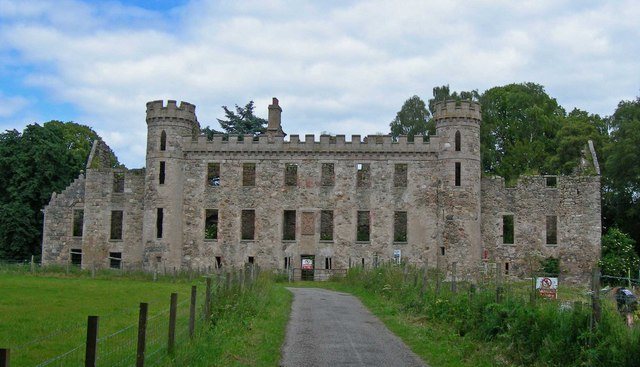
Hallforest Castle is a ruined lowland keep about 2.5 km from Kintore in Aberdeenshire, Scotland, United Kingdom. Its principal tower dates to the fourteenth century and is regarded as one of Scotland’s oldest keeps. Tradition attributes its construction to Robert the Bruce, who is said to have commissioned it as a hunting lodge. The same tradition holds that he granted it to Robert II Keith, who held the high royal office of Marischal of Scotland and was a predecessor of the Earls of Kintore.
Visits, attacks, and later status
Mary, Queen of Scots, who ruled from 1542 to 1567, visited the castle in 1562. During the wars of the seventeenth century, Hallforest was attacked repeatedly. It may have been abandoned soon afterward, although it remained in the possession of the Earls of Kintore.
The site is protected as a Scheduled Monument, a designation for places of archaeological or historic importance, and is listed as a Category B building, a Scottish grade for buildings of special architectural or historic interest.
Remains
Architectural remains
The keep
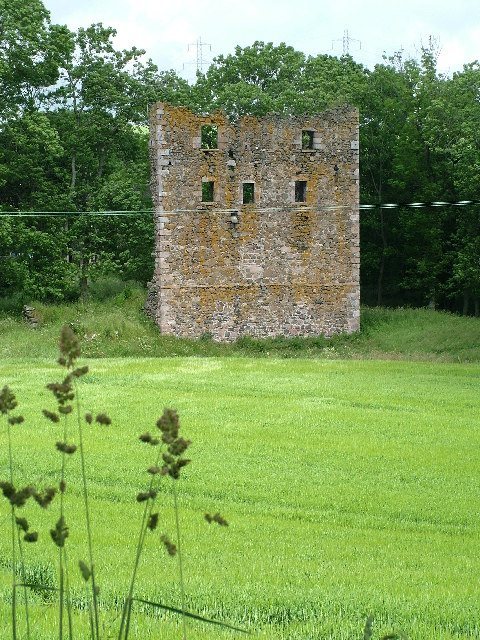
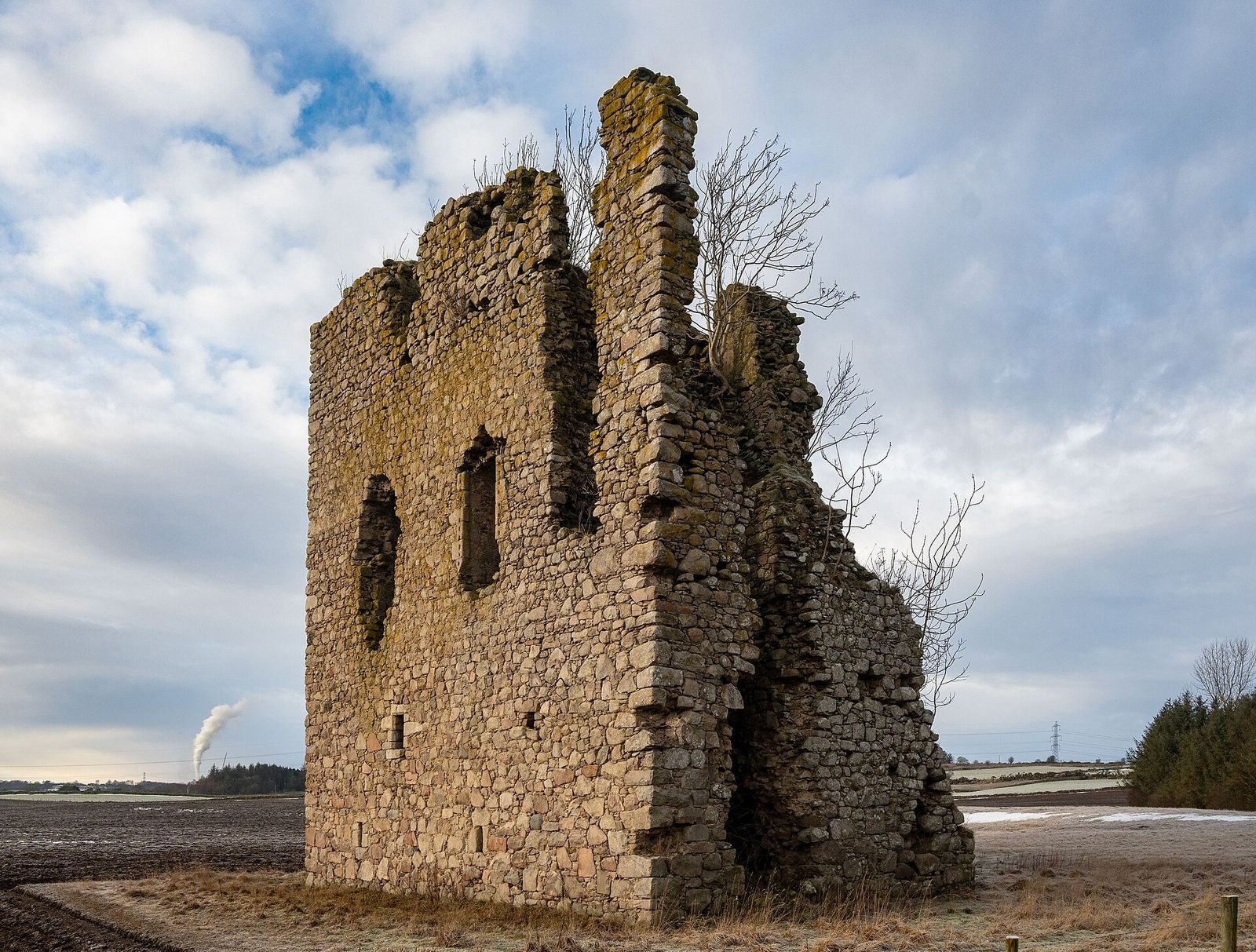
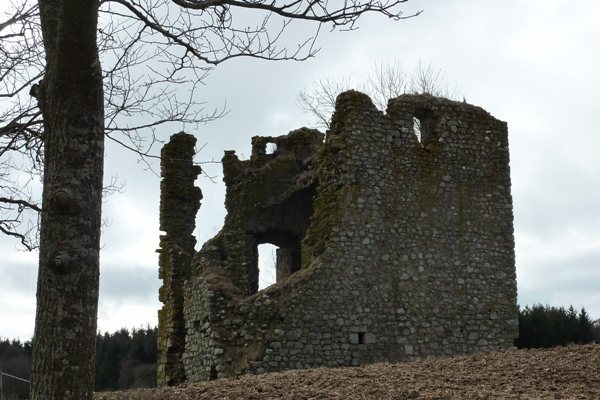
The castle’s main surviving structure is a plain, rectangular tower built of rubble masonry, using irregular stones. It measures about 15 m by 11 m, and its walls are 2.1 m thick. The keep originally contained six floors, with two vaulted ceilings separated by intermediate floors. Its entrance appears to have opened onto the first intermediate level.
Small gun loops, narrow openings for firing weapons, pierce the basement walls. This floor may also have had an entrance for cattle. Windows are located on the south side. A parapet once crowned the tower, while a stone roof probably rested on an arch near the top. Hatches and ladders were likely used to move between floors. The interior is now ruinous.
Traces of outer defenses
North of the tower are traces that may belong to an enclosing wall. Possible remains of a ditch or moat lie to its northwest.