Monastery of Our Lady of the Risco: An Augustinian Monastery in Ávila, Spain
Site at a Glance
- Rating
- 4.3
- Popularity
- Very Low
- Country
- Spain
- Primary era
- Early Modern
- Eras represented
- Early Modern
- Civilizations
- Crown of Castile, Spanish
- Site type
- Religious
- Remains
- Monastery
On this page12 sections
History
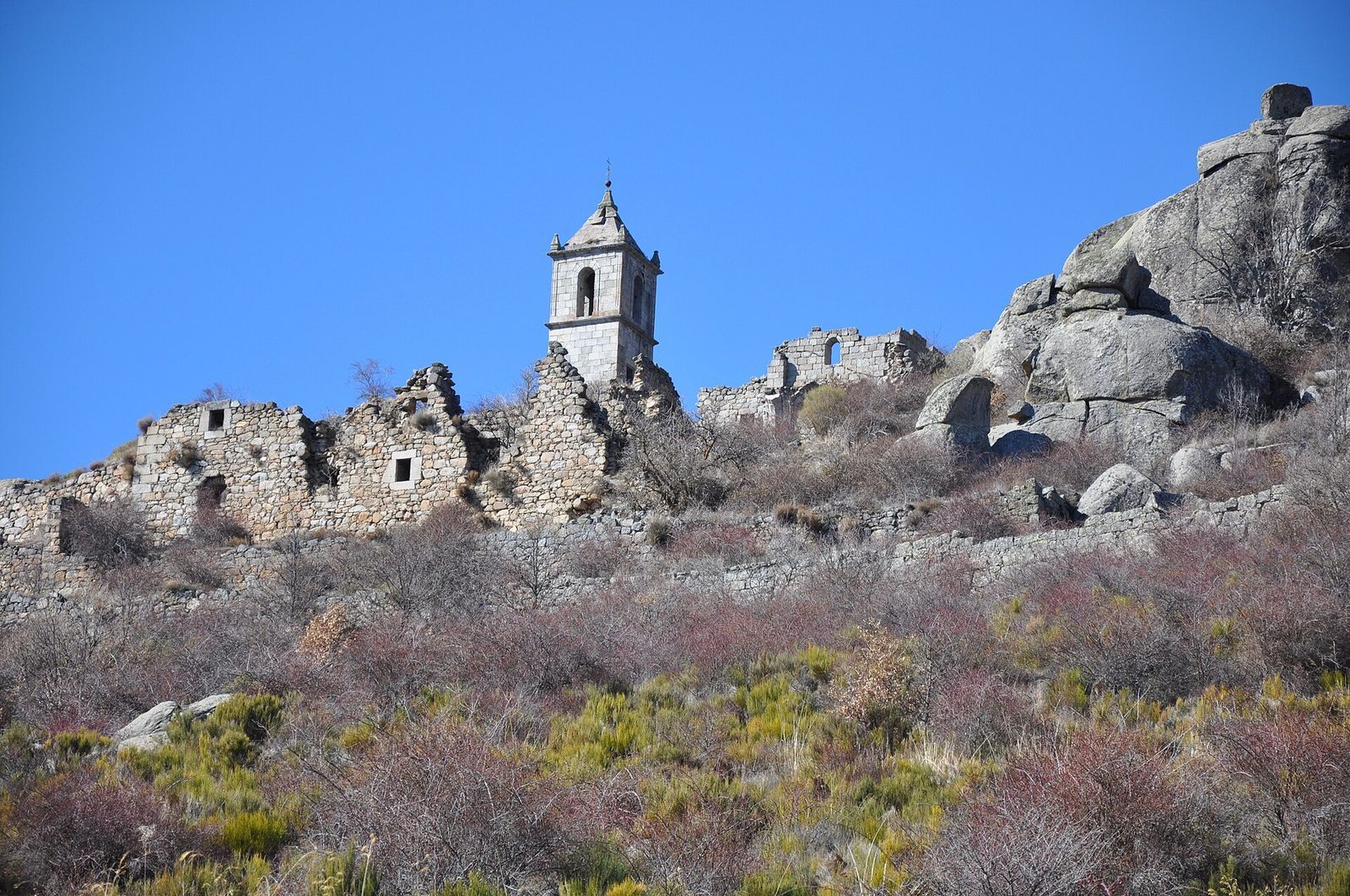
The Monastery of Our Lady of the Risco is a ruined monastery of the Augustinian order, a Catholic religious community whose members follow the Rule of Saint Augustine, on the Sierra de Ávila in Spain, above Amavida and Poveda. It began as a hermitage in 1504 and became a convent in 1530. Its architecture was late Gothic, with features resembling Herrerian design, a restrained Spanish Renaissance style.
Tradition and foundation
A local tradition links worship at the site to the Muslim conquest of Iberia. It says Christians hid an image of the Virgin of Sorrows among the rocks to protect it from destruction. In 1320, according to the same story, a shepherd searching for a lost goat found the image in a cave.
In 1504, the Augustinian friar Francisco de la Parra built a small hermitage where the image had been found and dedicated it to the Virgin of Sorrows, giving her the title Our Lady of the Risco. After retiring there, he sought permission from the lord of Villatoro and Bishop Ruiz to establish a convent. The hermitage became an Augustinian convent in 1530.
Pilgrimage and regional influence
The convent belonged to the Diocese of Ávila and became a center for evangelization and pilgrimage. Within the late-medieval district that now lies in Ávila province, it served as virtually the only cultural center. In 1564, with the consent of Bishop J. Bernardo de Fresneda, diocesan official Antonio Hernández authorized the friars to seek alms throughout the diocese. The house subsequently grew in economic influence and drew people seeking meditation and pilgrimage.
Economic growth and building work
During the seventeenth century, Payo Enríquez de Ribera, an Augustinian churchman and colonial administrator, transferred two regular payments to the convent, funded by Madrid’s taxes on wine and oil. An assessment valued its property at Mombeltrán at 69,966 reales, a historical Spanish currency unit.
By the early seventeenth century, the convent had substantial livestock, perhaps as many as 5,000 sheep, and also engaged in agriculture and industry. The flock made seasonal journeys between Castilian pastures and estates in Extremadura, as well as shorter trips, especially to the Fuente el Caño estate at Gálvez in Toledo. The friars belonged to the Mesta, an organization representing Castilian livestock owners and herders, and contributed to its upkeep. In 1793, after the Mesta’s council agreed to raise one million reales over four years, the convent was asked to pay its share.
The church was renovated late in the seventeenth century. A tower was erected in the 1770s, with its completion associated with prior Antonio Aguileta, the community’s superior. In 1791, ornamental structures behind the church’s altars were added in the Neoclassical style, which revived forms associated with ancient Greek and Roman architecture.
War, closure, and decline
The monastery’s decline began in the nineteenth century. During the Peninsular War, the conflict against Napoleonic France in Spain and Portugal, it sheltered guerrillas. It also suffered during the French occupation and from local looting, which was linked to resentment over conditions imposed on residents over many years.
On 29 October 1835, commissioner Gaspar Domínguez ordered the monastery closed and its friars expelled under a decree applying to convents with fewer than twelve religious. The house later suffered from Spanish disentailment, the transfer and sale of church property, as well as abandonment. In 1843, the 11-hectare estate containing the monastery was sold for 101,000 reales to Juan Torres and Pascual Fidalgo. The convent building was auctioned separately for 22,000 reales and offered again on 30 May; the buyer at the second auction is uncertain. The monastery no longer holds religious worship, and abandonment, damage, and looting have contributed to its deterioration.
Remains
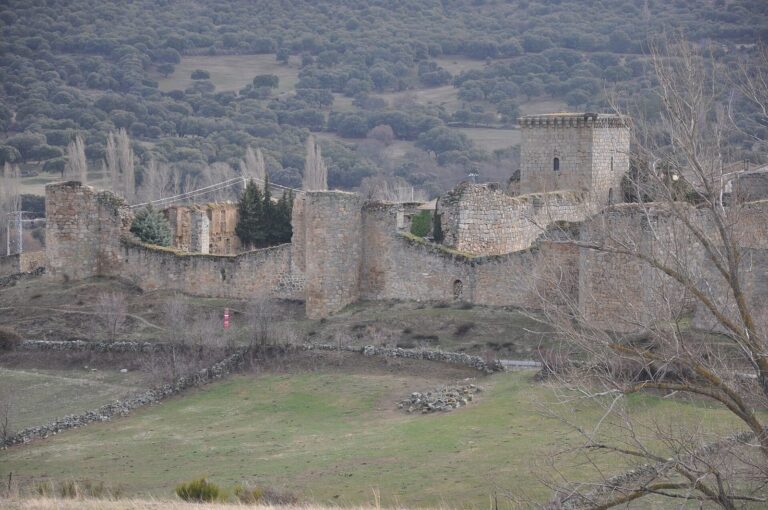
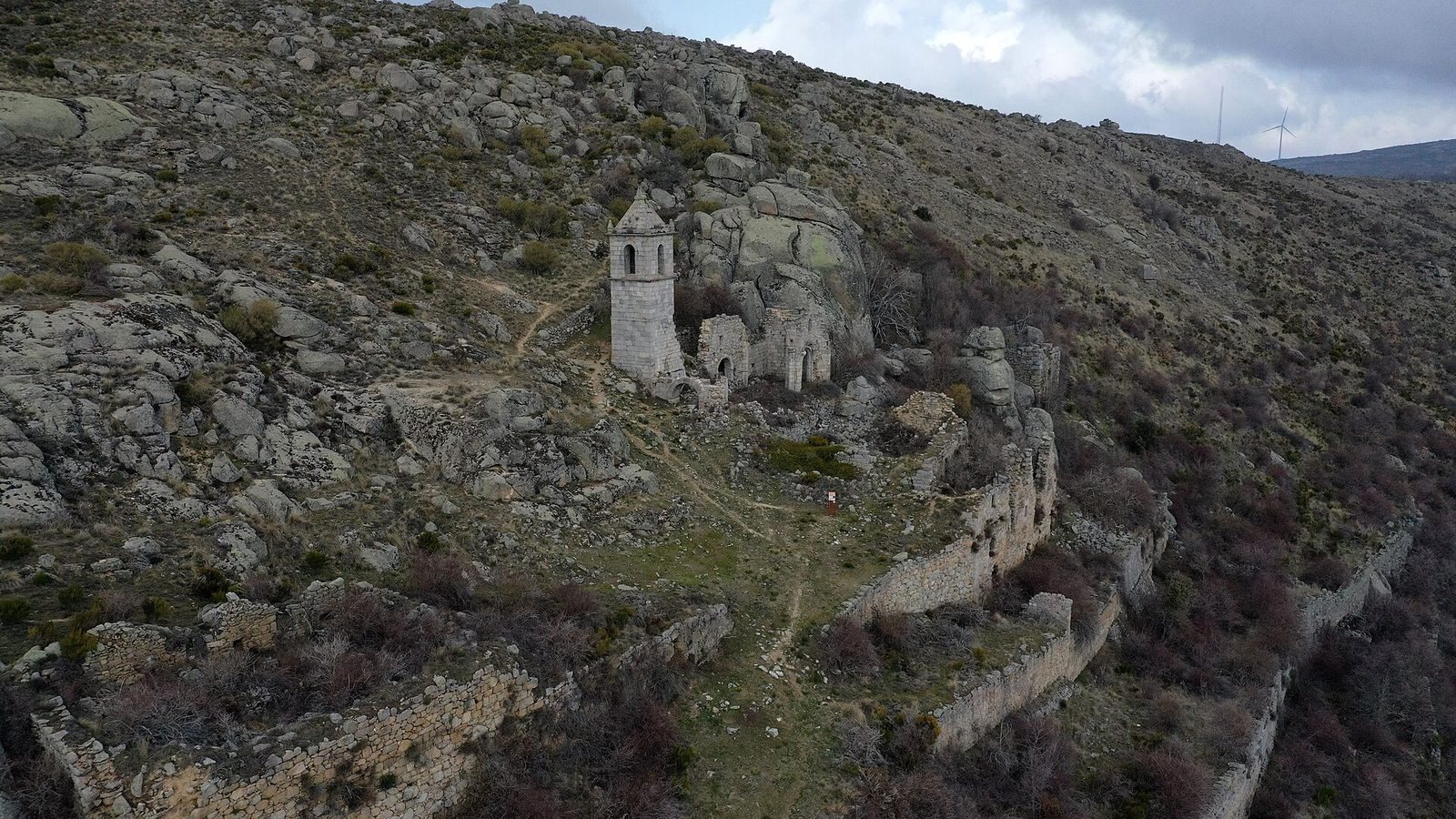
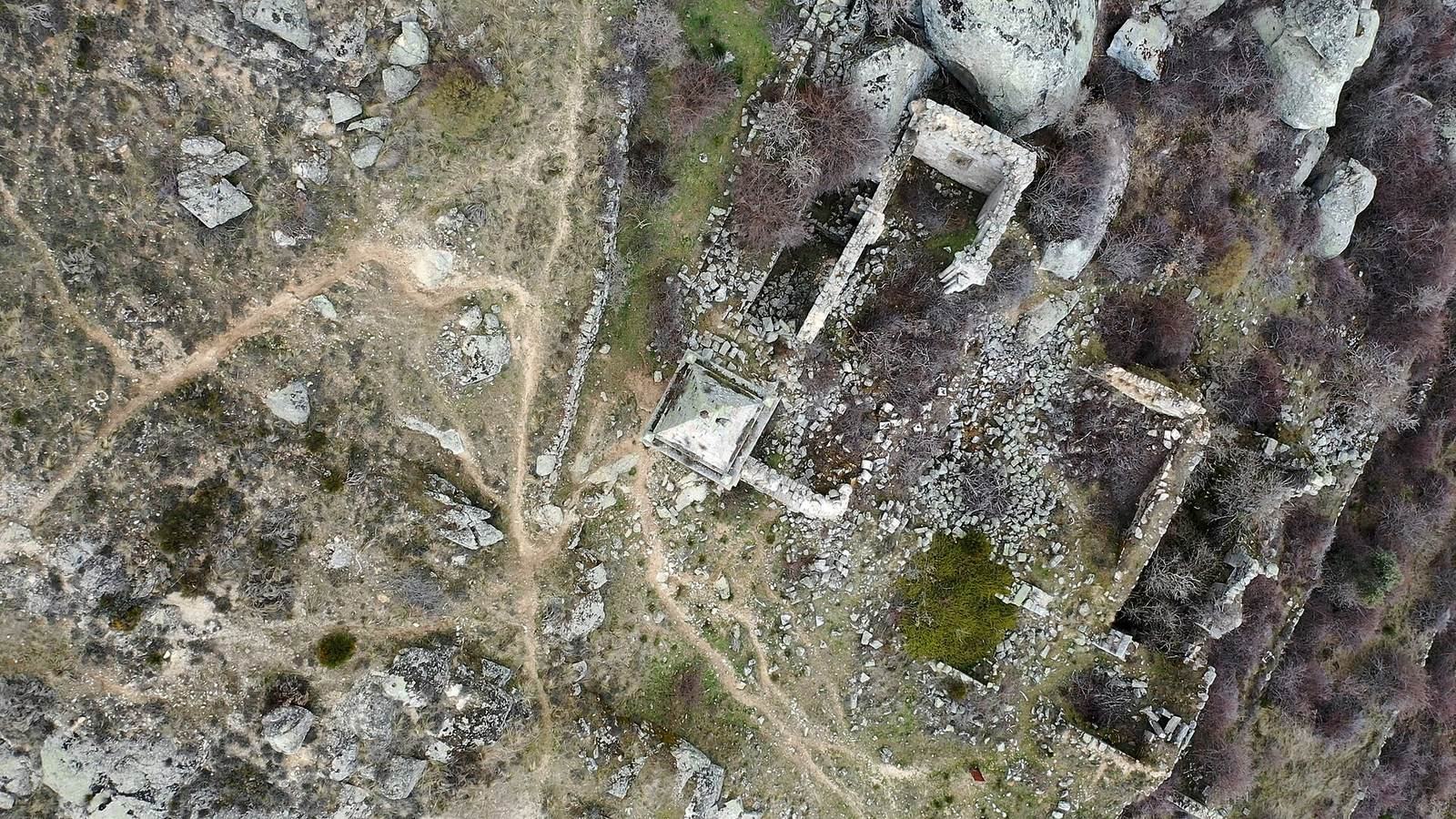
The monastery occupied the sunny slope of the Sierra de Ávila in the Amblés Valley. The valley lies between the Sierra de la Paramera to the south, La Serrota to the west, and the Sierra de Ávila to the north. The complex brought together a church, cloister, monks’ residence, lookout, cultivation terraces, pilgrim hostel, stables, warehouses, water-supply works, and access roads.
Church and bell tower
Church
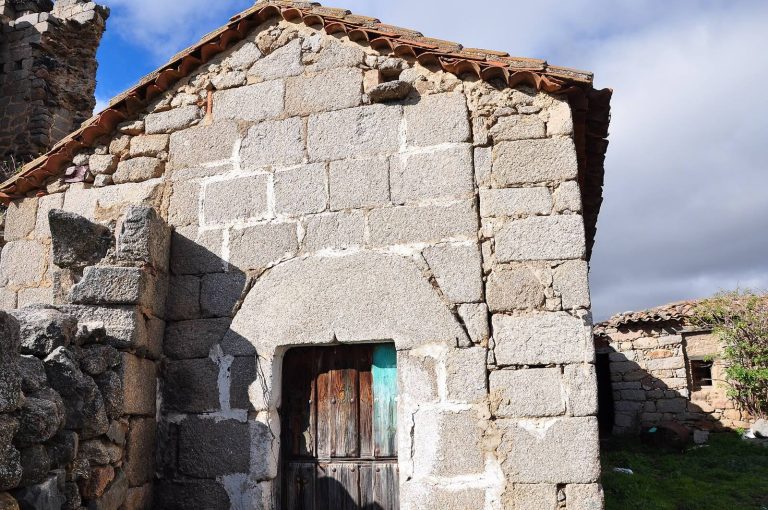
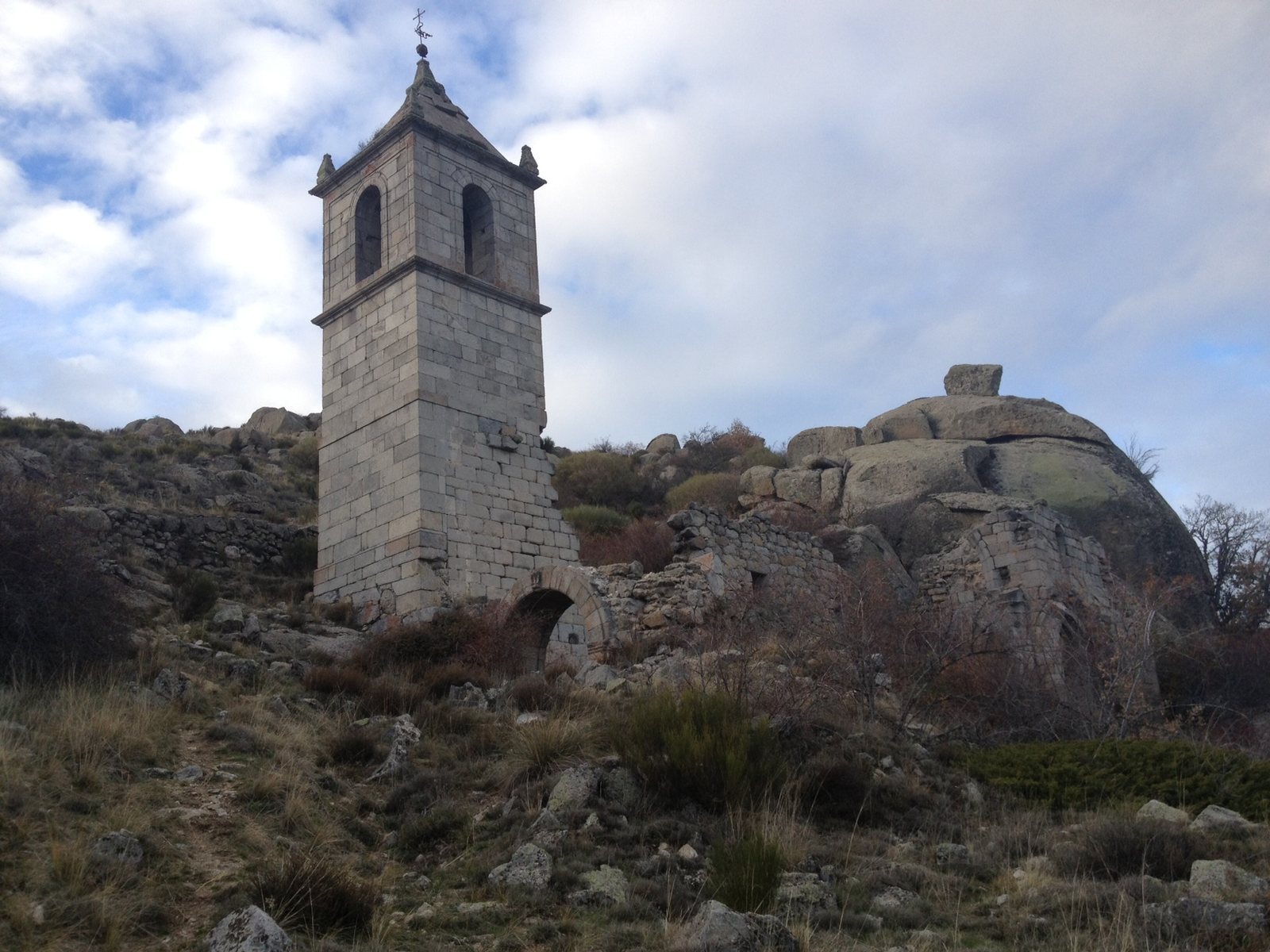
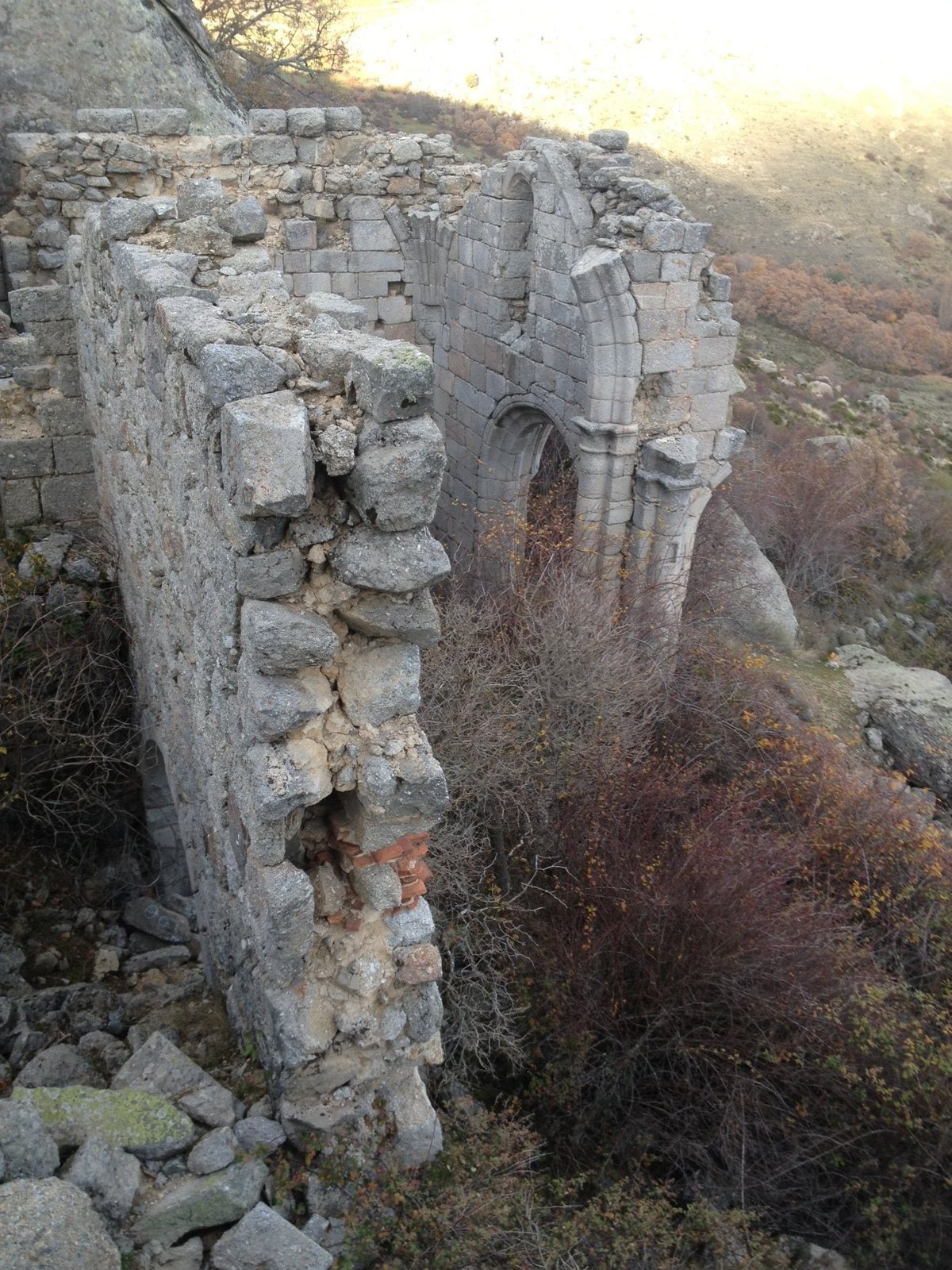
The surviving church remains include its entrance arch and part of the apse, which is partly obscured by vegetation. Walls from several of the monastery’s buildings also remain. At the 1843 auction, the convent was described as reduced to its walls, with carefully cut stone blocks, known as ashlar, on the main façade and at the corners.
Bell tower
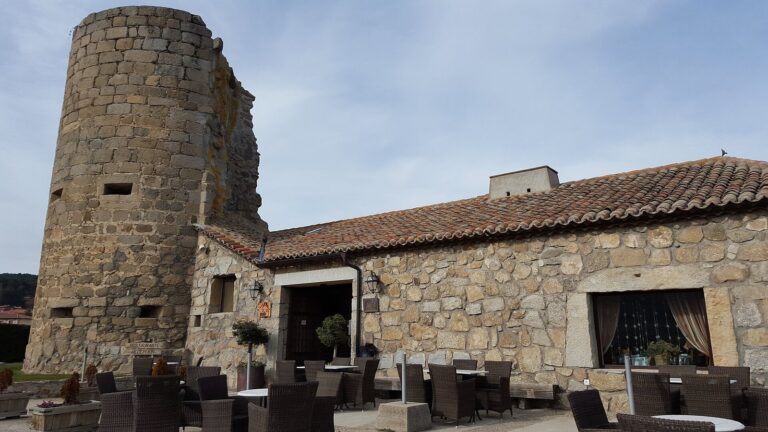
The bell tower is among the structures still standing. The 1843 auction description noted that it was then undamaged and that ashlar stonework was used in its construction. From the tower, the Amblés Valley is visible; on clear days, the view extends to Navacerrada and the Mujer Muerta mountain in Segovia.
Terraces, waterworks, and roads
Stone-paved roads, cultivation terraces, water-supply works, and other service remains survive around the complex. The monastery stood where paths from Villatoro, Vadillo de la Sierra, Poveda, and Amavida met. Parts of the stone roads remain paved.
Rock carvings
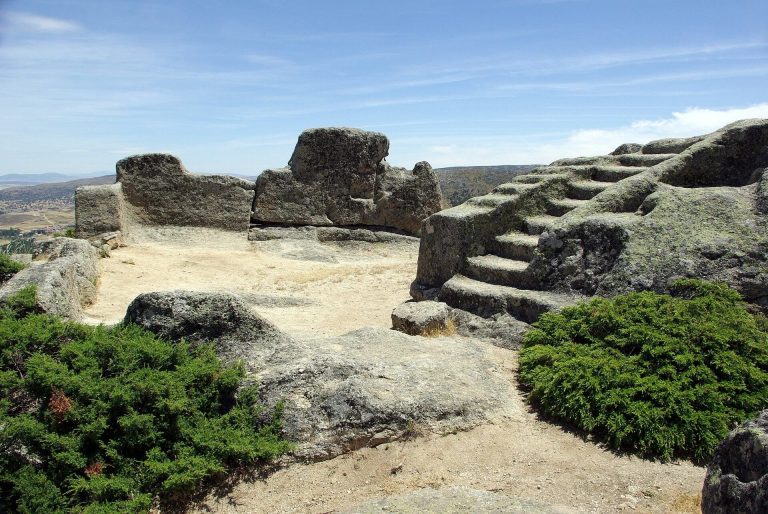
Near the ruins, a hollow among large rocks opens onto a platform bearing carvings of two circles, one twice the radius of the other, separated by a triangle. They face the Risco del Sol peak across the Amblés Valley, in the Sierra de la Paramera. One possible interpretation sees the triangle as a mountain and the circles as the sun and moon, but the carvings’ origin and meaning remain uncertain.
Dispersed devotional objects
When the monastery closed, its possessions were distributed among churches and religious houses in the region. The image of the Virgin of Sorrows, along with the bells and much of the convent’s vestments and valuables, went to the parish at Villatoro, where the image now occupies the main altarpiece. Other vestments and objects went to Piedrahíta and the Convent of La Santa in Ávila. An image of Saint Augustine was transferred to the parish of Vadillo de la Sierra, while Augustinian missals and other images were shared among religious institutions in Ávila.