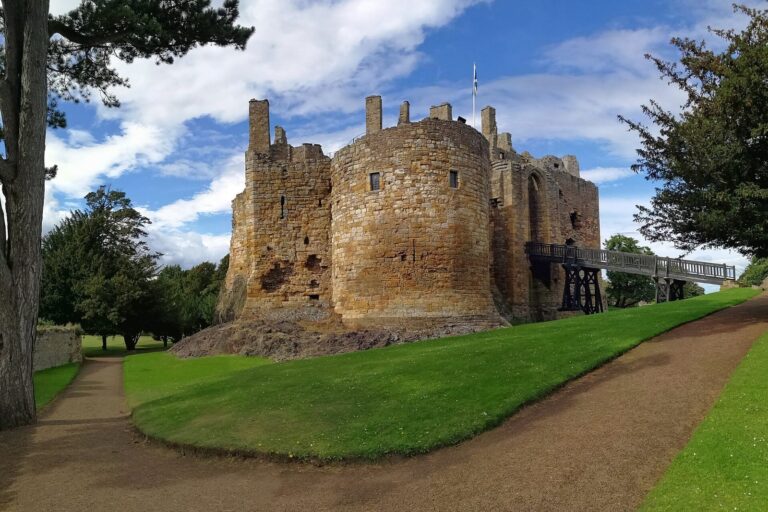
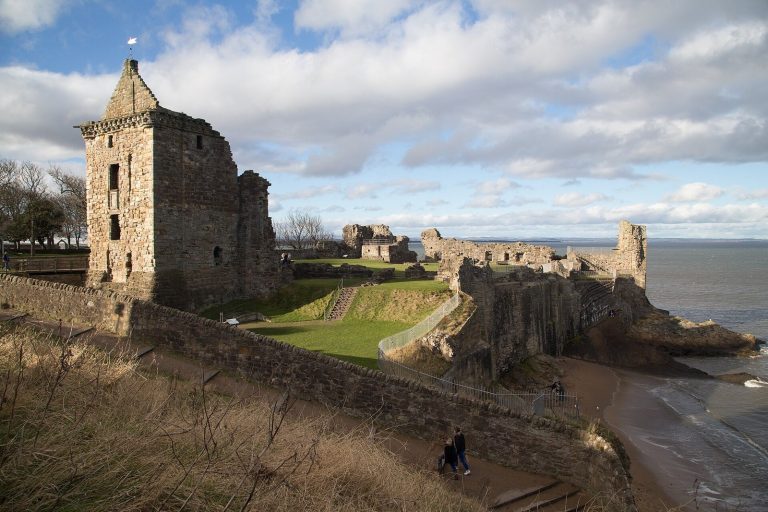
Isle of May Priory: A Medieval Monastery and Pilgrimage Site
Site at a Glance
- Popularity
- Medium
- Country
- United Kingdom
- Primary era
- Medieval
- Eras represented
- Medieval, Early Modern
- Civilizations
- Kingdom of Scotland
- Site type
- Religious
- Remains
- Monastery
On this page7 sections
History
Isle of May Priory was a Benedictine priory, a religious house governed by a prior, in the United Kingdom. Founded in 1145 as a dependent house of Reading Abbey, it developed at a site associated with older traditions of worship and pilgrimage. Its monks were charged with praying for the souls of Scottish kings.
Early worship and pilgrimage
Traditions connect the island’s earliest Christian community with two monks. Ethernan was believed to be buried there, and one account places his martyrdom at the hands of the Picts around 669. His shrine drew worshippers, including people seeking healing. A separate tradition credits Adrian of May with establishing an early monastery and says Danish pagans killed him in 875. The cults of Adrian and Ethernan were probably later combined.
Around 875, Viking raiders killed monks on the island, which was then abandoned for centuries. Pilgrims later returned to Ethernan’s shrine, and the island became a popular destination in the later Middle Ages. Adrian’s shrine also attracted pilgrims for several centuries.
The Benedictine priory
King David I granted the island to Reading Abbey in 1145, the year associated with the priory’s foundation. A community of nine monks from the abbey arrived in 1153. Benedictines followed the Rule of St Benedict, a guide to religious life. The community was expected to maintain nine priests to pray for the souls of Scotland’s kings, and David and his successors gave the priory further support.
Construction was hindered by Norse raiders based in Orkney. The Orkneyinga Saga, a medieval history of Orkney’s earls and Norse activity, tells of Sweyn Asleifsson and Margad Grimsson stopping on the island after Earl Rögnvald Kali Kolsson drove them from Orkney. Severe weather kept them there for seven nights. They told the monks they were travelling to meet the Scottish king on Rögnvald’s behalf, but the monks suspected piracy and sought help from the mainland. Sweyn and his companions then plundered monastic treasures and left. After meeting the raiders at Edinburgh, David sent a man to assess the losses and repaid the priory from his treasury. The saga calls the abbot Baldwin, a name that may refer to St Baldred.
Transfer, attack, and later ownership
In the 13th century, Bishop Wishart of St Andrews obtained the priory from Reading Abbey. The transfer to the canons of St Andrews is dated to 1288. In 1313, after the island became part of the Diocese of St Andrews, English forces briefly occupied it and destroyed the monastery. A chapel dedicated to St Adrian was built afterward. In 1318 the monastic buildings passed to the town of St Andrews, and the community, by then Augustinian and following the Rule of St Augustine, moved to Pittenweem Priory.
Patrick Learmonth acquired the island in 1549 and sold it two years later to Andrew Balfour of Mountquhanie, who died in 1570. Since 1958, the priory’s standing and excavated remains have been protected as a scheduled monument, a historic or archaeological site protected under Scottish law.
Remains
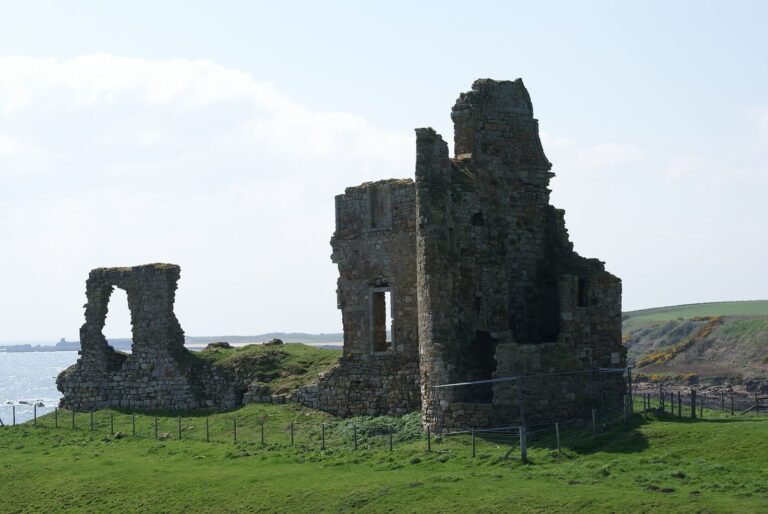
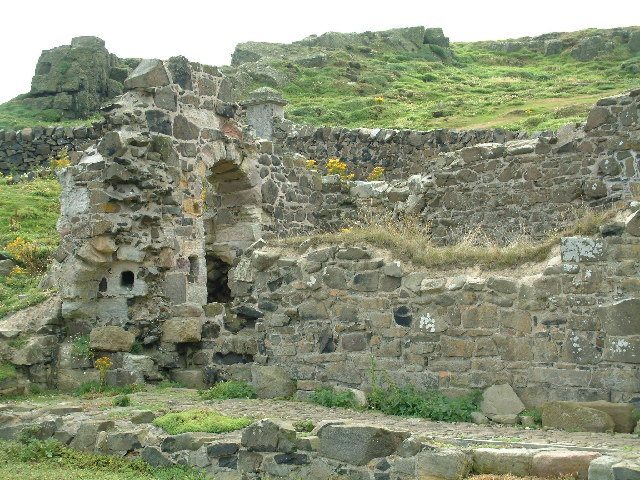
The site includes ruined stone remains of the later priory, both standing and excavated. Its architectural history also includes an earlier group of religious buildings and a round tower constructed within the former priory.
Early religious settlement
The early monastery attributed to Adrian is thought to have comprised a chapel and a group of Irish-style houses with beehive-shaped forms. These proposed buildings represent a different phase from the later priory, whose remains are of stone.
Priory and tower
The later monastery was a small house dedicated to St Mary the Virgin, a Christian title for Mary, the mother of Jesus. It also contained a shrine to St Ethernan. A round tower was built within the former priory in 1549; it had narrow openings for defence. The priory remains survive in ruined condition, with both standing fabric and excavated remains identified.