Dal Pozzo Castle: A Medieval Residence Transformed in Neo-Gothic Tudor Style
Site at a Glance
- Popularity
- Medium
- Country
- Italy
- Primary era
- Modern
- Eras represented
- Medieval, Modern
- Civilizations
- Unclassified
- Site type
- Domestic
- Remains
- Castle
On this page8 sections
History
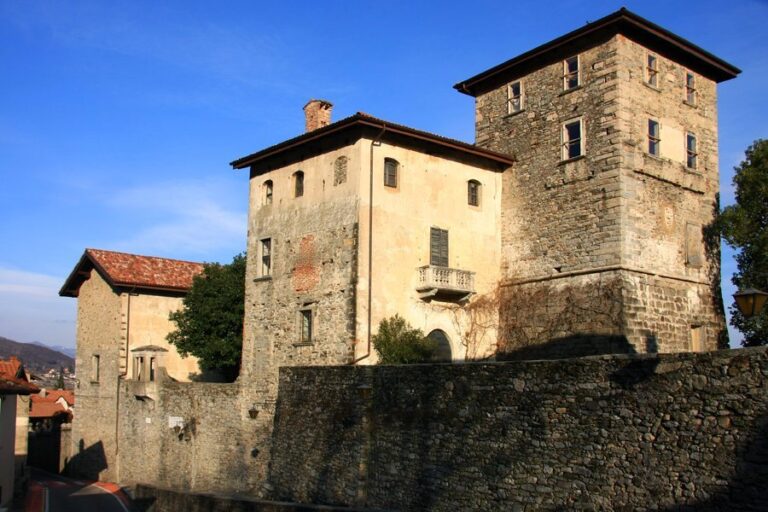
Dal Pozzo Castle is a historic residence in Oleggio Castello, Italy. Its origins are uncertain, but it is first mentioned in the early 13th century. During that century, Guido Visconti acquired the castle and made it his residence. The Visconti were a prominent noble family of Milan.
The Visconti residence
Guido had acquired nearby Massino in 1134, and the Visconti’s interest in Oleggio Castello may also have been encouraged by its proximity to Arona. A fortress there was under Visconti guard in 1173, and Arona became a Visconti possession in 1277.
The family branch based at Oleggio became known as the Visconti di Oleggio. Giovanni Visconti di Oleggio, who died in 1366, was lord of Bologna and Fermo. The castle later passed to the Visconti d’Aragona, another branch of the Milanese family, and then to the Dal Pozzo family, which gave the castle its present name.
Transformation and later use
In the 19th century, Marquess Claudio Dal Pozzo directed a radical conversion of the medieval castle into a large residence. After the Second World War, a hotel was established in the castle. In May 1946, Aldo Visconti di Oleggio Castello, a member of the Visconti di Oleggio branch, received a hereditary marquess title from the King of Italy.
Remains
The castle and its setting
Main residence
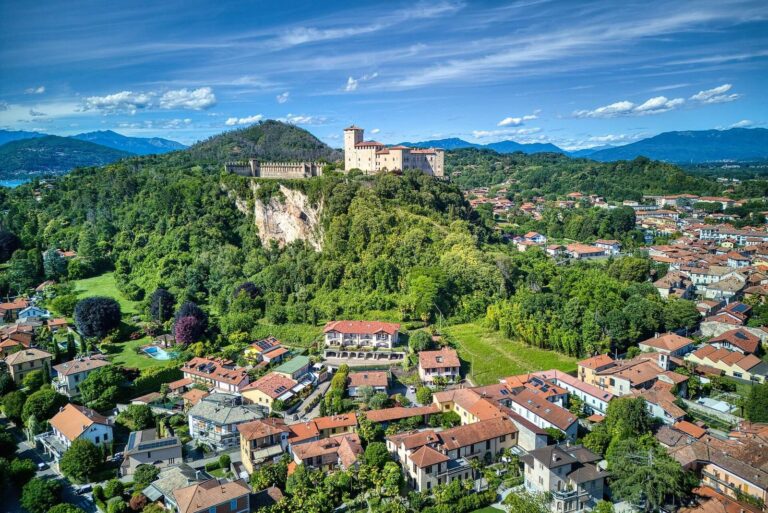
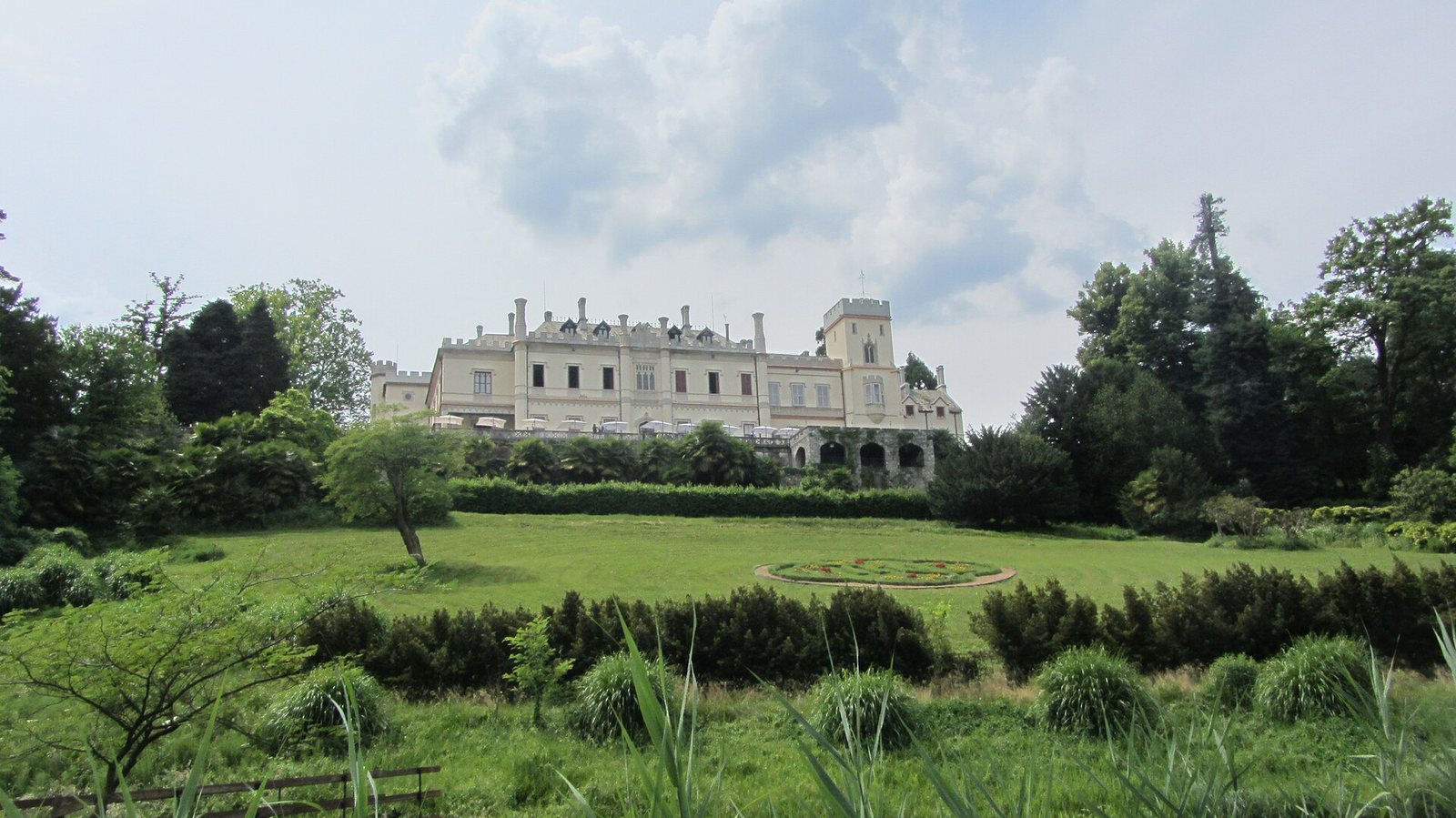
The main building has a consistent neo-Gothic Tudor character, inside and out. Its design reinterprets 16th-century Tudor Gothic, a form of Gothic-influenced architecture associated with the Tudor period in England.
Chapel and towers
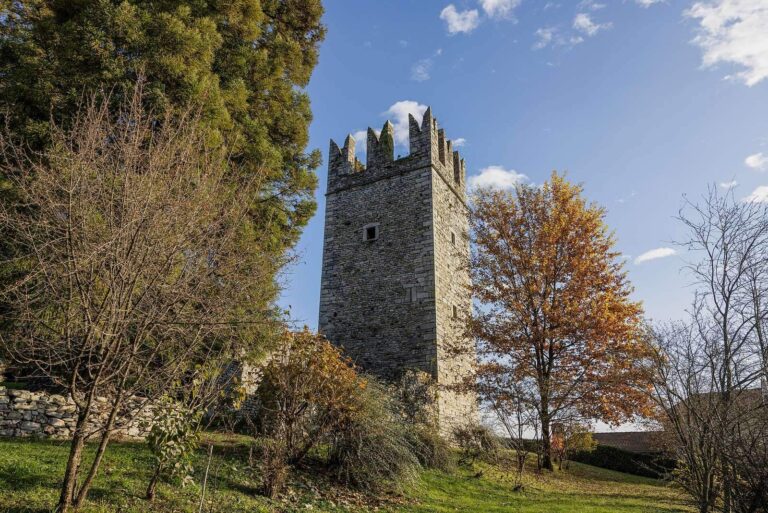
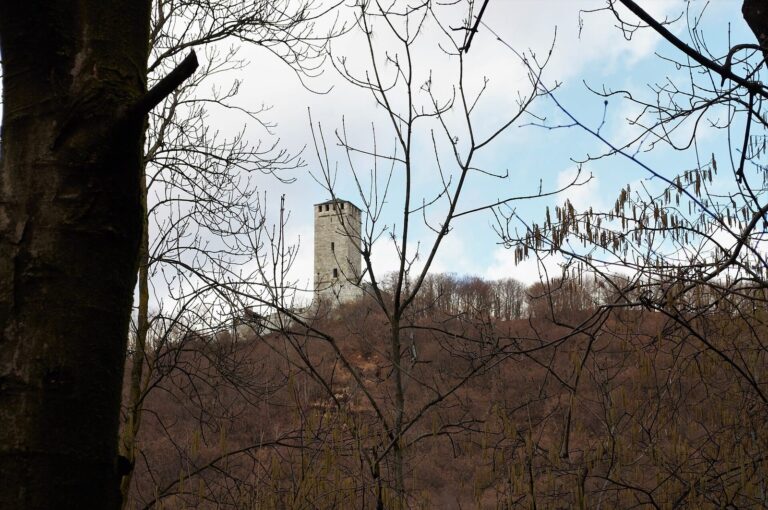
A private chapel and an eastern tower stand around the main building. A smaller octagonal tower marks its southern corner. Together, these features form the group of structures surrounding the residence.
Park and meadow
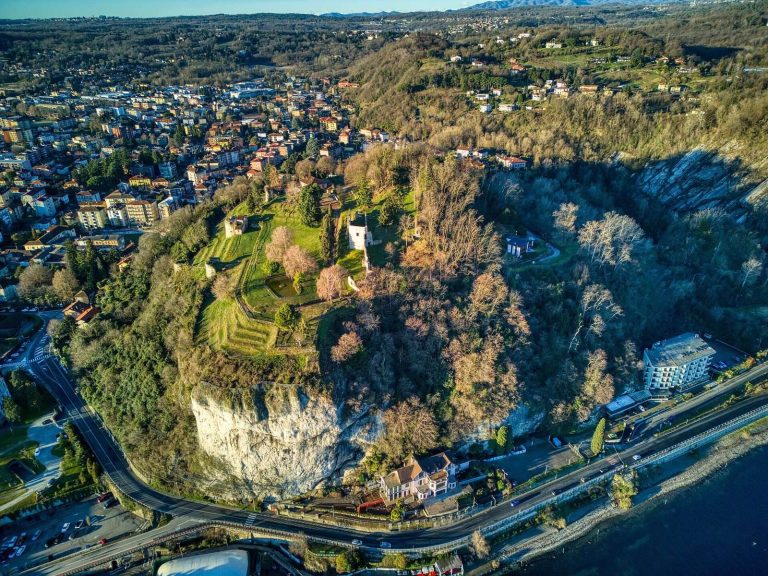
A park surrounds the castle, which borders a meadow descending toward Lake Maggiore. The meadow leaves the outlook toward the lake open. The hotel also uses nearby renovated buildings.