Potštejn Chateau: A Baroque Palace in Czechia
Site at a Glance
- Rating
- 4.4
- Popularity
- High
- Country
- Czechia
- Primary era
- Early Modern
- Eras represented
- Early Modern
- Civilizations
- Habsburg, Habsburg Austria, Holy Roman Empire, Kingdom of Bohemia
- Site type
- Domestic
- Remains
- Elite Residence
On this page7 sections
History
Construction
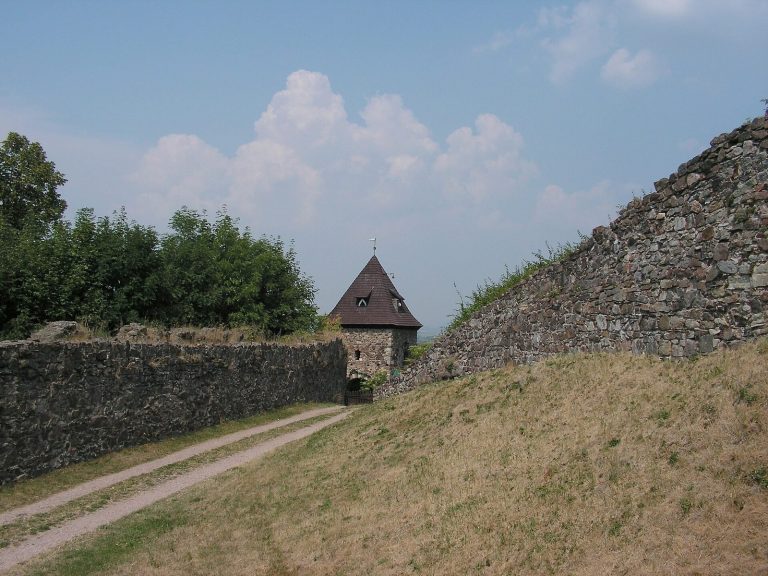
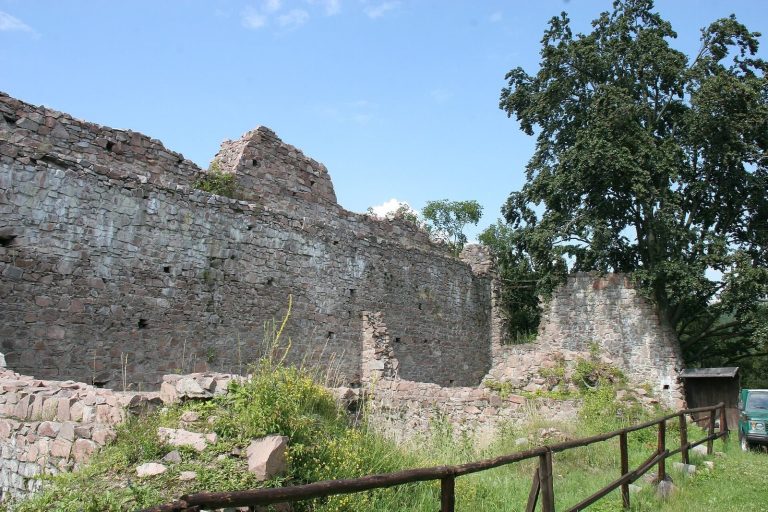
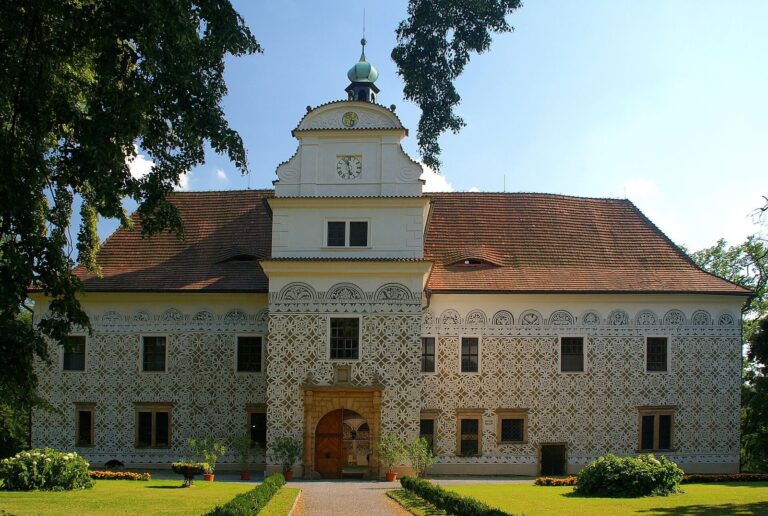
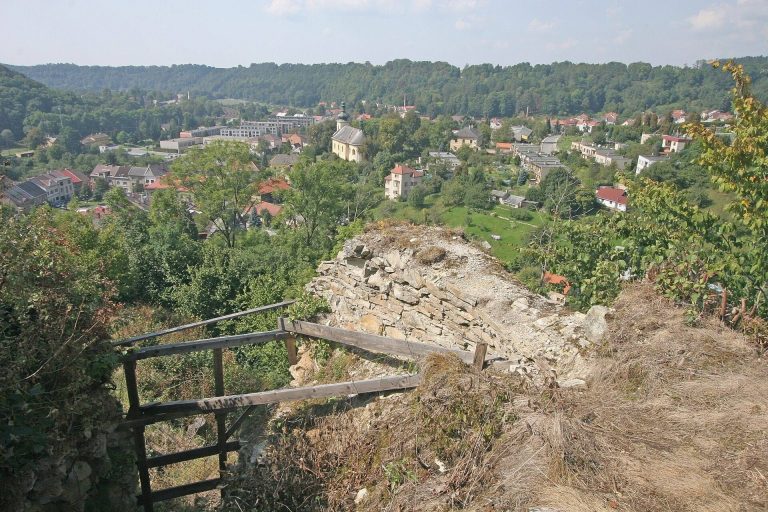
Potštejn Chateau is a Baroque palace in the center of Potštejn, Czechia. Count Jan Antonín Harbuval Chamaré commissioned it between 1749 and 1755 as a spiritual counterpart to the abandoned, ruined Potštejn Castle above the town. Architect Josef Jäger designed the palace.
Changing uses in the twentieth century
In 1945 and 1946, the British Embassy rented the palace as a recreation residence for its ambassador. In 1949, the Revolutionary Trade Union Movement, a major trade-union organization in Communist Czechoslovakia, took over the building as a training center for officials and workers. Its use during this period caused extensive damage and alterations, and original furnishings were removed or stolen. The movement left in 1989.
Remains
The palace incorporates a complex of manor farm buildings into its Baroque fabric.
Entrance façade
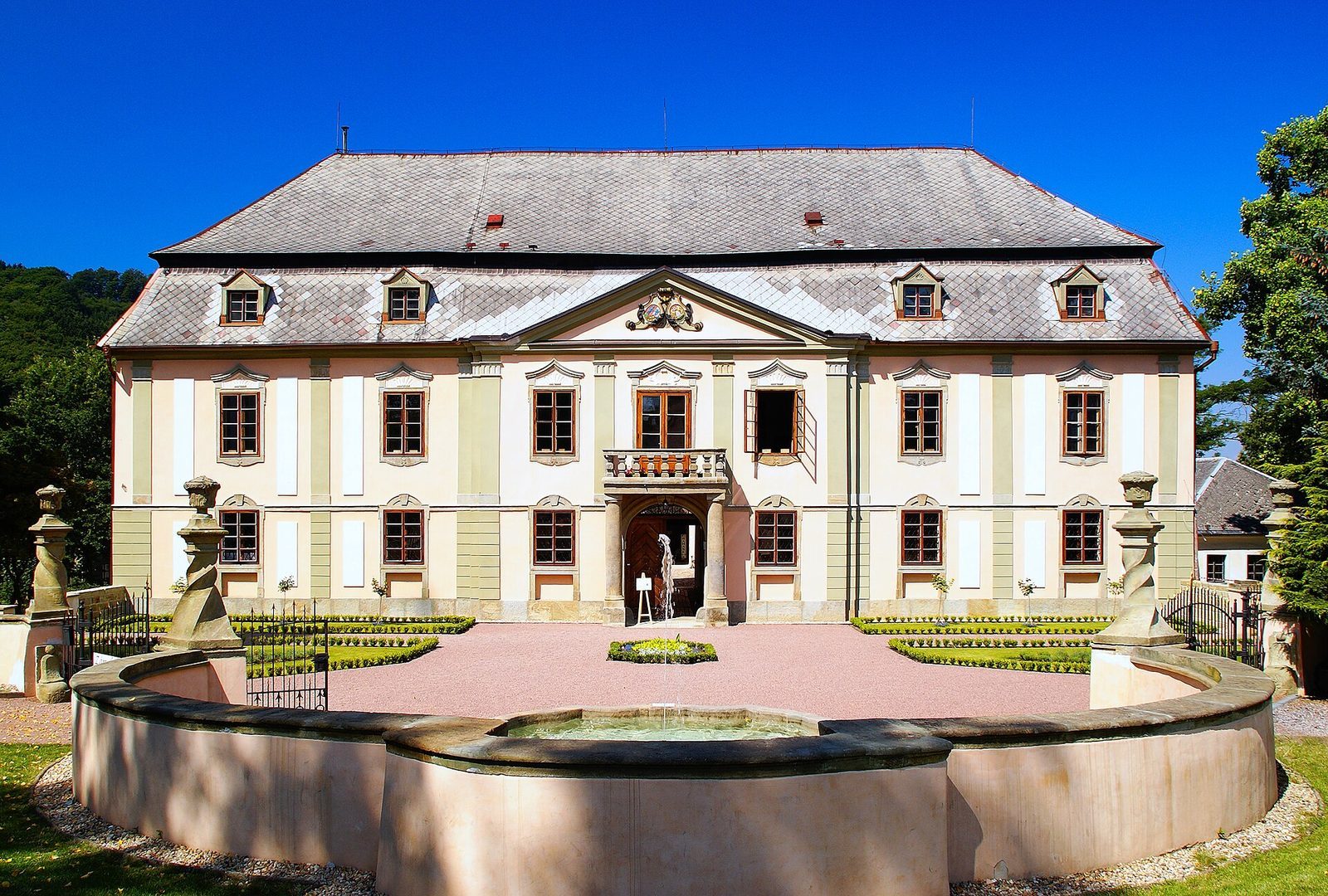
The entrance façade has the building’s richest exterior decoration. A balcony supported by columns frames the portal. The entrance bears the coats of arms of the owner and his wife, along with the date 1749, which marks completion of that wing.
Chapel
A chapel in the south wing has a semicircular projection. It is presented as the Chapel of the Holy Trinity among the spaces prepared for visitors.
Interior and grounds
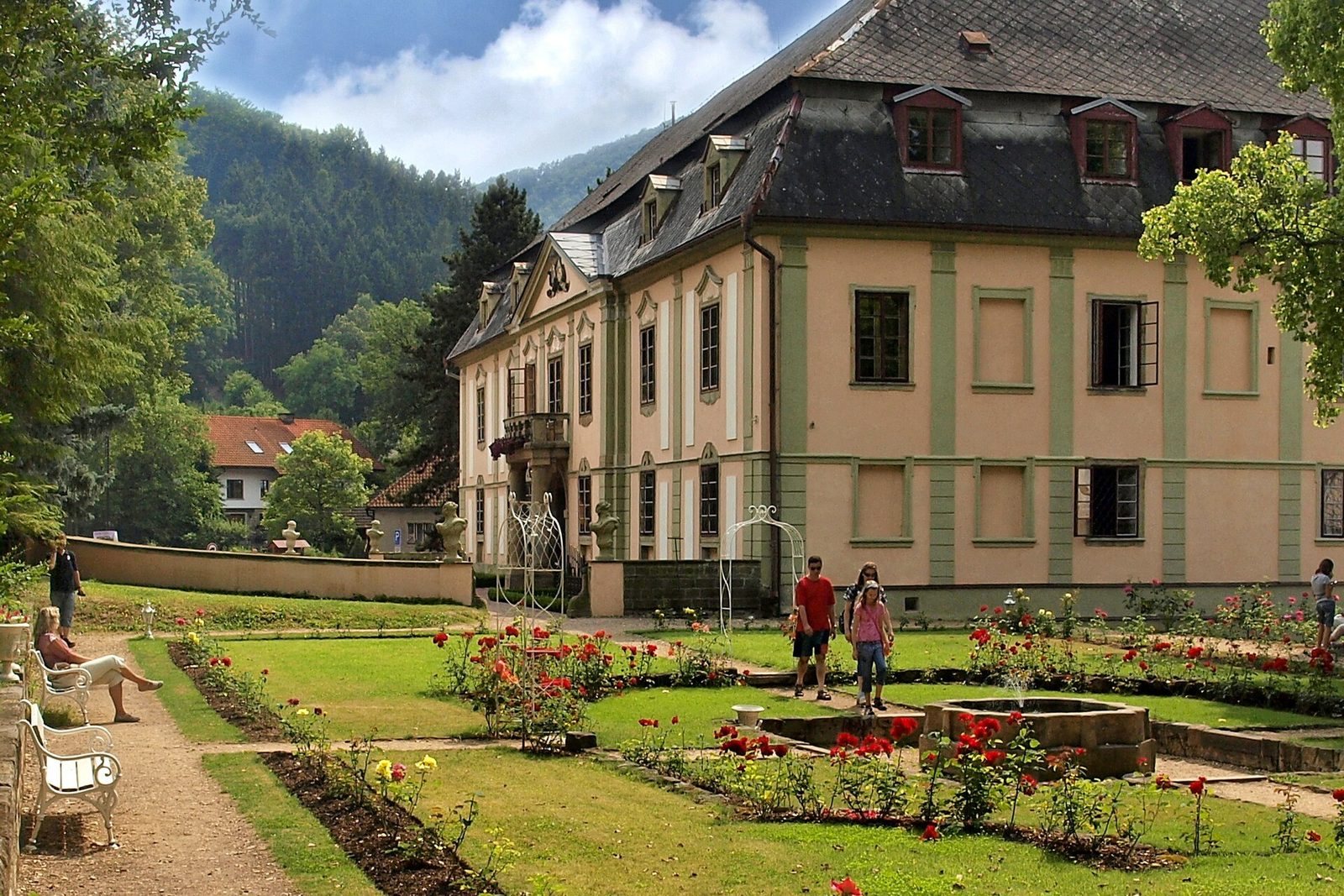
The visitor spaces include a marble hall and an exhibition gallery. The palace’s furnishings and equipment are partly original, partly borrowed from museums, and partly privately owned by the Nováček family. The grounds also include an English-style park.