Wolfsberg Castle: A Renaissance Castle in Austria
Site at a Glance
- Rating
- 4.5
- Popularity
- Low
- Country
- Austria
- Primary era
- Early Modern
- Eras represented
- Early Modern, Modern
- Civilizations
- Habsburg, Habsburg Austria, Holy Roman Empire
- Site type
- Domestic
- Remains
- Castle
On this page4 sections
History
Wolfsberg Castle stands above Angern, within Krems an der Donau in Austria. Built around 1531 over a medieval manor first mentioned in 1268, it is a Renaissance-style complex, reflecting a European cultural and artistic movement that shaped architecture from roughly the fifteenth century onward.
Medieval manor and Renaissance castle
From the thirteenth century, the estate repeatedly came into the possession of Göttweig Abbey, a Benedictine monastery in Lower Austria. From the fifteenth through the seventeenth century, the Edler von Geyer family owned it for much of the time. Major structural changes followed in the seventeenth and nineteenth centuries.
Twentieth-century uses and ownership
During the First World War, the castle housed many refugees from Galicia, a historical region of the Habsburg monarchy in lands now divided between Poland and Ukraine. In 1922, the Health Care Institution for Employees of the City of Vienna began operating a convalescent home there. From 1934 to 1989, the Catholic congregation of the Servants of the Most Sacred Heart of Jesus ran the castle, first as a convalescent home and, from 1960, as a retirement home.
The congregation sold the property to a real-estate office in 1989. In 1992, it passed to the physician and chemist Birkmayer, who planned to establish a health and recreation center. The family of Nikolaus (von) Fuchs, from South Tyrol, acquired the property in 2006.
Remains
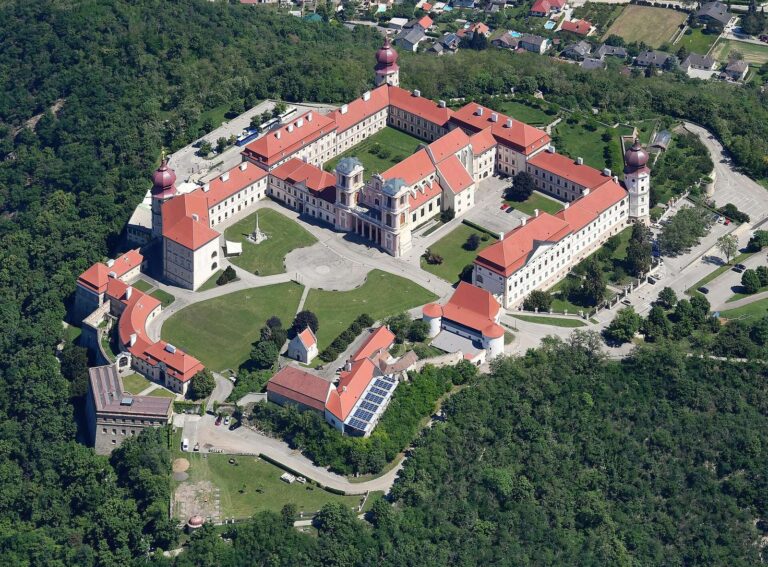
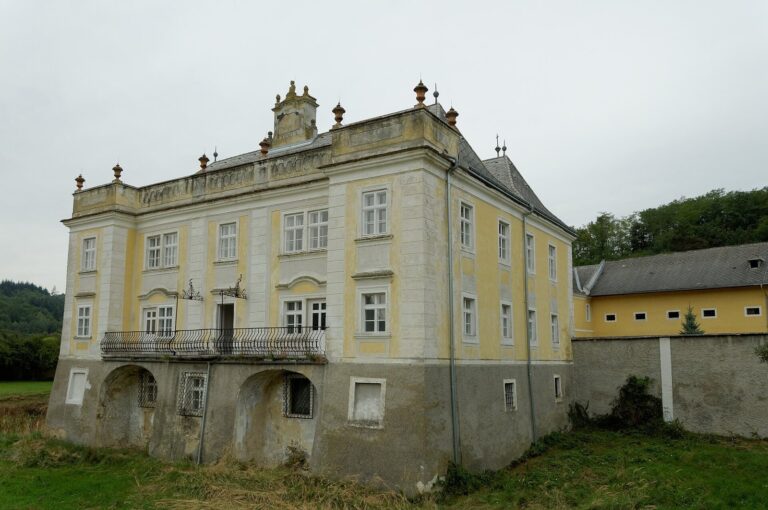
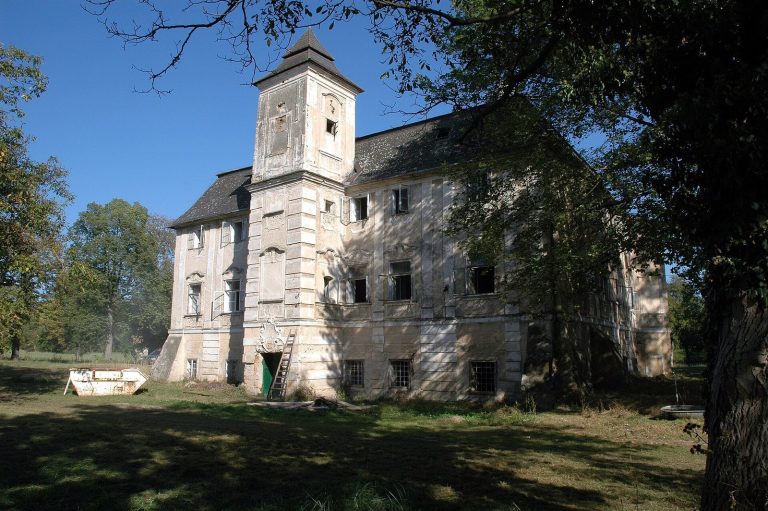
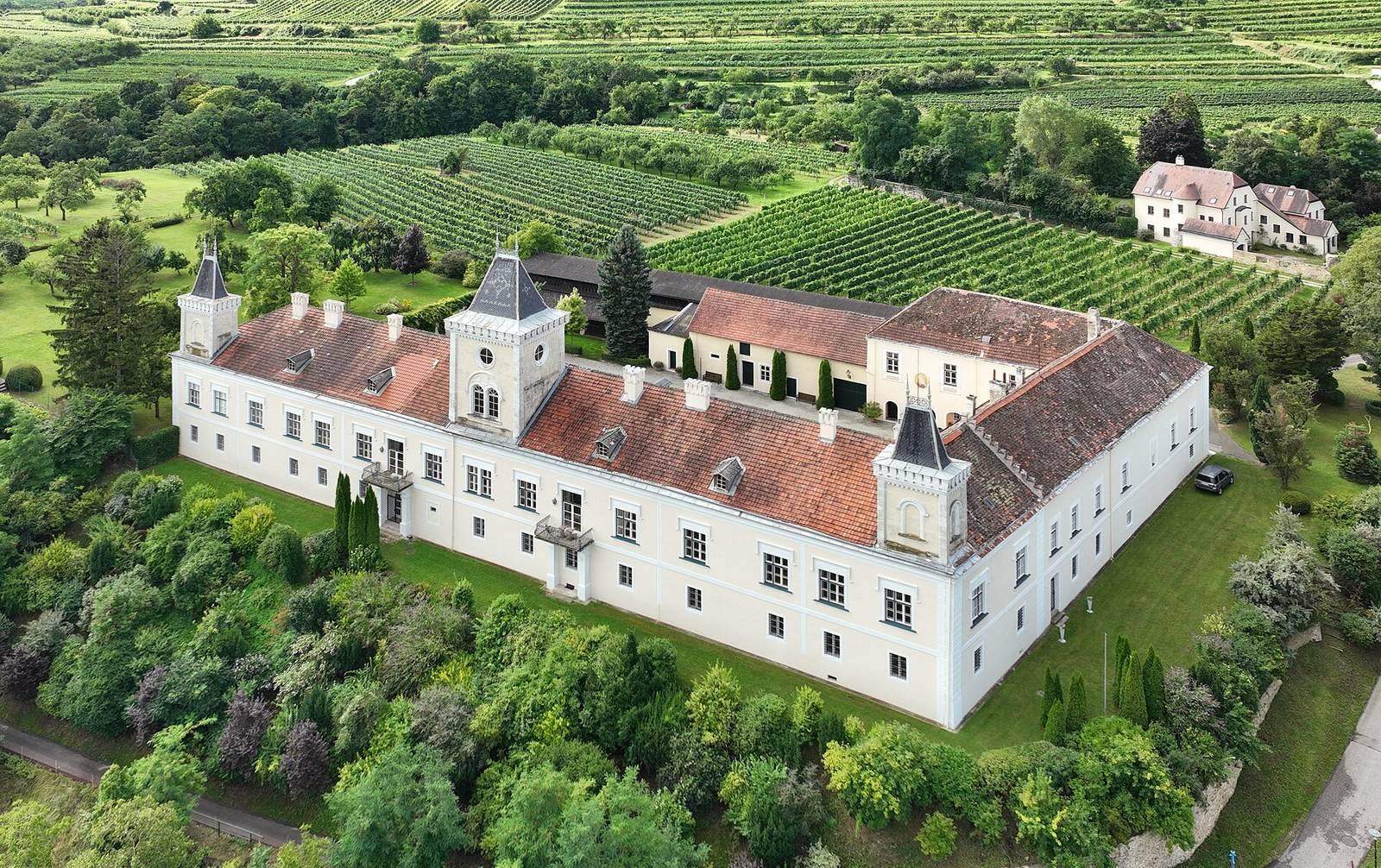
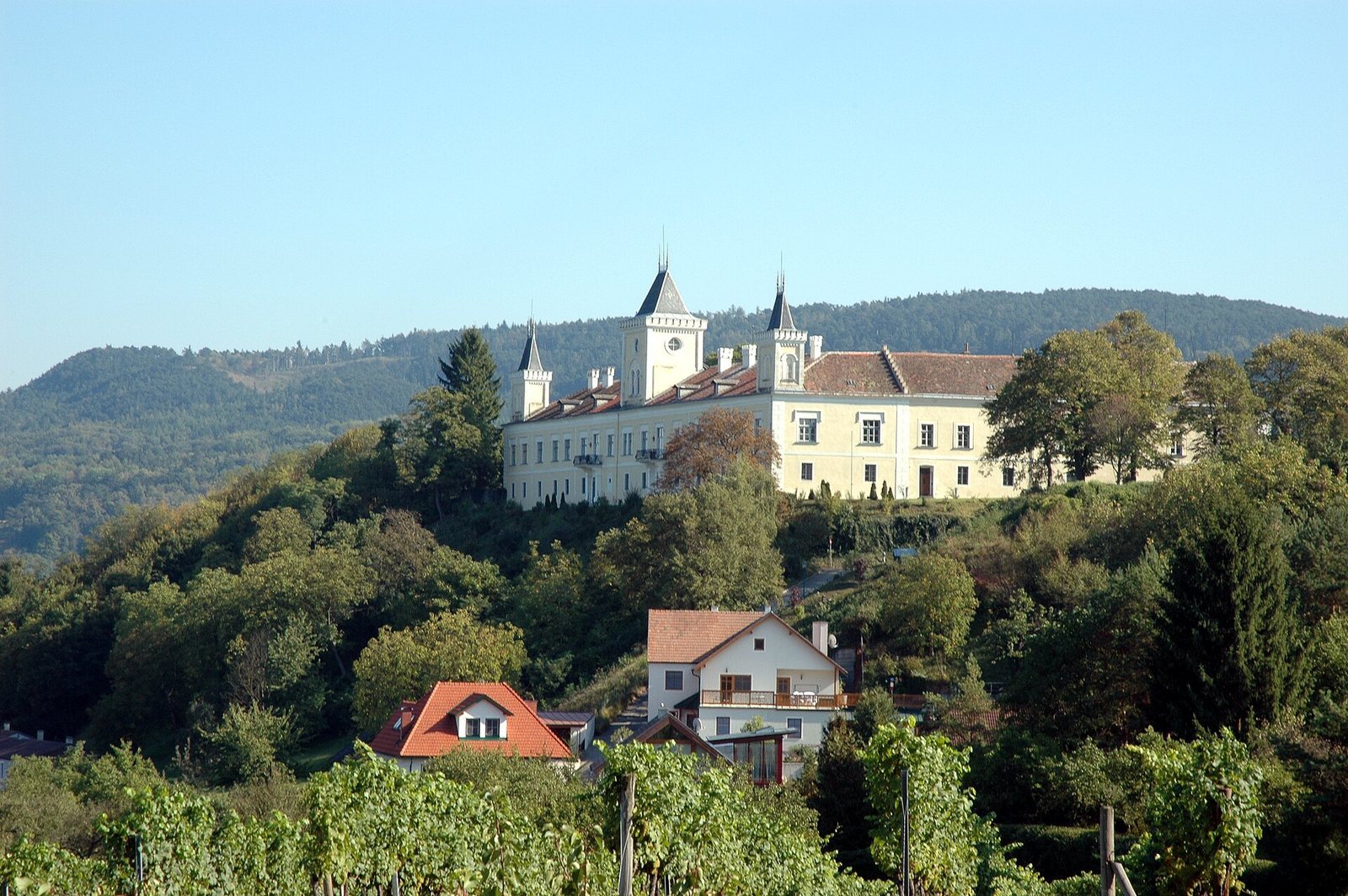
The surviving castle is a three-storey Renaissance complex on the steep edge of a high terrace descending toward the Danube. Angern lies below it, and the castle stands at an elevation of 235 metres above the Adriatic datum. Substantial portions of the structure remain.
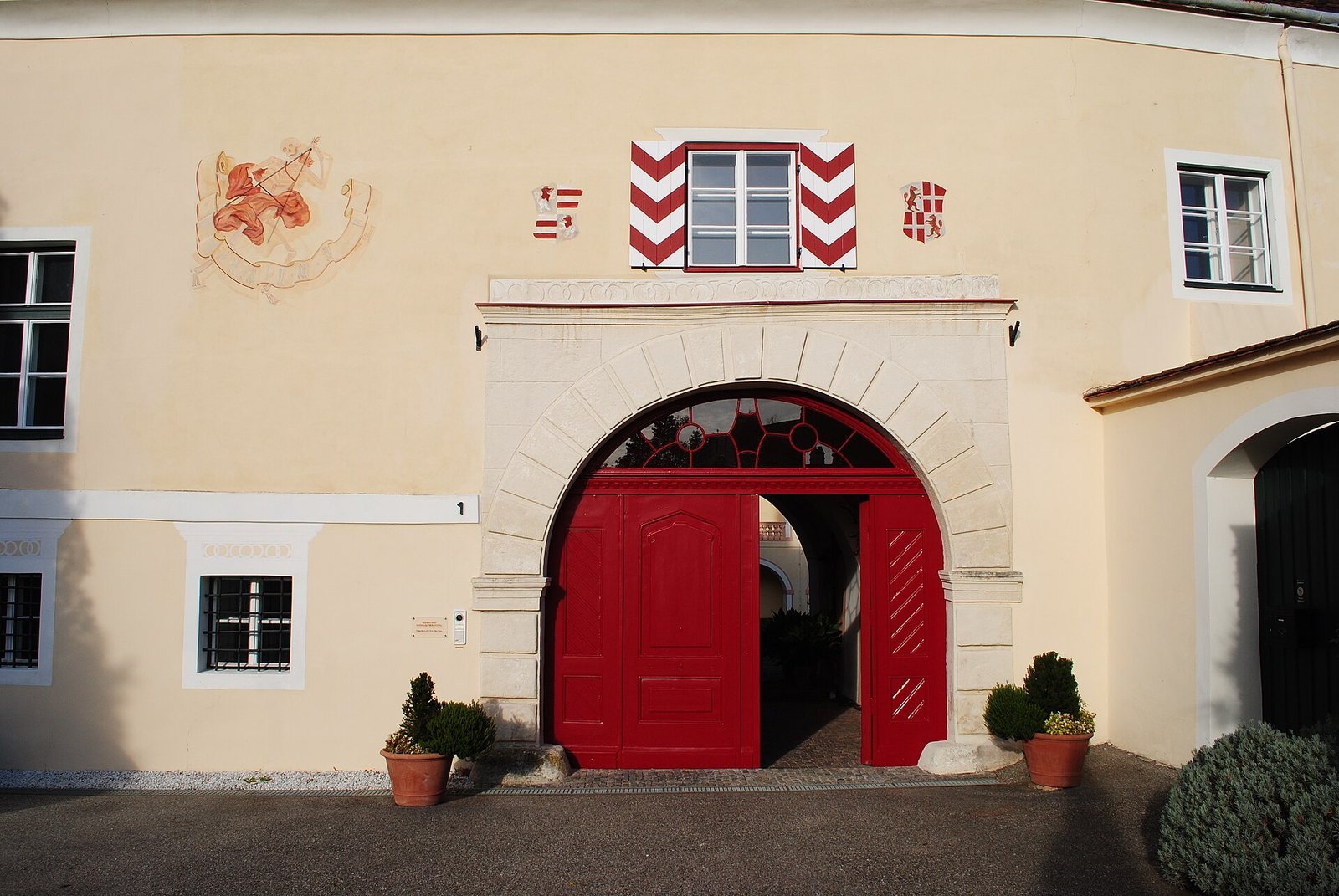
The courtyard has rows of arches supported by pillars, and a portal forms part of the complex. Three small turrets on the façade date to the nineteenth-century alterations.