Aystetten Castle: A Historic Estate in Germany
Site at a Glance
- Rating
- 4.6
- Popularity
- Low
- Country
- Germany
- Primary era
- Early Modern
- Eras represented
- Medieval, Early Modern, Modern
- Civilizations
- German, Holy Roman Empire, Kingdom of Bavaria
- Site type
- Domestic
- Remains
- Castle
On this page7 sections
History
Aystetten Castle is a historic castle and estate in the municipality of Aystetten, Germany, first recorded in 1428 as a fief, a landholding granted in return for obligations, from the Bishop of Augsburg to the Langenmantel von Radau family.
Early ownership
The estate later passed among Augsburg’s prominent civic families, including the Eggenbergers and Herwarths. In 1545, the village and castle went to the Monastery of the Holy Cross. Anton Fugger, a leading member of Augsburg’s merchant-banking family, acquired them in 1582, then sold the estate to the Fleckheimers in 1615 because of heavy debts.
War damage and rebuilding
The Thirty Years’ War, a major European conflict fought from 1618 to 1648, left the castle almost entirely destroyed. Leonhard Carl Sulzer acquired the property in 1693 and rebuilt it. After a short period under the Langenmantel family, the estate passed in 1729 to banker Christian von Münch, who called himself “Münch auf Aystetten.”
Münch’s expansion
Münch enlarged the fortified castle to twice its former size, added service buildings, and laid out further gardens. His interest in China also had a commercial dimension: he planted mulberry trees and began establishing a silkworm-rearing operation.
Later alterations and ownership
Johann Paul von Stetten acquired the castle and its associated properties in 1858. Extensive renovation and alteration followed in the latter half of the nineteenth century. From 1908 to 1911, Max von Stetten commissioned further changes to the gables, a terrace on the west side, and a new estate outbuilding. A restoration from 1952 to 1958 renewed the gable crenellations; part of the old service buildings was demolished in 1963, and the southern castle wall was partly taken down a few years later. The porcelain room was comprehensively renovated in 1994–95. The von Stetten family remains the owner, now in its sixth generation.
Remains
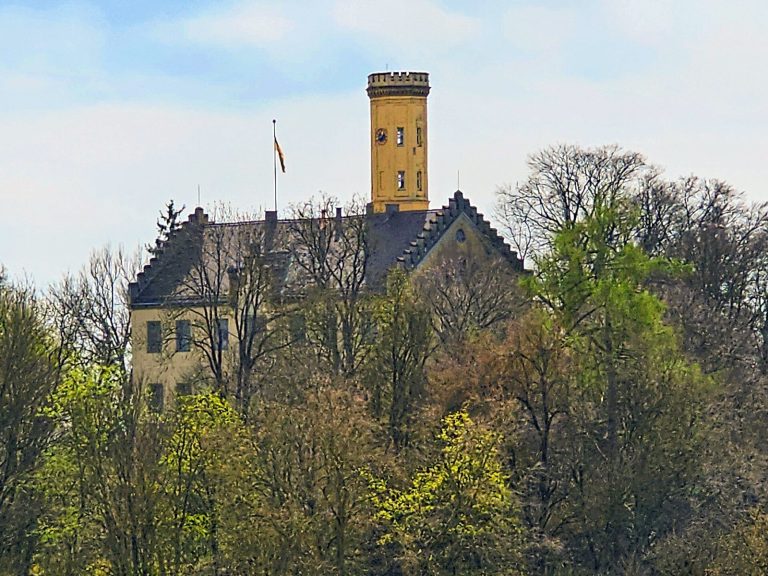
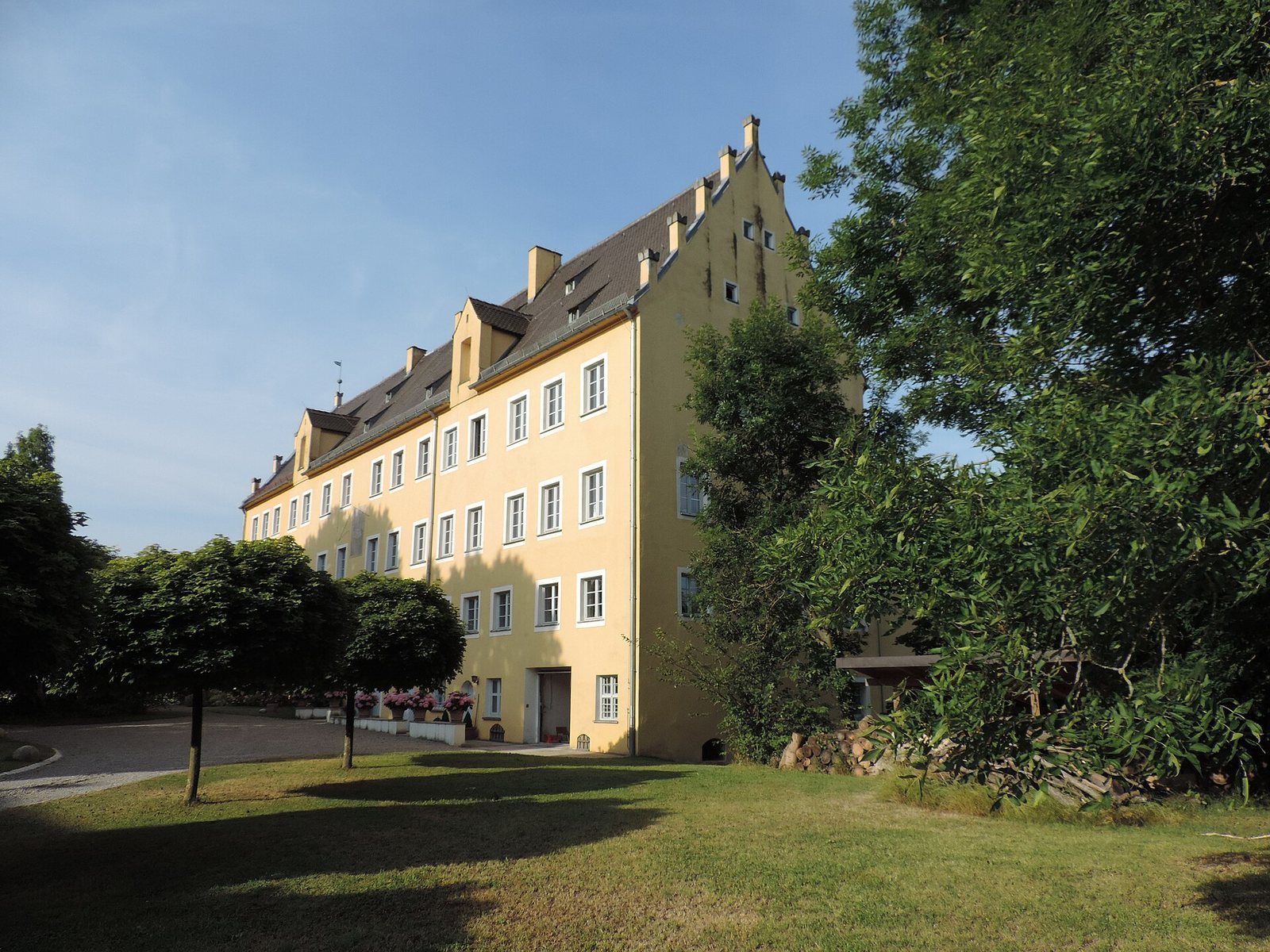
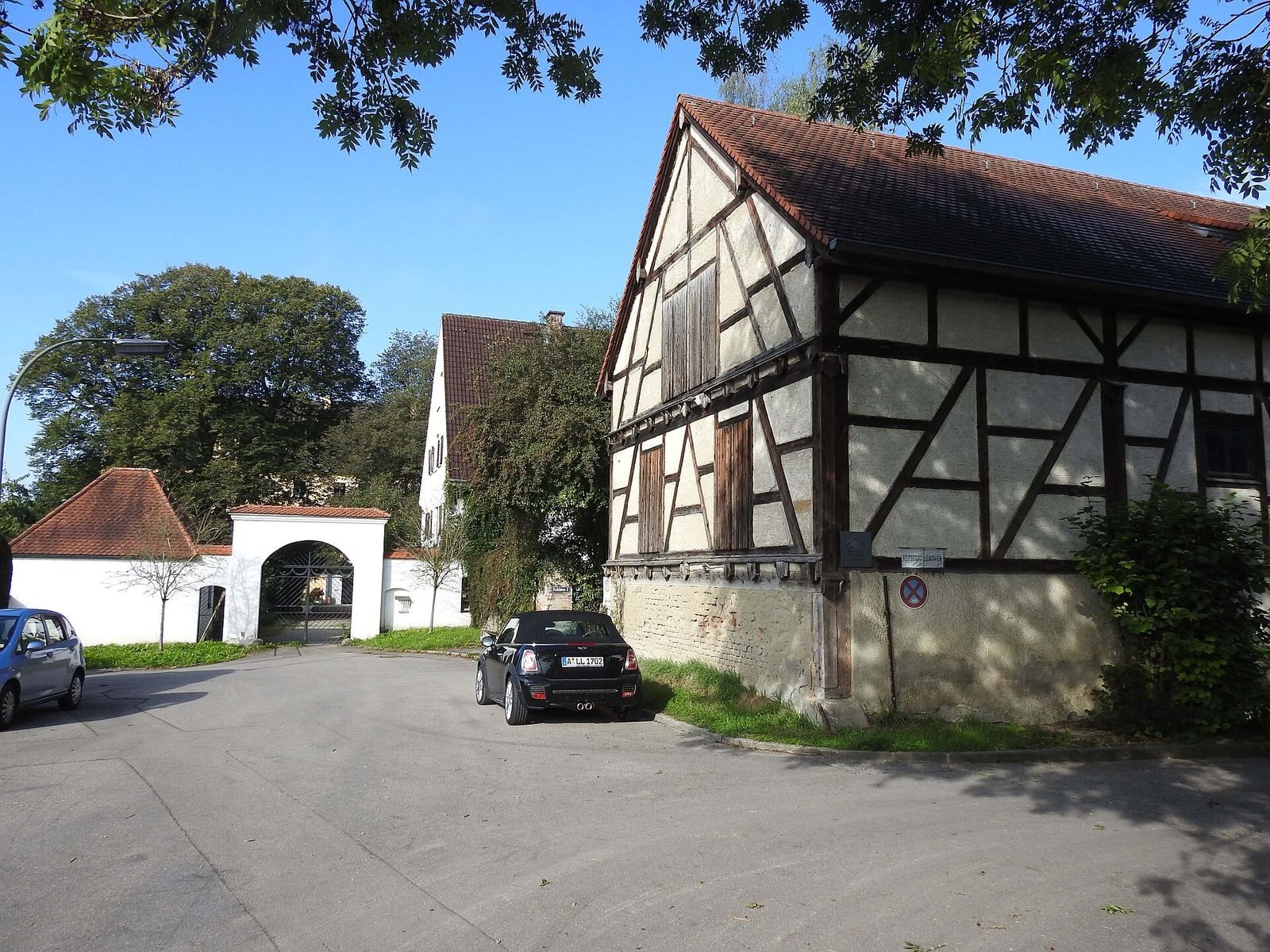
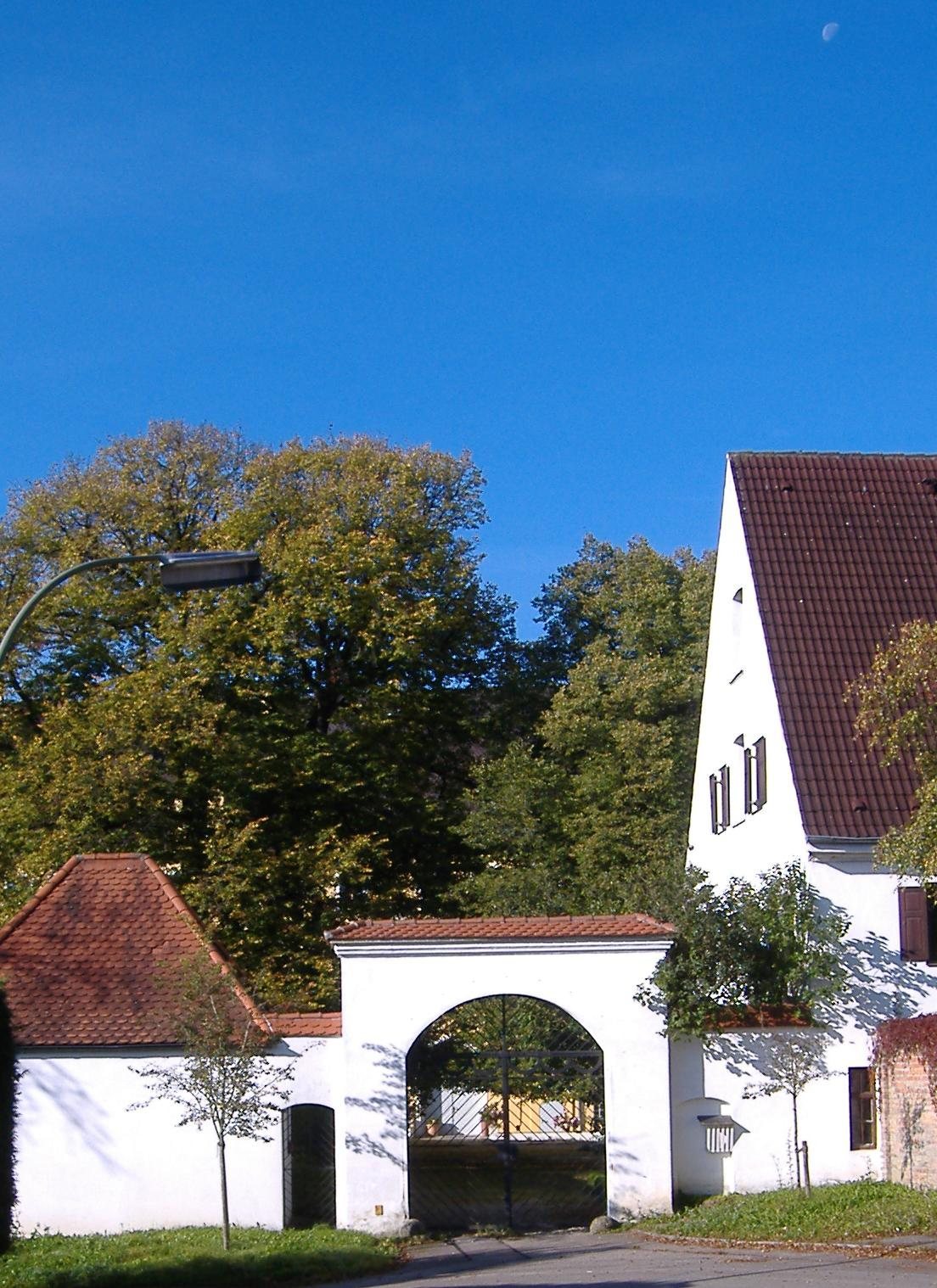
The castle stands at the exposed end of a small ridge about 12 kilometres northwest of Augsburg. Its principal building is an elongated, three-storey structure arranged as a single wing beneath a gabled roof. Defensive works once enclosed the castle; two towers and a few sections of wall survive. The gables have historicizing forms, and their forked, swallowtail-shaped battlements were reconstructed in that earlier style. The west-side terrace and an estate outbuilding form part of the later arrangement.
Interior features
Sulzer’s rebuilding included notable stucco ceilings. The castle also contains a porcelain room in a light, Rocaille style, an ornamental approach associated with delicate, asymmetrical forms. Christian von Münch furnished it with valuable Chinese faience, a type of glazed earthenware, decorated with fanciful images reflecting contemporary ideas about China.