Kloster Hiddensee: A Cistercian Abbey in Germany
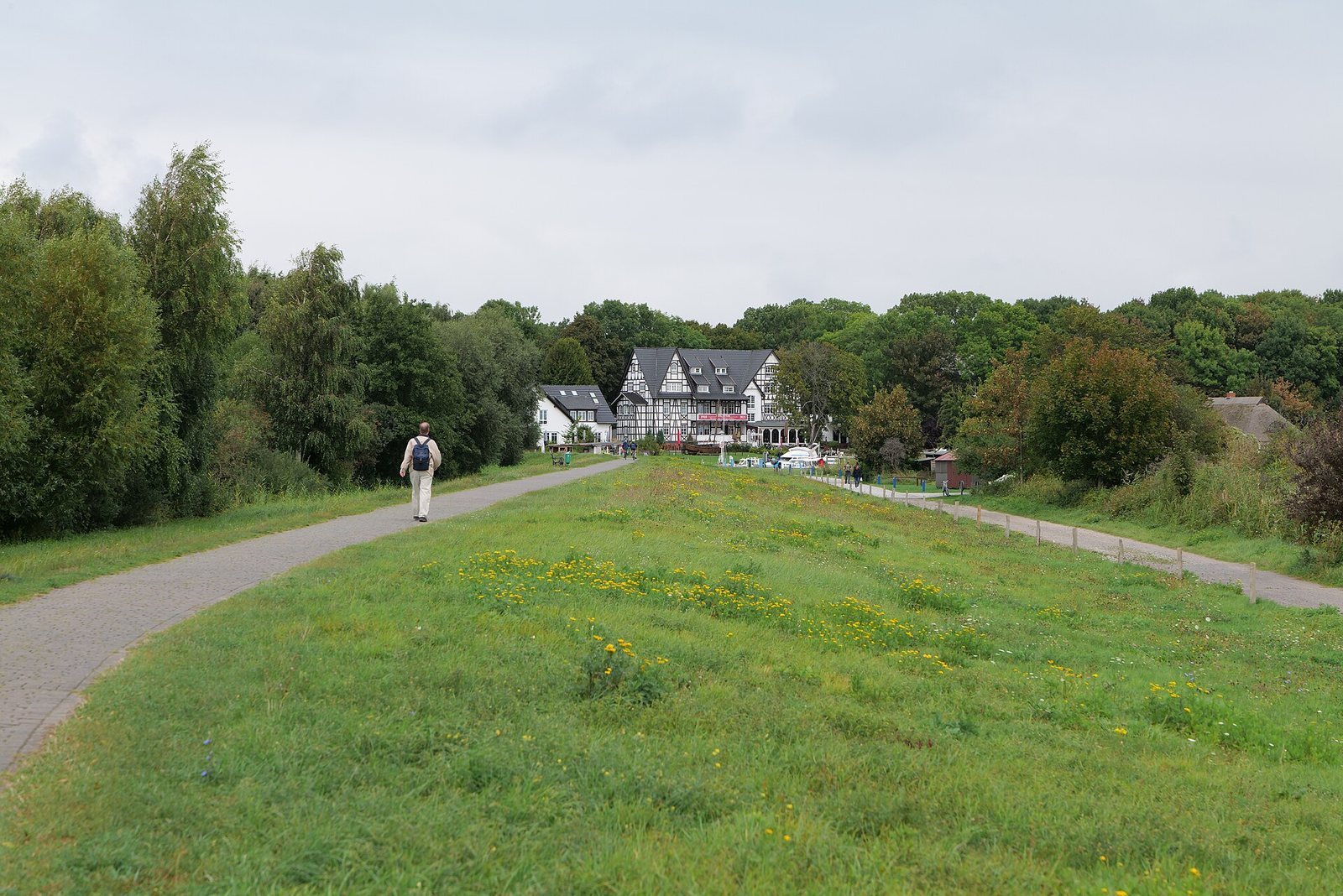
Site at a Glance
- Popularity
- Medium
- Country
- Germany
- Primary era
- Medieval
- Eras represented
- Medieval
- Civilizations
- Holy Roman Empire
- Site type
- Religious
- Remains
- Monastery
On this page12 sections
History
Kloster Hiddensee was a Cistercian abbey near the harbor of the present settlement of Kloster, on Hiddensee in Germany. Dedicated to St Nicholas, it operated from the 13th century until its dissolution in 1536. The Cistercians were a Catholic monastic order, and Kloster Hiddensee was founded as a daughter house, a monastery established by a parent house, of Neuenkamp. It belonged to the lineage of Morimond, one of the order’s four primary abbeys. The monastery was also known early as Nikolauskamp, and the later settlement at the site took its name from the abbey.
Foundation and early endowment
On 13 April 1296, Prince Wizlaw II of Rügen and his sons Wizlaw III and Sambor granted Hiddensee to Neuenkamp to establish the new abbey. The endowment included fishing rights in the waters between Hiddensee, Rügen, and the mainland, as well as the mainland village of Zarrenzin. Neuenkamp also bought Zingst for 2,000 marks in Sundish pennies for the foundation, except for a meadow belonging to the town of Barth.
The convent arrived in 1298, but claims by others to land and rights on Hiddensee and Zingst remained unsettled. In 1306, the Sundische Wiese had to be returned to Stralsund. Neuenkamp provided the new house with three salt pans at Lüneburg, installations where brine was heated to produce salt. These revenues remained important to the abbey’s finances.
Community and economy
The abbey had an average of 12 monks, alongside other lay residents. During its early years, the village of Plogshagen was established; it is now part of Neuendorf. The Cistercians also created two granges, or monastic farms. In 1299, the priest of Schaprode transferred pastoral care on Hiddensee to the abbey in return for an annual payment. The arrangement spared him difficult sea crossings in bad weather. Pope Clement V, head of the Catholic Church from 1305 to 1314, confirmed it in 1310, although Cistercians did not usually take on parish duties.
From 1300, the abbey acquired holdings on Rügen, especially around Schaprode and Trent and on the peninsulas of Wittow and Jasmund. These properties never formed one large, continuous estate, leaving income from the Lüneburg salt pans essential. A dispute with Stralsund over Vitte, a herring-landing place, arose in 1426. Between 1475 and 1495, the abbey took out increasing numbers of loans, reflecting its economic decline. In 1534, income from salt slightly exceeded what its lands brought in.
Fire, dissolution, and later use
A fire struck the monastery in 1373, and another in 1389 nearly destroyed it. The monastery church was reconsecrated in 1410.
In 1525, Duke George of Pomerania ordered an inventory of the abbey’s valuables, including jewels and silk vestments. Most were taken to Wolgast. The abbey was dissolved in 1536. After the Diocese of Roskilde, the church district with jurisdiction over Hiddensee, was secularized, Abbot Georg Vilter and the convent surrendered the monastery to the Pomeranian dukes in 1538. Vilter, abbot from 1513 to 1536, moved to the Hiddensee abbot’s residence in Stralsund and was buried in that city’s St Nicholas Church in 1560.
A ducal rent official moved into the abandoned monastery. When the Hiddensee rent office was merged with Bergen in 1570, the buildings began to decay. They suffered further damage during the Thirty Years’ War, a major European conflict fought from 1618 to 1648, and their stones were reused to build a manor farm at Kloster. The former monastic estate continued as agricultural property. Berendt Christoph von Wolffradt inherited land there from his father, and the property later passed to the Wüstenberg family.
Building work in 1954–55 exposed the southern wing of the monastic complex. Archaeological excavations by the University of Greifswald’s Institute of Art History followed from 1959 to 1961.
Remains
The abbey occupied the northern part of Hiddensee near the harbor of the present settlement of Kloster. Excavations have outlined a rectangular monastic enclosure and its internal room arrangement, with the abbey church identified as a large, cross-shaped building within the complex.
Monastic enclosure and church
Enclosure
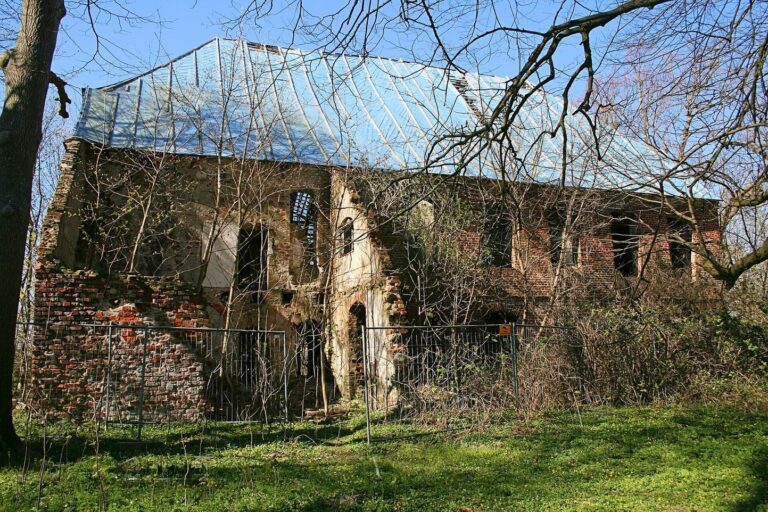
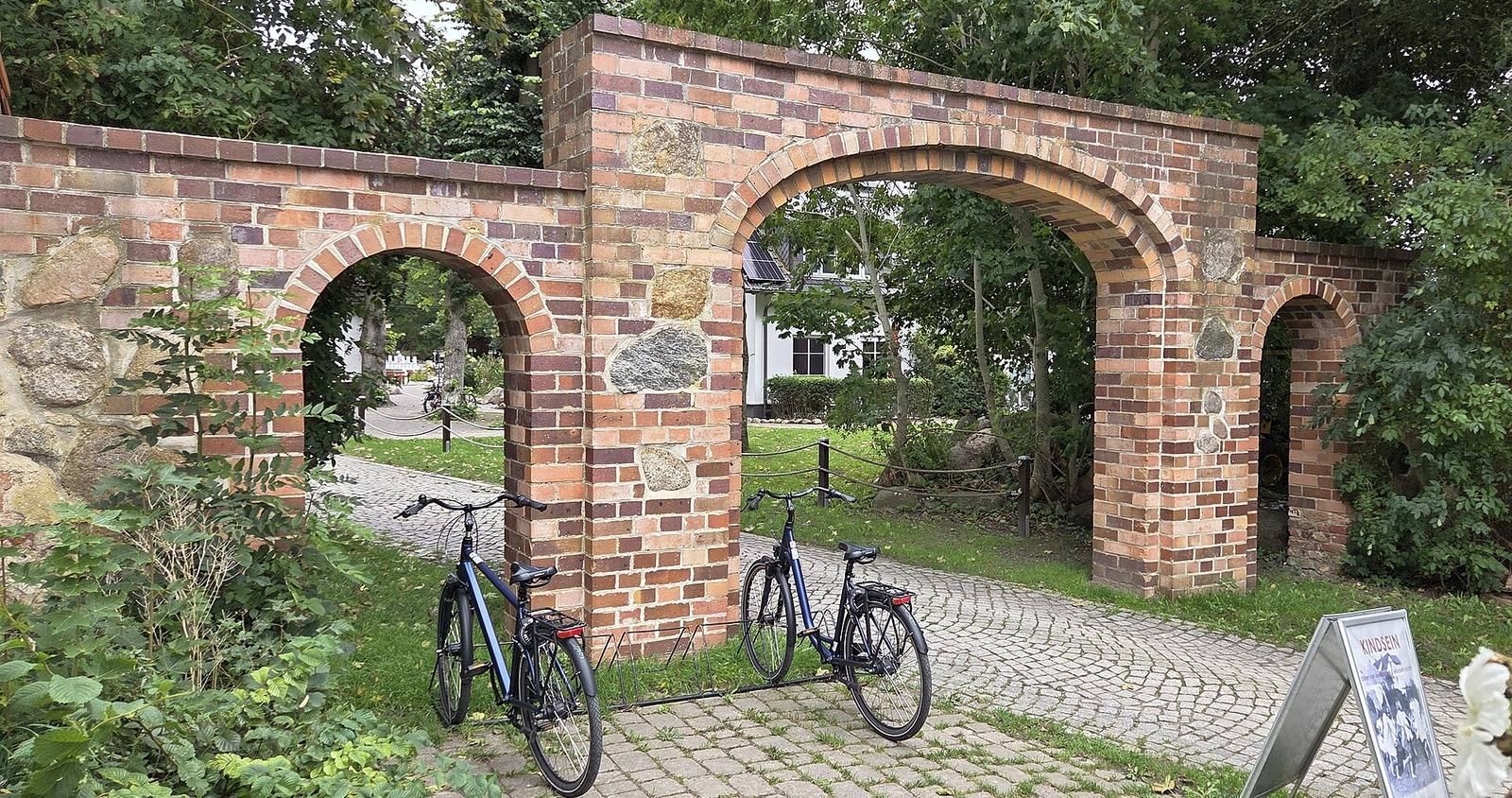
The excavated plan traces a rectangular monastic enclosure, the restricted residential and communal area of a monastery, with its rooms recorded in outline. The surviving remains include the old entrance gate and a fragment of wall.
Abbey church
The church was a three-aisled building, arranged in three lengthwise spaces, with nine bays, or divisions along its length. A transept, the part crossing the main body of a church, gave its plan a crosswise form.
Island chapels and lighthouse
Northern chapel
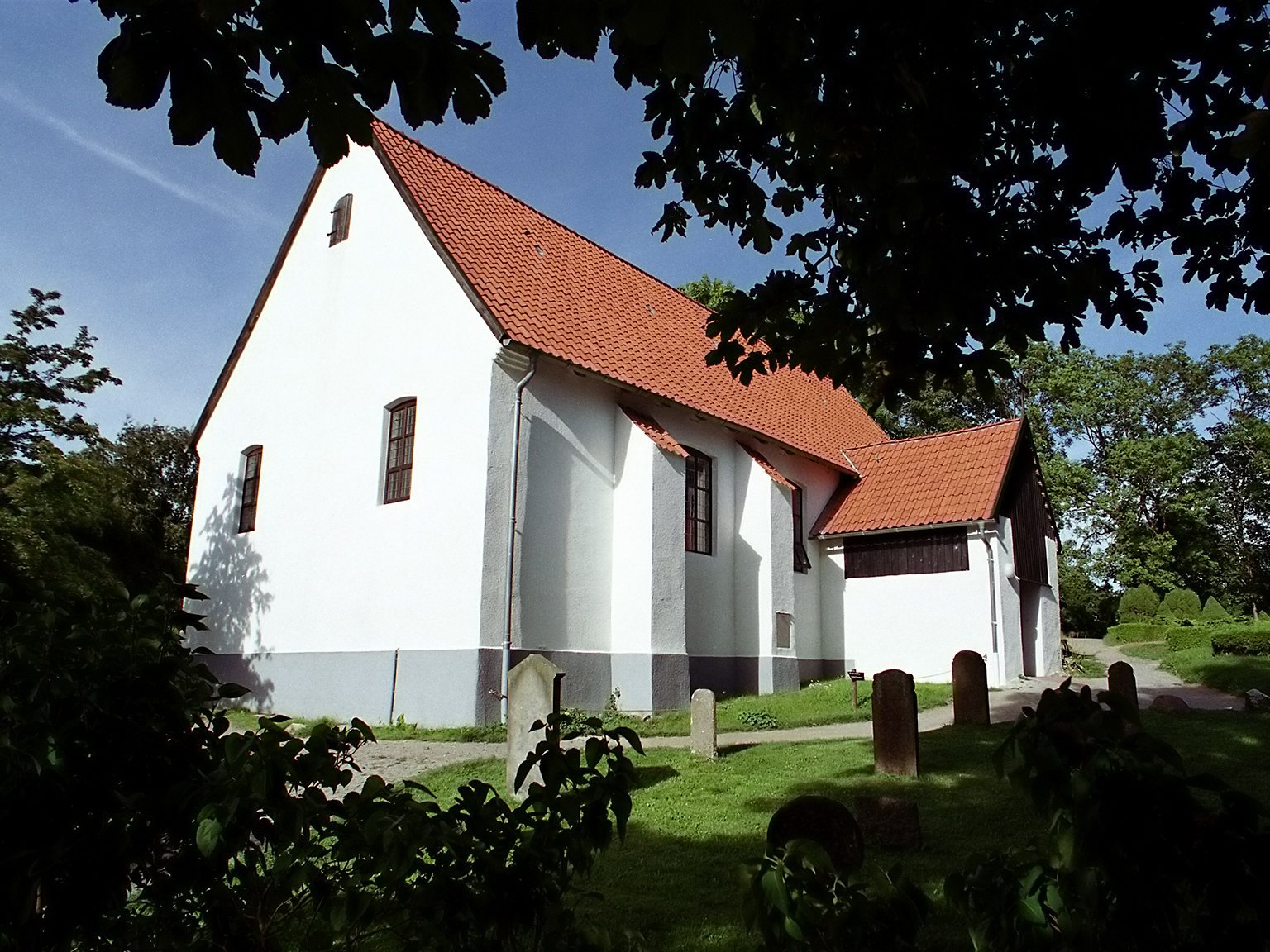
A chapel built in the north of the island became the parish church. It survives today as the Hiddensee Island Church and is the last surviving monastic building. The church belongs to the Evangelical Lutheran Church in Northern Germany.
Gellen chapel
A chapel on the southern Gellen peninsula was consecrated in 1302. With the bishop of Roskilde’s permission, a baptismal font was installed there in 1306. In 1332, the font was moved to the newly built chapel in the north of the island.
Gellen lighthouse
Under an agreement made in 1306, Stralsund provided the building for a lighthouse on Gellen. The monastery supplied its staff and maintained the light.