Gazi Husrev-beg Madrasa: An Ottoman Islamic School in Sarajevo
Site at a Glance
- Popularity
- Medium
- Country
- Bosnia and Herzegovina
- Primary era
- Early Modern
- Eras represented
- Early Modern
- Civilizations
- Ottoman
- Site type
- Religious
- Remains
- Madrasa
On this page10 sections
History
The Gazi Husrev-beg Madrasa is an Islamic secondary school in Sarajevo, Bosnia and Herzegovina, founded on 8 January 1537 by Gazi Husrev-beg, the Ottoman governor of Bosnia. It is Sarajevo’s oldest secondary theological school. Established as his second endowment and supported by a waqf, a charitable fund for a designated religious or public purpose, it became a Sunni institution, following the largest branch of Islam.
Ottoman foundation and teaching
Gazi Husrev-beg’s endowment charter called for a qualified scholar to teach religious and scholarly subjects. Students studied Qur’anic interpretation, hadith (reports about the Prophet Muhammad’s words and actions), Islamic jurisprudence and its foundations, philosophy, rhetoric, and theology. Learning took place in circles rather than graded classes, and study traditionally lasted 12 to 16 years. Graduates received an ijazah, a credential recognizing advanced learning.
During Ottoman rule, thousands of young men from varied backgrounds studied at the madrasa, including Bosniaks, Albanians, Arabs, and Turks. Under Austro-Hungarian occupation, the school took on the character of a lower secondary institution. The Sharia Judicial School, established in Sarajevo in 1881 and opened in 1887, belonged to the same period of change in religious education.
Reform and new curricula
A 1912 survey of Muslim religious education prompted wider reforms. In 1913, the male teachers’ institute Daru-l-muallimin joined the madrasa; it closed during the 1919–20 school year. On 22 December 1921, the madrasa and its hanikah, a Sufi lodge for dervishes, were formally united under the name Gazi Husrev-begova medresa. Secular subjects became more prominent, including mathematics, geography, natural history, calligraphy, drawing, and Bosnian.
Other initiatives reshaped education in Sarajevo. The Sarajevo District Madrasa began teaching in 1917 as a four-year vocational school and expanded to eight years in 1922. It was later dissolved amid wartime difficulties, funding shortages, and the establishment of other schools, including Gazi Husrev-beg Madrasa. A state-funded eight-year Sharia Gymnasium operated from 1918 to 1945, while a Higher Sharia-Theological School prepared senior religious officials from 1937 to 1945.
From 1930 to 1932, a trial program sought to establish an advanced madrasa within the institution, but it ended after two years. A women’s section opened in 1933 and became the Gazi Husrev-beg Women’s Madrasa in 1940. In 1939, the school was reorganized as a vocational secondary institution intended to educate future imams, religious teachers, and related professionals. Its teaching was arranged in two four-year cycles. From the 1940–41 school year, graduates could enter the Faculty of Philosophy in Zagreb.
War and postwar restrictions
The German invasion in April 1941, during the Second World War, interrupted teaching. From August 1941 until 1945, the madrasa operated temporarily in Đulagin dvor, a building constructed for an Islamic primary school. After the war, the school returned to Sarajevo, but communist rule in Yugoslavia sharply restricted Islamic education. The women’s school closed on 11 June 1949, and boys and girls began studying together. Material hardship led teachers and students to leave; no students graduated from 1948 to 1954 or from 1960 to 1962. In 1963, the school lost state recognition as a secondary school, and its program was reduced from eight years to five.
In January 1972, students went on strike, calling for director Abdullah Dervišević to resign, improved study conditions, and the addition of secular subjects. Dervišević resigned. Islamic community leaders and state security services sought to suppress the protest, while security services monitored the school and punished dissent. Serbian newspapers carried the students’ demands, but Bosnian-Herzegovinian newspapers did not. Sarajevo’s political leadership agreed that students would not be expelled or otherwise punished, while preventing further publicity for their demands. The strike ended in March without a clear resolution.
Renewal and the present-day school
The student publication Zemzem began in 1968 and has continued to appear. Its name refers to the Zamzam well in the Great Mosque in Mecca. The school returned to reconstructed Đulagin dvor in 1976 and shared the building with Sarajevo’s Faculty of Islamic Theology from the following year. The women’s section was re-established on 20 November 1978.
For the 1993–94 school year, the curriculum was revised to include more natural sciences, with mathematics, physics, and chemistry added alongside religious subjects, languages, and humanities. Today, the madrasa is a public, coeducational secondary school with a four-year program. Classes are taught in Bosnian under a curriculum adopted by the Islamic Community in Bosnia and Herzegovina and approved by the Sarajevo Canton education ministry. The school provides boarding, and graduates may continue to higher education in Bosnia and Herzegovina or at universities abroad. The old Kuršumlija madrasa and Ottoman-era facilities, including the library, are designated a National Monument of Bosnia and Herzegovina.
Remains
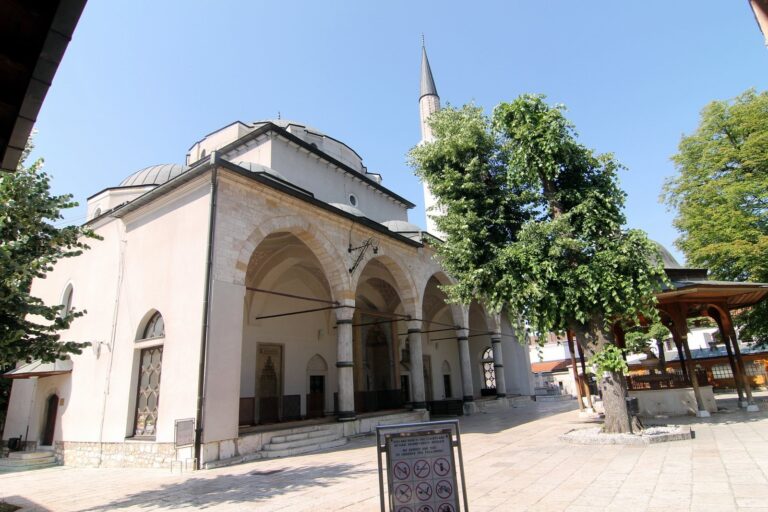
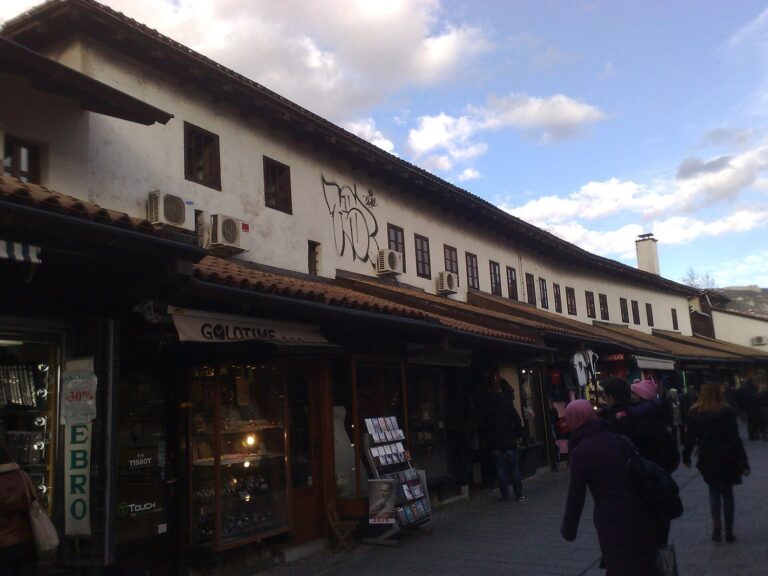
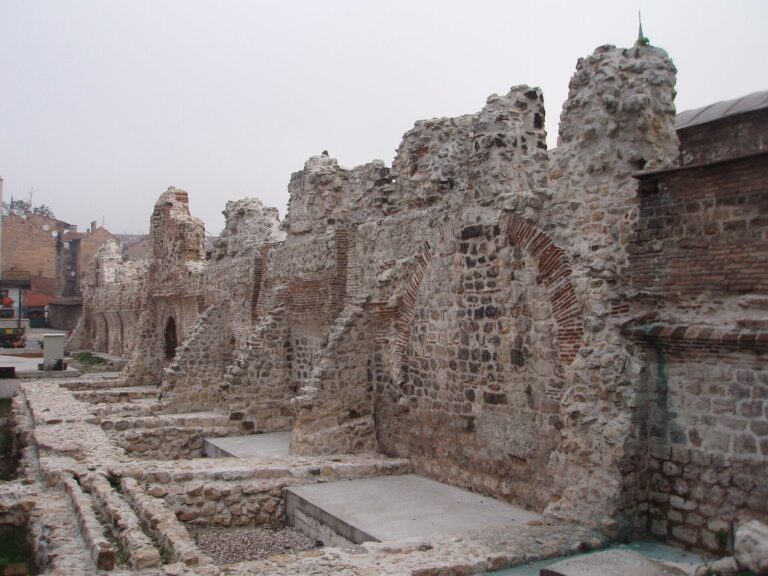
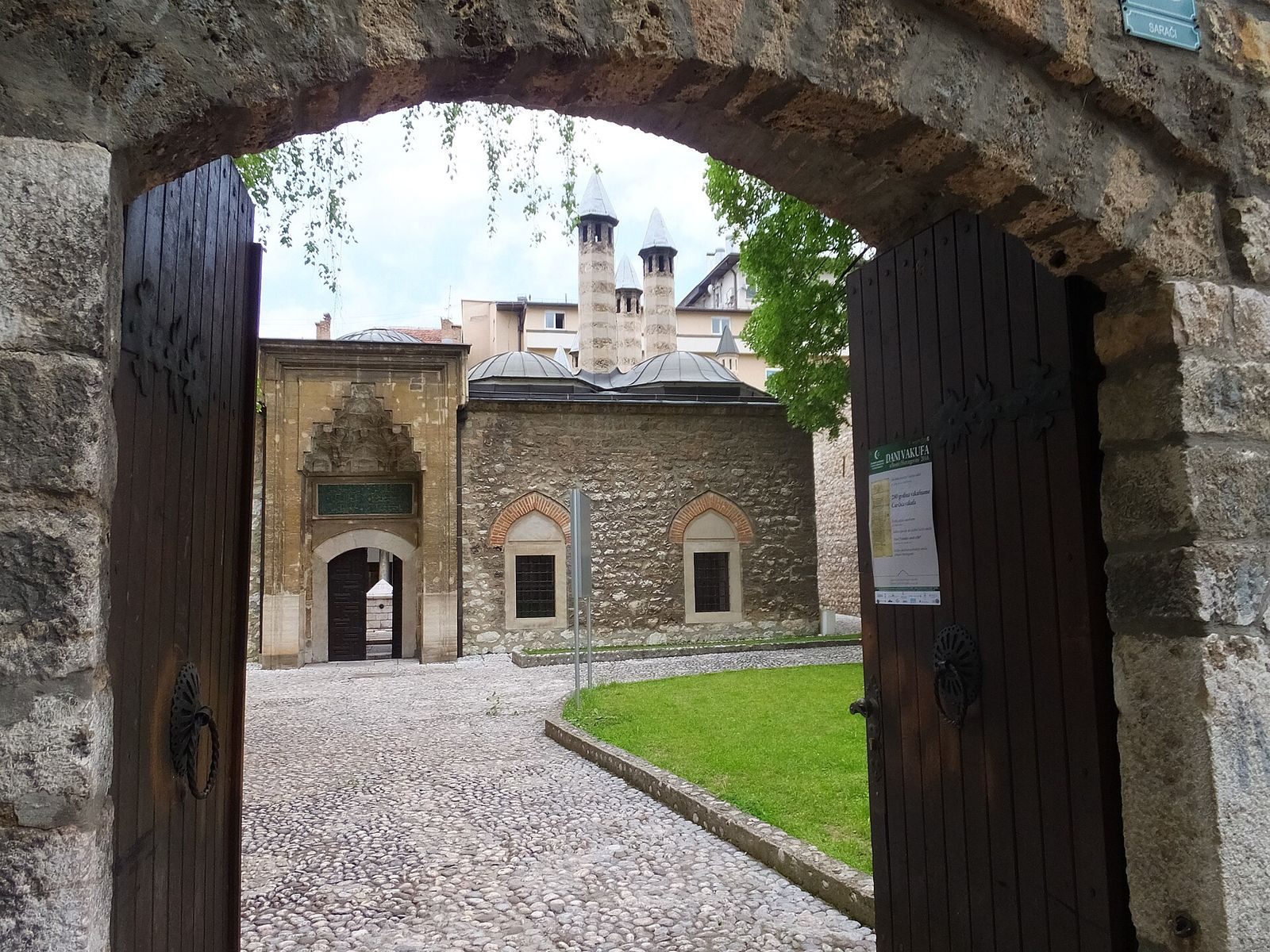
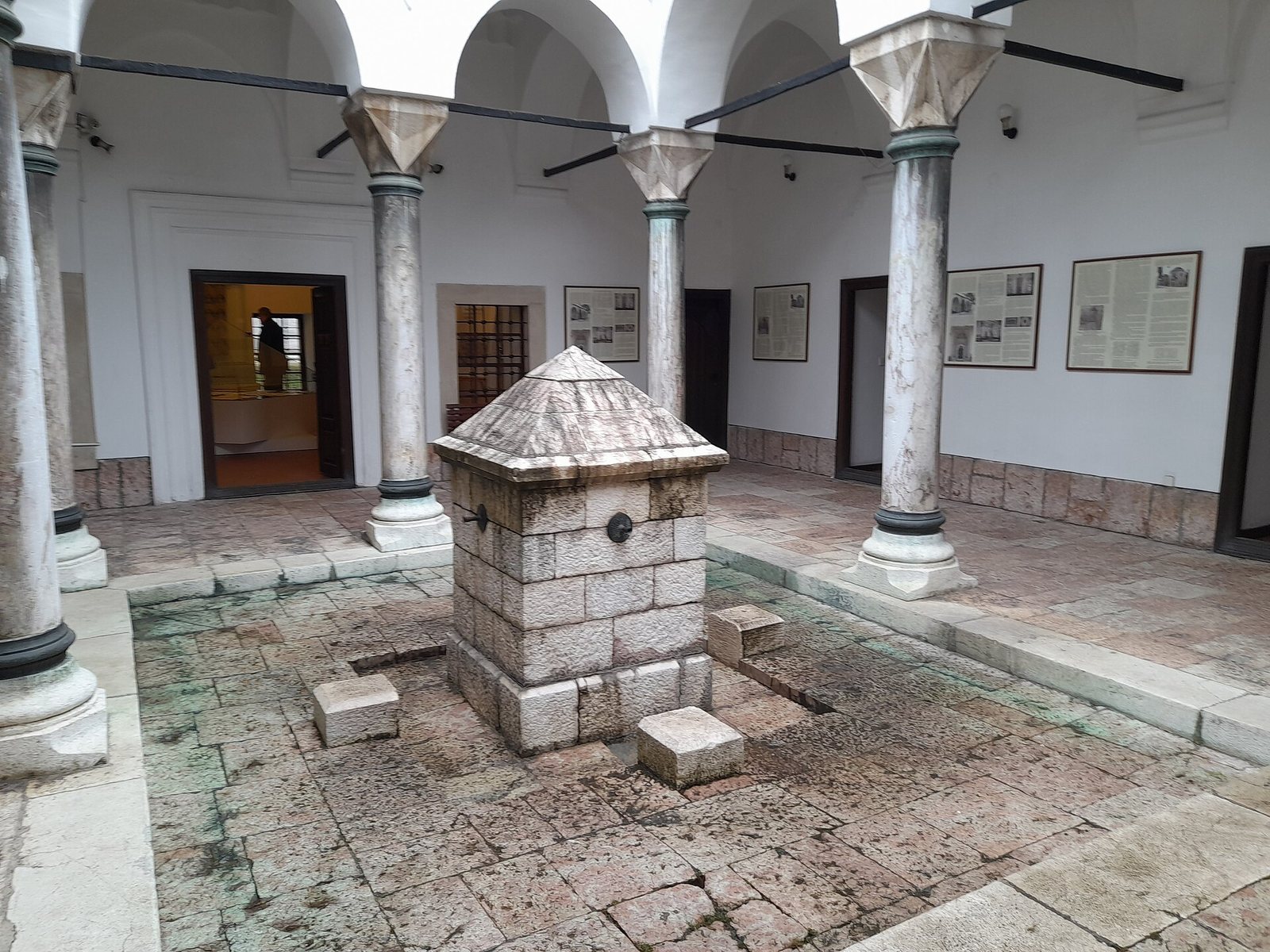
In Baščaršija, Sarajevo’s historic bazaar district, the madrasa belongs to a complex of old and newer buildings that includes the school, a library, and student accommodation. The original school followed the design tradition of madrasas in Istanbul. The women’s section is based at a separate address in Sarajevo.
Buildings and library
Kuršumlija Madrasa
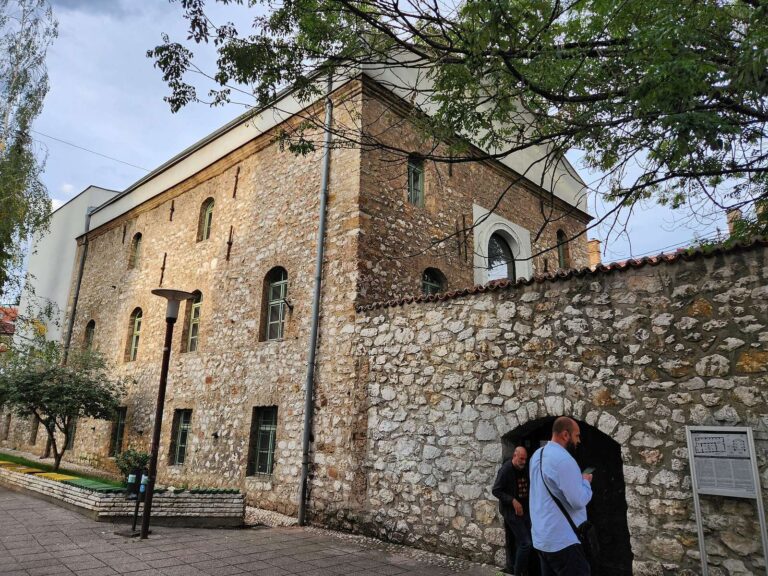
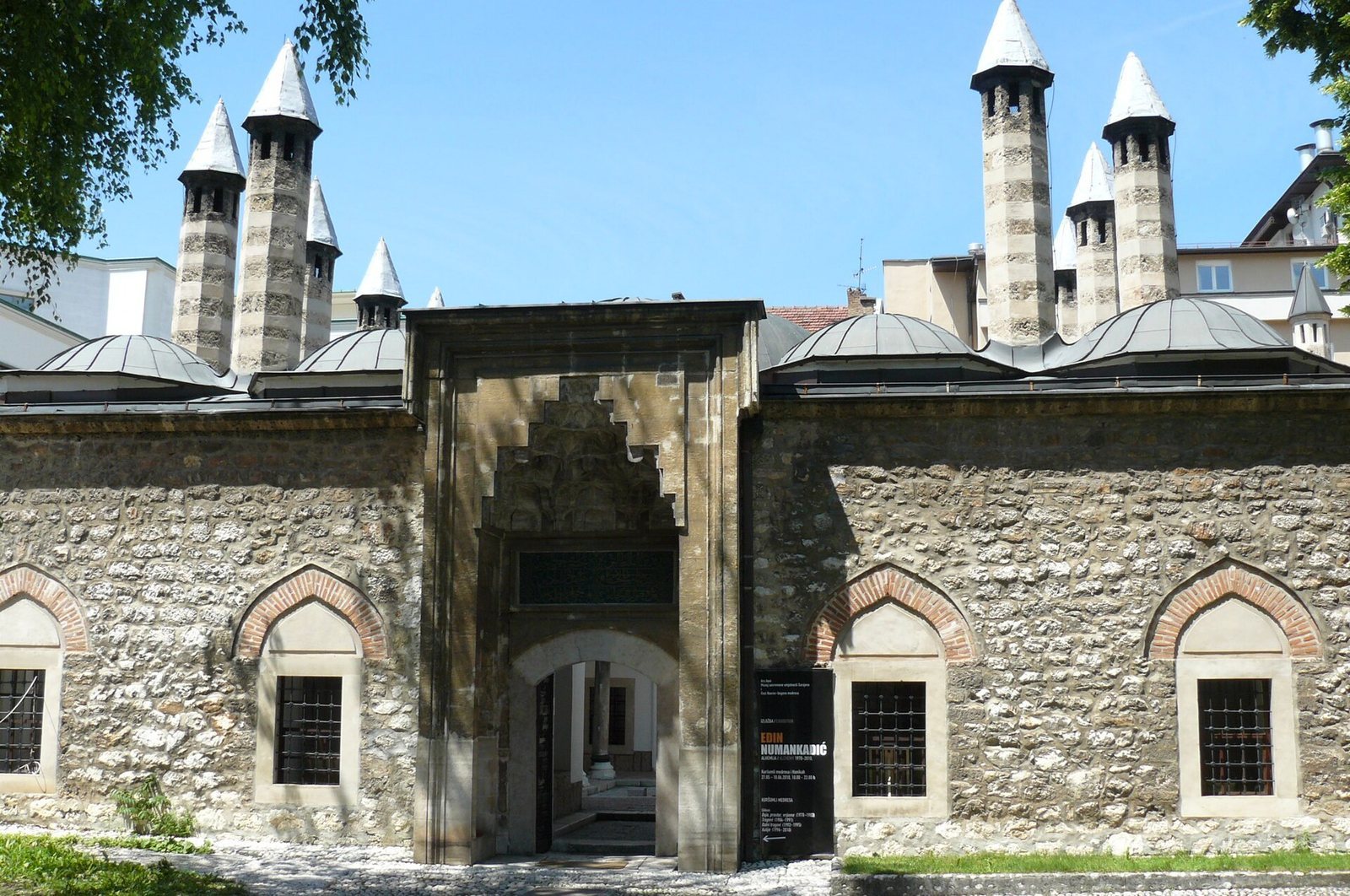
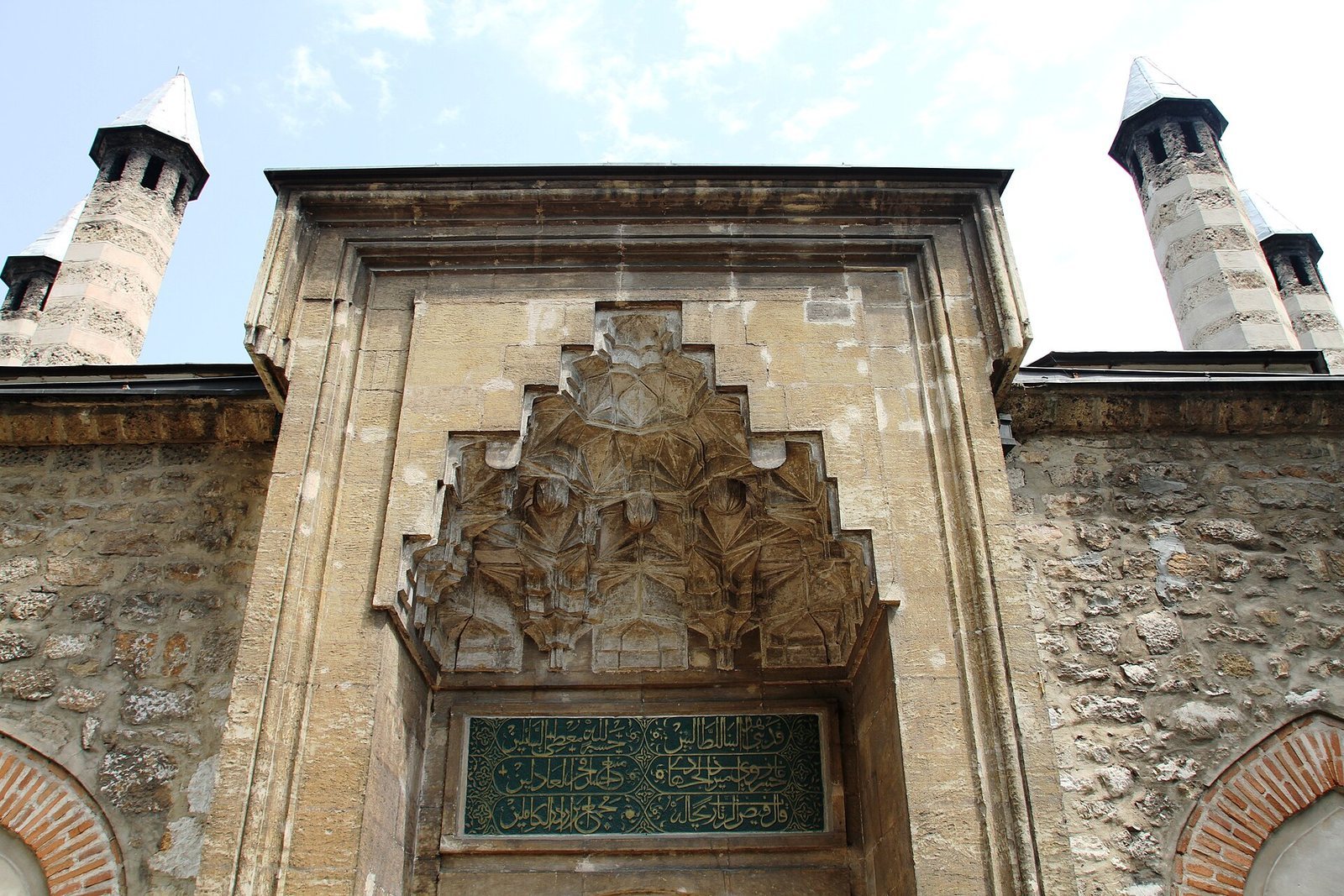
Designed by Acem Ali, an Ottoman architect of Persian origin, the madrasa was built in 1537 by masons, stonemasons, and blacksmiths from Dubrovnik and Sarajevo. Its lead-covered roof gave the building the name Kuršumlija, derived from the Turkish word for lead. The old madrasa building has undergone partial restoration.
Hanikah
The madrasa’s associated facilities included a hanikah, a lodge used by dervishes, members of Sufi religious communities.
Gazi Husrev-beg Library
Founded in 1537 as a public library and included in the complex, the Gazi Husrev-beg Library holds Islamic manuscripts, including manuscripts donated by the founder. Its collections also include books, journals, newspapers, documents, and photographs. The collection survived the Bosnian War and the Siege of Sarajevo.