Schöneck Castle: A Medieval Castle and Residence in Italy
Site at a Glance
- Popularity
- Medium
- Country
- Italy
- Primary era
- Medieval
- Eras represented
- Medieval
- Civilizations
- Holy Roman Empire
- Site type
- Military
- Remains
- Castle
On this page9 sections
History
Foundation and early lordship
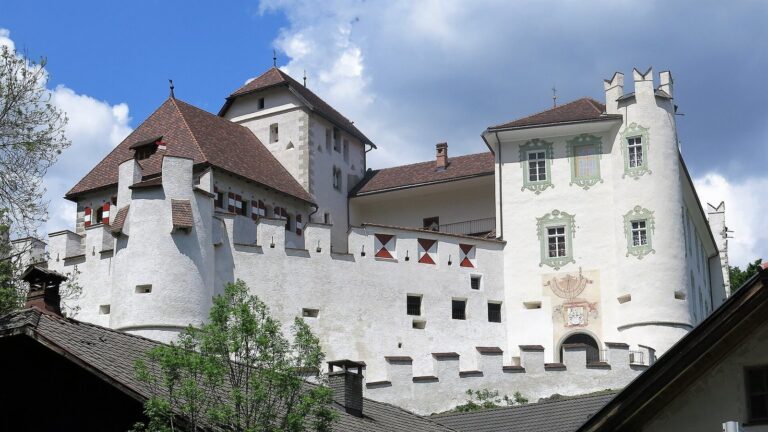
Schöneck Castle is a medieval castle near Mühlen and Issing, in the municipality of Pfalzen, Italy. The Lords of Rodeneck built it in the 12th century. First recorded in 1155 and again in 1164, it held full jurisdiction and began as a fief of the Bishopric of Brixen, an ecclesiastical territory governed by a bishop. It later passed to the Meinhardiner, a ruling dynasty associated with the County of Tyrol.
In 1189, Hugo von Schöneck set out on the Third Crusade, a military expedition to the eastern Mediterranean, and died during the campaign. Before leaving, he bequeathed his estates at Rodeneck, Vals, and Schalders to Neustift Abbey, a religious house near Brixen.
Jurisdiction and noble residence
Engelmar von Villanders held Schöneck’s judicial jurisdiction in 1342. After 1348, the Lords of Villanders’ possessions north of Haslacher Klause reverted to the Counts of Gorizia, who administered the lands through custodians. The counts were a regional ruling dynasty.
Friedrich von Wolkenstein resided at Schöneck in 1377. The castle is considered the most likely birthplace of his son Oswald von Wolkenstein, a late-medieval knight and poet-composer, although this identification is uncertain. Friedrich’s seals from the relevant years call him captain, or custodian, of Schöneck, an administrator responsible for a castle or its jurisdiction.
Later ownership and conversion
The Künigl family of Casteldarne owned the castle from the 17th through the 20th century. By the time they sold it in 1964, it had become a farmhouse. Its new owner undertook extensive renovations and converted it into a stately residence. The castle remains privately owned.
Remains
Castle structures
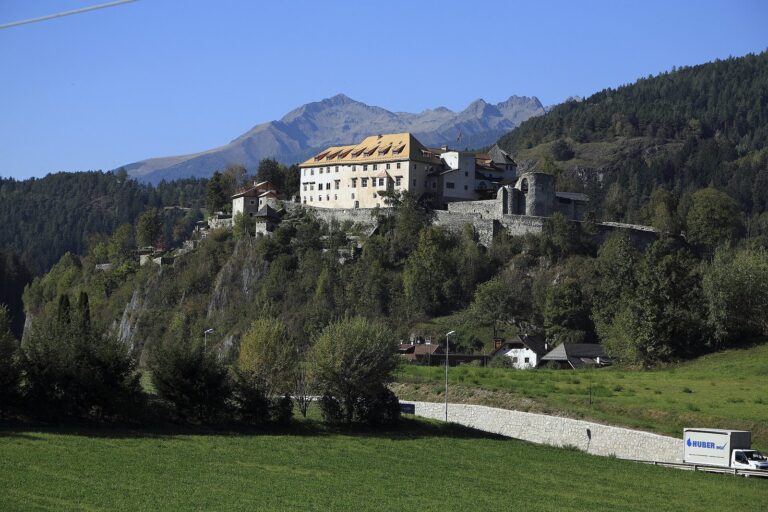
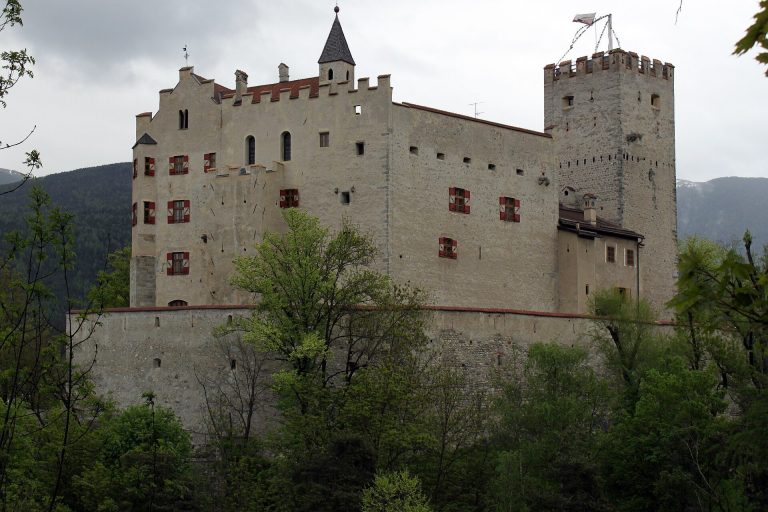
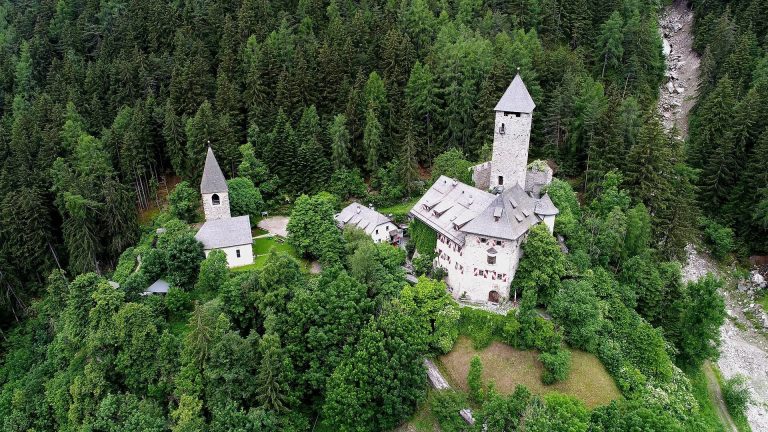
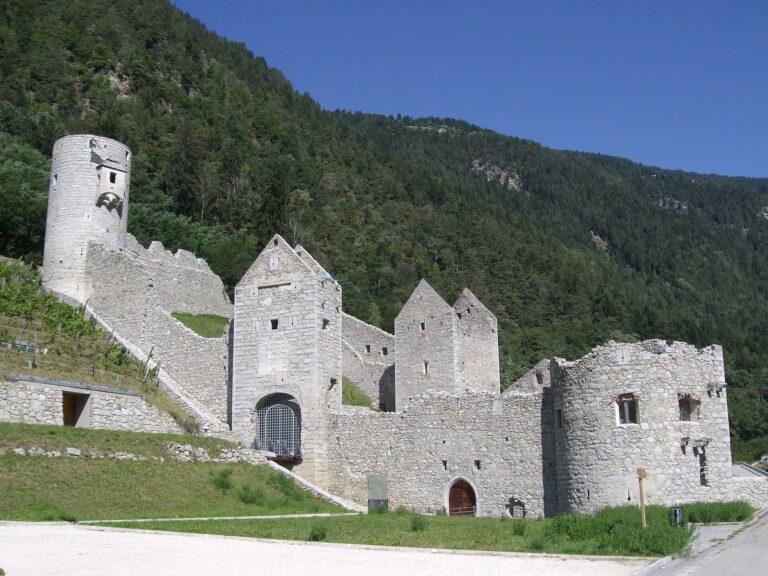
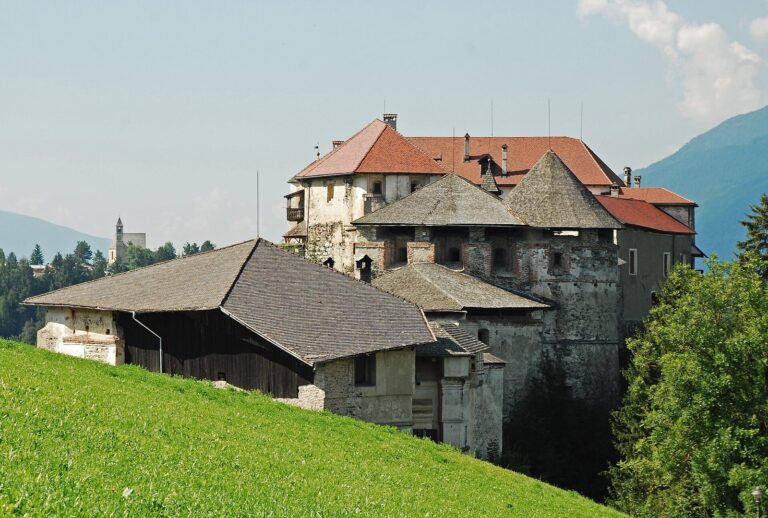
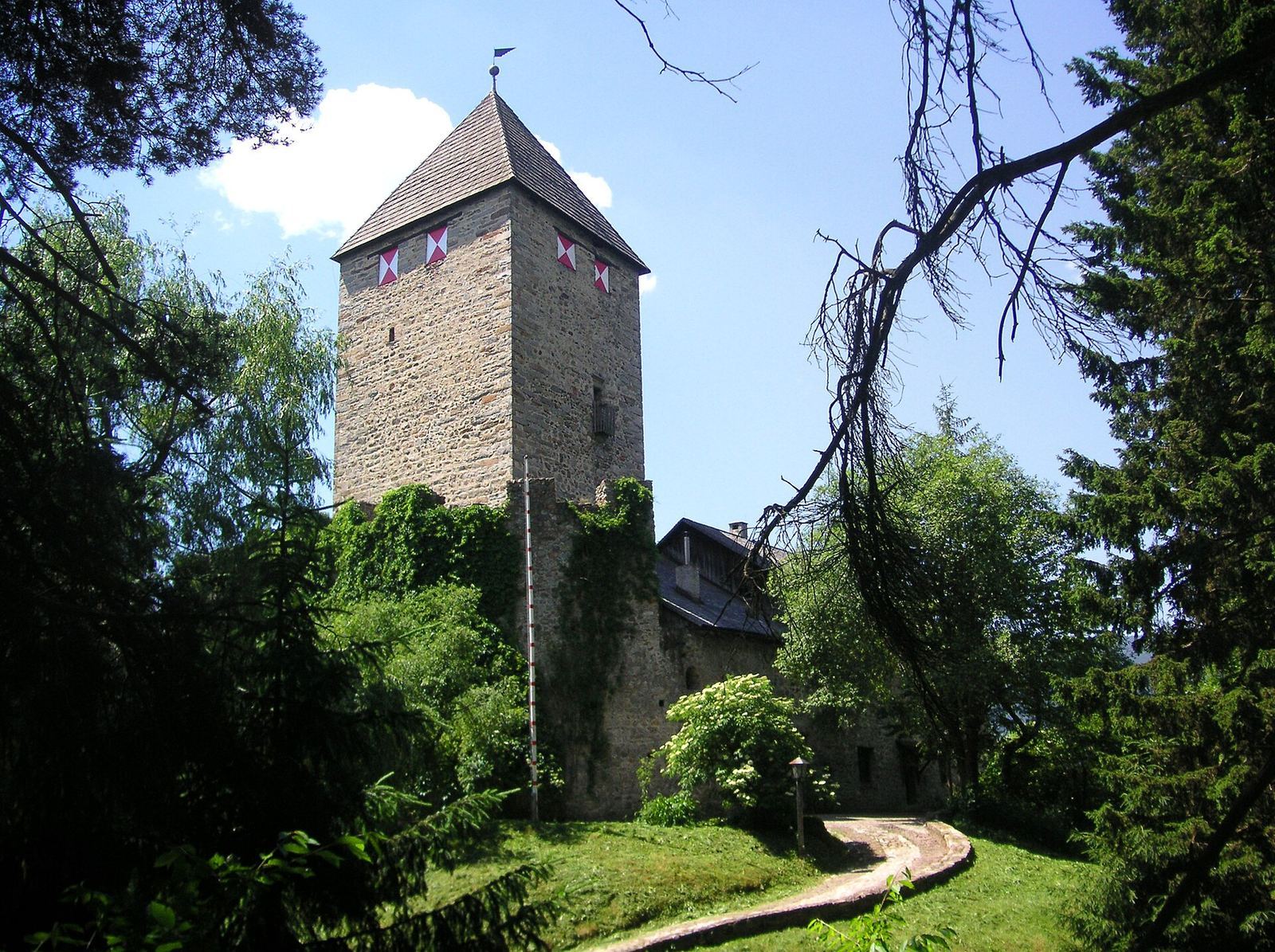
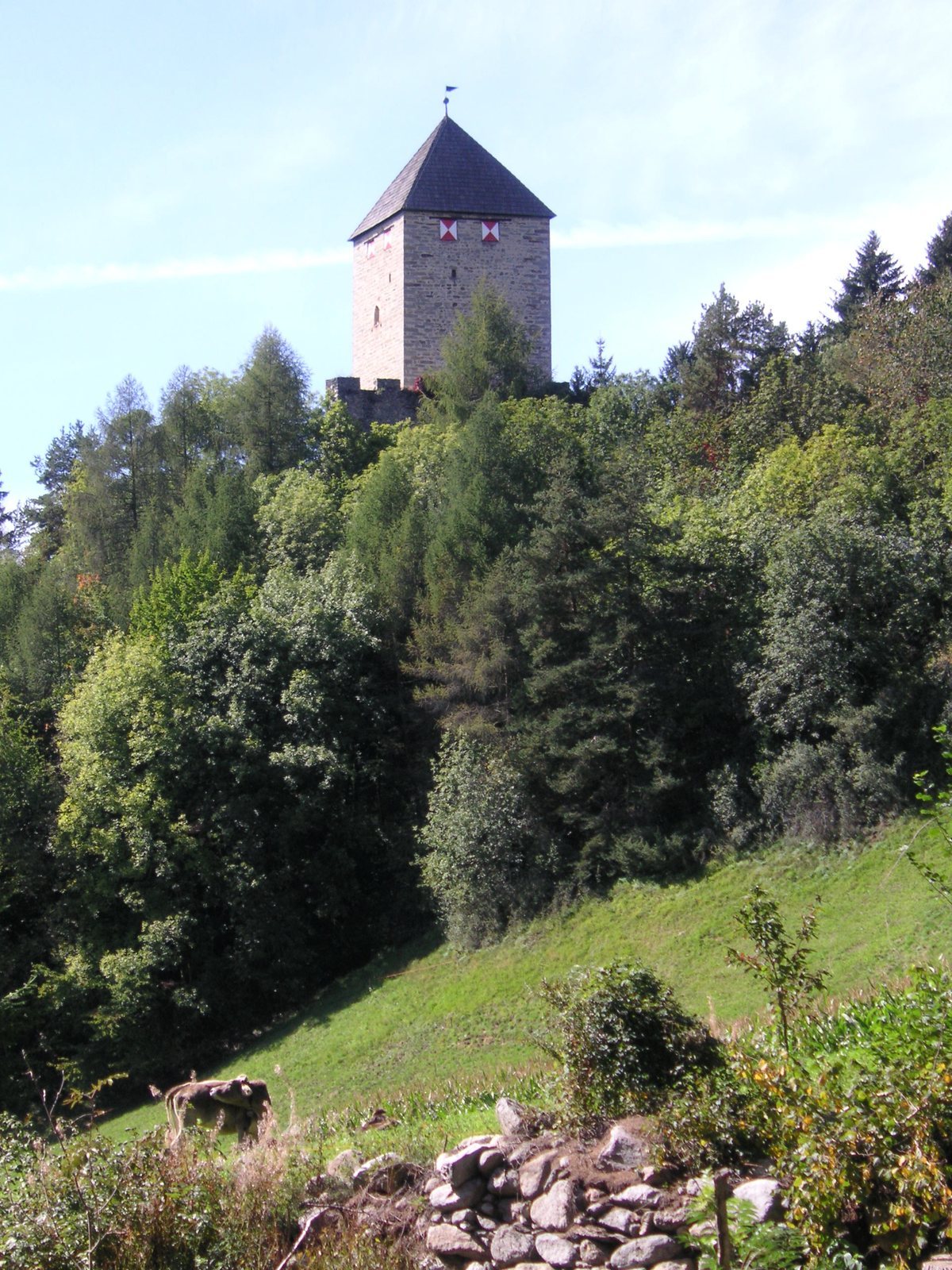
Schöneck stands on a broad hillside terrace north of the Puster Valley. The castle is partly preserved: its keep, or main defensive tower, outer defensive enclosure, and wall survive and have been restored. The palace also remains, along with parts of the original chapel.
Chapel and nearby farmstead
Chapel
The chapel is in ruins, but fragments of a fresco associated with Michael Pacher’s workshop survive. Pacher was a painter and sculptor active in the later 15th century.
Pacherhof farmstead
Remains of the former Pacherhof farmstead lie near the castle. The farmstead is identified as the birthplace of Michael Pacher.