Serralunga d’Alba Castle: A Fourteenth-Century Military Fortress
Site at a Glance
- Rating
- 4.6
- Popularity
- Very High
- Country
- Italy
- Primary era
- Medieval
- Eras represented
- Medieval
- Civilizations
- Unclassified
- Site type
- Military
- Remains
- Castle
On this page10 sections
History
Serralunga d’Alba Castle is a fourteenth-century military fortress in Italy, overlooking its namesake village and the Langhe vineyards. Commissioned in 1340 by the Falletti family, it was built between 1340 and 1357 under Pietrino and his son Goffredo II.
Before the fortress
A watchtower stood on the site in the twelfth century, held by local lords descended from Bonifacio del Vasto, a medieval noble associated with governing a frontier territory. In 1190, the fief, or lordship, passed to Manfredo of Saluzzo, a member of the ruling house of the Marquisate of Saluzzo in Piedmont. The Falletti family of Barolo later acquired it.
Military purpose and preservation
The Falletti had the earlier tower demolished and built the castle as a military stronghold, not a family home. Soldiers were its occupants, using it to repel attacks by invaders.
Few alterations were made over the following centuries, leaving the medieval structure largely intact. The Italian state acquired the castle in 1949 and carried out major restoration work to preserve it.
Remains
Vertical form and exterior
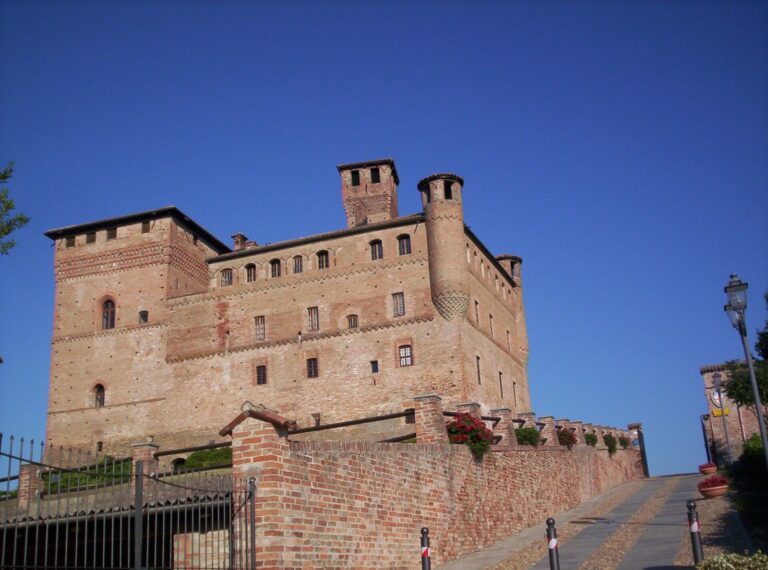
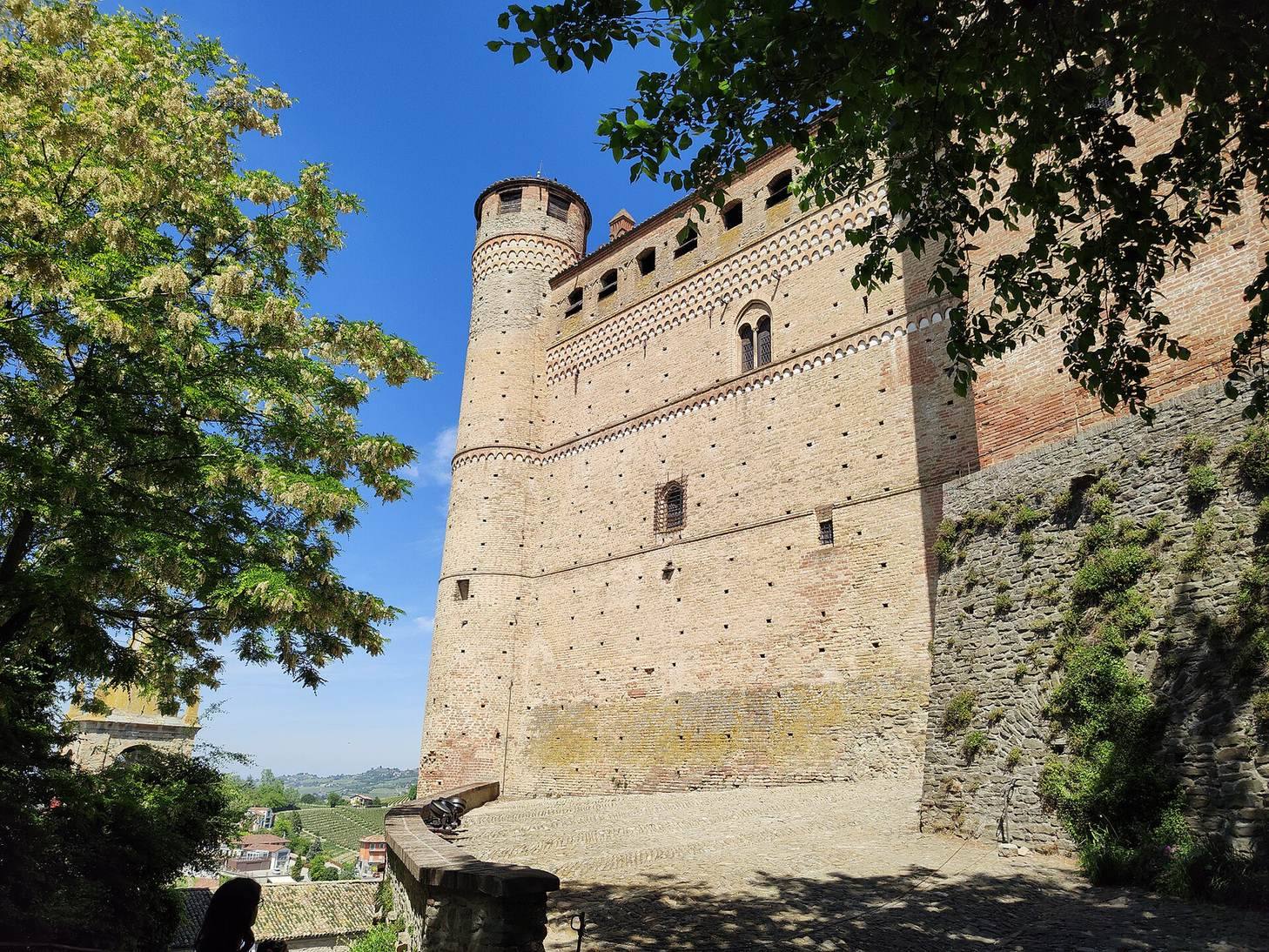
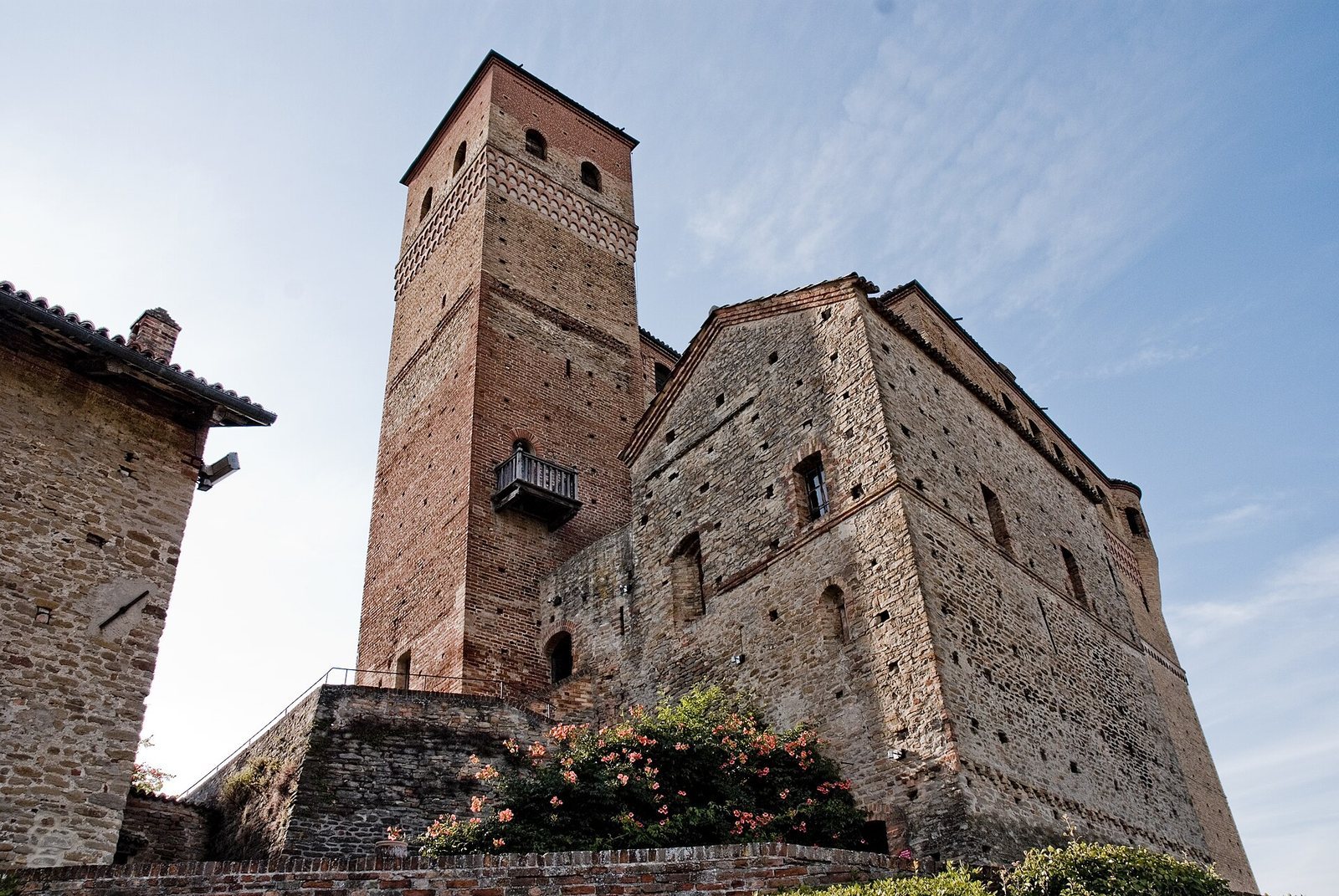
The castle stands on a hilltop and has a markedly vertical layout. Its elongated principal block is flanked by a cylindrical tower and a square tower.
Windows and upper walls
The exterior features two-light windows, each divided into two openings by a central support. Ghibelline merlons, or swallowtail-shaped battlements, and bands of small arches supported by projecting masonry also distinguish the walls.
Principal structures
The Palacium
The Palacium, the castle’s principal hall building, forms an elongated block with large halls arranged one above another.
Flanking towers
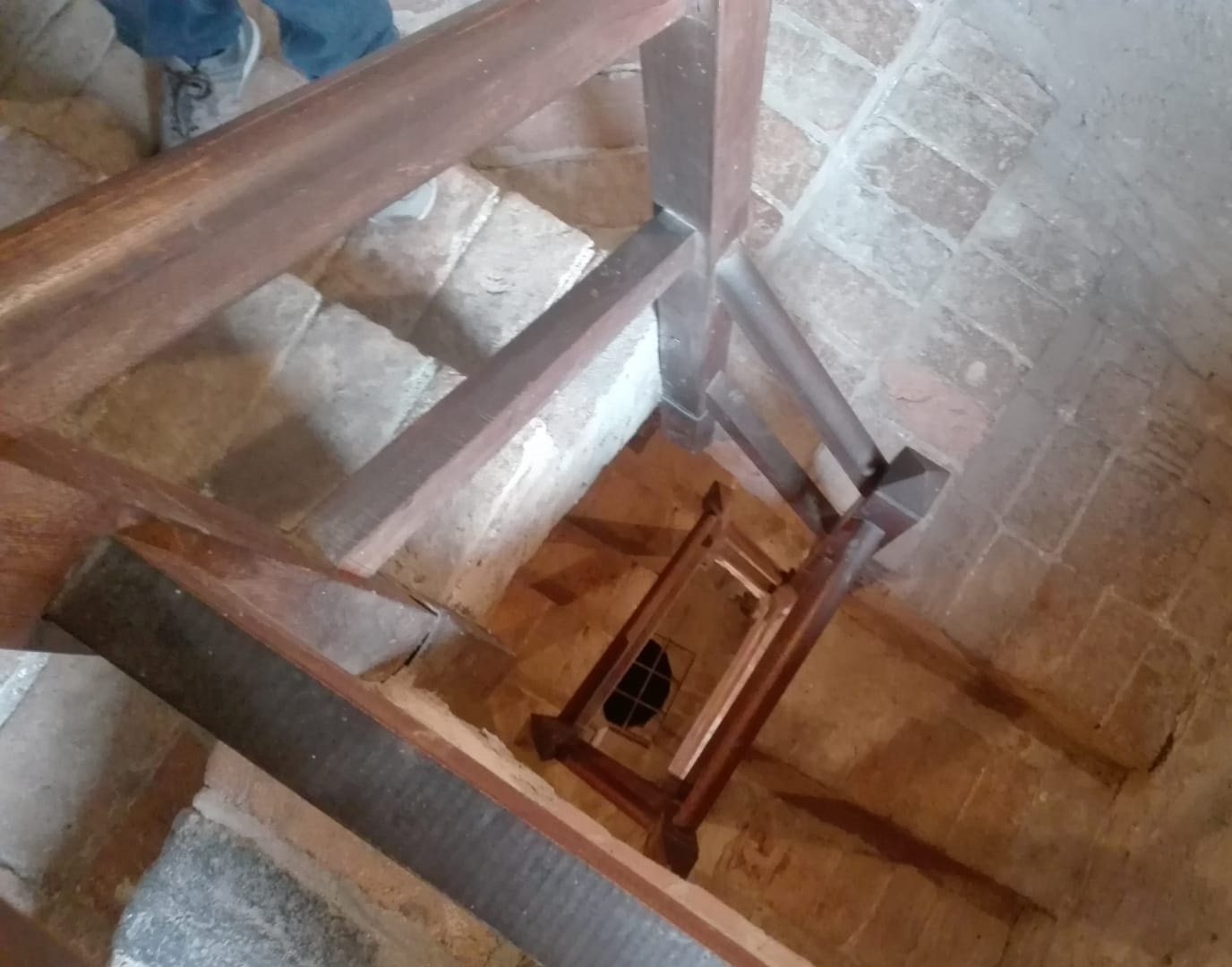
The cylindrical tower contains the entrance to a well into which people condemned to death were dropped. Its round design was regarded as unusually advanced for its time. A square tower stands on the other side of the principal block.
Chapel and Hall of the Vassals
The castle also contains a chapel and the Hall of the Vassals. Vassals were people bound to a lord by obligations of service and allegiance. The hall holds fifteenth-century frescoes depicting Saint Catherine of Alexandria, a Christian martyr.