Schloss Meuselwitz: A Baroque Castle Complex in Germany
Site at a Glance
- Popularity
- Medium
- Country
- Germany
- Primary era
- Early Modern
- Eras represented
- Early Modern
- Civilizations
- Holy Roman Empire
- Site type
- Domestic
- Remains
- Castle
On this page5 sections
History
Medieval and early modern ownership
Schloss Meuselwitz was a castle complex in Meuselwitz, Germany, whose history included ties to ecclesiastical and feudal authority before its Baroque expansion. Between 1139 and 1196, members of the ministerial class, a service group that served rulers and church institutions in military or administrative roles, took their name from the castle while serving the Zeitz ecclesiastical foundation, an endowed church institution. In 1286, overlordship of the fief was divided equally between Zeitz and the Wettins, a German dynastic house.
By the late fourteenth century, the estate belonged to the lords of Bünau. They sold it in 1571 to Heinrich Cramer von Clausbruch, an ennobled merchant who established a cloth manufactory there. After the Cramer family died out, Veit Ludwig von Seckendorff inherited the estate.
Baroque expansion
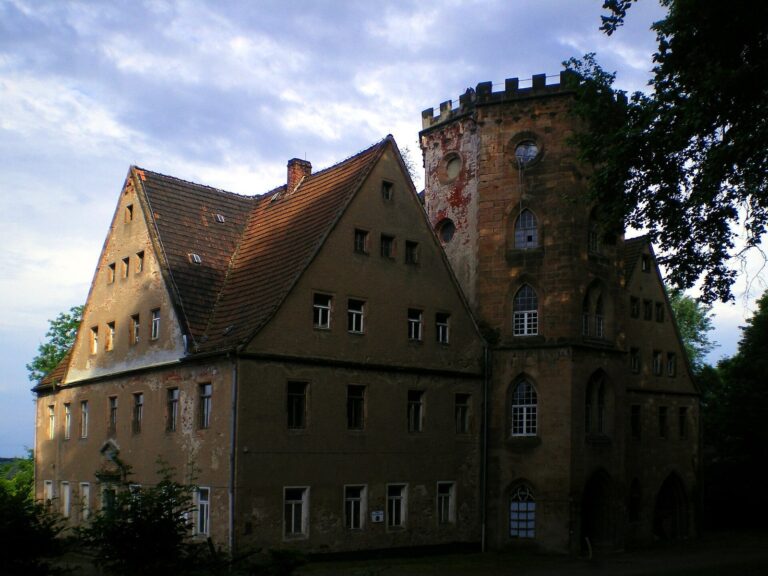
From 1676, von Seckendorff expanded the castle into a four-wing complex in the Baroque style. Johann Heinrich Gengenbach may have planned the work. David Schatz began laying out a castle park in 1709. Further construction took place between 1724 and 1727.
Restoration work was carried out from 1910 to 1913. Allied bombing raids damaged parts of the castle in 1944 and 1945. In 1947, following SMAD Order No. 209 of the Soviet Military Administration in Germany, the Soviet occupation authority after the Second World War, the municipality chose to demolish the building for its construction materials. The decision faced opposition from the state conservator and several citizens. Demolition continued from 1947 to 1950.
Remains
Castle and orangery
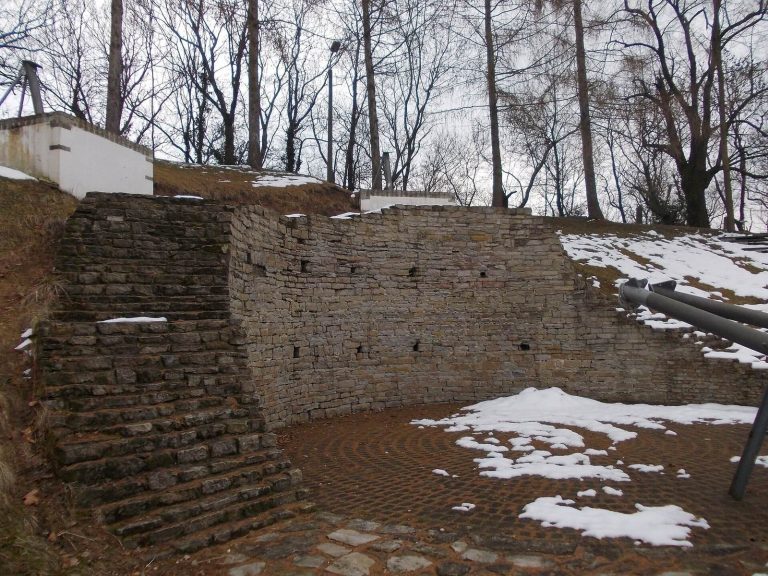
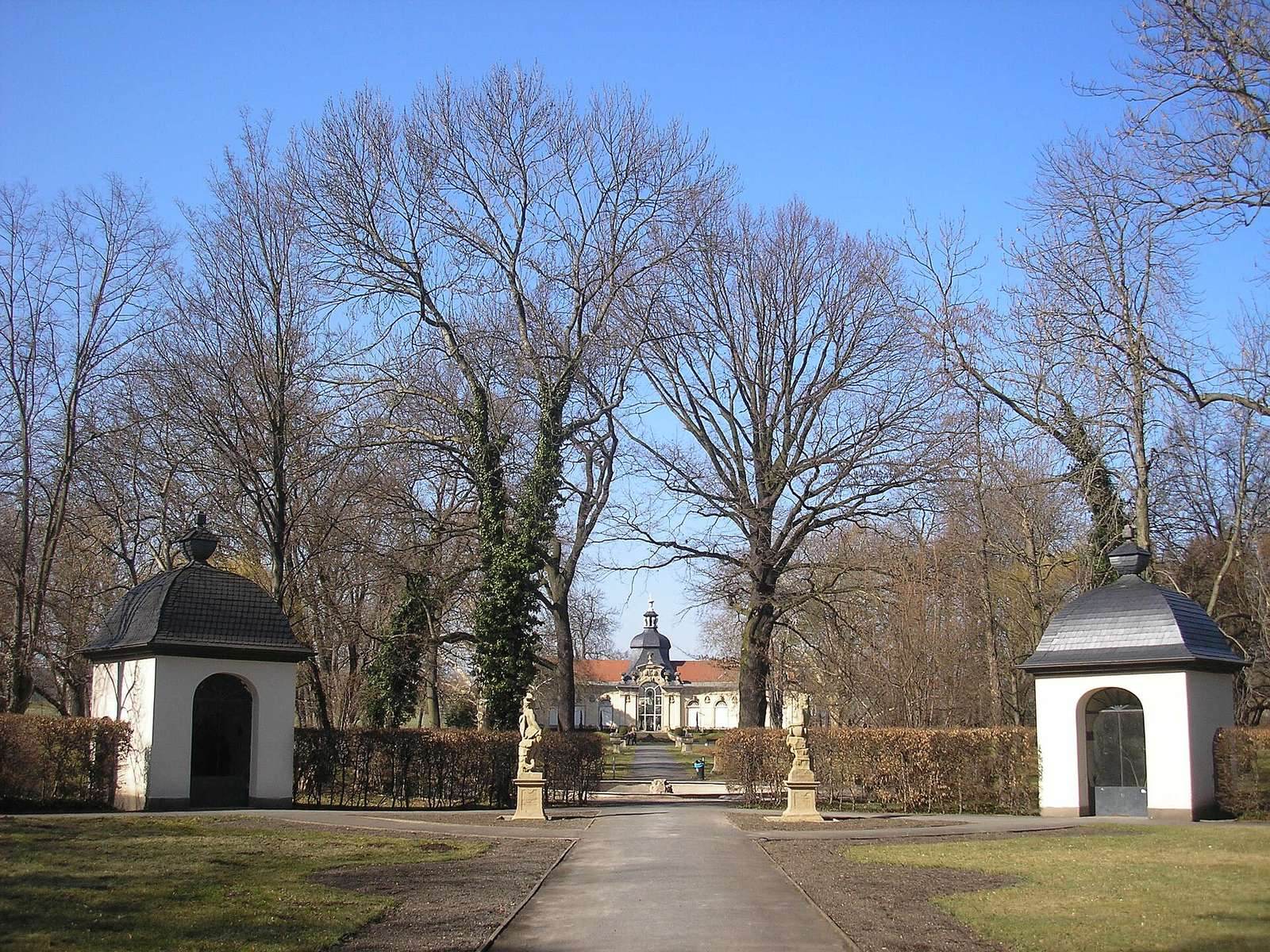
The complex had a four-wing Baroque main building with four projecting corner additions, as well as a park and an orangery. Built between 1724 and 1727, the orangery was a building for sheltering citrus trees and other tender plants. It is the only part of Schloss Meuselwitz that survived the demolition.