Trinity College Kirk: A Royal Collegiate Church in Edinburgh
Site at a Glance
- Popularity
- Medium
- Country
- United Kingdom
- Primary era
- Medieval
- Eras represented
- Medieval, Early Modern
- Civilizations
- Kingdom of Scotland
- Site type
- Religious
- Remains
- Church
On this page14 sections
History
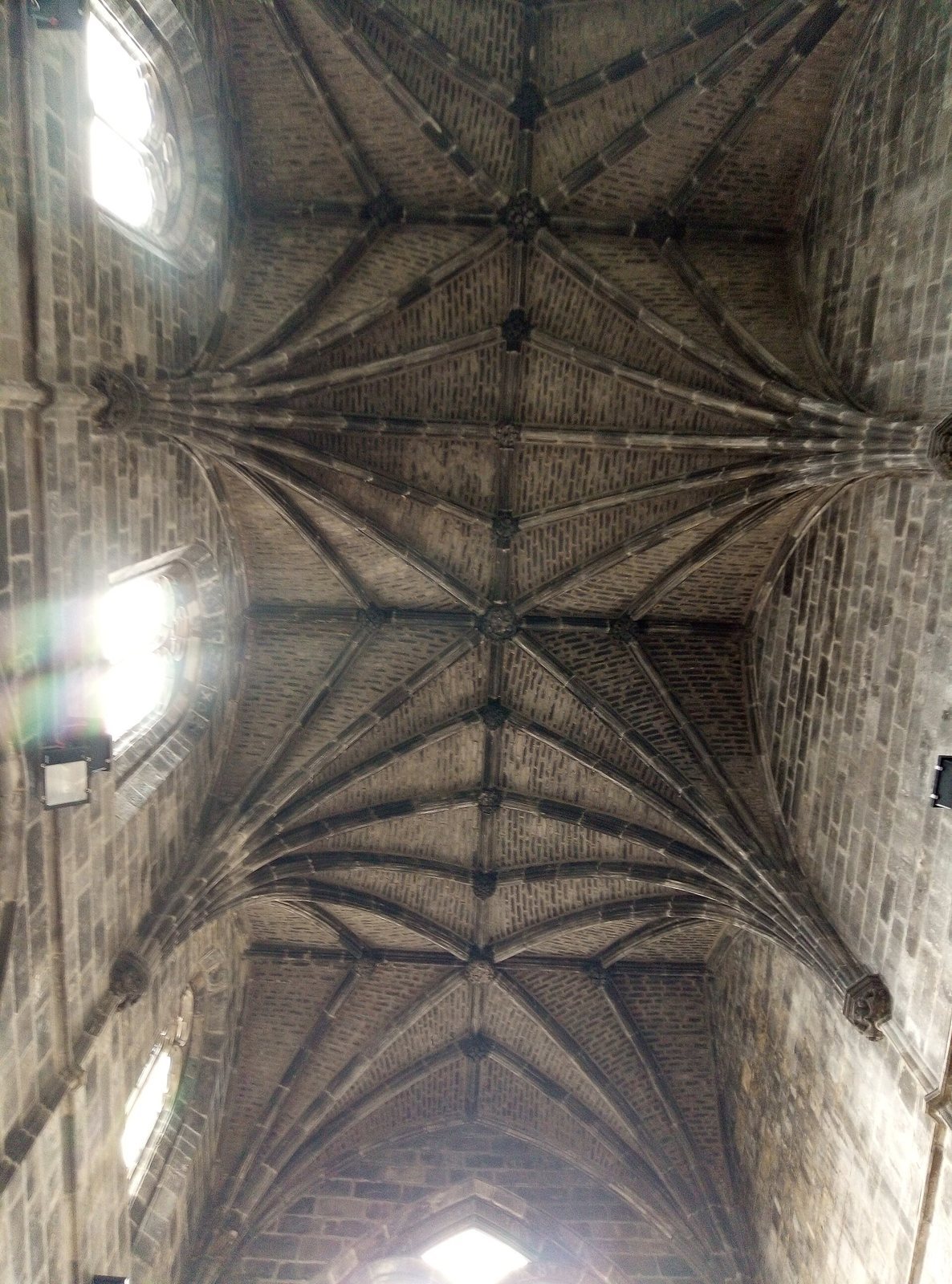
Trinity College Kirk was a royal collegiate church in Edinburgh, United Kingdom, founded in 1460 by Mary of Guelders, queen consort of James II of Scotland. A collegiate church was served by clergy organized as a college. Built in Scotland’s late Gothic style beside a hospital, the church commemorated James, who had been killed at the siege of Roxburgh Castle that year.
Foundation and endowment
The college’s clergy included a provost, who headed the group, eight prebendaries, church officers supported by assigned revenues, and two clerks. Its income came from land and revenues granted by Mary and from later gifts. In 1459-60, while the chancellorship of St Andrews was vacant, Mary petitioned Pope Pius II to attach Soutra to the foundation. The pope authorized this by decree on 23 October 1460. A royal charter dated 25 March 1462 made the church at Soutra a source of income for the provost, who was also to maintain three people receiving charitable support at Soutra Hospital.
Archbishop James Kennedy of St Andrews confirmed the foundation on 1 April 1462. Its prayers were intended to commemorate James II, seek the wellbeing of his soul and deceased Scottish monarchs, and support the health of the king and Mary’s son, James. Kennedy appointed John Halkerston to oversee the building work. The following year, Mary’s steward Henry Kinghorn paid Halkerston for an account of the work he had carried out.
In August 1463, Pope Pius II offered a five-year plenary indulgence, understood in Catholic teaching as remission of all temporal punishment for forgiven sins, to people who attended the Holy Trinity feast and the next eight days and contributed what they could toward completing the church. The feast commemorates the Christian belief in one God in three persons. Contributions went into a locked box, with keys held by the provost and the papal collector for Scotland; one-third of the receipts supported the wider work of the Catholic Church.
The college’s revenues grew over time. They included income from Uthrogal, a leper colony at Monimail in Fife, and Easter Wemyss parish church. In 1502, a dean and sub-dean were appointed with stipends from Dunnottar parish in Kincardineshire. Revenues from Soutra, Fala, Lampetlaw, Kirkurd, Ormiston, and Gogar parishes were added in 1529. In 1501, during a dispute with merchant Walter Chepman, Provost James Oliphant was asked to produce the college’s foundation and endowment charters.
Building campaign and unfinished design
On 8 April 1531, Provost John Dingwall contracted mason Robert Dennis to continue work toward completing the kirk during Dingwall’s lifetime. He required the new work to follow the existing choir. King James V asked Pope Clement VII whether Dingwall could grant indulgences to contributors at the Holy Trinity feast and its following eight days. Dingwall died in 1533, after which masons sought payment from the legacy he had left for the project. The planned church was never completed.
Reformation and parish use
After the Scottish Reformation, the sixteenth-century movement that established Protestant church authority in Scotland, the kirk passed from religious control to the Crown. It appears to have stood unused until November 1567, when Regent Moray transferred the church and hospital property to Edinburgh’s provost, Simon Preston of Craigmillar. Preston passed it to the city for use as a hospital for poor and infirm people. Materials for alterations were to be taken from the demolished Dominican Blackfriars monastery; stones, lime, and sand from its burial ground were sold to masons for building work.
In 1568, the hospital was promised income from the altar of Saint James at St Giles’ Kirk, including rents from properties at the Overbow and Castlehill. The church appears to have served the hospital for about seventeen years. In 1584 it became the official church for Edinburgh’s north-east quarter, a role it kept until closure. Provosts retained a financial interest in the building until 1585, when Robert Pont resigned his office to the town.
From 1597 to 1782 the congregation had a second charge, a secondary ministerial post. Several ministers in that position became Moderators, elected presiding officers of the Church of Scotland’s General Assembly. James Grierson held the office in 1719 and George Logan in 1740. The second charge ended after the building of St Andrew’s Church in the New Town drew away a substantial part of the congregation. John Smith, first appointed to the second charge, became the minister of the first charge in 1660. He was deposed in 1662 for refusing to accept church government by bishops.
Congregation and dismantling
Walter Tait served as minister from 1813 to 1833. He was deposed in 1833 after allowing a man identified as the apostle Thomas Carlyle to interrupt public worship on the Monday after communion, claiming to speak under spiritual inspiration. Tait later became pastor of the Catholic Apostolic Church, a nineteenth-century Christian movement, and remained in that role until his death in 1841.
The church’s floor burials included Mary of Guelders, Bishop Thomas Spens, who died in 1480, Lady Sophia Ruthven, buried in 1592, and Lady Jane Hamilton, buried in 1596. Ruthven was the first wife of Ludovic Stewart, 2nd Duke of Lennox; Hamilton was the first wife of Hugh Montgomerie, 3rd Earl of Eglinton. Mary’s coffin was transferred to Holyrood Abbey in 1848.
An Act of Parliament in 1844 gave the North British Railway compulsory-purchase powers over property needed for its station. It required the company either to rebuild and restore the kirk as it had found it or to compensate the Town Council, trustee of the charity. In 1848 the church and hospital were dismantled for Waverley Station under architect David Bryce, despite a formal protest by the Society of Antiquaries of Scotland. The company paid compensation to the council.
After the Disruption of 1843, the split that led many congregations to leave the established Church of Scotland and form the Free Church of Scotland, most of the congregation joined the Free Church. About eighty people remained in the established church. They worshipped temporarily at the Calton Convening Rooms on Waterloo Place, then from about 1857 at John Knox’s Free Church at the Netherbow, and from 1861 in a divided corner of St Giles’ Cathedral. Legal proceedings in the Court of Session and House of Lords delayed rebuilding for nearly thirty years, while stored church stones were stolen.
Reconstruction and later changes
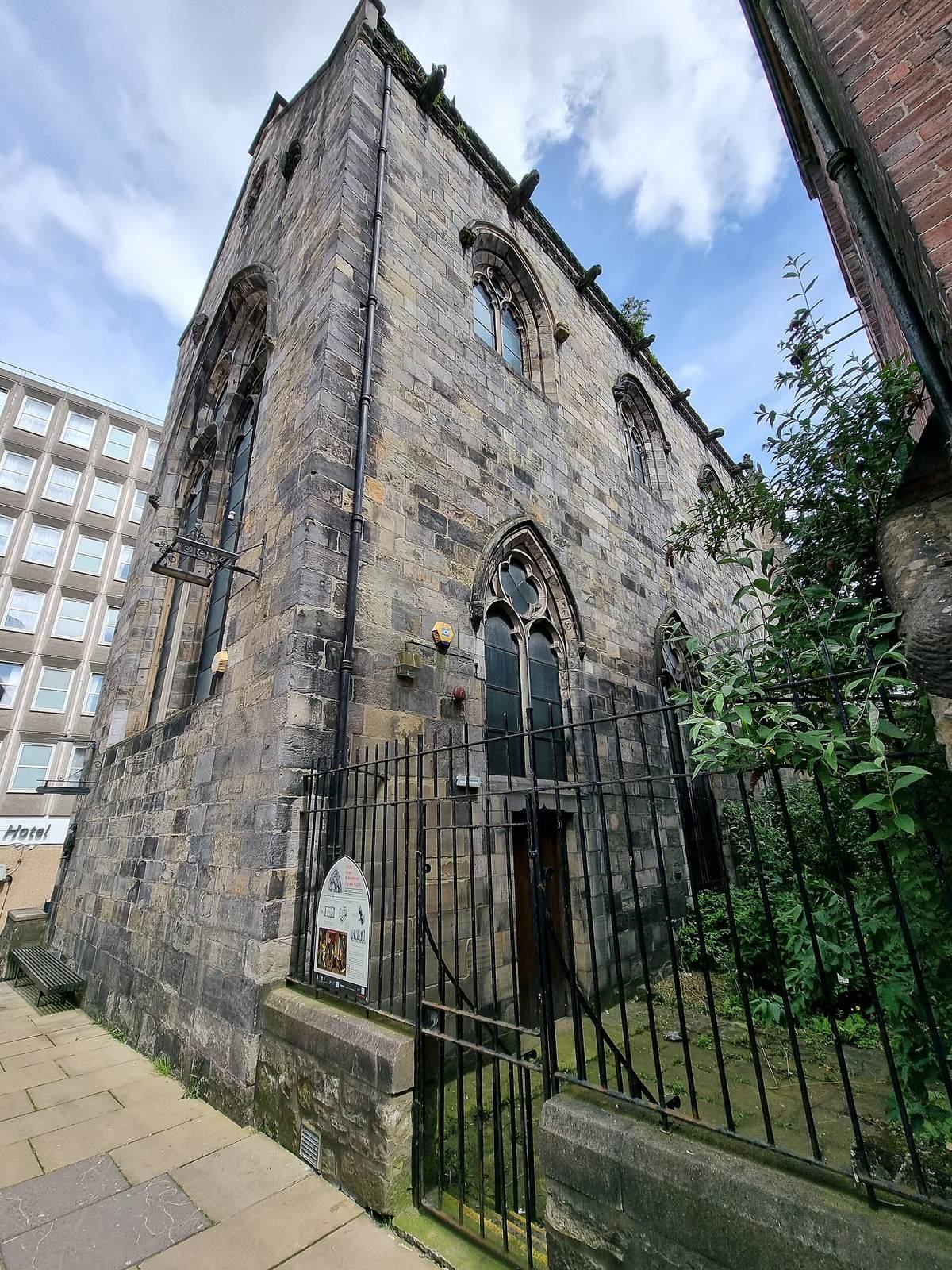
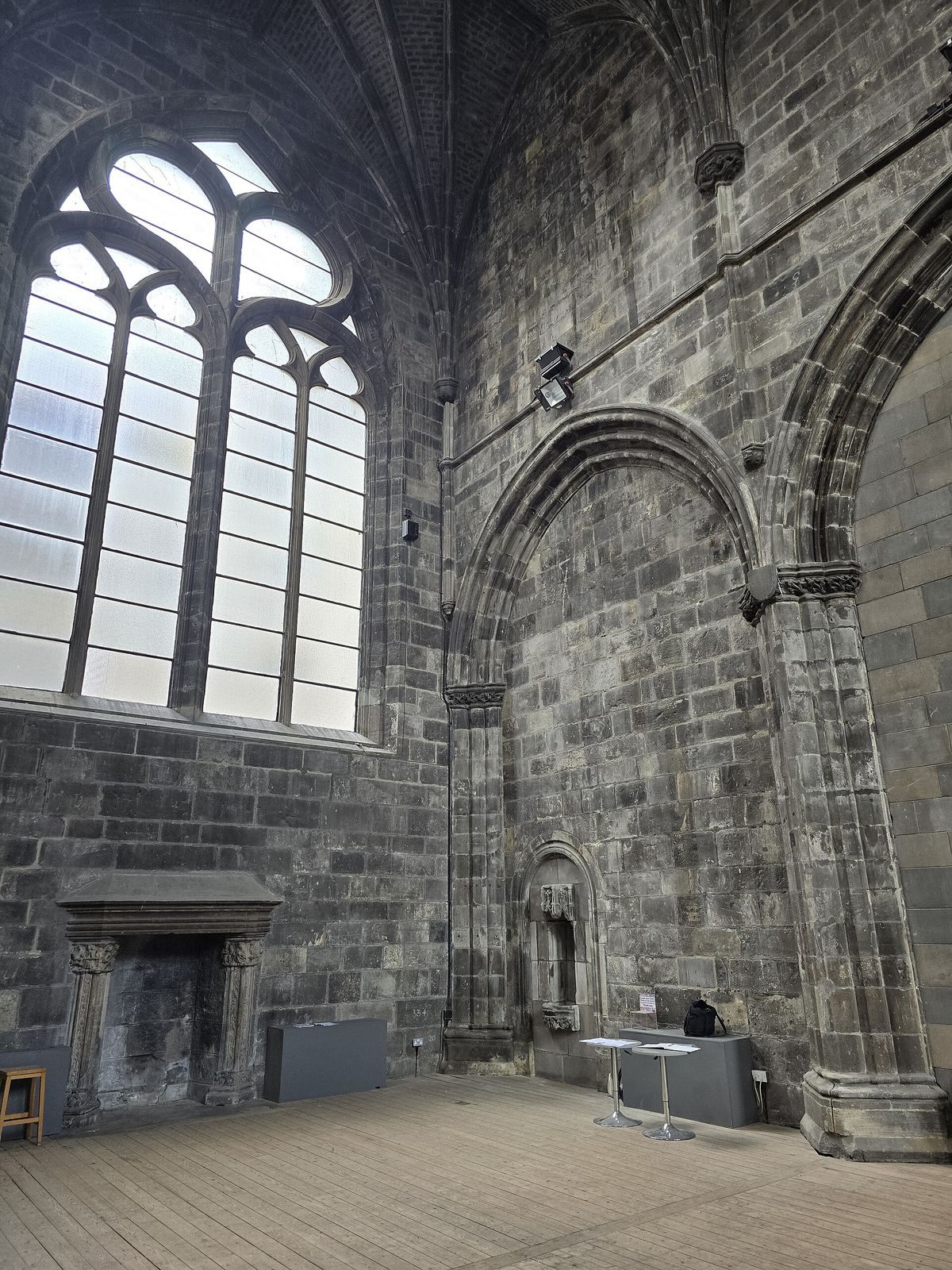
A replacement church was built on newly created Jeffrey Street under the City Improvement Schemes. The street’s first building, it opened for worship in October 1877 and could accommodate up to 900 people. In the 1960s, the Jeffrey Street church, designed by John Lessels, was demolished for an office development. The reconstructed apse remained at Chalmers Close. The apse, carved stone fragments, and boundary wall are listed as a Category A building, Scotland’s highest listing category for structures of national or international architectural or historic importance.
Remains
The original kirk stood in the valley between Edinburgh’s Old Town and Calton Hill, on ground later occupied by Waverley Station. Its medieval fabric was built in the Scottish late Gothic style from local sandstone quarried about 500 metres to the west, on the site now occupied by the Scott Monument. Part of the church was later reconstructed in Jeffrey Street, and its apse now stands at Chalmers Close.
The medieval church
Plan and masonry
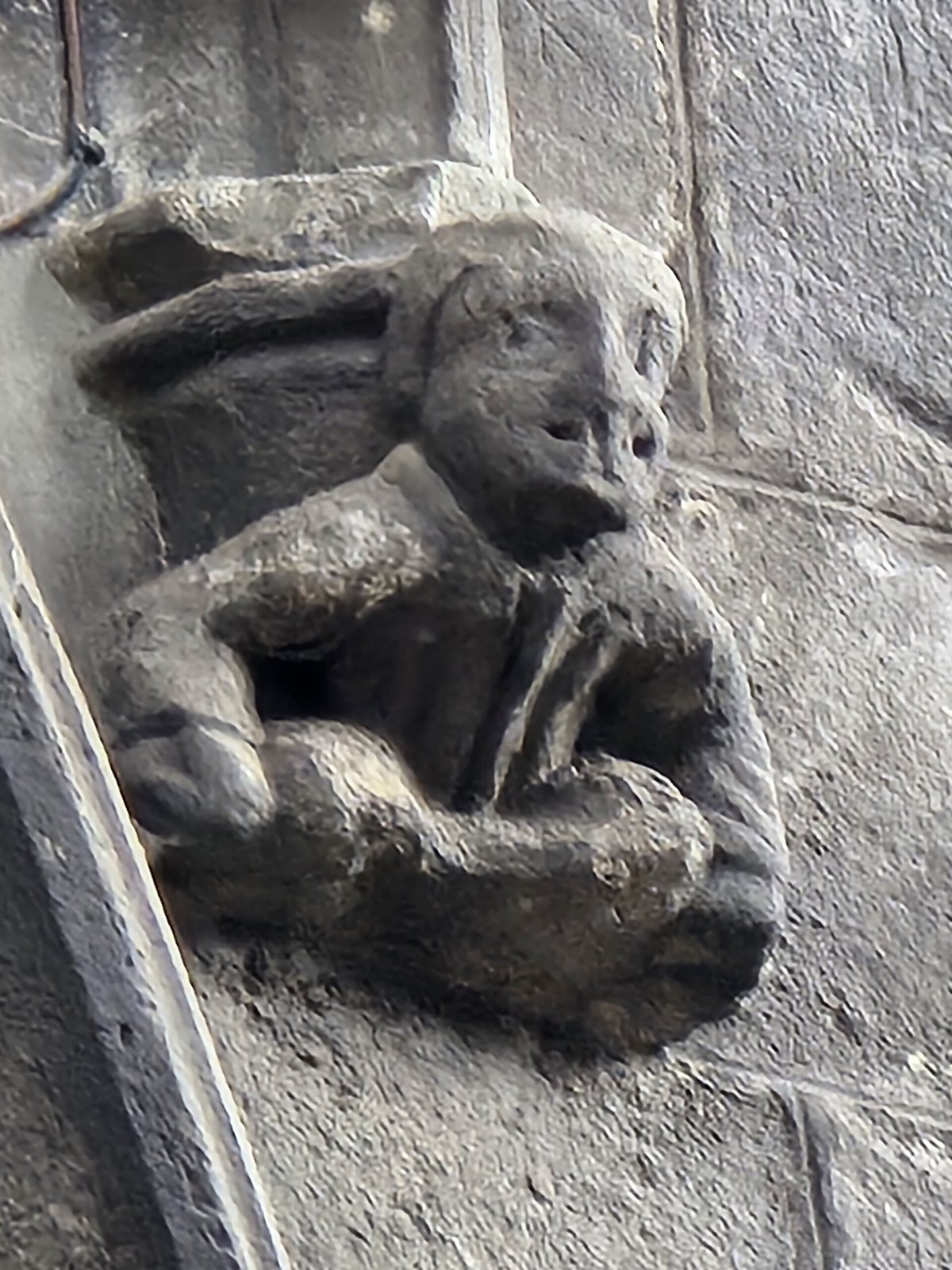
The completed work comprised an apse, the rounded end of the church, a choir, the clergy’s area, with aisles, or side passages, and transepts, the crosswise arms of the building. The original design remained unfinished. Roof water ran out through carved gargoyles, which served as spouts. Several monkey figures are also said to have formed part of the kirk’s decoration.
Altarpiece and font
Hugo van der Goes completed the kirk’s triptych altarpiece, an artwork arranged in three sections, in 1479. Four surviving panels depict James III, Saint Andrew, James III’s son and future king James IV, and Margaret of Denmark. The work also includes its donor, the first provost Edward Bonkil, and his coat of arms. The altarpiece is now displayed in the National Gallery of Scotland. The medieval baptismal font from the kirk was installed in the Jeffrey Street church shortly before that building opened.
Carved stonework
Statuary and carved stone ornament from the original church are in the gardens of Craigcrook Castle in west Edinburgh. Their transfer is not precisely dated: they may have been moved during the 1848 dismantling or salvaged later as the kirk was taken apart.
Reconstructed church fabric
Trinity Apse
By 1872, about one-third of the kirk’s numbered stones remained. They were used to reconstruct a version of the choir and apse, known as the Trinity Apse, which was attached to the rear of the Jeffrey Street church and used as its hall. After the later church was demolished, the apse stood alone at Chalmers Close. The reconstructed apse, carved stone fragments, and boundary wall remain there.
Jeffrey Street church
The replacement church had a newly built front, while Lessels incorporated several architectural features from the medieval kirk into his design. The reconstructed choir and apse formed its hall, and the medieval font was placed inside before the church reopened.