Palais Schey von Koromla: A Historicist Palace in Vienna
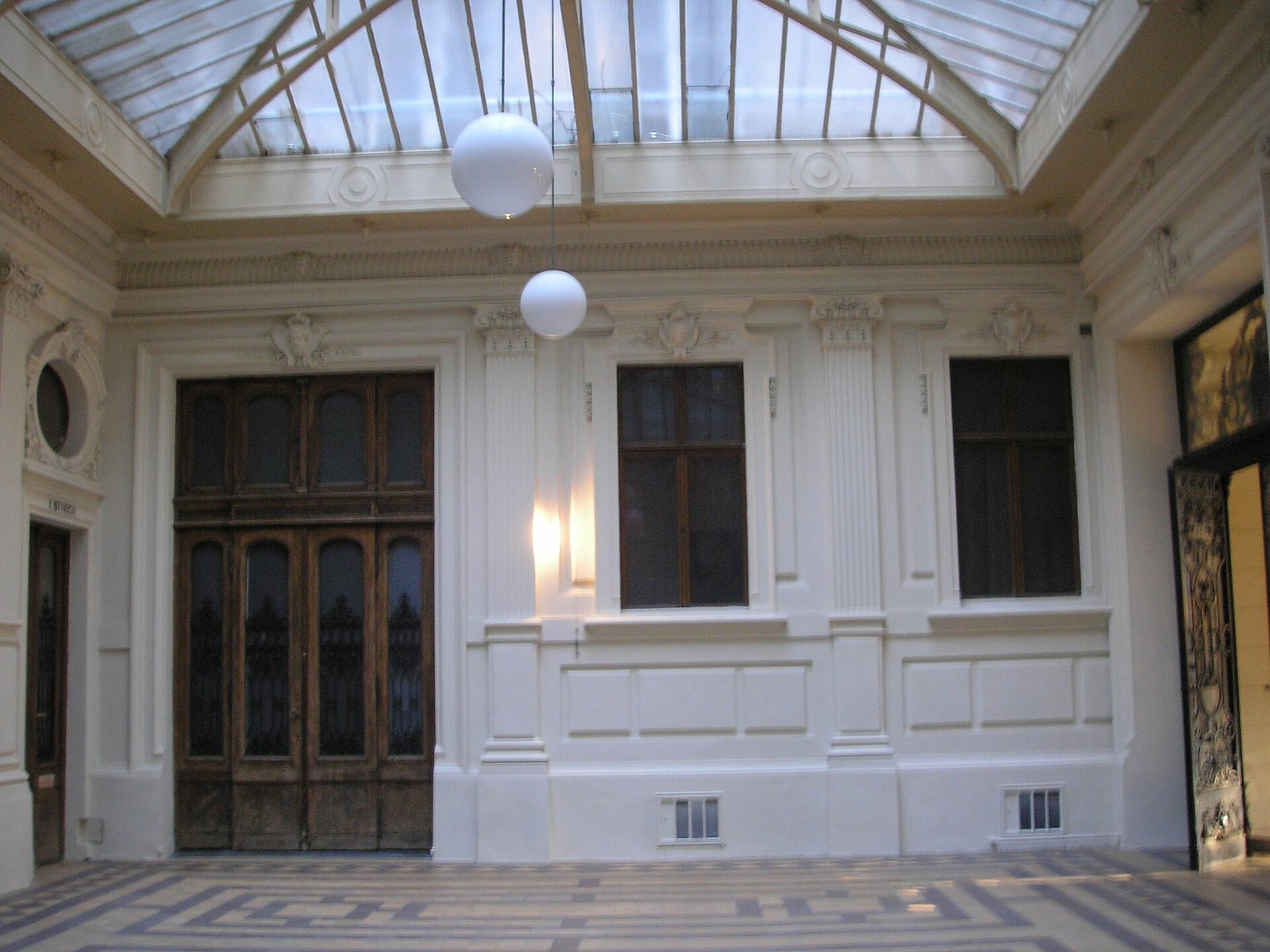
Site at a Glance
- Popularity
- Medium
- Country
- Austria
- Primary era
- Modern
- Eras represented
- Modern
- Civilizations
- Austrian Empire, Habsburg
- Site type
- Domestic
- Remains
- Elite Residence
On this page6 sections
History
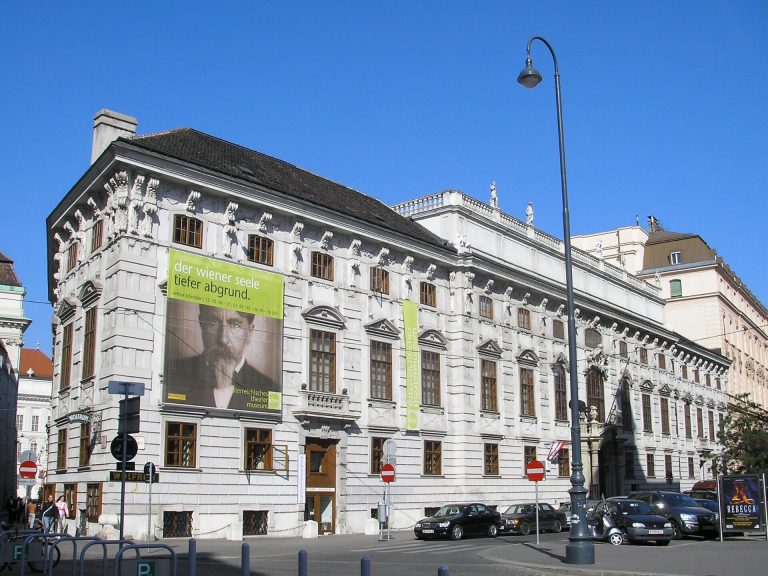
Palais Schey von Koromla is a historicist palace in Vienna, Austria, built in 1863–64 during redevelopment associated with the Ringstrasse, the broad boulevard around the city’s historic center. Its design draws on earlier architectural styles.
Construction and later history
Banker and baron Friedrich Schey von Koromla commissioned the palace as part of a project initiated by Emperor Franz Joseph I on land formerly occupied by Vienna’s city walls. Construction took place in 1863–64, and the commission is dated to 1864. The Ringstrasse opened in 1865. Vienna’s state opera house, the Wiener Staatsoper, opened one block away in 1869 and owns the palace.
A monument to the German writer and poet Johann Wolfgang von Goethe was unveiled in 1900. The palace’s interior survived both Nazi rule and the Second World War.
Remains
Building layout
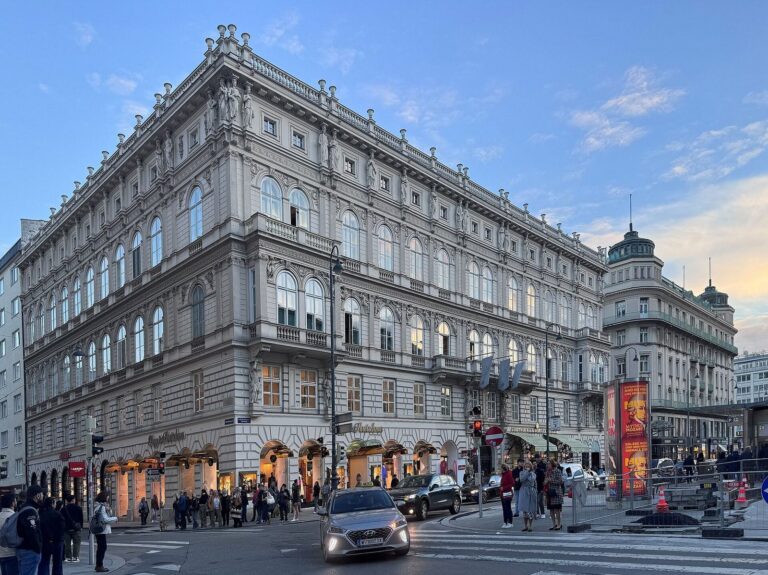
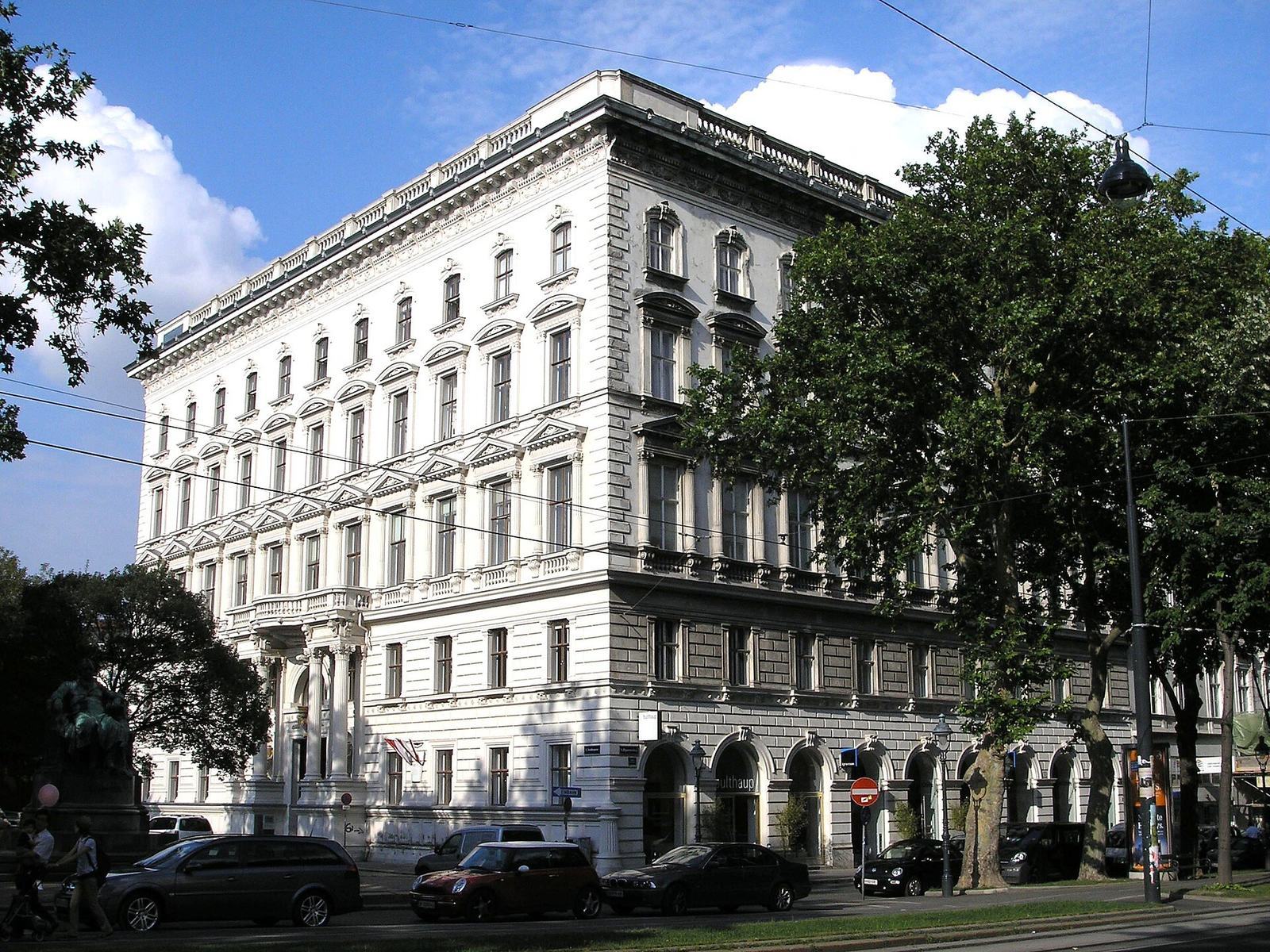
The five-storey brick palace has light-colored plaster and occupies a corner at Goethegasse 3 and Opernring 10 in Vienna’s Innere Stadt, the historic central district. Its principal façade faces the former Imperial Garden, part of the Hofburg, a former imperial palace complex. The garden remained private property of the imperial court until 1918. The building adjoins neighboring buildings on its other two sides.
Facades and entrance
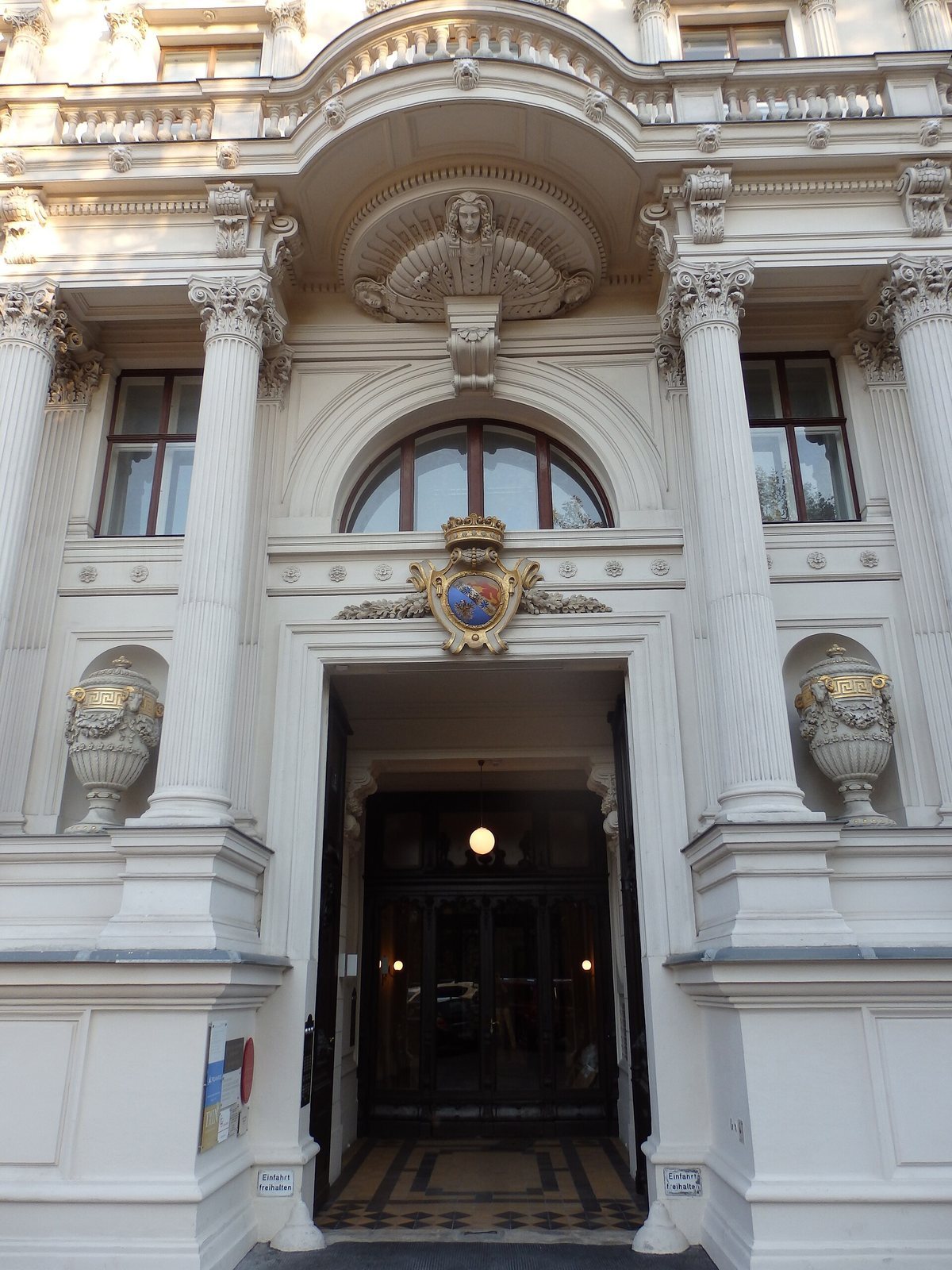
The façade facing the former Imperial Garden has eleven window axes, while the Ringstrasse side has nine and contains shops. At Goethegasse, a stone entrance portal with tall columns supports a balcony on the second, principal floor.
Goethe memorial
The memorial is a statue at the corner of Goethegasse and the Ringstrasse, between the palace and the Burggarten, a public garden beside the Hofburg.