Flaxley Abbey: A Cistercian Monastery and Later Country House
Site at a Glance
- Popularity
- Medium
- Country
- United Kingdom
- Primary era
- Early Modern
- Eras represented
- Medieval, Early Modern, Modern
- Civilizations
- British, English
- Site type
- Domestic
- Remains
- Elite Residence
On this page14 sections
History
Flaxley Abbey was a Cistercian monastery near Flaxley in the Forest of Dean, Gloucestershire, United Kingdom. Roger Fitzmiles founded it in 1151, and building continued until 1154. The Cistercians were a monastic order that developed from the Benedictine tradition and took its name from its founding abbey at Cîteaux. Flaxley was a daughter house of Bordesley Abbey in Worcestershire, meaning it was established by that monastery; its first monks came from Bordesley. Dedicated to the Virgin Mary, the abbey belonged to the Diocese of Hereford, an ecclesiastical district overseen by a bishop. A local tradition linked its site to the death of Roger’s father, Miles of Gloucester, who was killed while hunting in the Forest of Dean in 1143.
Foundation and medieval use
Henry II confirmed the abbey’s rights by charter between 1151 and 1154, then issued another in 1158 protecting its granges at West Dean and Wallmore. Granges were monastic farms or estates. Since the area was difficult to cultivate, the monks focused on raising sheep. In the late 12th century, Popes Alexander III and Celestine III exempted the community from tithes, payments traditionally owed to a church or religious institution from produce or income.
Flaxley was under royal protection from Henry II’s reign and served as quarters for royal hunting. King John also visited. In 1227, Henry III granted the abbey rights to Abbot’s Woods, and Edward III visited frequently. In 1353, Edward granted it income from rents and other profits on lands in the Forest of Dean.
The abbey’s first abbot, Waleran, was removed after a visitation in 1187 by the Cistercian general chapter, an assembly that supervised the order’s monasteries. The monks chose Alan, from Bordesley, to replace him. Later abbots included Richard around 1200; William, who may have been elected in February 1277; Nicholas in 1288; William de Rya in 1314; Richard Peyto in 1372; William in 1426; Berkeley in 1476; John in 1509; William Beawdley in 1528; and Thomas Were in 1532. Although the abbey was not wealthy, its library contained more than 100 books. Its income was assessed at £112 in 1535.
Suppression and conversion
Flaxley was suppressed on 4 September 1536 during Henry VIII’s dissolution of the monasteries, a campaign to close monastic institutions and transfer their property. Seven monks and Abbot Thomas Were were present. Three monks entered other abbeys, and Were went to Aston Rowant. On 21 March 1537, the abbey and its lands were granted to Sir William Kingston.
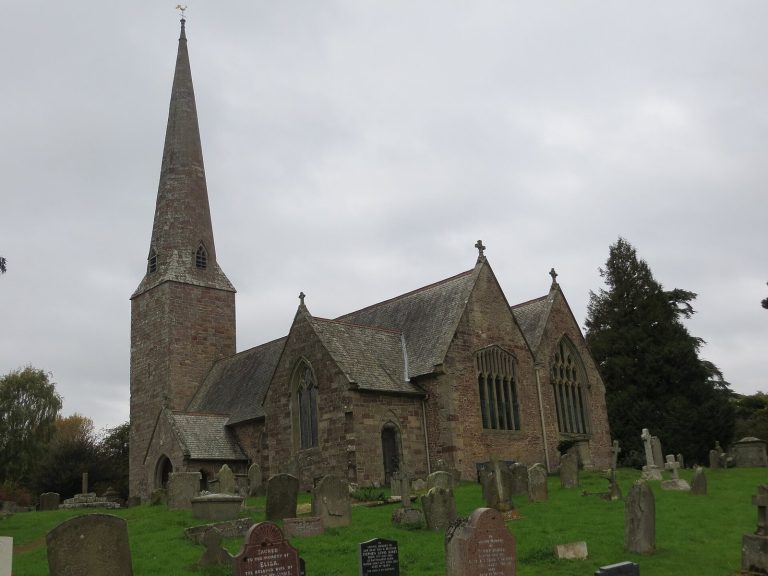
After the suppression, parts of the monastery were demolished and surviving buildings adapted as a manor house. The gate chapel became the church of Flaxley village. The abbey church had burned down by the time of the dissolution.
Boevey and Crawley-Boevey ownership
James Boevey, a London merchant, lawyer, and philosopher, bought the property in 1648 with his half-brother William. It later passed to Catherina Boevey after her brief marriage to William, James’s son. On her death in 1727, she left it to Thomas Crawley, who later took the name Crawley-Boevey.
After her husband’s death, Catherina completed Dutch-style gardens at Flaxley and continued to improve the grounds. Her canal gardens are said to have influenced those of her friend Maynard I Colchester at Westbury Court. The Crawley-Boevey family later succeeded to a baronetcy created in 1784 for Sir Charles Barrow, who died in 1789. A baronetcy is a hereditary title below the peerage; a special remainder sets out an alternative line of succession.
Rebuilding and later status
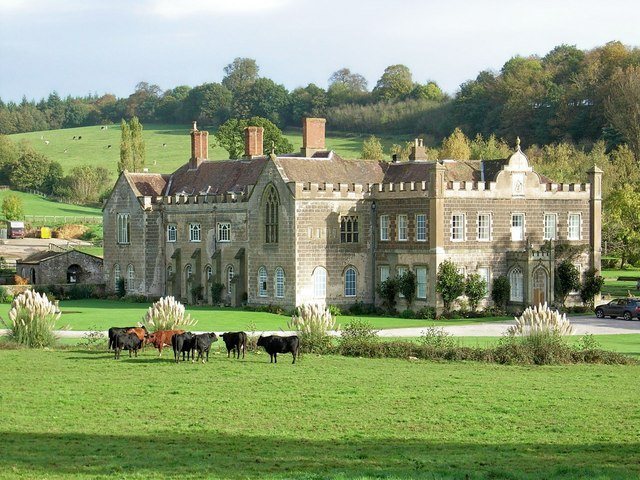
A fire partly destroyed the west wing in 1777. The north part was later removed, and a new south wing formed part of substantial rebuilding. In the 19th century, the house received a Gothic Revival redesign, reusing forms associated with medieval Gothic architecture. Flaxley remained the Crawley-Boevey family home until 1960 and is now a private country house. It was listed Grade I on 23 September 1955. Grade I is England’s highest listing category, for buildings of exceptional architectural or historic interest.
Remains
The monastic layout
The abbey included a cloister, a covered walk around a monastic courtyard, with the church to its north and ranges including the former lay-brothers’ range to the west and the former east range. Parts of the medieval complex survive within the country house and its gardens.
Abbey church
The church stood north of the main complex. Foundations of its south transept, the cross-arm of a church, lie beneath the existing gardens.
Orangery
An 18th-century orangery occupies the northern part of the cloister. Such buildings sheltered citrus trees and other plants needing protection from cold.
Chapter house
The chapter house, where the monastic community met for business, was in the former east range. A pond now occupies part of its site.
The former west range
The west range, originally used by lay brothers, members of the community whose duties generally centered on manual work rather than choir services, survives as part of the house. It was altered in the 16th and 17th centuries.
Dormitory and refectory
The former lay-brothers’ dormitory later served as a guest room and has four 17th-century windows. Below it, the 12th-century refectory, or dining room, retains a rib-vaulted ceiling supported by intersecting masonry ribs. The refectory was also adapted as a guest room.
Abbot’s Hall
In the southern part of the range, Abbot’s Hall stands above the former latrine. Its surviving features include carved decoration and four narrow openings.
House and gardens
The former canal gardens were later removed as the land was modified. In the early 1960s, Oliver Messel redesigned the manor-house interior and created a modern-style garden.