Toskánský palác: A Baroque Aristocratic Residence in Prague
Site at a Glance
- Rating
- 4.5
- Popularity
- High
- Country
- Czechia
- Primary era
- Early Modern
- Eras represented
- Early Modern
- Civilizations
- Habsburg, Habsburg Austria, Holy Roman Empire, Kingdom of Bohemia
- Site type
- Domestic
- Remains
- Palace
On this page4 sections
History
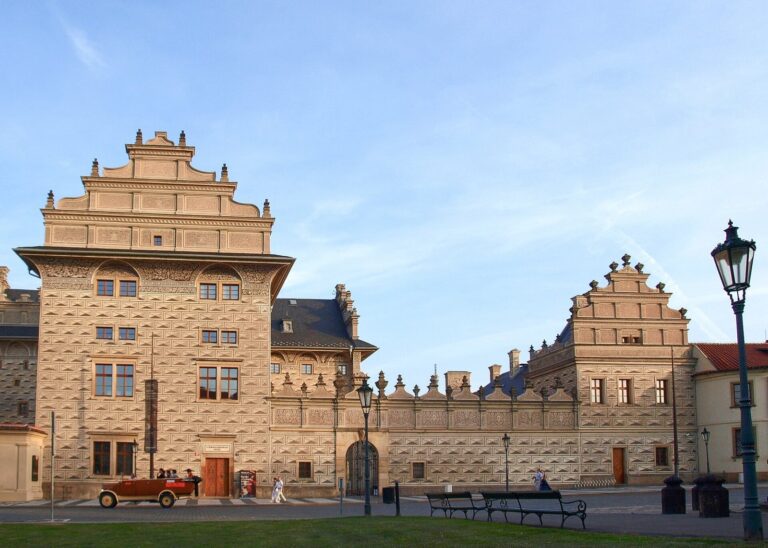
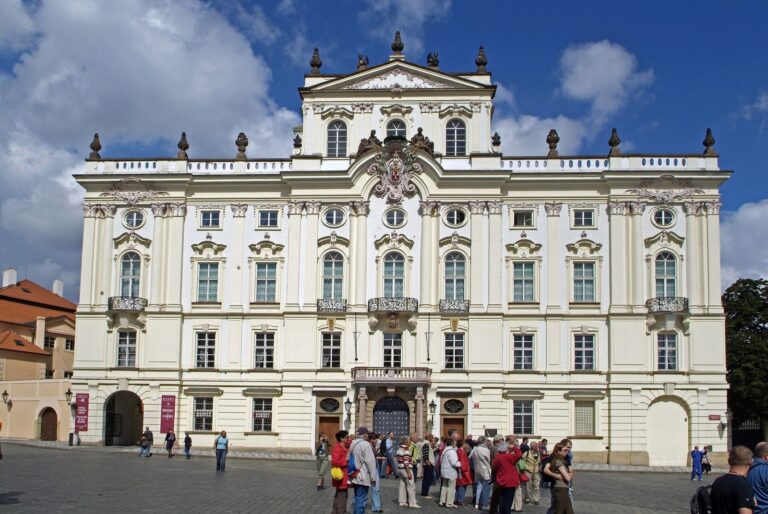
Toskánský palác is a Baroque palace on the western side of Hradčany Square near Prague Castle in Czechia. Baroque is an architectural and artistic style known for elaborate forms and ornament. Construction had begun by 1690 under Count Michael Osvald Thun-Hohenstein, a Bohemian nobleman, on land occupied by several smaller houses belonging to the Lobkowicz family, another Bohemian noble family. Thun-Hohenstein intended the palace as an aristocratic residence near the castle, but died before it was finished. The French architect Jean Baptiste Mathey designed the building, and the architect Canevalli oversaw its construction.
In 1718, Anna Maria Franziska, Duchess of Tuscany, bought the unfinished palace and brought its construction to completion. The building’s name reflects her association with Tuscany. It became a residence for the grand dukes of Tuscany and remained in the hands of the Medici, the ruling dynasty associated with the region, for several decades before passing to their successors.
A major renovation took place in 1998, and the palace now houses the Czech Republic’s Ministry of Foreign Affairs. It has held national cultural monument status since 2026.
Remains
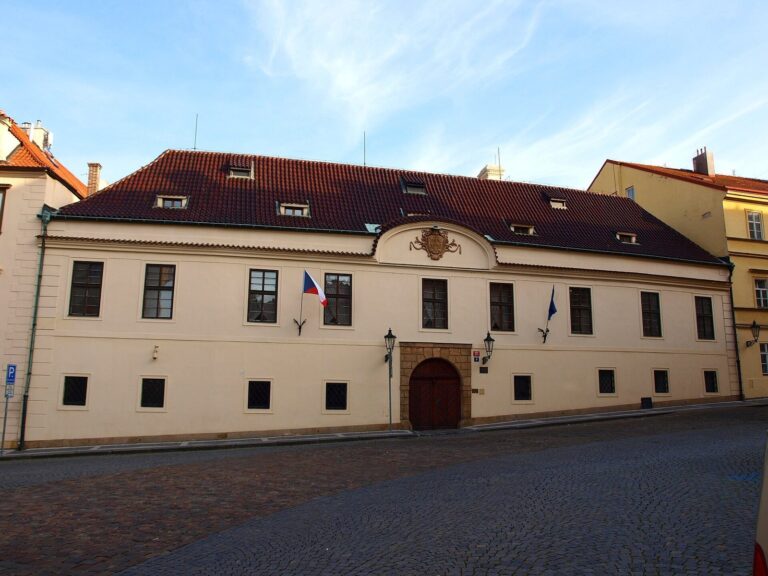
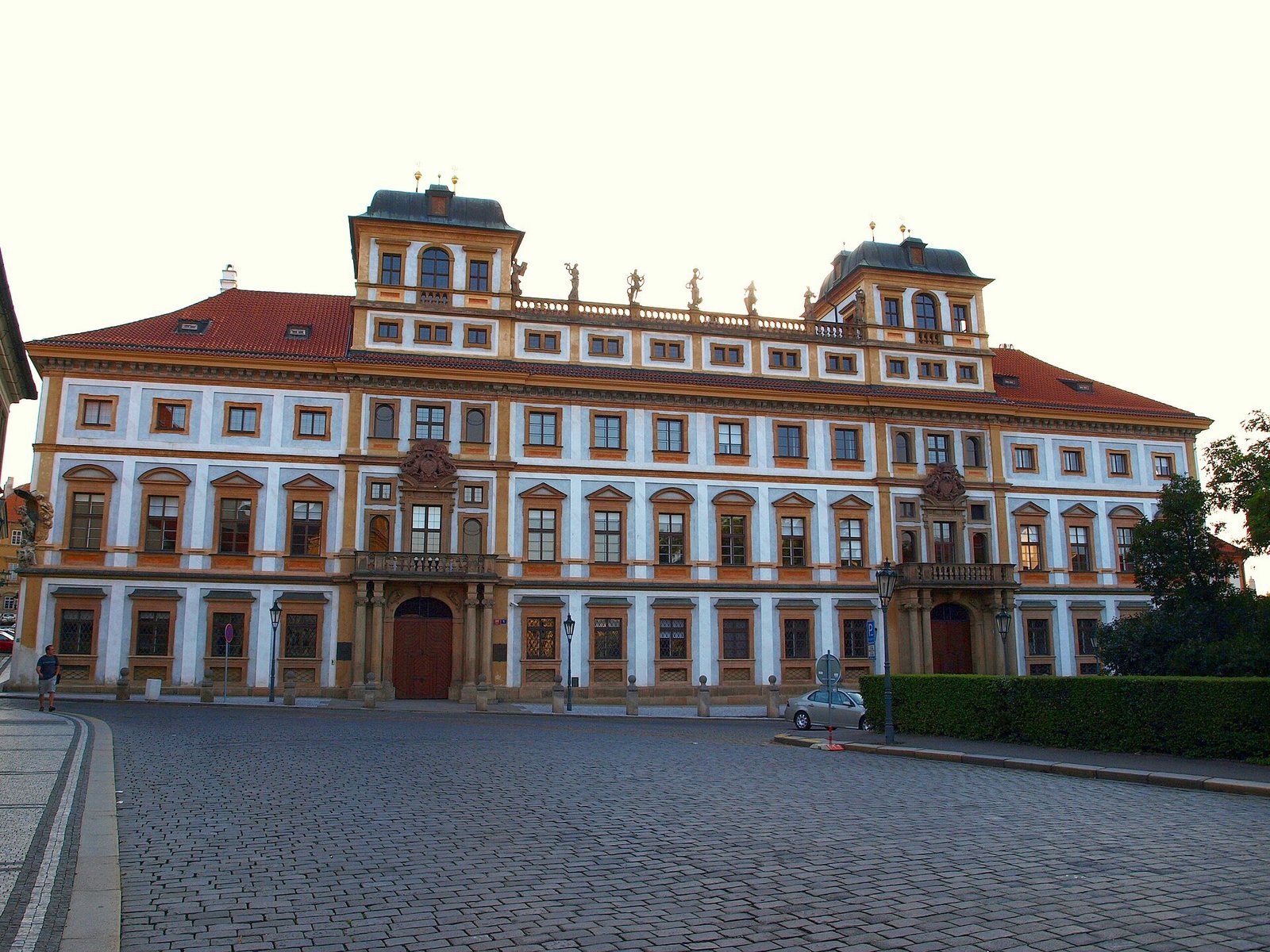
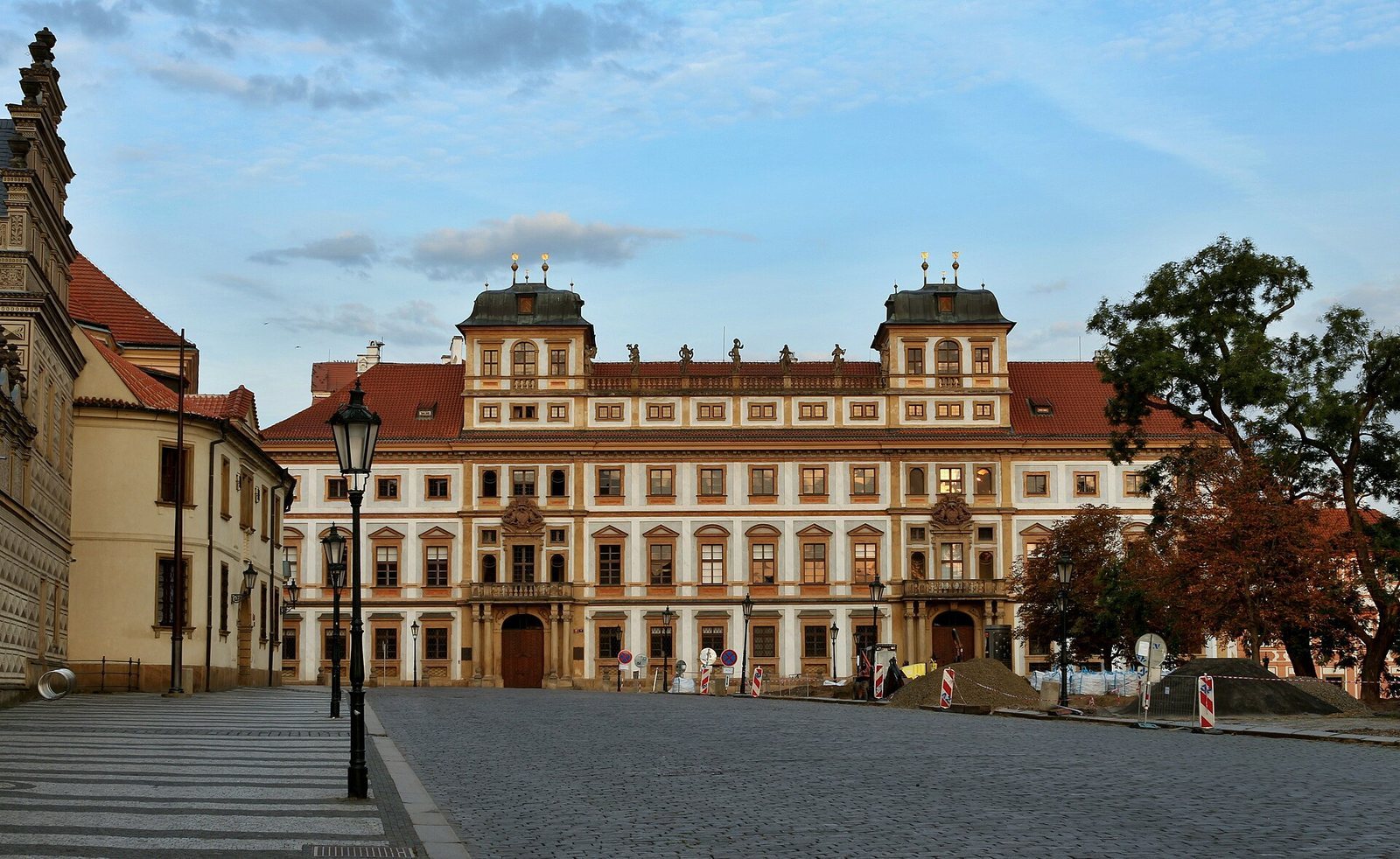
The palace occupies the western side of Hradčany Square. Its rectangular plan consists of four wings enclosing a rectangular courtyard, with two fountains placed in niches in the building. The structure has three principal levels, a raised fourth level over the central section crowned with statues, and a pair of square towers at the sides.
Façades and entrances
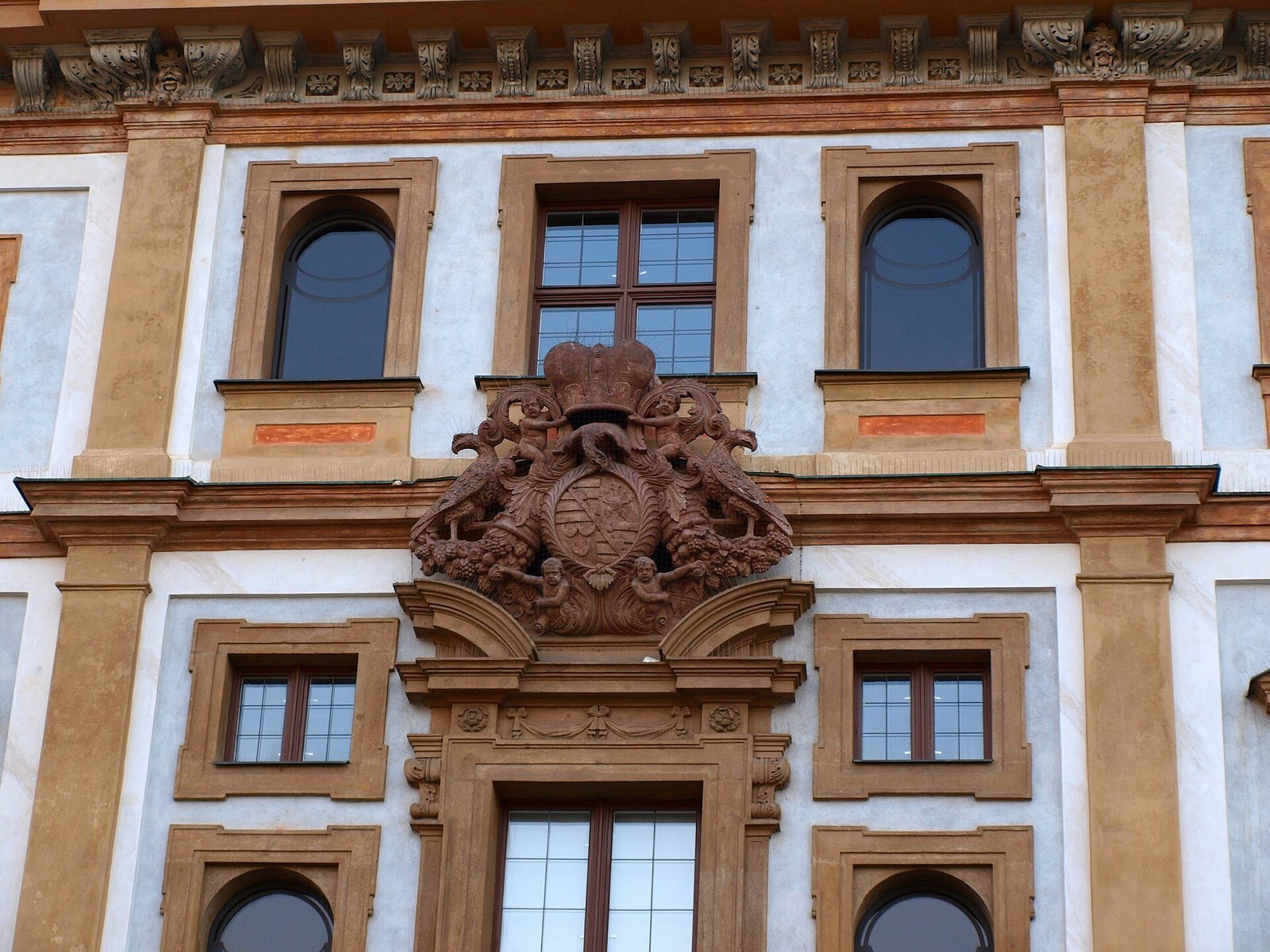
The long main façade has an entrance at either end. Each entrance is topped by a balcony resting on pairs of columns with capitals. Doors at the first upper level open onto the balconies, and monumental coats of arms sit above them. Two Tuscan coats of arms also appear on the façade. Horizontal bands divide the exterior, while shallow pilasters, flat projections resembling columns, frame the window levels. On the first upper level, pairs of windows have triangular or curved pediments, the shaped elements placed above openings.
Sculptural decoration
Jan Brokoff, a sculptor active in Bohemia, created the façade’s sculpted allegory of the seven liberal arts: grammar, rhetoric, logic, arithmetic, geometry, music, and astronomy.