Palazzo Gallenga Stuart: A Baroque Palace and University Seat in Perugia
Site at a Glance
- Popularity
- Medium
- Country
- Italy
- Primary era
- Early Modern
- Eras represented
- Early Modern, Modern
- Civilizations
- Italian, Papal States
- Site type
- Domestic
- Remains
- Elite Residence
On this page8 sections
History
An Antinori Residence
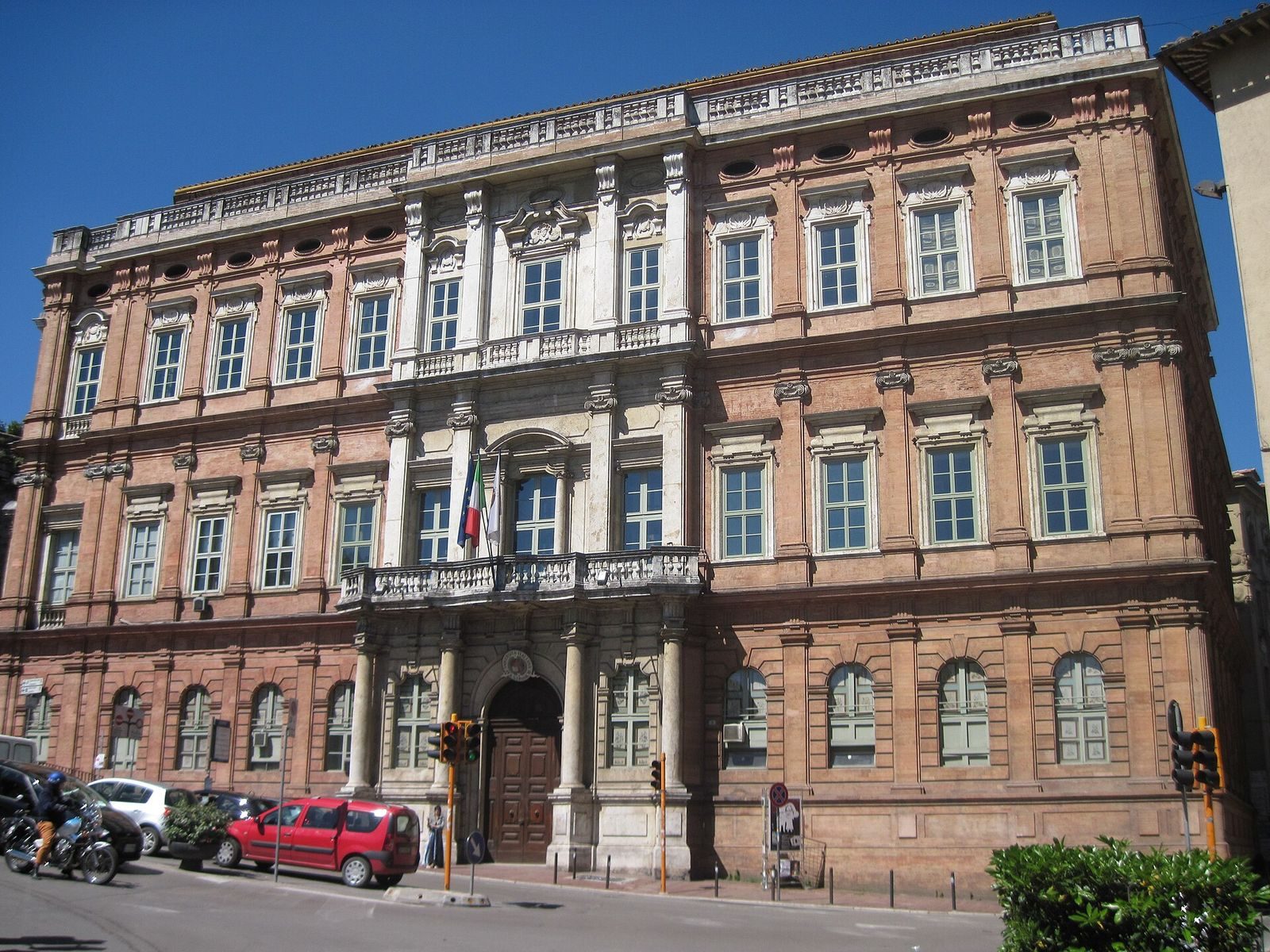
Palazzo Gallenga Stuart is a Baroque palace in Perugia, Italy, built around 1700 on Giuseppe Antinori’s initiative as a residence for his noble family. The Baroque style, an early modern European approach known for dramatic forms and elaborate effects, shaped the building. Roman architect Francesco Bianchi designed the palace.
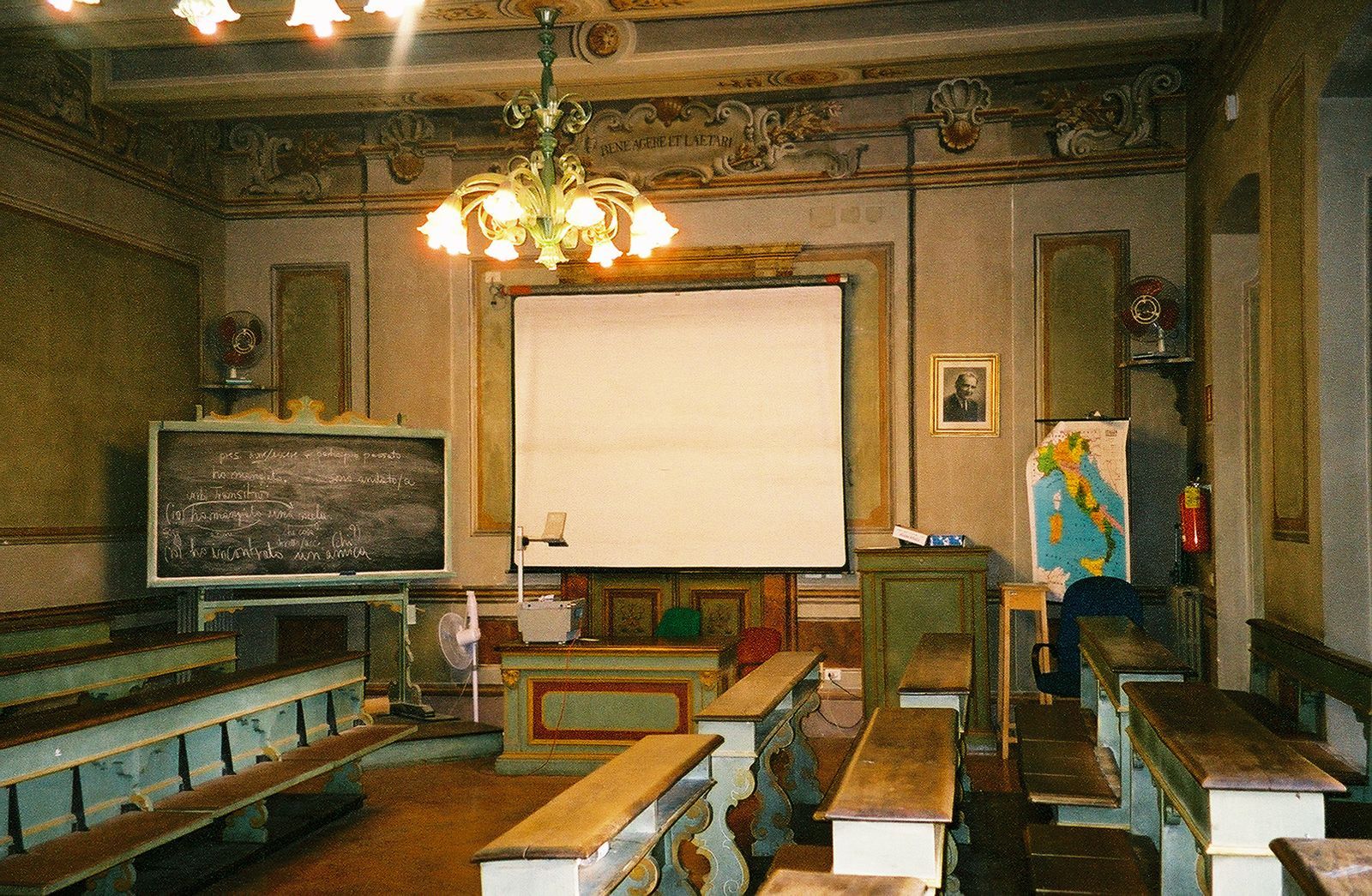
In 1720, Carlo Goldoni gave his first theatrical performance in the palace’s Sala Goldoniana, or Goldoni Hall. He was then a young man living in Perugia with his father, a physician. Between 1748 and 1758, Pietro Carattoli carried out the main façade, following Bianchi’s design.
From Private Residence to University
Romeo Gallenga Stuart acquired the palace in 1875, giving it the name it bears today. In 1926, Count Gallenga Stuart transferred it to the Municipality of Perugia. The following year, it became the home of the University for Foreigners of Perugia, a role it continues to serve.
In 1931, American student Frederick Thorne Rider made a substantial donation to the university that supported its expansion. Rider later became an honorary citizen of Perugia.
Remains
Exterior and Entrance
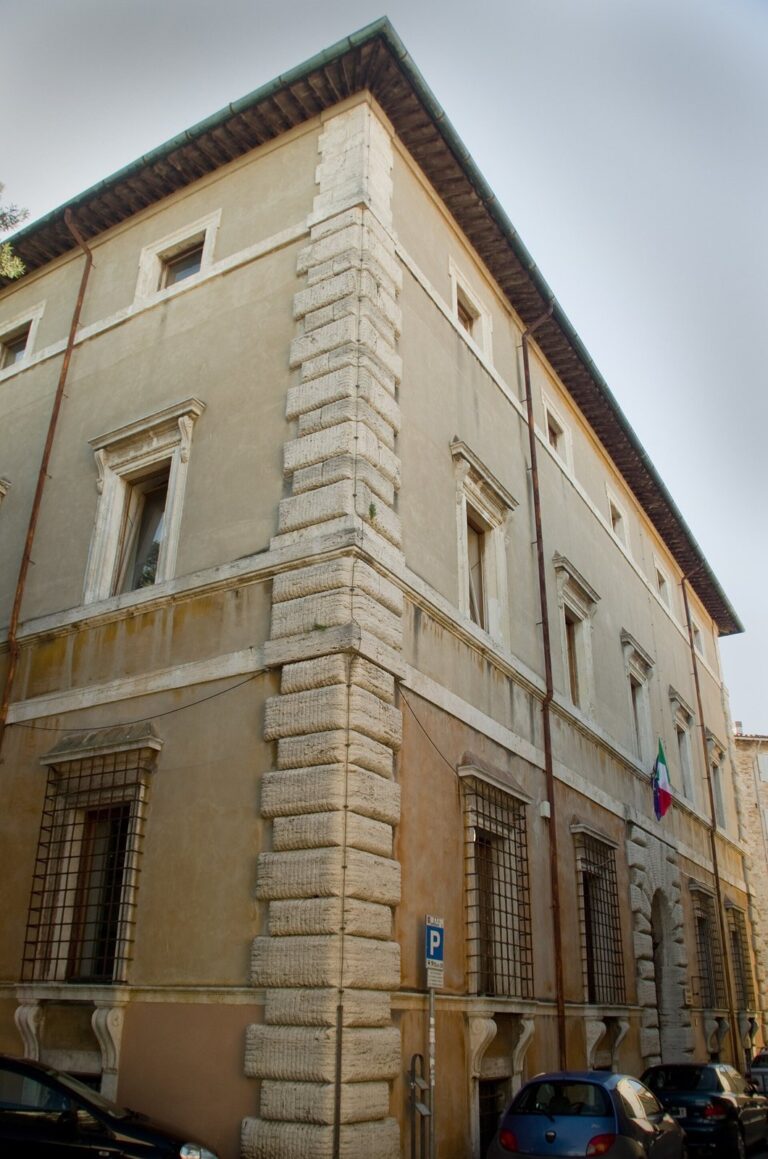
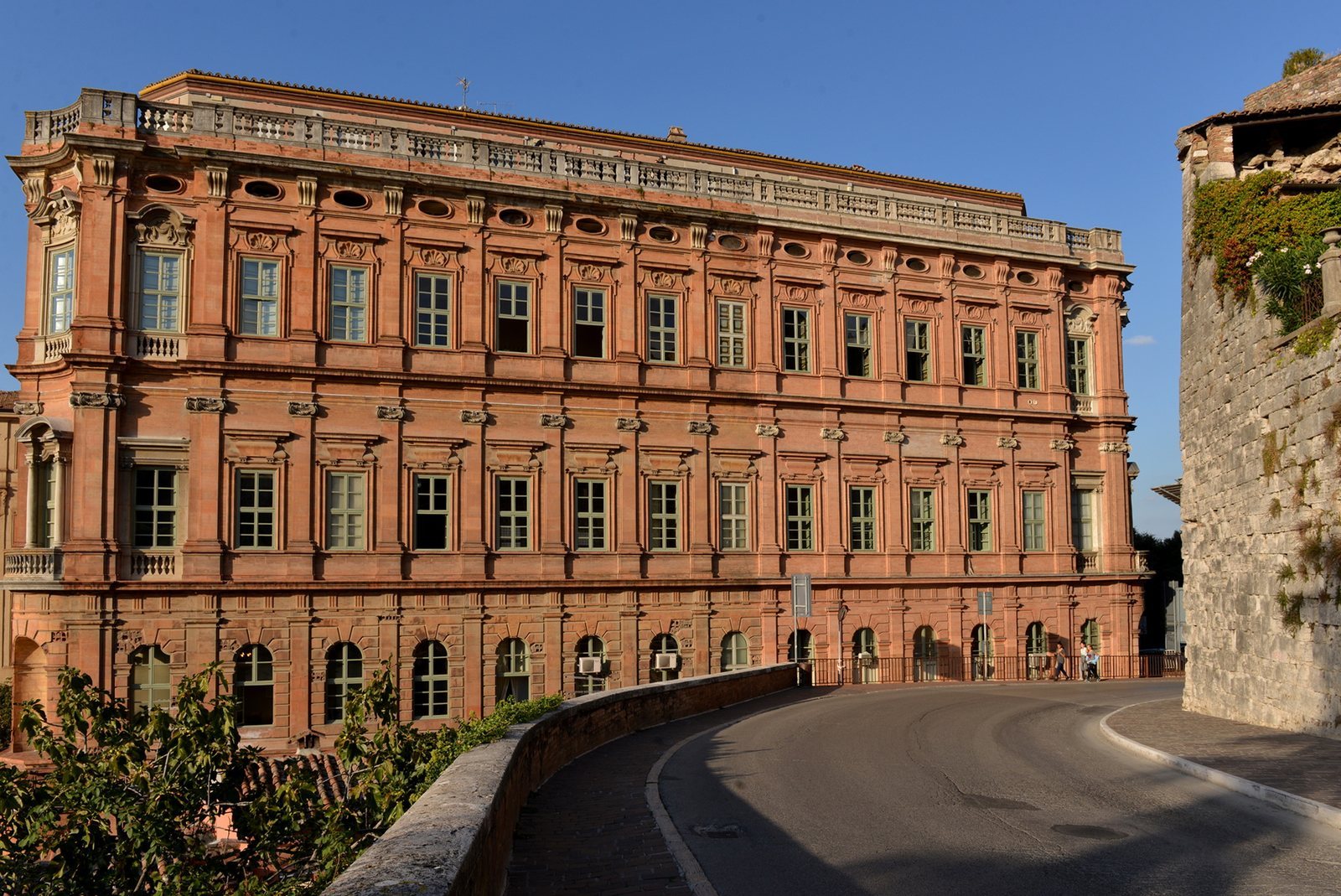
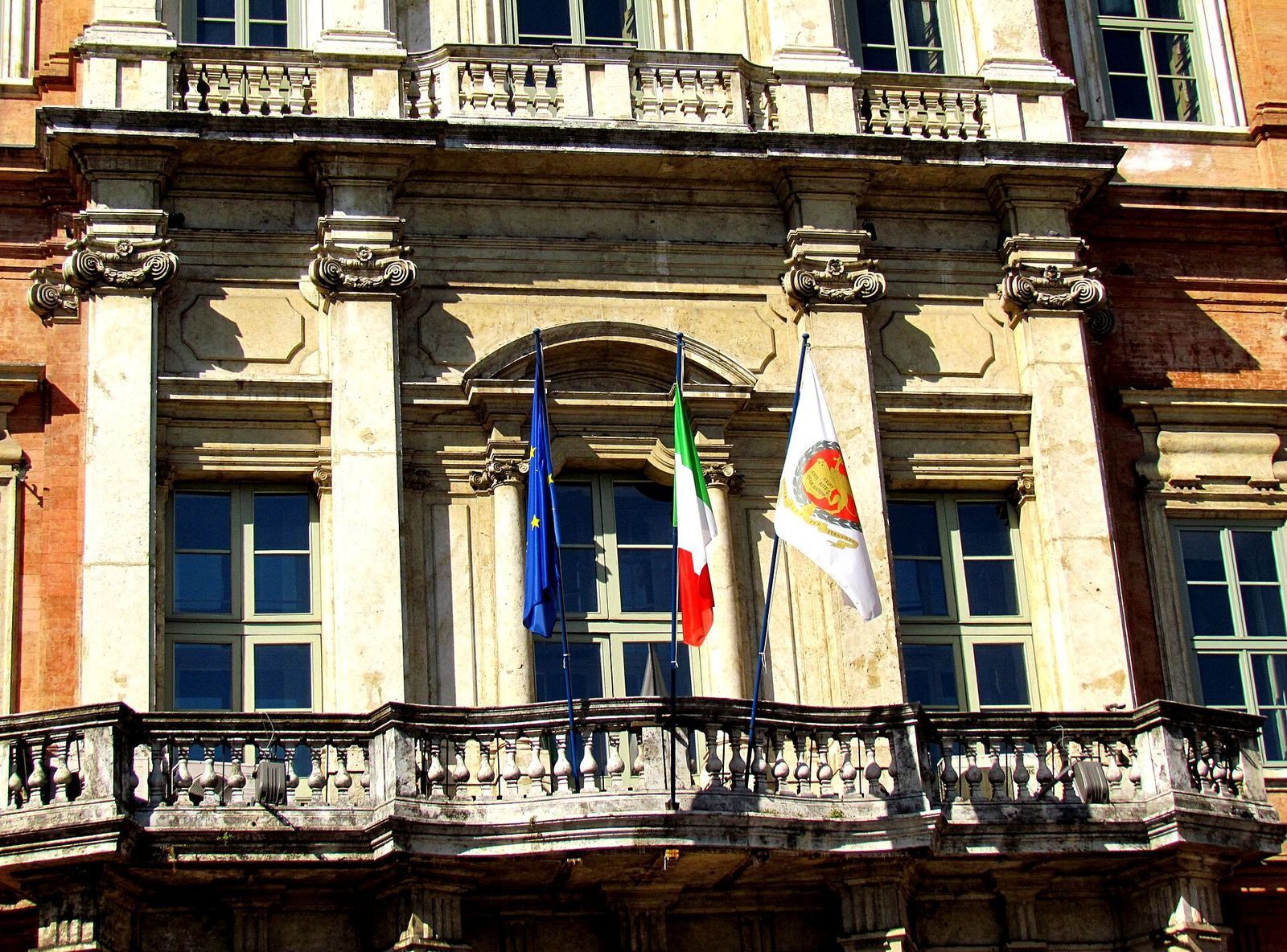
The Baroque palace has a main façade arranged in broad groups of large windows, with brick cornices and pillars. Inside, the vestibule and grand entrance staircase are noted for their architectural quality.
University Additions and Hall
Rear Façade and Wing
A rear façade and a new wing were added in 1931, extending the palace during its use by the university.
Aula Magna
The university’s main hall, the Aula Magna, was designed by architect Dino Lilli. It contains a preserved series of related wall paintings titled The Apotheosis of Rome, painted by Gerardo Dottori in the 1930s.