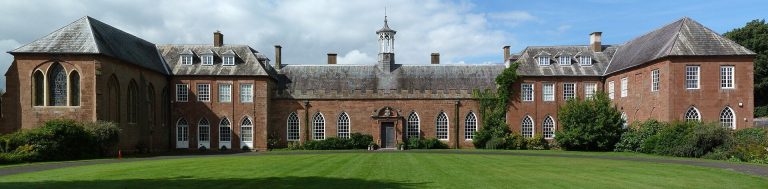
Grafton Manor: A Historic Manor House and Estate in the United Kingdom
Site at a Glance
- Popularity
- High
- Country
- United Kingdom
- Primary era
- Early Modern
- Eras represented
- Early Modern
- Civilizations
- English
- Site type
- Domestic
- Remains
- Manor House
On this page9 sections
History
Grafton Manor is a historic manor and estate in the United Kingdom, established before the Norman Conquest of 1066. Its name means “settlement at or near the wood” and may reflect a connection with woodland management on a larger estate. The manor’s lords held influence in county affairs, and its later history became closely associated with Catholic worship and political conflict.
Before and after the Norman Conquest
Before the conquest, five thegns, members of the Anglo-Saxon landholding class, held the manor from Earl Edwin and owed support to their lord. By 1086, Roger held it from Urse d’Abetot. For part of the period between the reigns of Henry II and Edward I, Grafton also came under the forest law of Feckenham Forest. Such laws imposed special controls on hunting and the use of woodland resources.
Records from the twelfth and fourteenth centuries trace a succession of lords from the de Grafton family. Henry is named in 1166, followed by Richard in 1166–67 and Ralph during King John’s reign. Two successive men named John followed, then Edmund in 1315 and his son John in 1349–50. In 1350–51, John’s son Roger granted the manor to Thomas Beauchamp, Earl of Warwick. By 1367–68 it was held by John de Hastings, and later passed to his daughter Maud, who married Ralph Stafford. Edmund de Grafton represented Worcestershire in the early House of Commons on four occasions. Other lords also served the county as High Sheriff, the Crown’s senior county official, or as members of Parliament.
The Staffords and late medieval conflict
Ralph Stafford died in 1409–10, leaving Grafton to his son Humphrey. Humphrey’s arrest had been ordered in 1401. His son John held the manor from 1419 to 1422 and inherited Upton Warren as well; John’s brother Humphrey then became heir. Humphrey and his brother William died fighting the forces of Jack Cade during his 1450 rebellion. Cade took Humphrey’s armour and clothing and wore them.
A later Sir Humphrey Stafford inherited Grafton and Upton Warren in 1449–50. Accused of attacking the Harcourt family in 1450, he faced an arrest warrant. He fought for Richard III at the Battle of Bosworth, then broke sanctuary, the protection offered to fugitives in a sacred place, and backed the Yorkist rebellion led by Viscount Lovell. Henry VII had him executed for treason at Tyburn on 8 July 1486.
Talbot ownership and Catholic worship
Grafton and Upton Warren passed to a branch of the Talbot family connected with the Earls of Shrewsbury. Sir Gilbert Talbot, who also served as Keeper of Feckenham Forest, held the manors until his death in 1517. The estates then passed through his sons Gilbert, who died in 1542, and John, who died in 1549. John’s son John died in 1555; that man’s son John held the estate until his own death in 1611. The last of these Johns was a prominent Catholic recusant, a person who refused to conform to the Church of England. He was suspected of involvement in the 1605 Gunpowder Plot, a conspiracy to destroy Parliament and kill King James I, because his daughter Gertrude married one of its plotters, Robert Wintour.
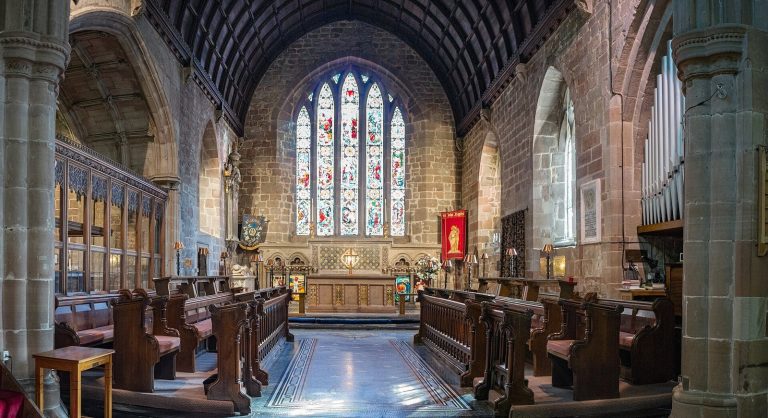
After the Reformation, Grafton became associated with Catholic worship in Worcestershire, and St Michael’s Chapel served as the base of a Roman Catholic mission. The chapel had originally been attached to the parish of Bromsgrove. William of Blois, Bishop of Worcester, granted it to the sacrist of St Mary’s in Worcester, a church officer responsible for the buildings and furnishings. The sacrist was required to burn a taper before King John’s tomb in Worcester Cathedral. Disputes followed between the de Grafton family and the sacrist over inheritance of the advowson, the right to nominate a priest, and responsibility for maintenance. The right later passed to the Staffords at Grafton and then to the Talbots.
The Shrewsbury family and the Civil Wars
George Talbot succeeded to the title of Earl of Shrewsbury in 1618. John Talbot, the 10th Earl, took part in the English Civil Wars, conflicts that began between supporters of Charles I and Parliament and continued in later struggles over the monarchy. John’s son Francis was active in the war in Worcestershire and served on its Committee of Safety, a body concerned with wartime security and defence. The military role of prominent Catholics, including the Talbots, fuelled resentment in the county. In 1646–47, Clubmen, locally organized armed groups seeking to protect communities from military activity, formed in western Worcestershire. Their proclamation opposed the presence of armed forces and plundering, and rejected obedience to Catholics and recusants or their appointment to state and judicial offices.
During the third Civil War, Francis Talbot joined Charles II’s largely Scottish forces at the Battle of Worcester. After their defeat by Oliver Cromwell’s New Model Army, Parliament’s reformed professional army, Francis’s cavalry troop helped Charles escape. John Talbot is said to have accompanied the king during his flight.
Later ownership and restoration
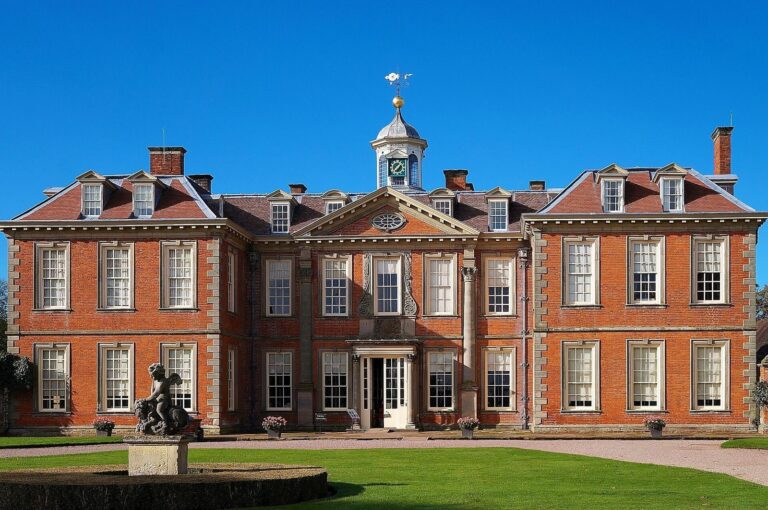
Charles Talbot, the 12th Earl of Shrewsbury, served several English monarchs and became Duke of Shrewsbury in 1694. He built Heythrop Park as the family’s principal residence. A fire in 1710 damaged parts of Grafton Manor. When Charles died in 1718, the dukedom ended, and later owners of Grafton again held the title of Earl of Shrewsbury.
In 1860, the earldom and property passed to Henry Chetwynd-Talbot, the 18th Earl of Shrewsbury, bringing Ingestre Hall and other properties into the estate. The extent of the Talbots’ use of Grafton at that time is uncertain. The family retained the estates and the titles to the manors of Grafton and Upton Warren into the early twentieth century. Grafton Manor was sold to Alfred Murray-Willis in 1934. Architect David Brandon restored the manor house in 1860, with further restoration taking place in the later twentieth century.
Remains
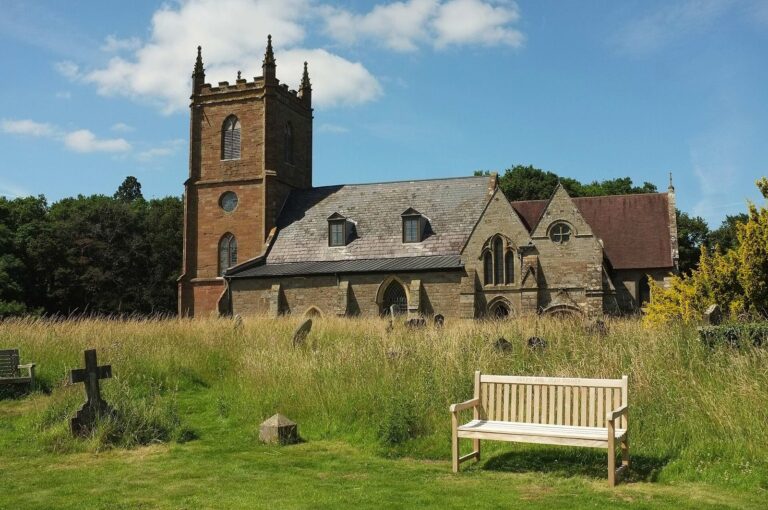
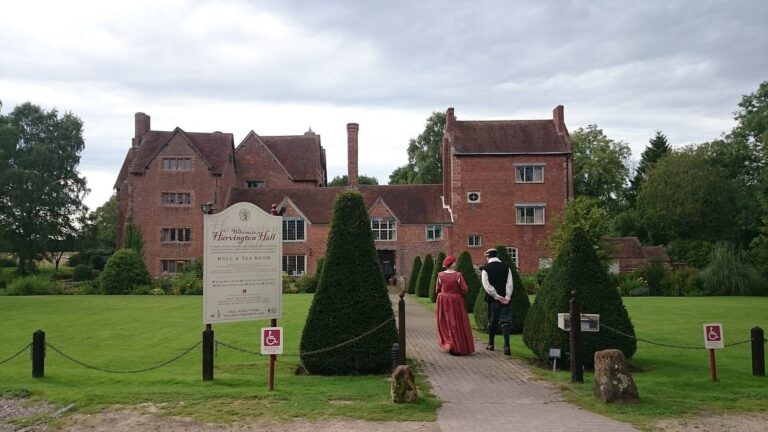
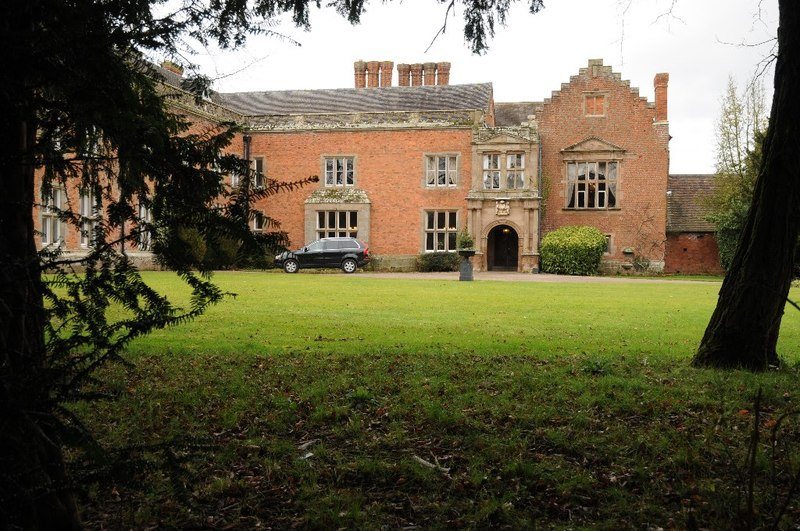
The architectural remains include an L-shaped manor house and St Michael’s Chapel, which stands beside it with a small burial ground. The house was built in the early sixteenth century and extensively altered around 1567.
The manor house
An inscription above the parlour window reads: “Plenti and grase ti in this plase whyle even man is plesed in his degre there is both pease and uniti. Salaman saith there is none acorde when every man would be a lorde.”
St Michael’s Chapel and burial ground
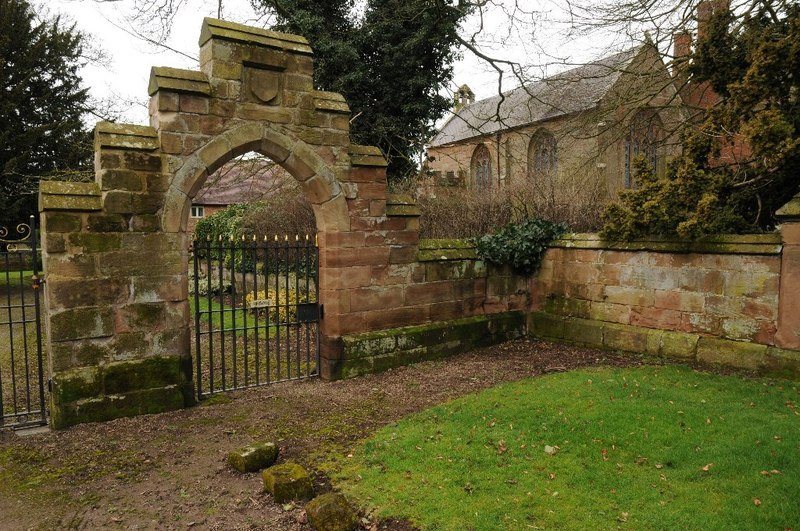
The chapel stands adjacent to the manor house, with a small burial ground beside it. It had fallen into disuse and ruin by the end of the eighteenth century.