St Giles’ Church, Oxford: A Medieval Parish Church
Site at a Glance
- Rating
- 4.5
- Popularity
- Low
- Country
- United Kingdom
- Primary era
- Medieval
- Eras represented
- Medieval
- Civilizations
- English
- Site type
- Religious
- Remains
- Church
On this page13 sections
History
St Giles’ Church, Oxford, is a Church of England parish church in the United Kingdom, built in the Norman period for Edwin, son of Godegose, and completed in 1120. Edwin was its founder. The Domesday Book, William I’s survey of England completed in 1086, records that a landholder north of Oxford intended to build a Norman church there.
When the church was built, it stood in open fields about 550 yards (500 metres) north of Oxford’s old city wall. Open ground separated it from the wall, within which about 1,000 people lived at the time. In 1139 Edwin gave the church and its property to Godstow Abbey, a newly established Benedictine monastery about two miles (3.2 kilometres) to the northwest. Hugh, Bishop of Lincoln, consecrated the church in 1200. St Giles’ Fair was founded to mark the consecration and continues today.
From abbey ownership to St John’s College
Godstow Abbey surrendered St Giles’ and its lands to the Crown in 1539, during the dissolution of the monasteries, the Crown’s suppression and seizure of monastic institutions and property. In 1542 Henry VIII granted the church to his physician, Dr George Owen. Owen’s son Richard sold it in 1573 to Sir Thomas White, then Lord Mayor of London.
White had established St John’s College in 1555 from the former Cistercian house of St Bernard, east of St Giles’ Street. He granted the church to the College, which has held the parish advowson, the right to nominate the parish’s incumbent, ever since.
Civil War damage and later repairs
Among St Giles’ Laudian vicars were William Juxon, who served from 1610 to 1615, and Thomas Turner, vicar from 1624 to 1629. Laudians supported church reforms associated with Archbishop William Laud, including episcopal authority and ceremonial worship in the Church of England.
The church was damaged during the English Civil War, the mid-17th-century conflict between supporters of Charles I and Parliament. Parliamentarian forces besieged Oxford, where Royalist troops defended the king. St Giles’ vicar John Goad is said to have led services during the Parliamentarian artillery bombardment of the city in 1645. The war may also have destroyed the tomb of Henry Bosworth. Repairs in the 17th and 18th centuries were limited. In the 19th century, parts of the church were repaired, and work to rebuild the chapel south of the chancel began in 1850.
Parish growth and modern changes
As North Oxford grew, new parishes were formed from parts of St Giles’. St Philip and St James was consecrated in 1862, followed by St Margaret’s, a daughter church of St Philip and St James, in 1883. St Giles’ remains a separate parish but shares a united benefice, an arrangement for shared clergy or administration, with those churches. It belongs to the Church of England’s Diocese, Archdeaconry and Deanery of Oxford, within the Province of Canterbury. In 2011 the church’s eight bells were removed for repair and tuning and returned for rehanging that November.
Remains
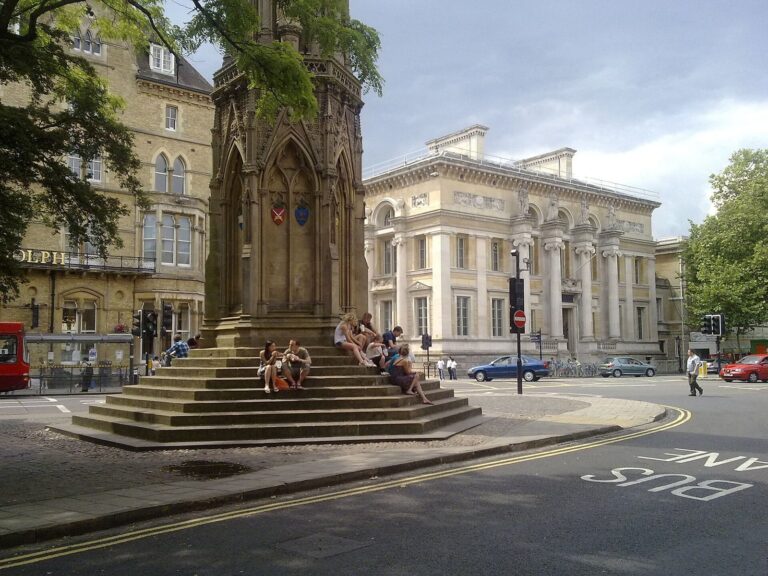
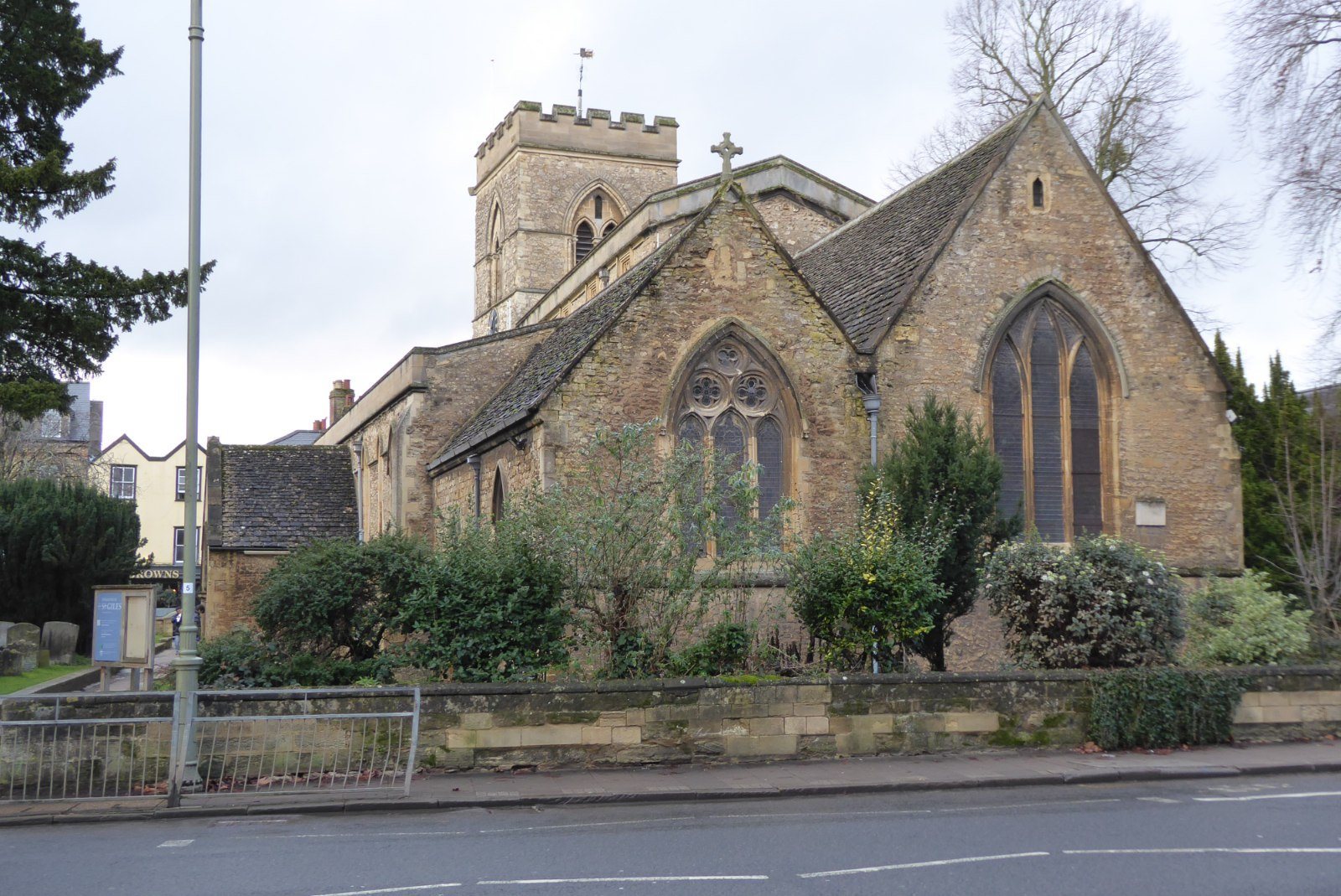
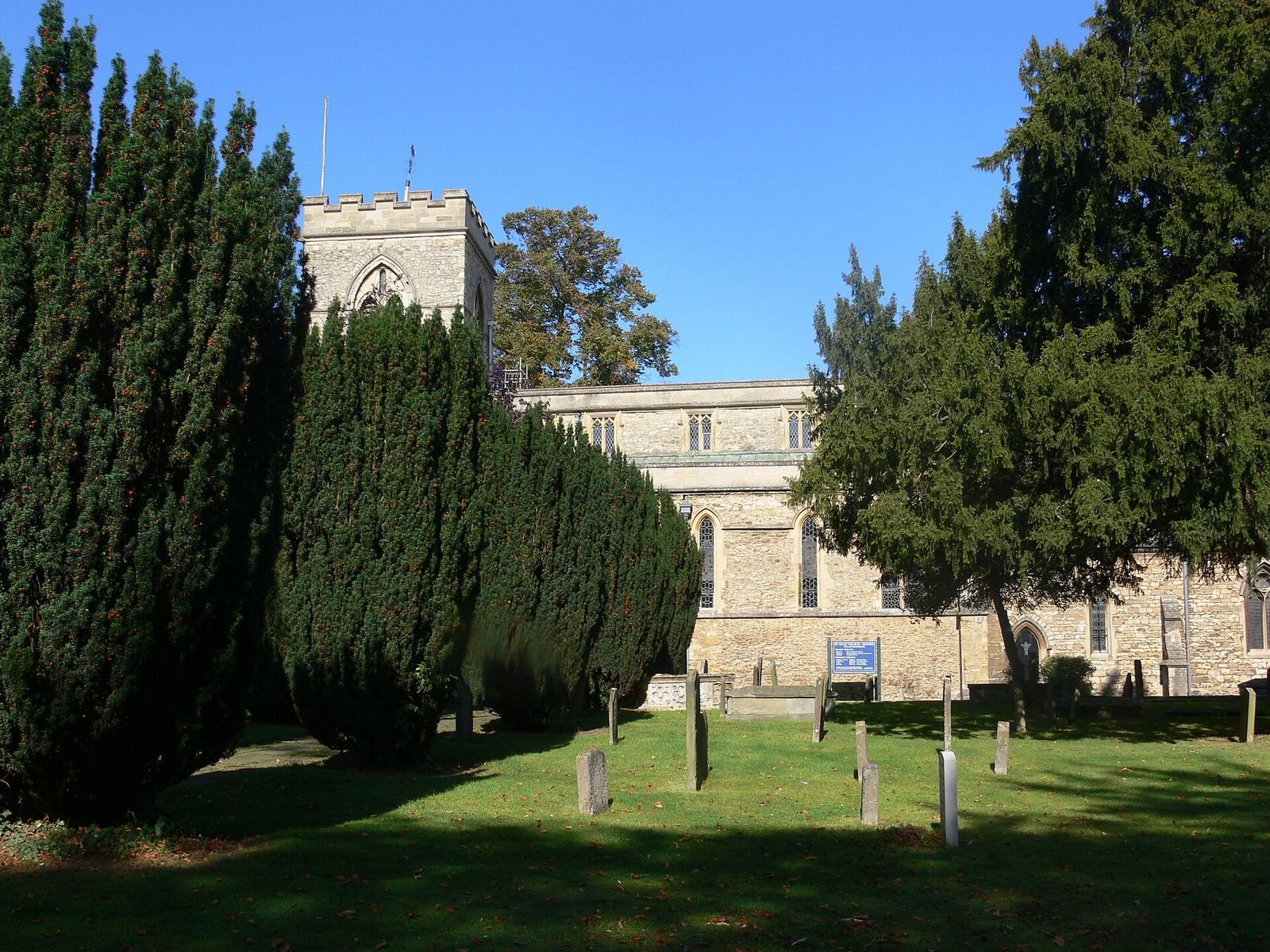
St Giles’ stands at the northern end of the broad thoroughfare of St Giles’, where it meets Woodstock Road and Banbury Road. The Oxford War Memorial adjoins the south end of the churchyard. The church combines Norman architecture, the Romanesque style developed in England after the Norman Conquest, with Early English and Decorated Gothic, successive phases of English Gothic work. Its surviving medieval fabric dates principally from the 12th and 13th centuries.
Medieval building fabric
12th-century remains
Two 12th-century windows survive on the north side of the nave clerestory, the high wall with windows above the lower roofs. The lower parts of the bell tower also belong to this period.
Early 13th-century tower and aisles
The bell tower was completed early in the 13th century. The aisle arcades, rows of arches separating the aisles from the nave, and the narrow, pointed lancet windows are also of this period.
Decorated Gothic chancel
The chancel, the part of the church around the altar, was built in the Decorated Gothic style late in the 13th century.
Columns, cross and monuments
Tower columns and consecration cross
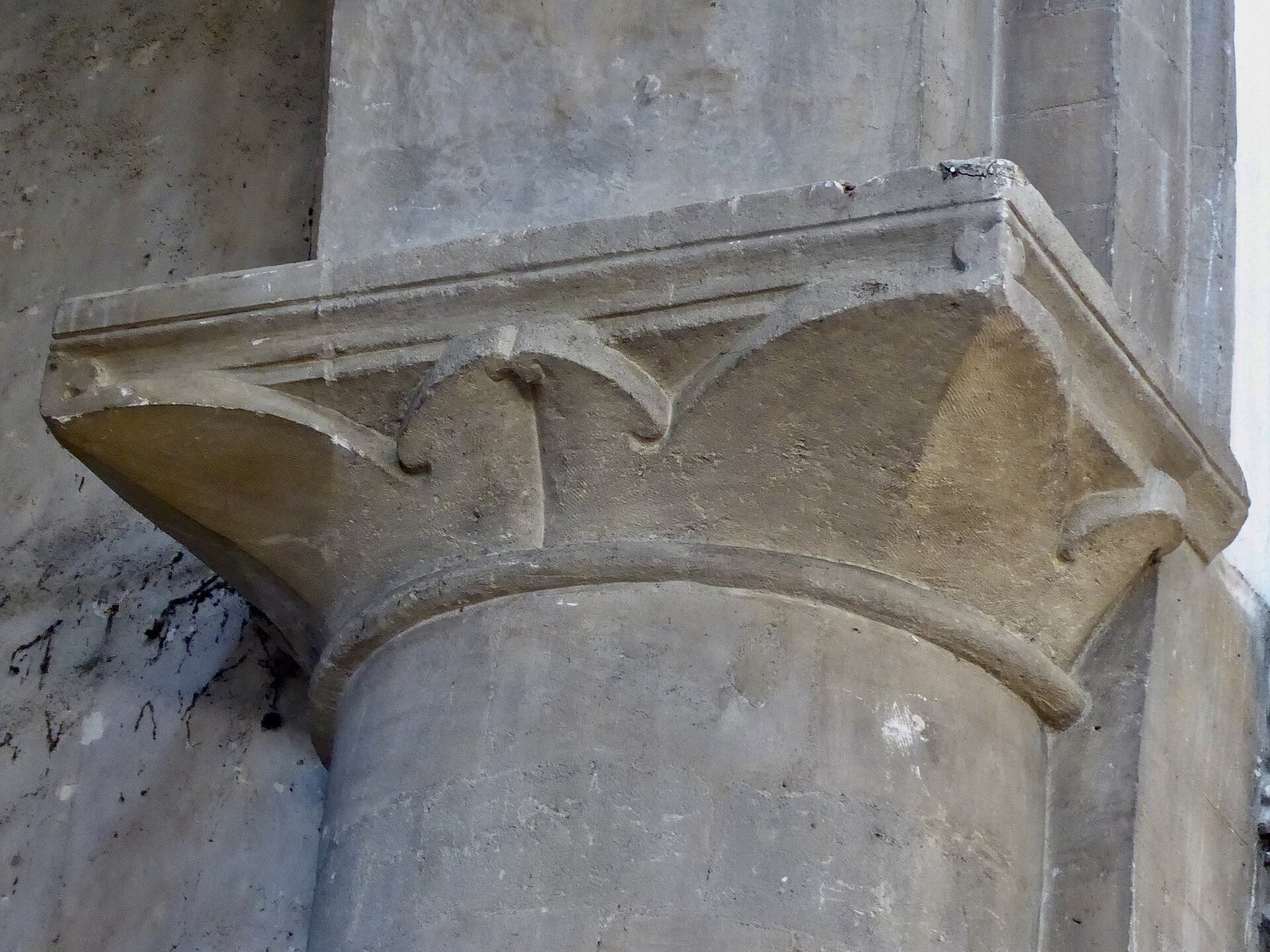
Thick columns support the tower space. Their simple, flowing waterleaf capitals, carved with leaf-like forms, date to about 1170. An organ occupied the tower space from 1953 until its removal in 2025, concealing the capitals and surrounding sculpture. A cross cut into the tower’s western column consists of interlaced circles. It probably dates from the 13th or 14th century and is believed to commemorate the church’s consecration.
Bosworth figures
A group of sculpted figures represents Henry Bosworth, who died in 1634, his wife Alice and their three children. The figures appear to have been made for a tomb.
Bell ring
The tower contains a ring of eight bells. Its tenor, the largest and lowest-pitched bell, was cast by Ellis Knight I of Reading in 1632. William Taylor cast five more in 1850, probably at the Taylor family’s Oxford bell foundry. The treble, the smallest and highest-pitched, and the second bell above it were cast at the Whitechapel Bell Foundry in 1927 by Mears and Stainbank.