Pitt Rivers Museum: An Archaeology and Anthropology Museum in Oxford
Site at a Glance
- Popularity
- Very High
- Country
- United Kingdom
- Primary era
- Unclassified
- Eras represented
- Unclassified
- Civilizations
- Unclassified
- Site type
- Museum
On this page8 sections
History
Pitt Rivers Museum is an archaeology and anthropology museum in Oxford, United Kingdom, founded in 1884 when Augustus Pitt Rivers gave his private collection to the University of Oxford. The gift established a museum that would also support the university’s teaching in anthropology and archaeology.
Foundation and academic purpose
The donation came with conditions: the university had to appoint a permanent lecturer in anthropology and provide a building used solely for the collection. Edward Burnett Tylor took up the post of Reader in Anthropology in 1885. A Reader is a senior academic rank below professor, and Tylor became the United Kingdom’s first anthropology lecturer. Museum staff continue to teach archaeology and anthropology at the university. Henry Balfour was the museum’s first curator.
The collection began with about 22,000 objects and has since grown to more than 600,000, including extensive photographic holdings. Nearly all the material was donated by colonial officials, travellers, scholars and missionaries. Pitt Rivers stipulated that changes to displays should retain their general guiding principle: presenting the development of design and human culture from simple forms to complex ones. This evolutionary approach is no longer considered suitable for modern displays of archaeological and anthropological material.
Work on a building beside the Oxford University Museum of Natural History began in 1885 and was completed in 1886. Architect Thomas Manly Deane was commissioned to design it. In 1901, Tylor acquired a carved Haida house post and brought it to the museum.
Expansion and changing interpretation
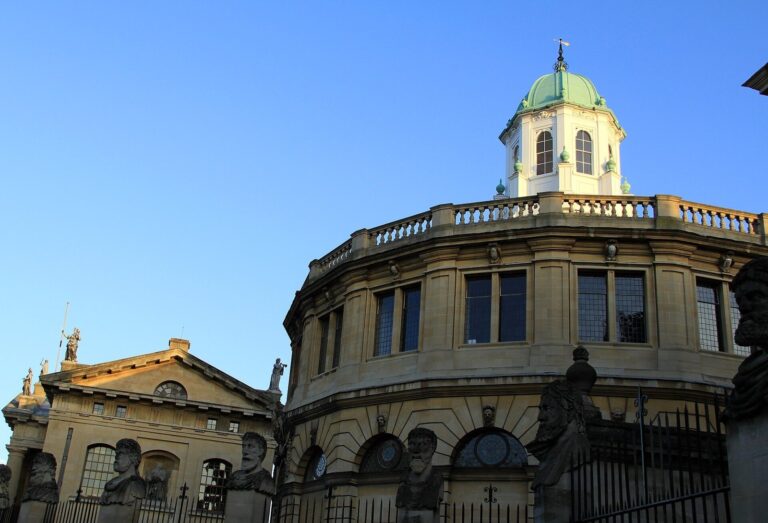
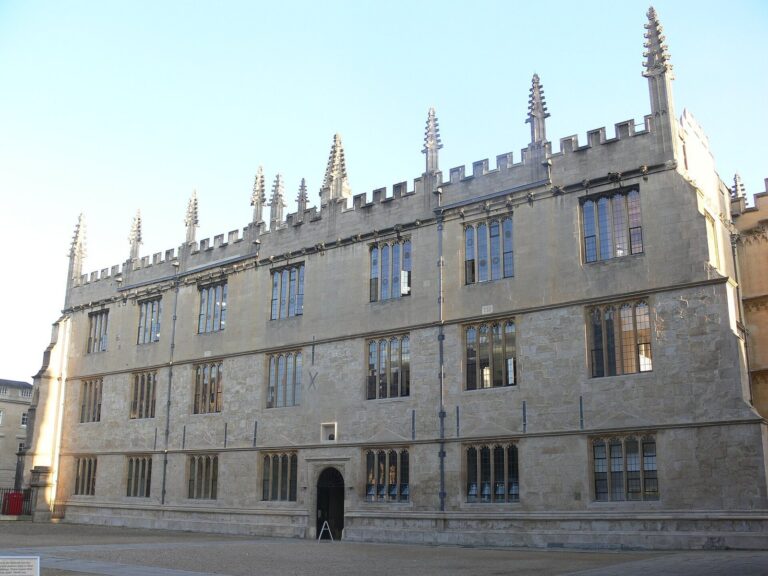
During the 1960s, plans to relieve overcrowding by moving the museum to a larger Banbury Road site came close to approval but were ultimately abandoned. The university selected a circular design by Italian architect-engineer Pier Luigi Nervi. The proposed building was expected to occupy more space than the Sheldonian Theatre, Clarendon Building and Bodleian Library combined. Oxford City Council approved the plans by 32 votes to 29 in 1966, and the university reserved the site while seeking funds. Bernard Fagg, an archaeologist and museum curator who supported the project, suffered a stroke in 1968. The fundraising effort later lost momentum, its committee dissolved, and the university cancelled the scheme in 1970.
A new adjoining building, completed in 2007 after an expansion initiative begun in 2004, provided a conservation laboratory and allowed the museum’s academic staff to return to the area. During the COVID-19 pandemic in 2020, the museum decided to remove displays of shrunken heads and other human remains, which had been exhibited since the 1940s. The museum said that displaying them reinforced racist and stereotypical thinking. It also announced plans for an introductory display addressing its colonial history and for revised labels that would include stories from artists and Indigenous leaders.
The museum has worked with communities to correct gaps and errors in collection information and discuss repatriation. Its Living Cultures initiative involved the Maasai-led campaign group Oltoilo Le Maa and the community-development organization InsightShare. In 2022, the Pitt Rivers Museum and the Oxford University Museum of Natural History returned the remains of 17 Indigenous Australians to the Australian government.
Remains
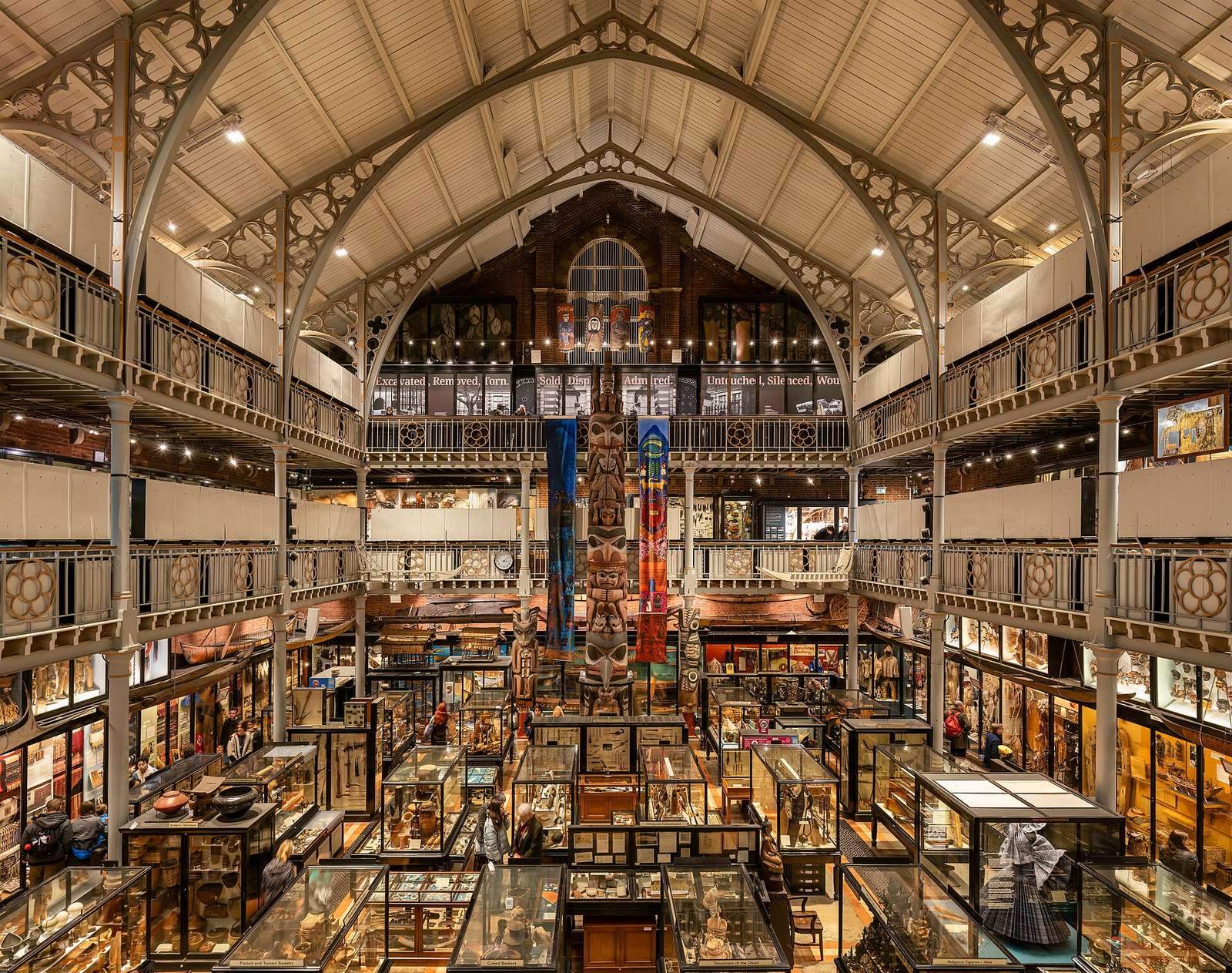
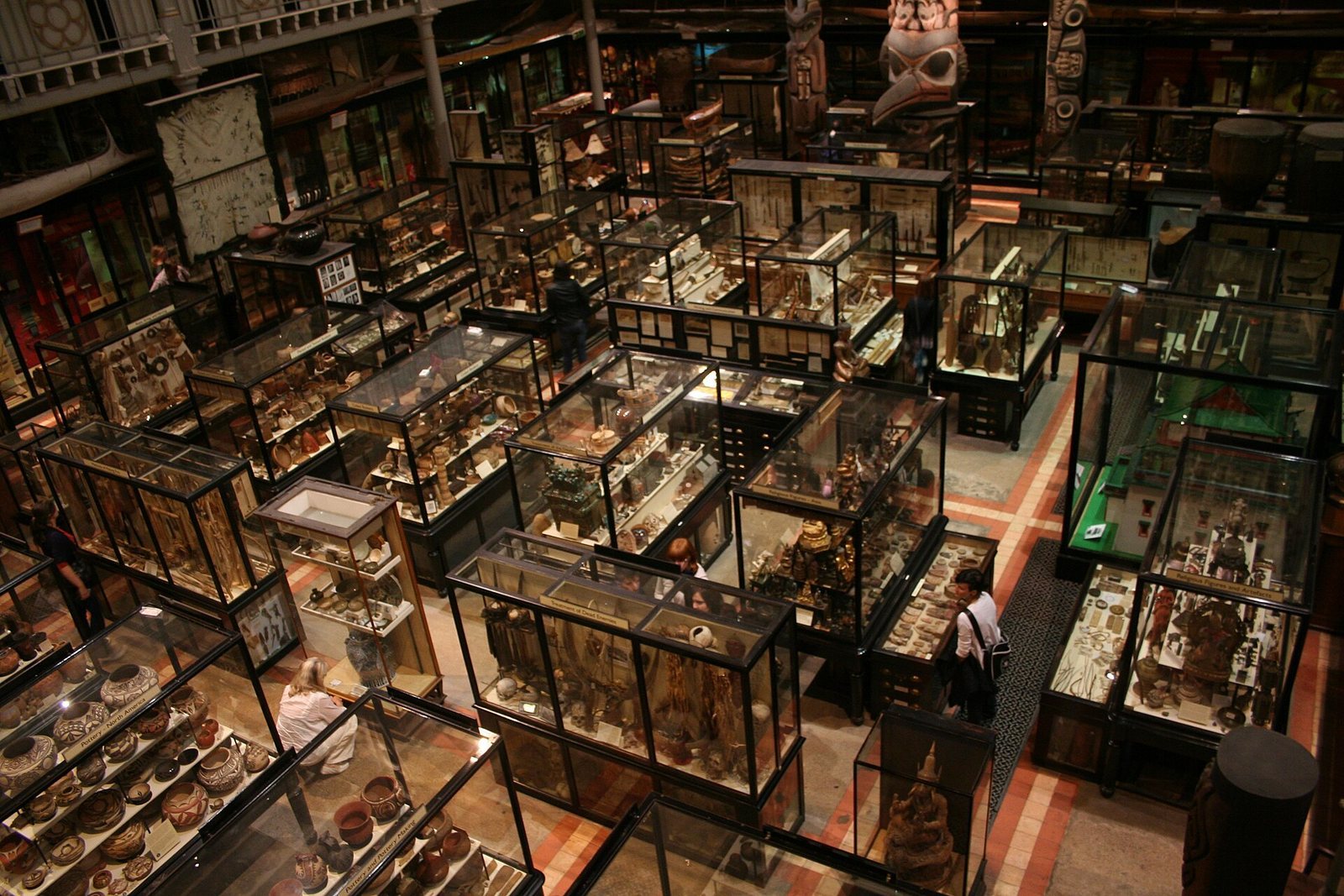
The museum occupies a building attached to the rear, eastern side of the Oxford University Museum of Natural History, with access through that museum. Its main exhibition space is a large rectangular room with colonnades, two mezzanine levels and a high vaulted ceiling. Display cases and objects fill the room.
Exhibition space and displays
Collection arrangement
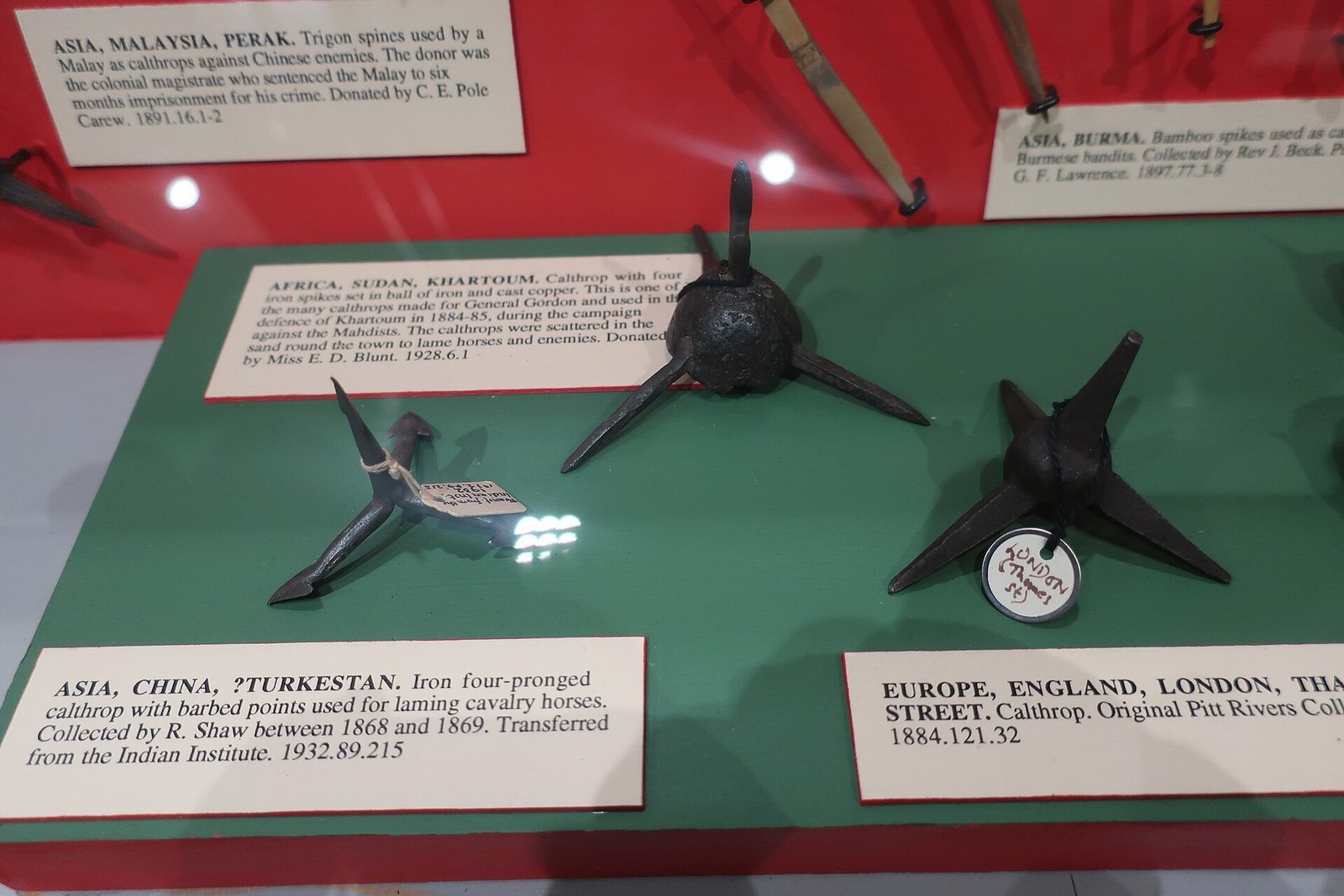
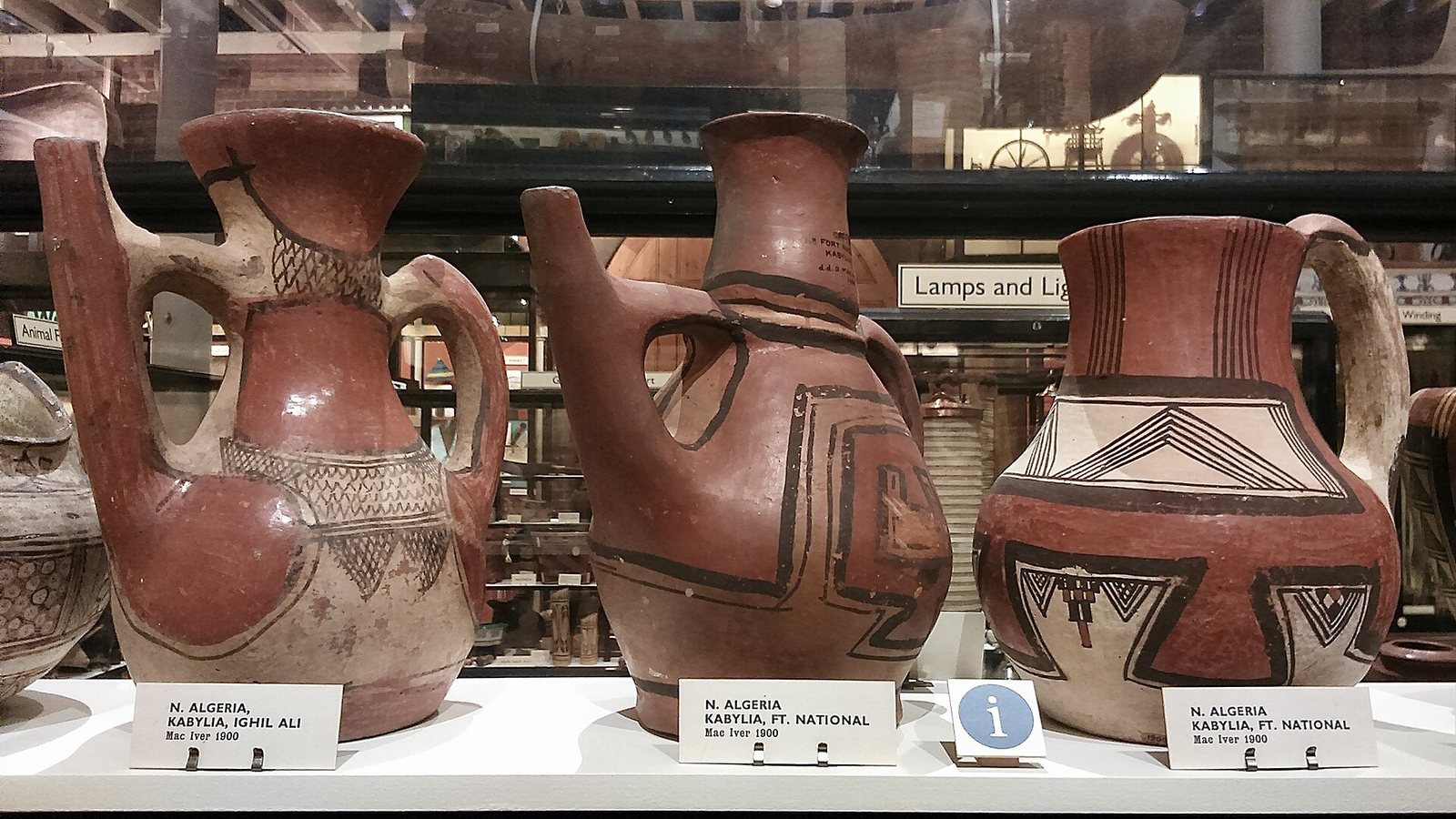
Objects are grouped according to how they were used rather than by date or place of origin. Displays bring together multiple examples of a tool or artefact type, allowing differences across regions and periods to be seen. The exhibits change periodically.
Haida house post
The largest object on display is an 11.36-metre carved Haida house post. The Haida are an Indigenous people of the Pacific Northwest coast, and a house post is a carved post associated with a house. This example originally stood in front of Star House in Old Massett, also known as Uttewas, on Graham Island in British Columbia, Canada. Star House belonged to Chief Anetlas (c. 1816–1893), and its construction is thought to date to 1882. Tylor brought the post to the museum in 1901.
Alterations in 2008–09
Work in 2008–09 removed a gallery built in the 1960s, giving a clearer view of the house post, and returned the original display cases to their earlier positions at the front of the museum. The project also made room upstairs for the Clore Duffield Education Centre, added an entrance platform level with the Natural History Museum to improve access for wheelchair users and parents with strollers, and installed environmental controls.