Morzin Palace: A High Baroque Residence in Prague
Site at a Glance
- Popularity
- Medium
- Country
- Czechia
- Primary era
- Early Modern
- Eras represented
- Early Modern
- Civilizations
- Habsburg, Habsburg Austria, Holy Roman Empire, Kingdom of Bohemia
- Site type
- Domestic
- Remains
- Elite Residence
On this page6 sections
History
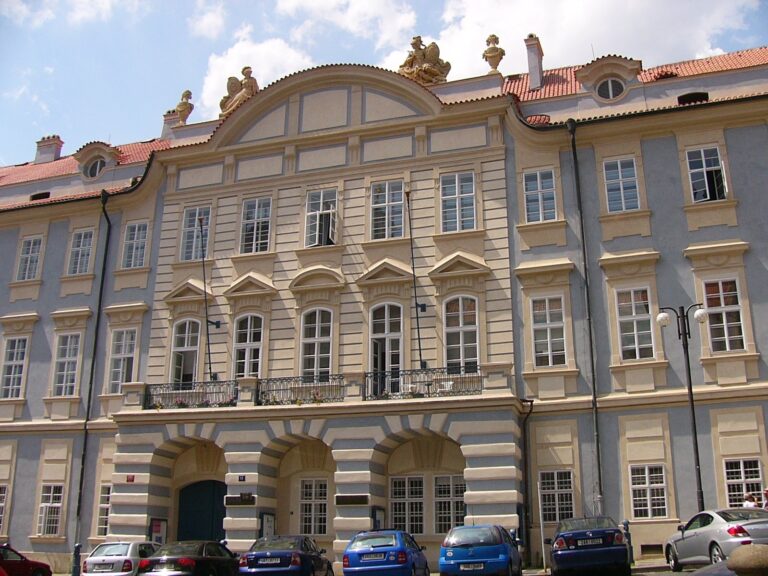
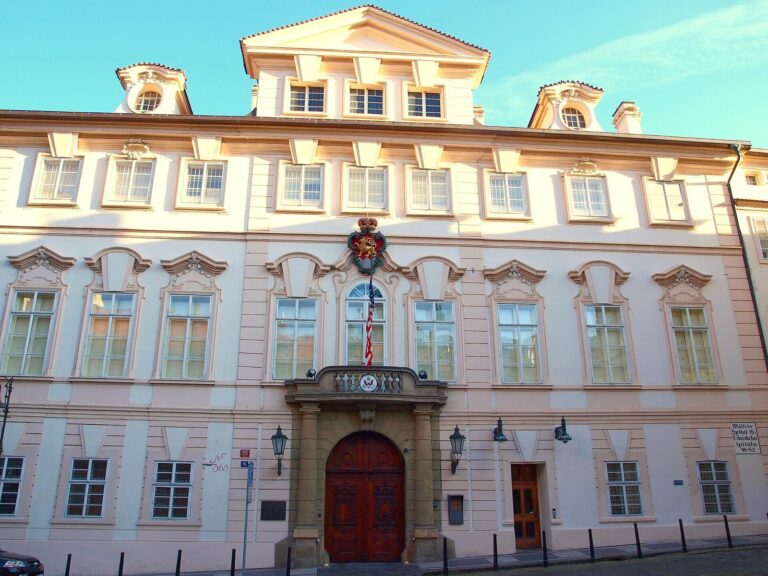
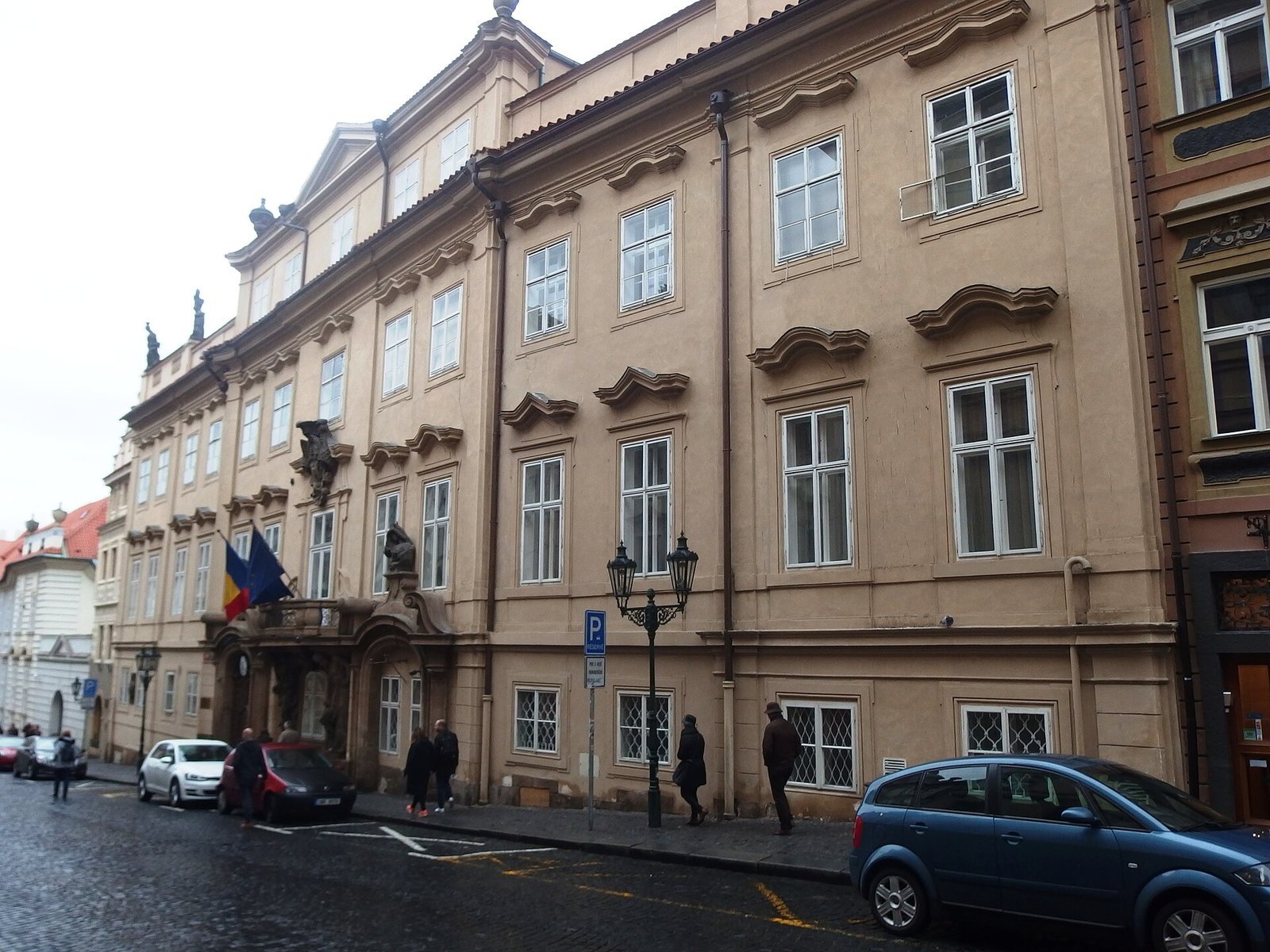
Morzin Palace is a Baroque palace in Prague, Czechia, transformed into a unified High Baroque building on Count Václav Morzin’s commission in 1713 and completed in 1714 under architect Jan Blažej Santini-Aichel. It is regarded as one of Prague’s most significant Baroque palaces. The project followed Count Paul Morzin’s acquisition of several town houses on the site from Maximilian von Wallenstein in 1668. The Morzin family traced its ancestry to the Tyrolean Mohr family, a line of counts.
Music and later ownership
During the eighteenth century, the palace became a center of Prague’s musical life. The German Baroque composer Johann Friedrich Fasch worked there as court music director. The Morzin family retained the palace until 1881, when it passed to their relatives, the Czernin-Morzin counts. They sold it to the Romanian state in 1936, and it has since served as Romania’s embassy in the Czech Republic.
Remains
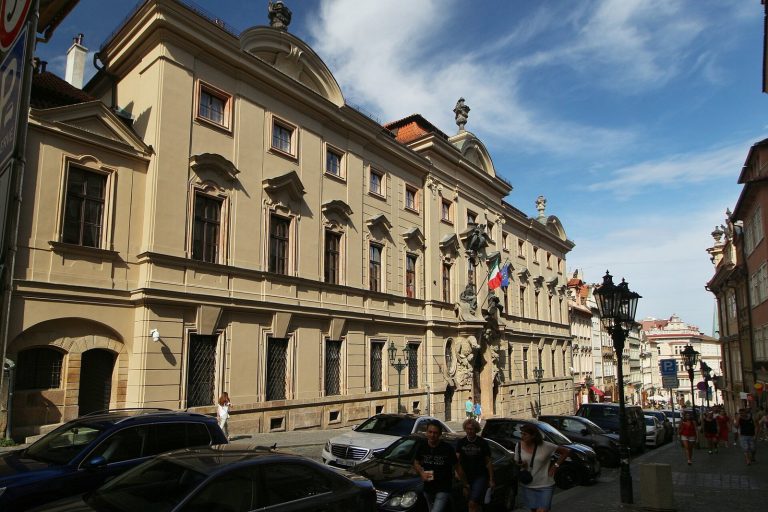
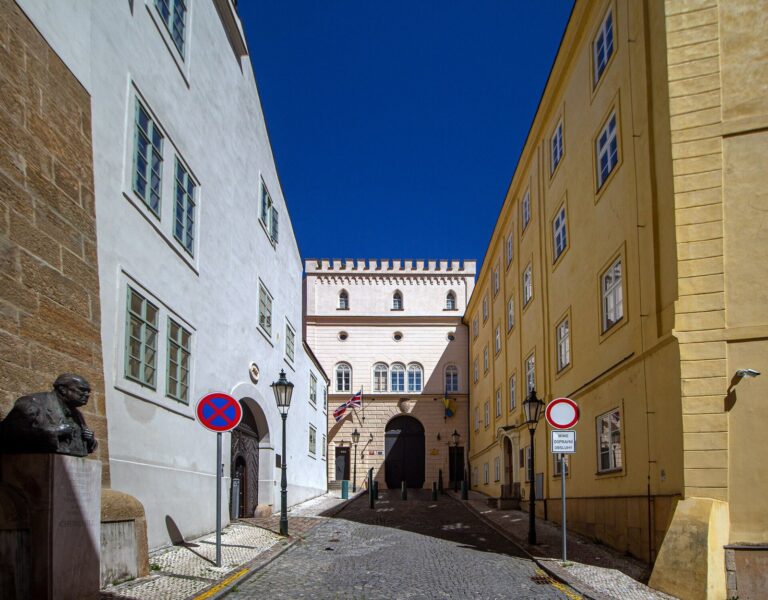
The two-storey palace has a principal facade on Nerudova Street in Malá Strana, near Lesser Town Square and opposite the Italian Embassy. The street forms part of the historic Royal Route between the Old Town and Hradčany, Prague’s historic Castle District.
Facade and interiors
Street facade
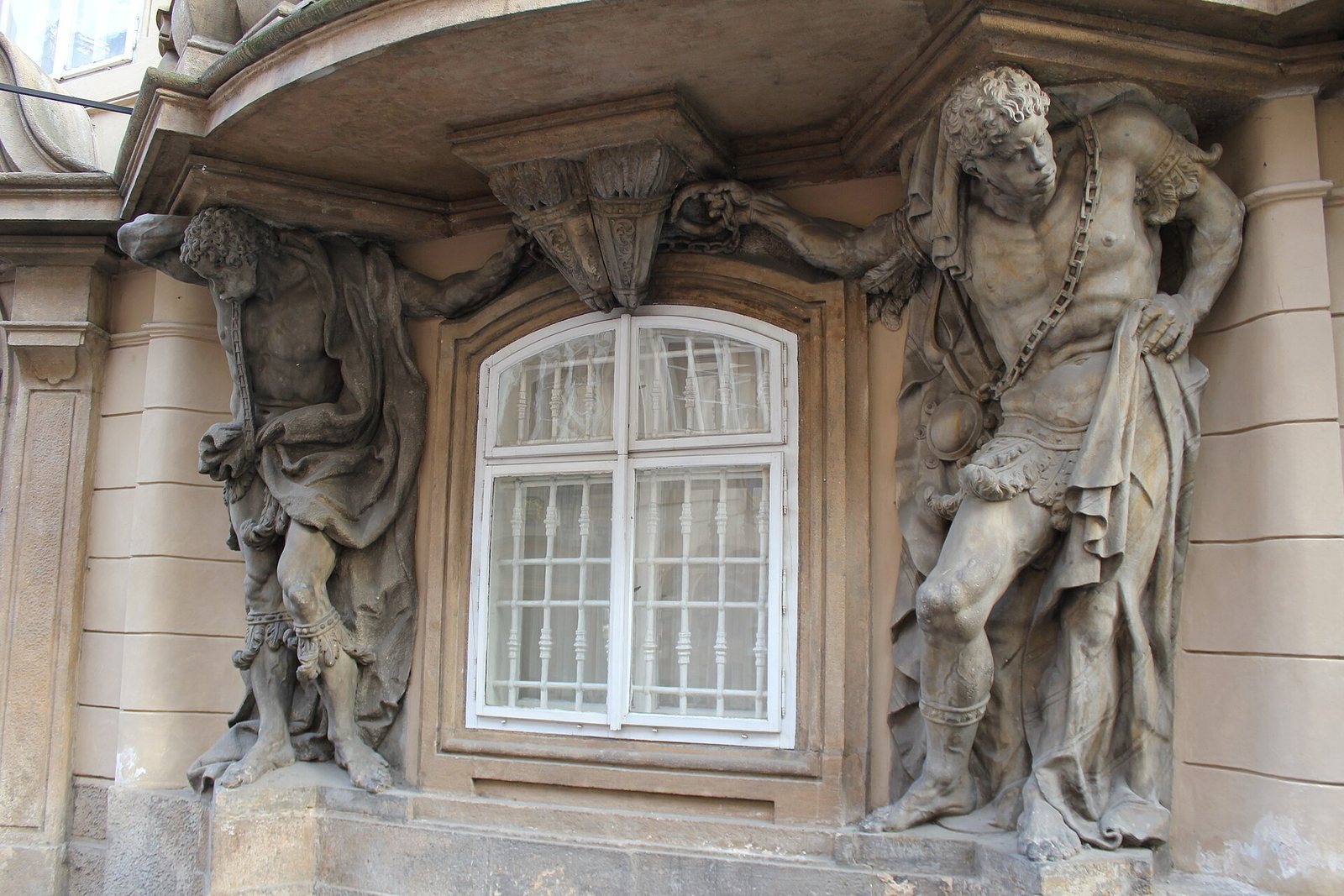
Ferdinand Maximilian Brokoff created the facade’s sculptural ornament, regarded as among the finest in Prague. Two sculpted male figures support the balcony, depicted as chained Moors, a historical European art term for people associated with North Africa and parts of the Muslim world. Their design draws on the Morzin family coat of arms. Figures representing Day and Night stand above the two carriage entrances, while the family arms appear at the center of the portal. The facade also commemorates Mihai Viteazu, also known as Michael the Brave, a ruler of Wallachia around the turn of the seventeenth century.
Interior furnishings
Several rooms retain portions of their eighteenth- and nineteenth-century furnishings.