Łuszczewski Palace in Leszno: An 18th-Century Residence
Site at a Glance
- Rating
- 4.5
- Popularity
- Low
- Country
- Poland
- Primary era
- Early Modern
- Eras represented
- Early Modern, Modern
- Civilizations
- Polish–Lithuanian Commonwealth, Russian
- Site type
- Domestic
- Remains
- Elite Residence
On this page7 sections
History
Construction and family ownership
Łuszczewski Palace in Leszno, Poland, is a late-Baroque residence, built in the first half of the 18th century for the Łuszczewski family, associated with the Pierzchała coat of arms, a family emblem. The Leszno estate passed to the Szymanowski family, associated with the Jezierza coat of arms, in 1736. The family held it until 1827.
Among the later owners was Maciej Szymanowski, a starosta, an official who administered a district, and castellan of Rawa, a senior territorial official. He was married to Anna Łuszczewska, daughter of Walenty, a deputy chamberlain of Sochaczew, a local official involved in land-boundary disputes. After Maciej, the palace complex passed to his son Jan, a deputy to the Great Sejm, the Polish parliament convened from 1788 to 1792, and then to Jan’s nephew Michał, brother of General Józef Szymanowski. Maciej’s son Józef, a lawyer, writer, and politician, also lived in the palace.
19th-century remodeling
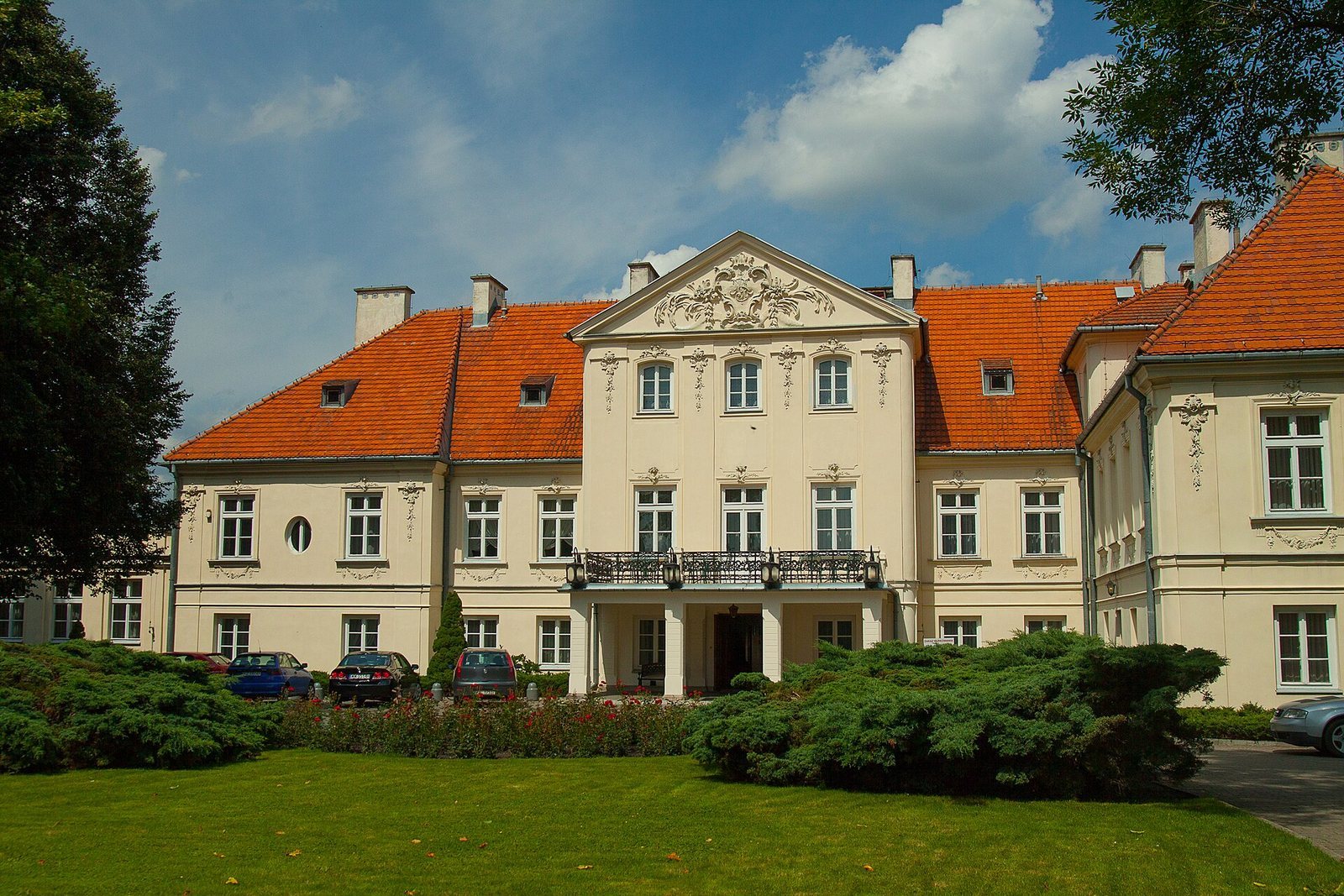
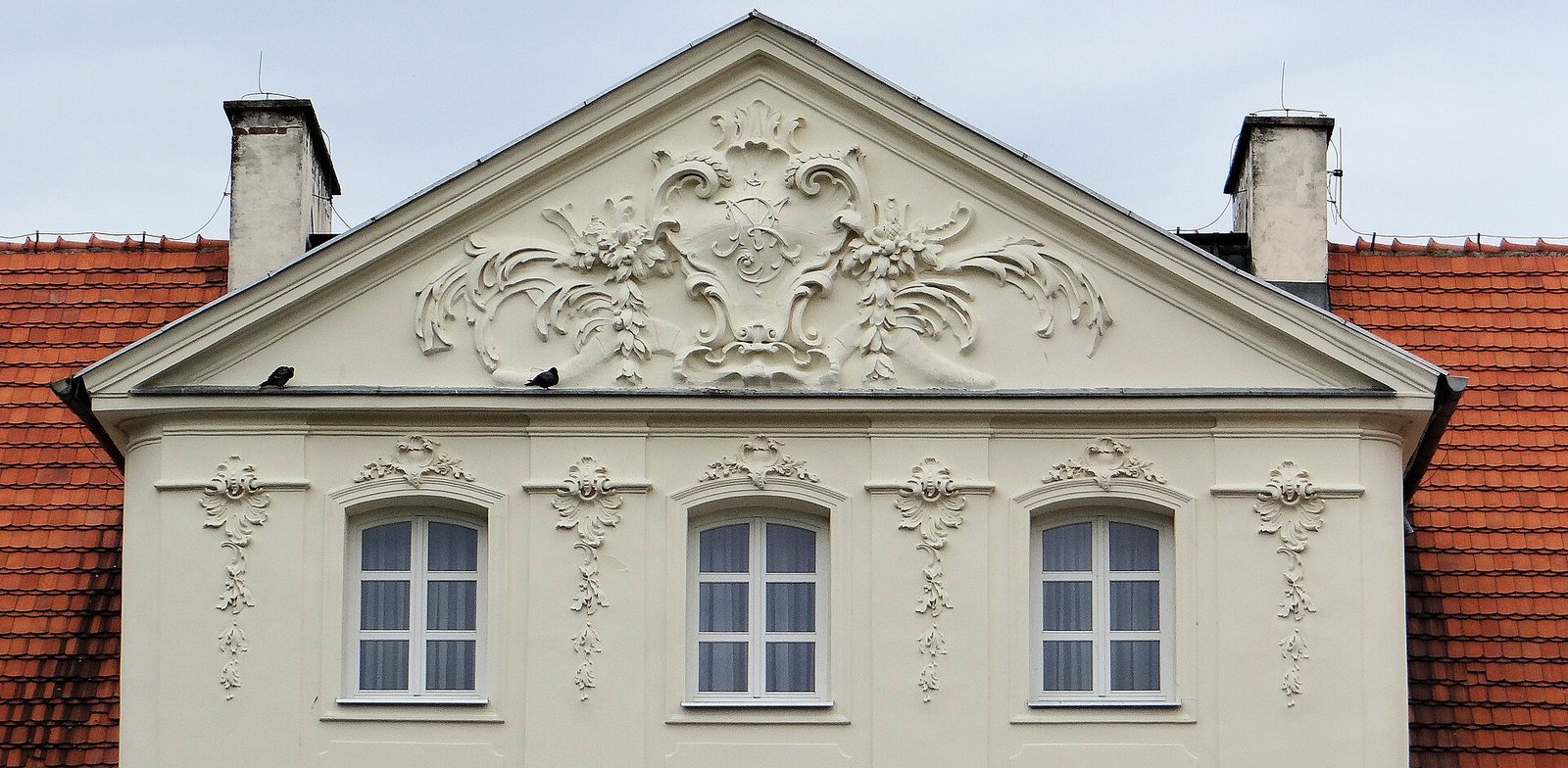
The palace underwent substantial remodeling in the second half of the 19th century. Its facade received Neo-Rococo ornament, a 19th-century revival of Rococo decoration, while the surrounding park was reshaped as a landscape park.
Remains
Palace and grounds
Palace
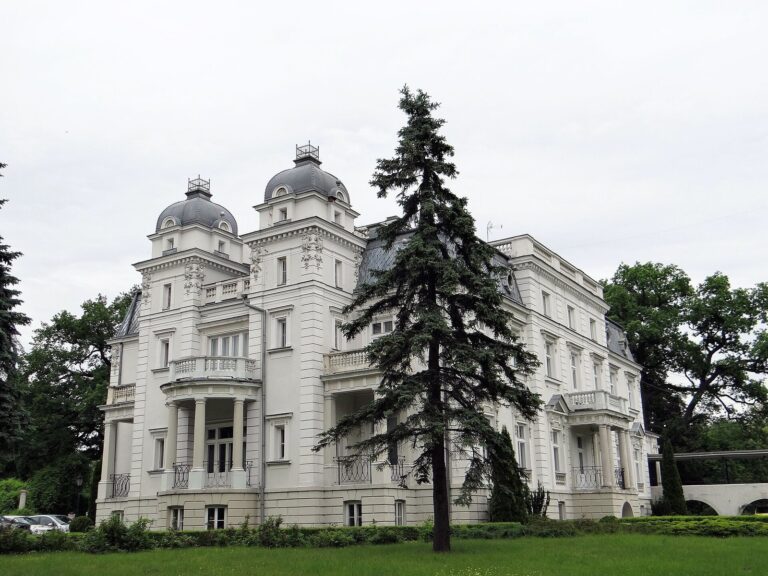
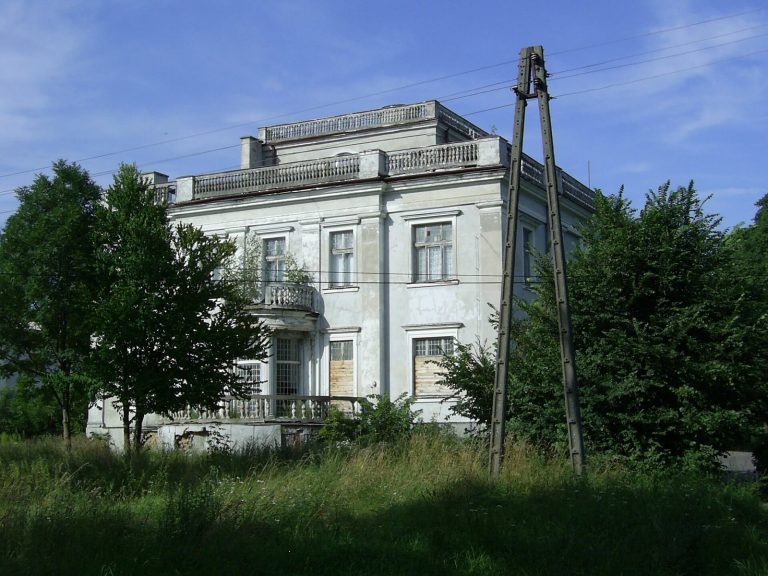
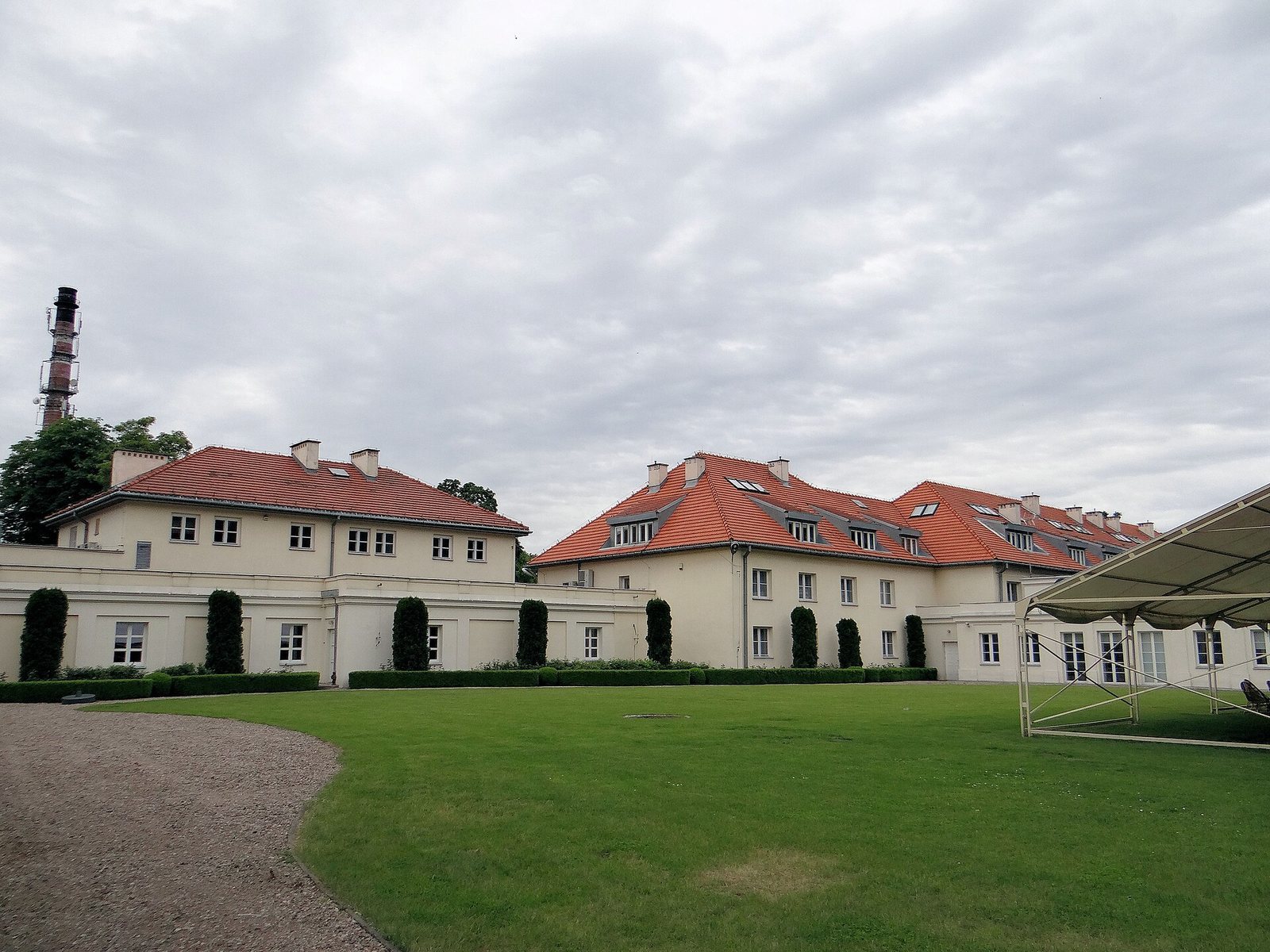
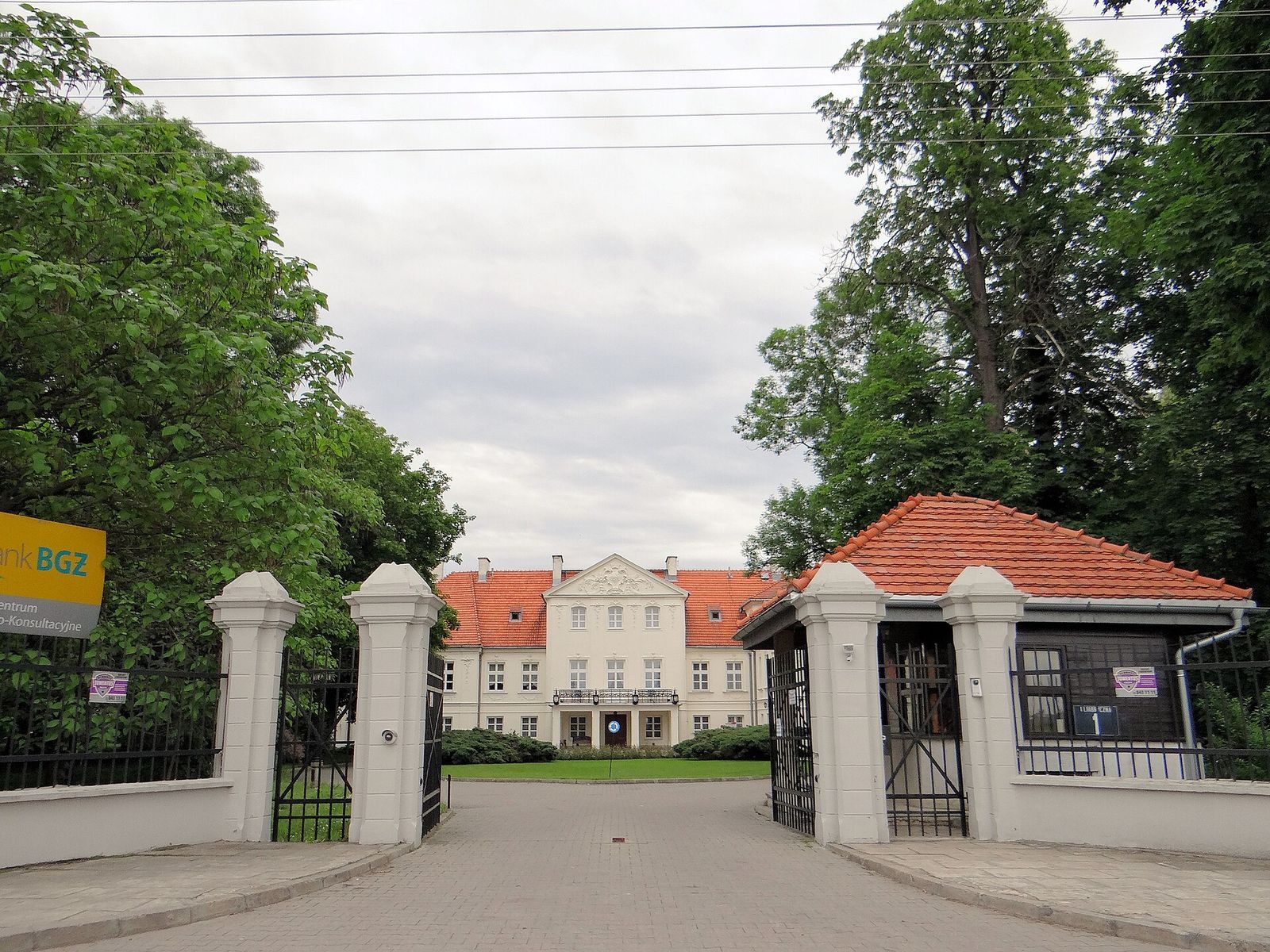
The late-Baroque palace has an L-shaped plan, with its right wing extending toward the entrance gate. Its hipped roof slopes down on all sides. The front facade has a central projection arranged across three vertical divisions, topped by a triangular pediment containing a cartouche, an ornamental frame for a heraldic emblem. Neo-Rococo ornament dating to the second half of the 19th century decorates the facade. Above the main entrance, a terrace rests on four square supports. On the garden side, another terrace and a small balcony face the grounds.
Park
An 18th-century park surrounds the palace and includes a pond. During the 19th century, it was transformed into a landscape park.