Andrychów Palace: A Seventeenth-Century Manor in Poland
Site at a Glance
- Rating
- 3.6
- Popularity
- Low
- Country
- Poland
- Primary era
- Early Modern
- Eras represented
- Early Modern, Modern
- Civilizations
- Habsburg, Polish–Lithuanian Commonwealth
- Site type
- Domestic
- Remains
- Manor House
On this page7 sections
History
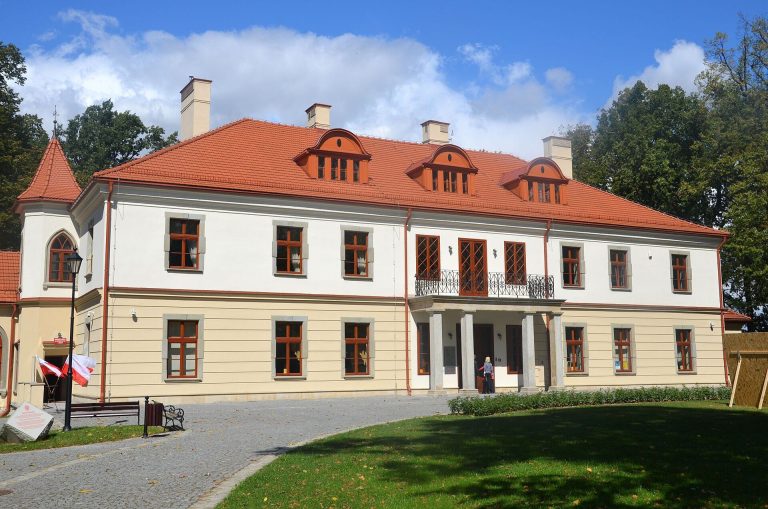
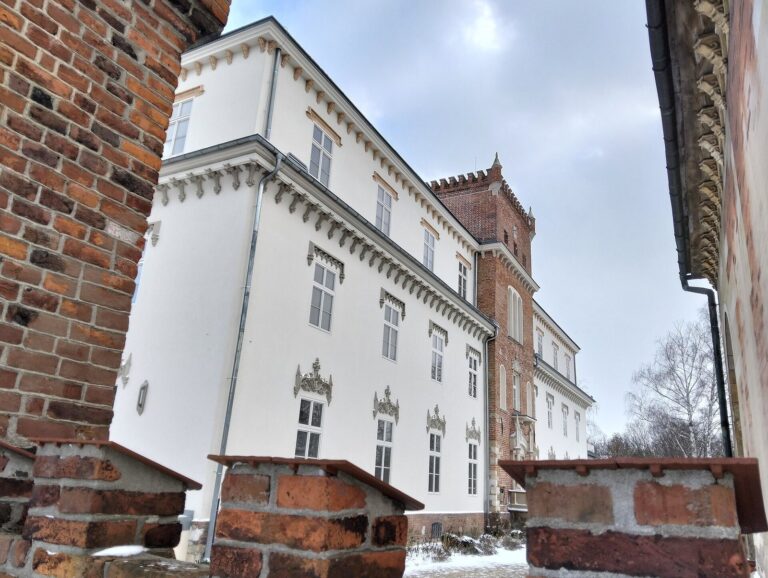
Andrychów Palace, also known as Bobrowski Palace, is a manor in central Andrychów, Poland, built in masonry during the first half of the seventeenth century. A fortified residence may have stood on the site before the manor.
The manor and Ankwicz ownership
Marian Przyłęcki, a landowner who held the Wieprz estate complex, built the manor and moved his residence from Wieprz to Andrychów. In 1756, the property passed to the Ankwicz family, associated with the Abdank coat of arms.
A hall adjoining a small tower hosted one of the Bar Confederation’s meetings. This eighteenth-century uprising was led by Polish-Lithuanian nobles. By 1761, official documents called the property a Castle, a name linked to its earlier defensive character.
The Bobrowski remodelling
In the nineteenth century, the Bobrowski counts enlarged and remodelled the manor, adding two wings and giving it a Classical character. They also laid out an English-style landscape garden.
The grounds had a defensive setting of three ponds and a moat. In 1875, the pond on the marketplace side was filled in.
Remains
Palace and grounds
Manor house
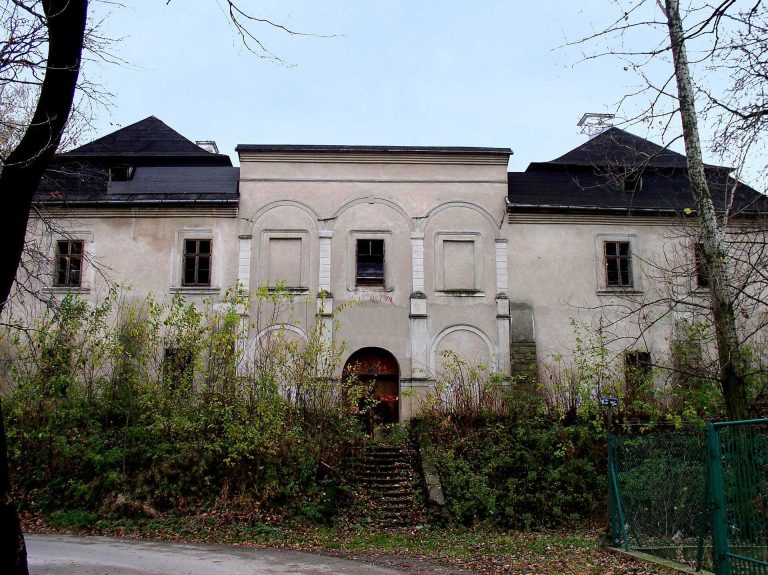
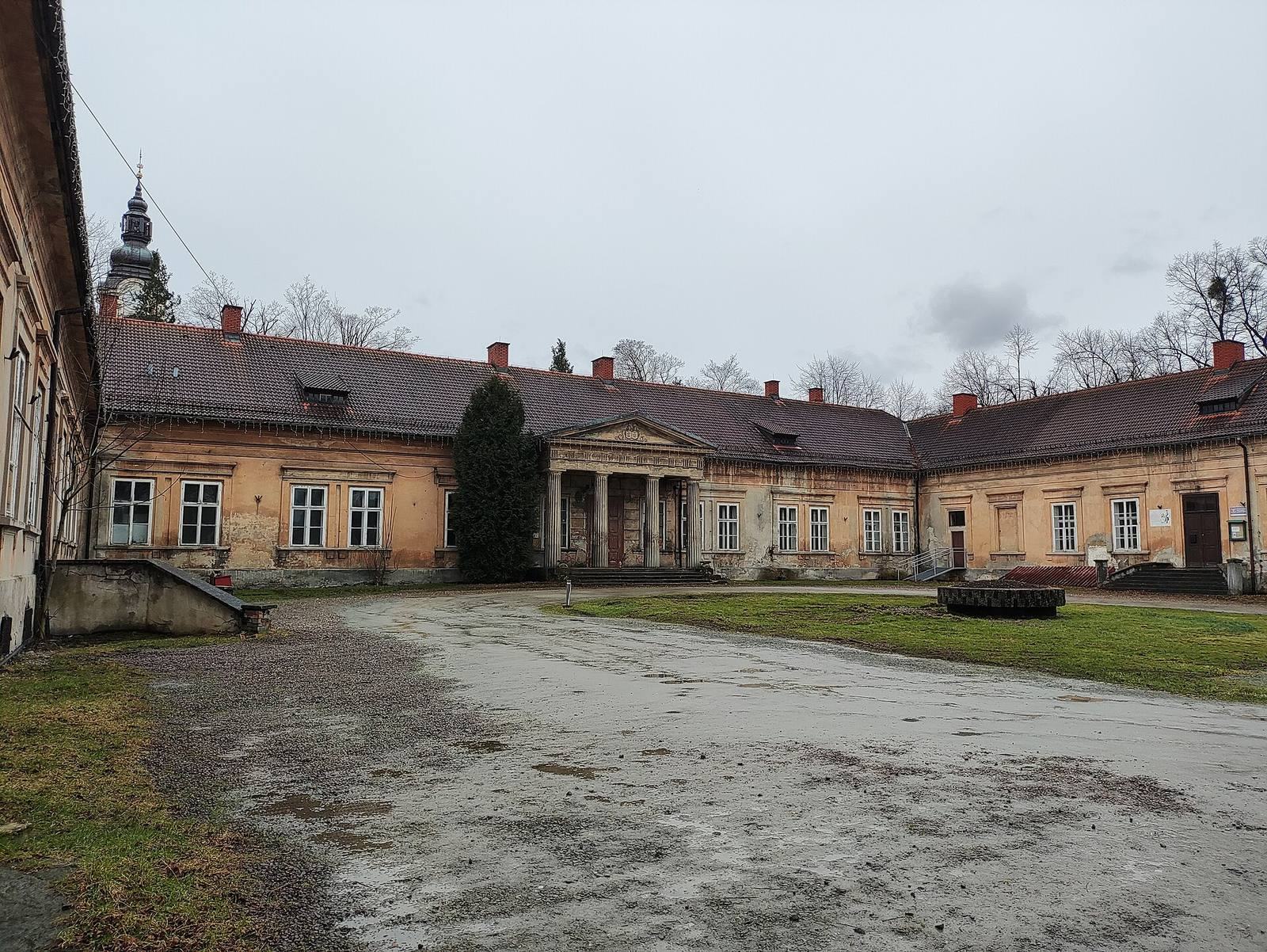
The one-storey masonry manor has a basement, low gable roofs and a horseshoe-shaped plan. A four-column entrance porch in the Doric style, a classical column design, marks the central section. It is topped by a triangular pediment bearing the Bobrowski family’s Jastrzębiec coat of arms and the Męciński family’s Poraj coat of arms. Stefan Bobrowski, a revolutionary leader associated with the January Uprising of 1863, had a wife from the Męciński family.
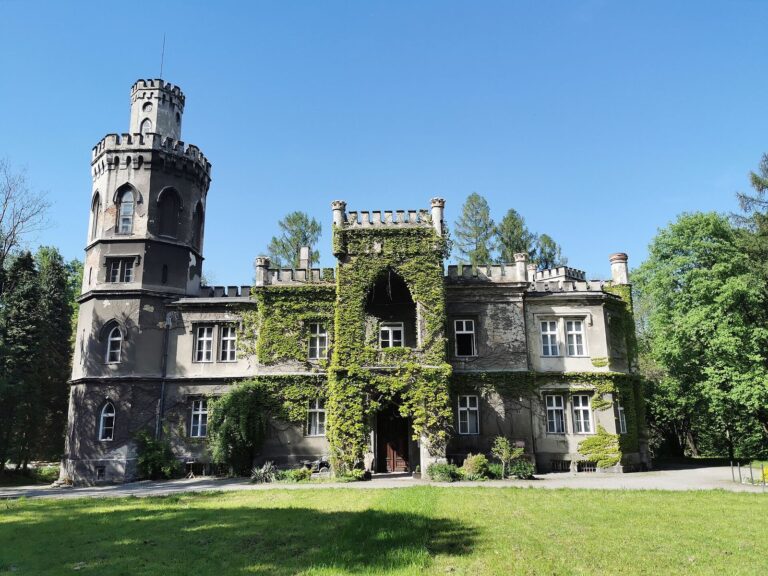
The main entrance is on the north side, where the road was laid out. A projection extends from the rear, and a tower stands at the southwest corner. The large windows are either round-headed or rectangular.
Park and coach house
The palace stands amid the remains of a designed park, which includes a pond. A detached coach house beside the manor is now used as a restaurant.