Schloss Meiselberg: A Historic Castle near Maria Saal
Site at a Glance
- Popularity
- Medium
- Country
- Austria
- Primary era
- Early Modern
- Eras represented
- Early Modern
- Civilizations
- Habsburg, Habsburg Austria, Holy Roman Empire
- Site type
- Domestic
- Remains
- Castle
On this page6 sections
History
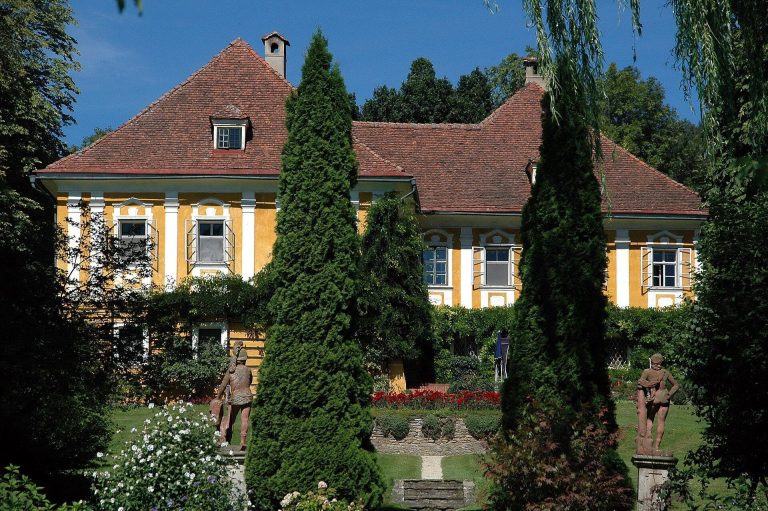
Schloss Meiselberg is a castle near Maria Saal in Carinthia, Austria, whose origins probably reach back to the sixteenth century. Its exact construction date and builder are unknown.
Sixteenth- to eighteenth-century development
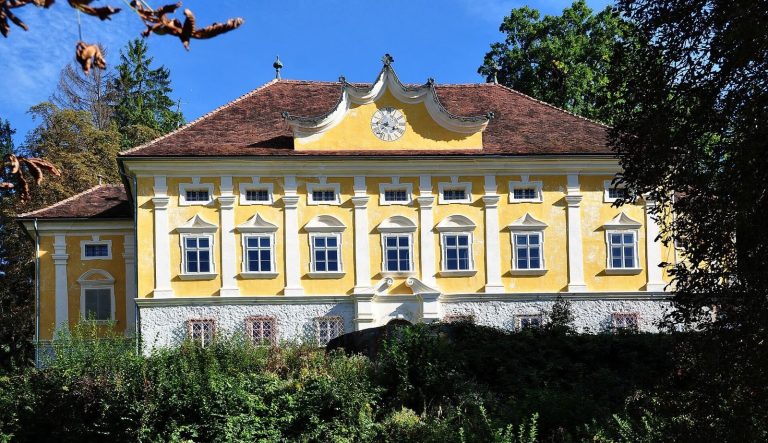
Hans Christoph von Metnitz bought the castle in 1595 from the heirs of Hieronymus von Meiselberg. He enlarged it during the seventeenth century. In 1694, ownership passed to Hans Adam Stampfer von Walchenberg, from a family of mining entrepreneurs based in Öblarn. His descendants expanded and remodeled the castle in the eighteenth century in the Baroque style, an early-modern European style known for elaborate forms and decoration.
Later owners and cultural associations
The castle passed to Count Dismas Christalnigg in 1793. Countess Paula Vojkffy died by suicide there in 1886. In 1919, a descendant of Christalnigg sold the estate to Countess Marie Wydenbruck. Her daughter, Countess Helene Desfours-Walderode, transferred it in 1941 to her cousin Marie Therese, Princess of Hanau.
Marie Therese was the daughter of Prince Karl Georg Fugger of Babenhausen and Eleonora, Princess of Hohenlohe-Bartenstein. Her father was the son of Prince Karl Ludwig Fugger of Babenhausen and Friederike, Countess Christalnigg of Meiselberg; both had spent considerable time at the castle. The estate later belonged to the Princes of Hanau zu Hořowice, Counts of Schaumburg. Princess Nora Fugger, born Princess of Hohenlohe-Bartenstein, was a prominent host of gatherings for conversation and cultural exchange in late-nineteenth-century Vienna, alongside Princess Pauline Metternich. Her memoir, In the Splendour of the Imperial Era, recalls the Austro-Hungarian Monarchy, the dual monarchy of Austria and Hungary established in 1867 and dissolved in 1918.
Remains
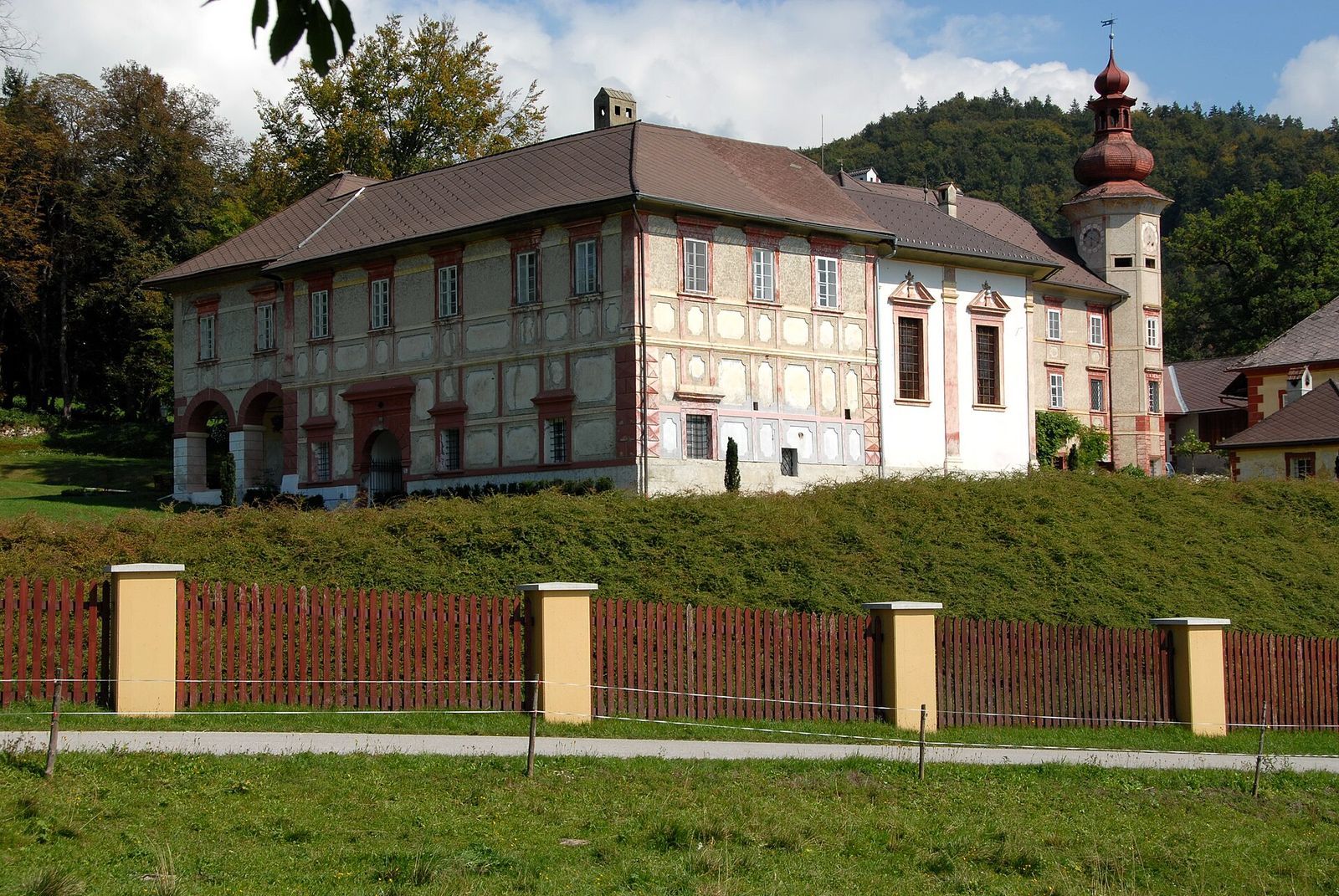
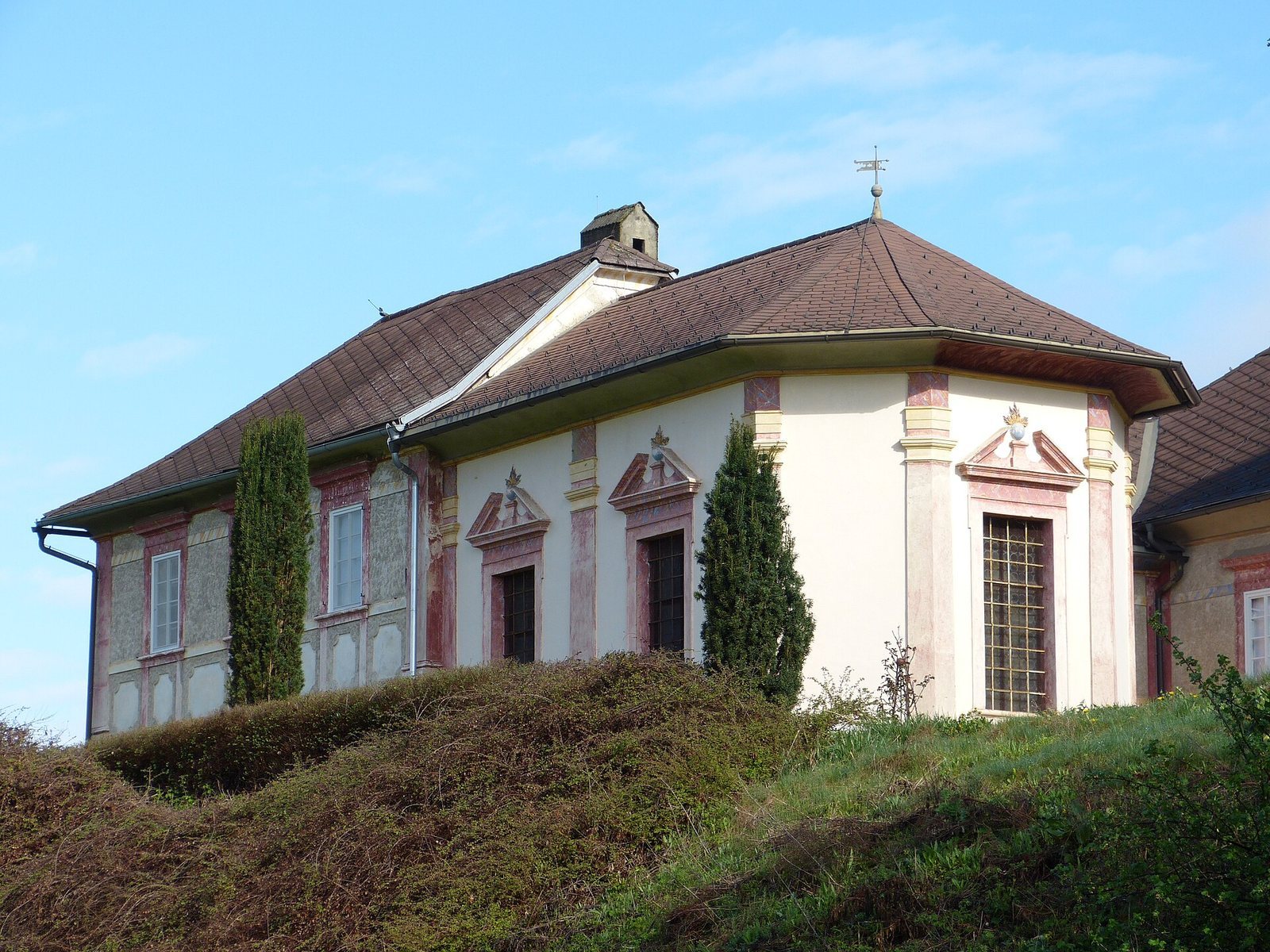
The multi-storey castle has an irregular, horseshoe-shaped plan, with wings added during the seventeenth and eighteenth centuries.
Castle and great hall
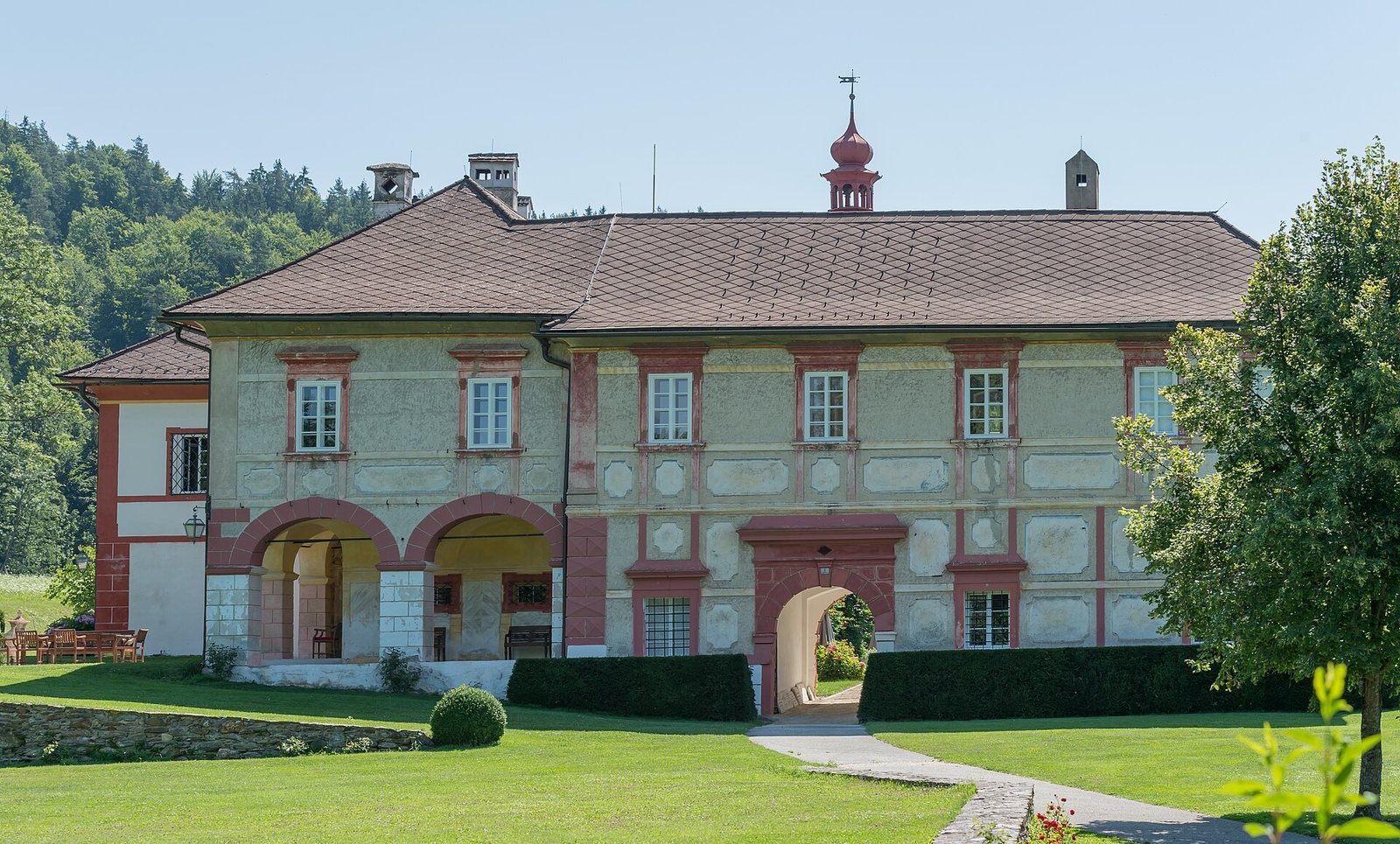
Sixteenth-century parts include a three-storey corner tower topped by an onion dome and two small turrets on the façade. An arched passage and façades with painted decoration, including areas painted to imitate marble, are among the exterior features. In the great hall, a ceiling painting by Josef Ferdinand Fromiller depicts the death of Abel, a biblical figure whose death is told in Genesis.
Chapel of the Holy Trinity
Added in 1700, the chapel is dedicated to the Holy Trinity, the Christian belief in God as Father, Son, and Holy Spirit, and has served as a burial place for castle owners and their families. Its furnishings include an altar painting of the Resurrection of Christ, the Christian belief that Jesus rose from the dead, a ceiling painting by Anton Zoller, a Trinity group dated 1710, and decorative plasterwork by Kilian Pittner. People buried in the chapel include Countess Minky von Wydenbruck, identified as an owner from 1919, members of the Christalnigg family, Countess Paula Vojkffy, and Princess Nora Fugger.