Boskovice Chateau: An Empire-Style Residence in Czechia
Site at a Glance
- Rating
- 4.6
- Popularity
- High
- Country
- Czechia
- Primary era
- Modern
- Eras represented
- Modern
- Civilizations
- Austria-Hungary, Austrian Empire, Habsburg
- Site type
- Domestic
- Remains
- Elite Residence
On this page7 sections
History
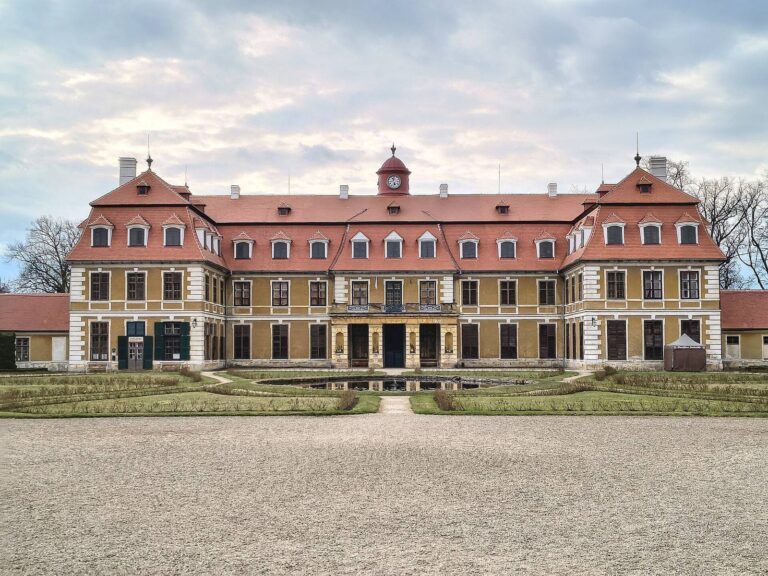
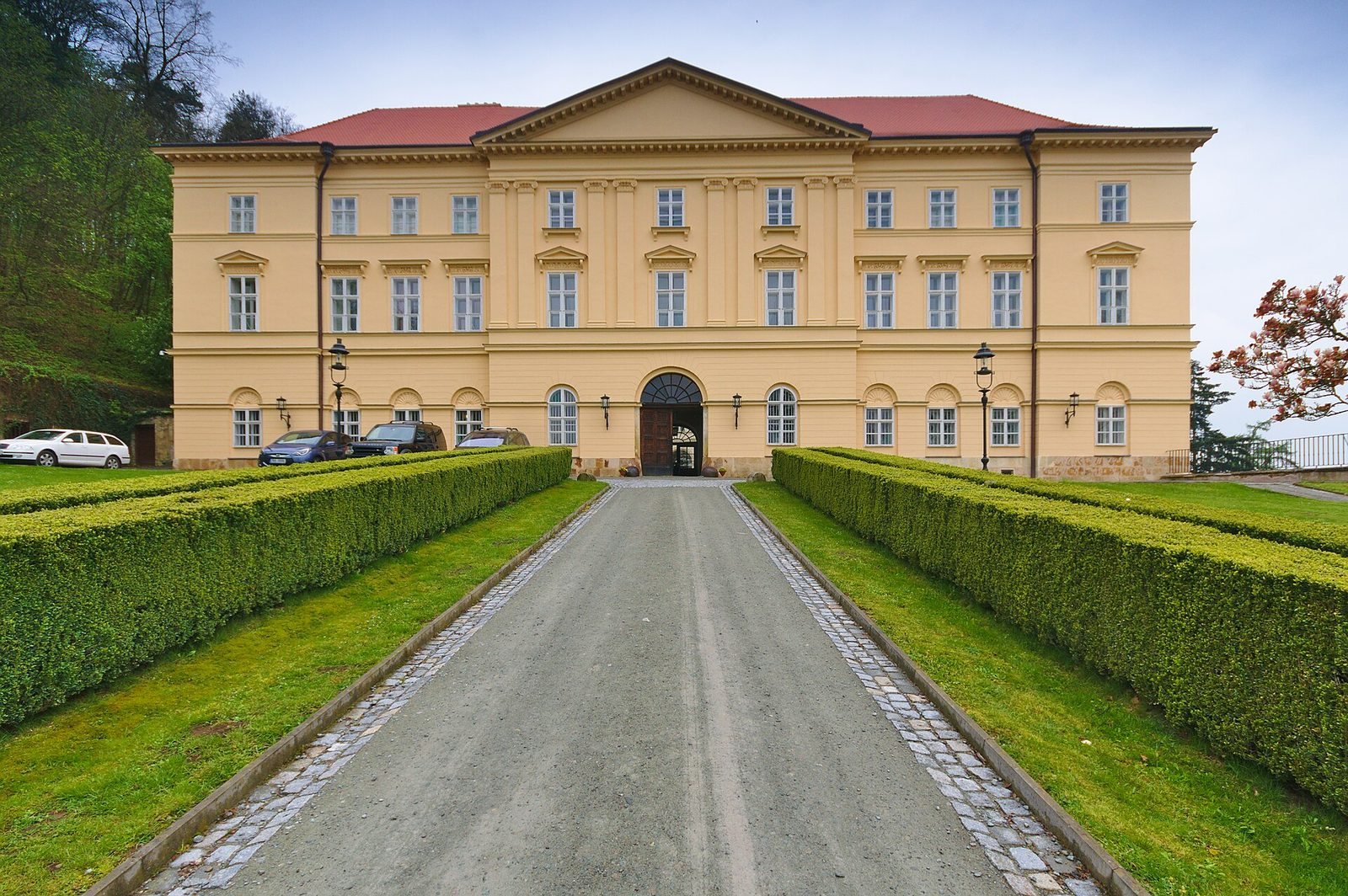
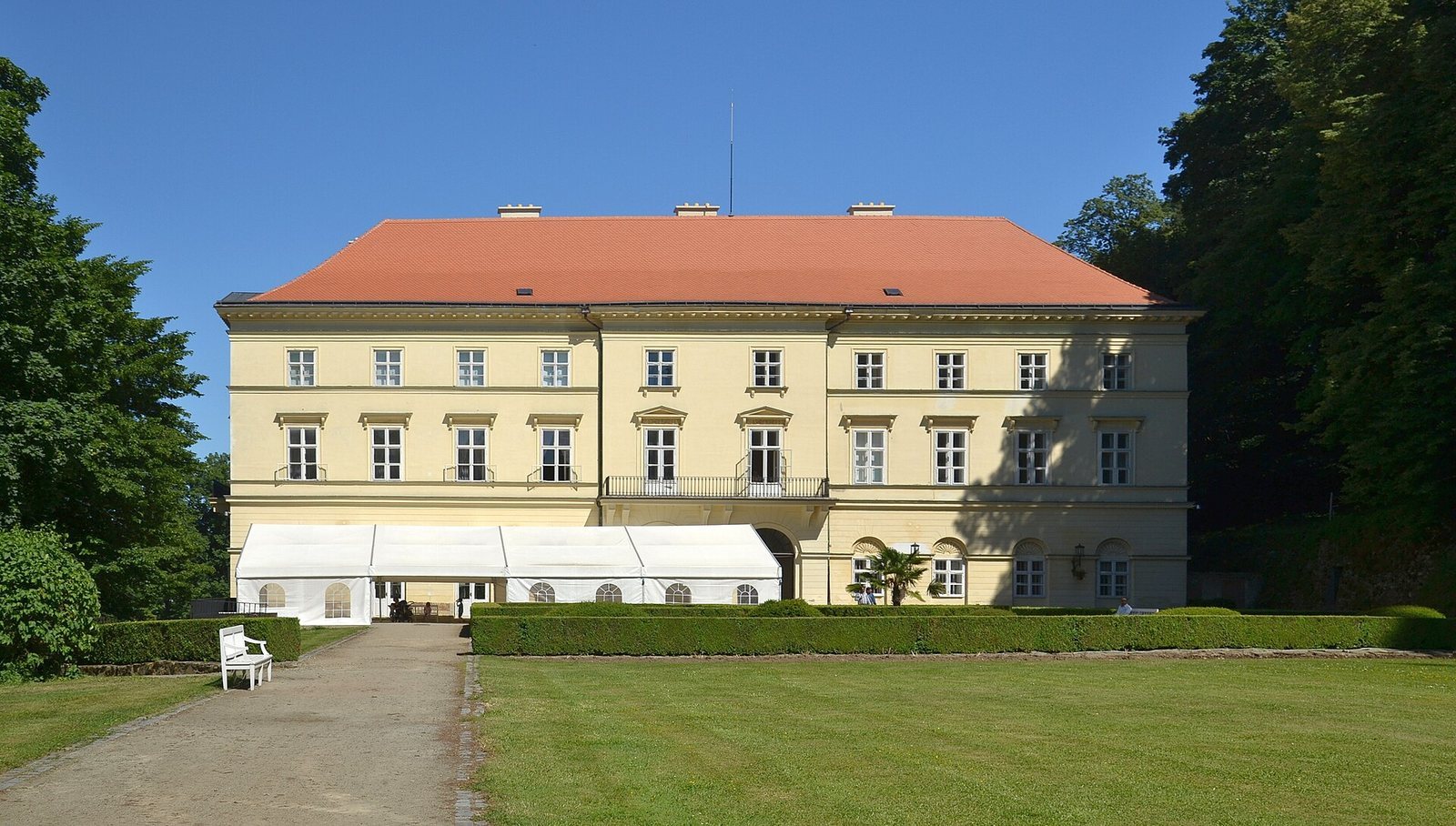
Boskovice Chateau is an Empire-style residence in Czechia. Empire style is an early 19th-century form of Neoclassicism associated with the Napoleonic era. Construction began in 1819, commissioned by Franz Joseph von Dietrichstein, an Austrian prince and nobleman, on the site of a former Dominican monastery.
Monastery and construction
Emperor Joseph II dissolved the Dominican monastery in 1784 as part of the Josephine reforms, measures that included changes to religious institutions. The former monastery briefly housed a paint factory before it was demolished, and its building materials were reused in the chateau. The designer remains uncertain. The plans were first attributed to Peter von Nobile, a Neoclassical architect active in the Habsburg monarchy, while later research has favored Josef Esch.
Later ownership and structural change
The Dietrichstein-Mensdorff-Pouilly princes, members of an aristocratic family of the Habsburg lands, owned the chateau from 1856. In 1916, structural defects led to the collapse of the west wing’s courtyard wall, after which the building’s structure was secured. Following the February 1948 Communist seizure of power in Czechoslovakia, the state nationalized the chateau and used it as a boarding school. In 1991, it was restituted to Olga Mensdorff-Pouilly, daughter of the last prince, Alexander Albert (1899–1964), and her son Félix Tadeo Leloir y Dietrichstein (born 1959).
Remains
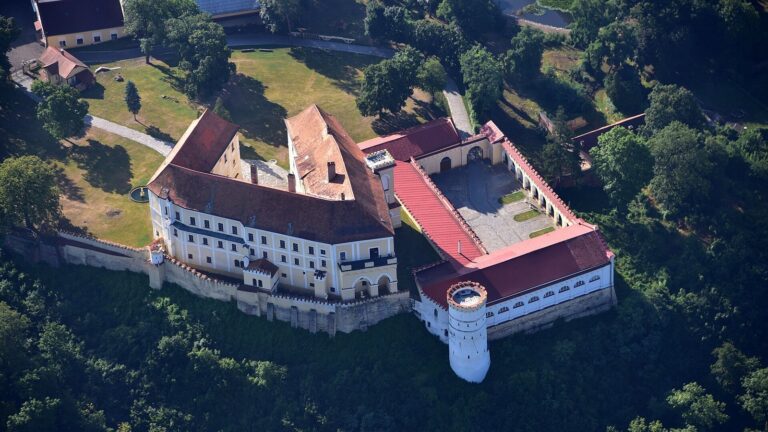
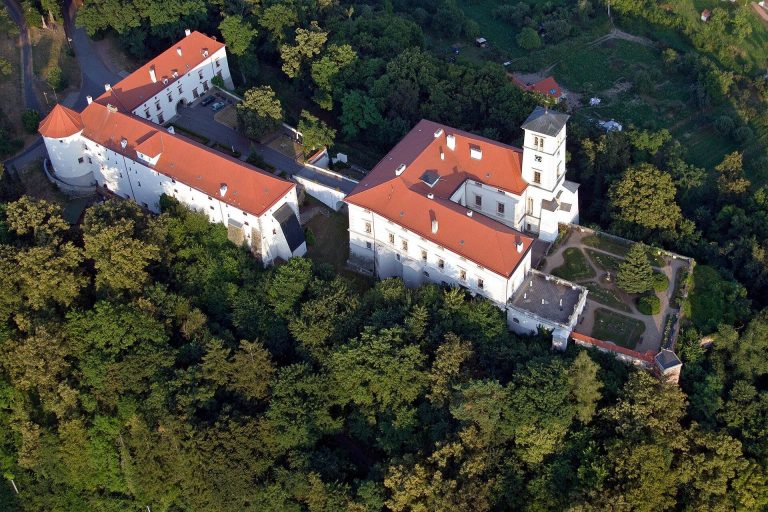
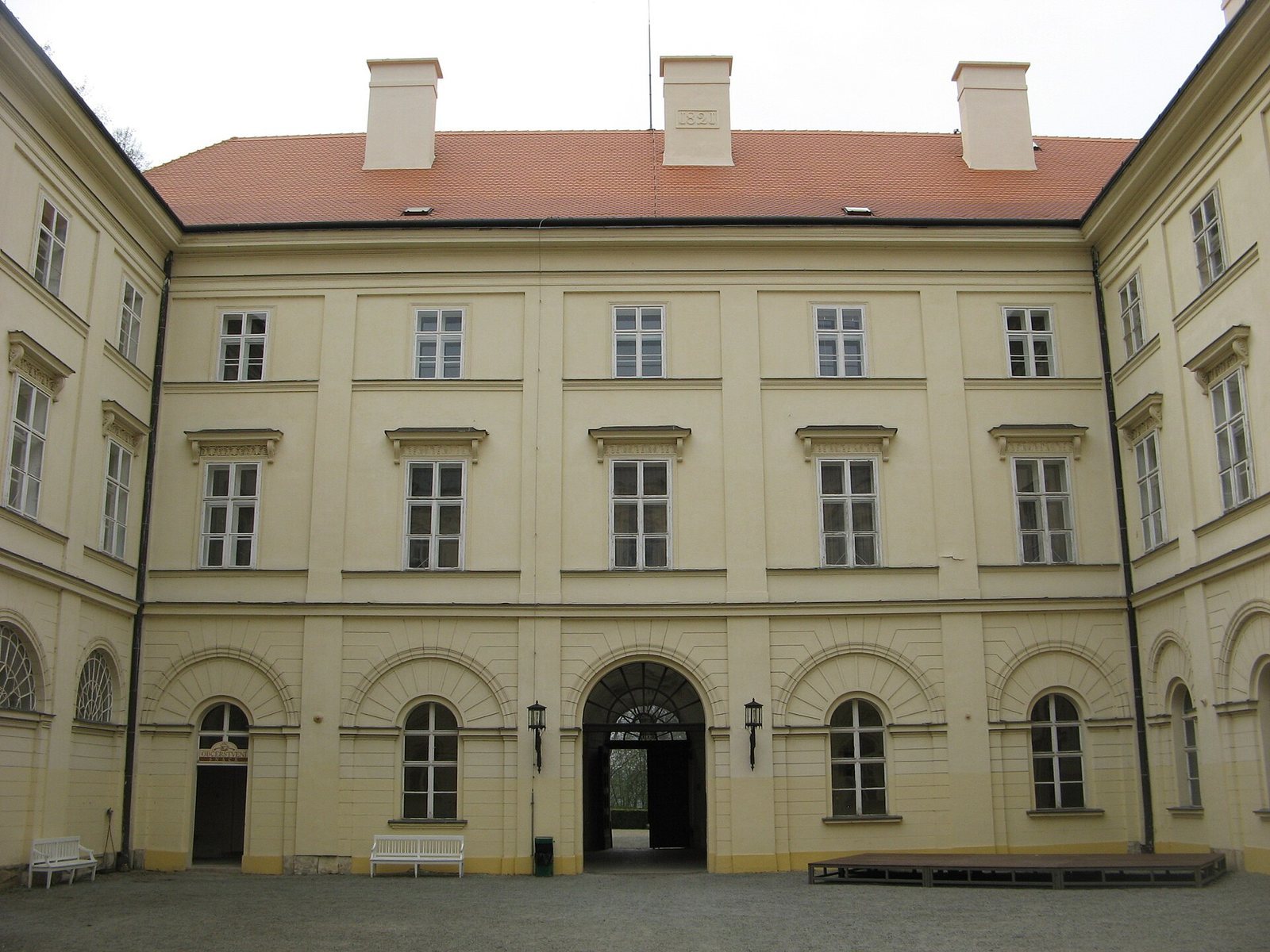
The chateau stands at the southern edge of Boskovice on the slope of Sychrov. Built in the Empire style, it includes an arcaded courtyard, furnished interiors, and a park laid out in French and English styles.
Courtyard
The courtyard arcades were joined with anchors, and their arches were walled in, leaving a window or doorway in each. This alteration gave the courtyard a new appearance.
Interiors and furnishings
The furnished main hall spans two floors and also serves as a concert hall. Paintings by Dutch artists from the first third of the 19th century decorate the extensive library. Among the furnishings are a copper celestial globe showing the starry sky through heraldic symbols and a painting on buffalo hide depicting a battle against the Turks. The chateau also contains a children’s theatre in Rococo style, an earlier, ornate European style. Queen Victoria, queen of the United Kingdom from 1837 to 1901, gave the theatre as a gift.
Park and greenhouse
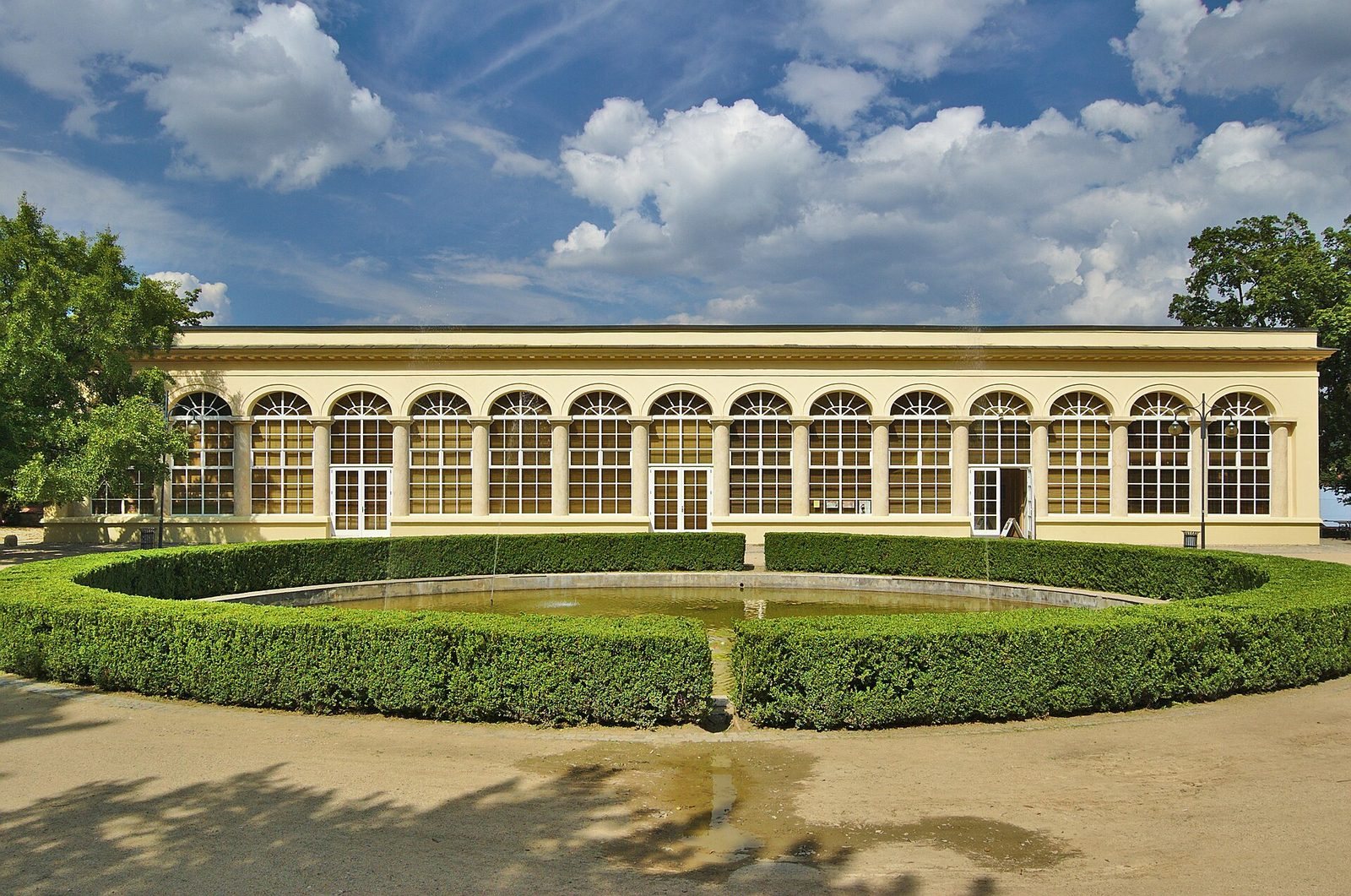
The chateau park combines French and English designs. Its Empire-style greenhouse was designed by Josef Hájek in the 1830s.