Valliscaulian Order: A Medieval Monastic Congregation
Site at a Glance
- Popularity
- Medium
- Country
- France
- Primary era
- Medieval
- Eras represented
- Medieval, Modern
- Civilizations
- Duchy of Burgundy, French
- Site type
- Religious
- Remains
- Monastery
On this page13 sections
History
Foundation at Val-des-Choux
The Valliscaulian Order was a Roman Catholic monastic congregation founded at Val-des-Choux in Burgundy, France, in the late twelfth century. Its first monastery gave the order its name, also rendered in Latin as Vallis Caulium. Between 1210 and 1250, the congregation grew into a monastic head house with around 30 dependent communities.
Local tradition places Viard, a lay brother of the Carthusian priory at Lugny, at a forest hermitage in 1184. A lay brother was a member of a religious community who was not necessarily ordained as a priest. Viard, also known as Gui, became prior, or monastic superior, in 1193. Duke Odo III of Burgundy established a church and monastery at the hermitage, and the first buildings were completed that year. Pope Innocent III approved the duke’s foundation charter in 1203. Odo granted the surrounding forest to the brothers in 1203 and made another gift in 1209; the pope confirmed these grants in 1211. The order itself received formal papal confirmation in 1205.
Rule, livelihood, and expansion
The original rule combined Carthusian and Cistercian practices with Benedictine customs, drawing on three distinct Catholic monastic traditions. Pope Honorius III relaxed the rule in 1223. It placed prayer and austerity at the center of monastic life, with the aim of each monk’s personal salvation. Brothers owned no private property, worked and ate together, abstained from meat and fat, and supported themselves through income rather than begging or outside employment. Silence was expected. Women were excluded from the inner precinct, and monks could leave the outer bounds only when the prior led them on order business.
The daily schedule included Mass, canonical hours, the regular cycle of Christian prayer, and a chapter meeting with twelve readings. Monks also had set periods for reading, prayer, and contemplation; novices underwent a year of probation. The rule prescribed coarse white wool and fur clothing, with a white mantle and red cross associated with Cistercian dress. Monks were to avoid linen and hemp, wear hairshirts if able, and sleep clothed and belted, with shoes and cowls but no mattresses. The congregation’s limited income was intended to cover necessities and keep admission of new members within its means.
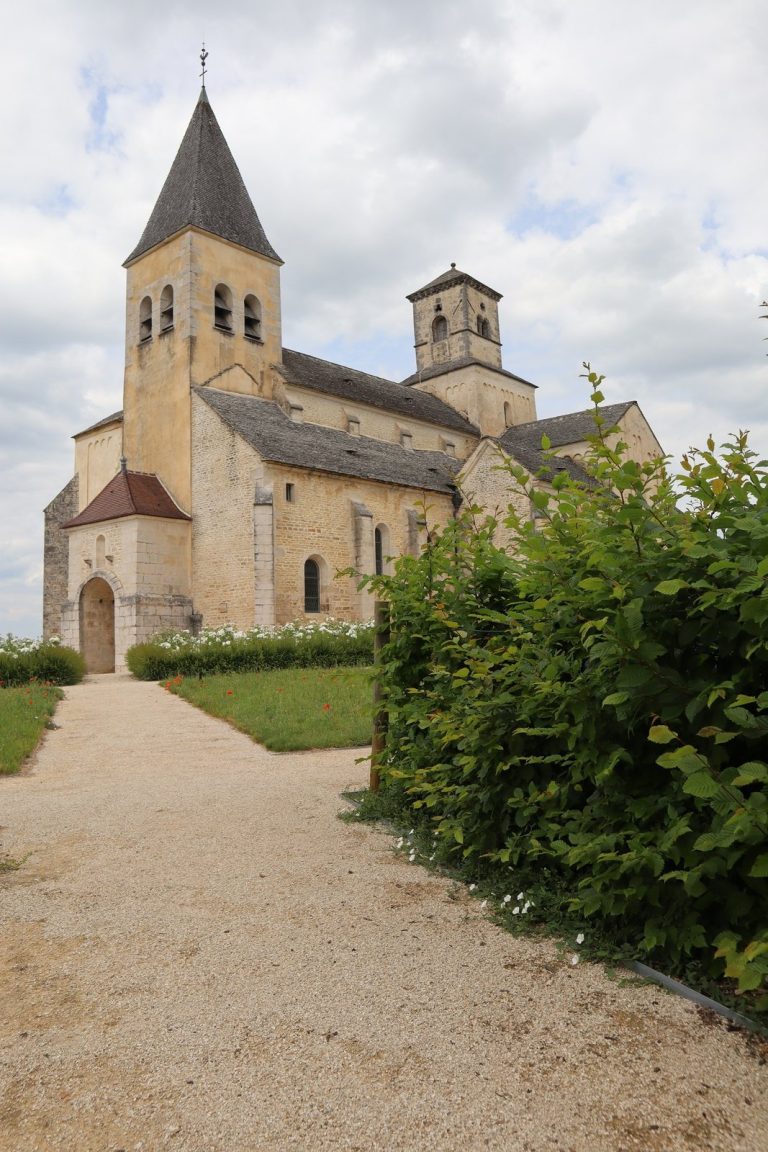
The order’s network included about 30 dependent houses, with 20 known by name: 17 in France and three in Scotland. French foundations included Sainte-Barbe at Lavau, established before 1213; Notre-Dame de l’Épeau at Donzy in 1214; Val-Croissant at La Motte-Ternant in 1216; Vauclair at Giey-sur-Aujon in 1219; and the Abbayotte at Magny-sur-Tille in 1224. Royal-Pré was founded by Louis IX in 1255. Valliscaulian priories are also recorded in Germany.
Ardchattan, Beauly, and Pluscarden were founded in Scotland in 1230. Ardchattan and Beauly later became Cistercian priories, while Pluscarden became a dependent house of the Benedictine Abbey of Dunfermline. The Abbayotte moved to Dijon in 1363. Several houses were later dissolved, including Clairlieu in 1742, Vausse in 1763, Sainte-Barbe in 1769, Val-Duc in 1779, L’Épeau in 1784, and the Genevroye in 1790. At Val Saint-Benoît, the Sisters of Bethlehem established the monastery of Notre-Dame d’Adoration in 1982.
The brothers also made salt in large stone tubs and claimed exemption from the tax on salt production, a claim that led to prolonged litigation. The Dukes of Burgundy gave the community annual gifts, including twenty hogsheads of Pommard wine.
Union and closure
By the middle of the eighteenth century, only three brothers remained at Val-des-Choux. Its revenues had declined, and no one had joined the order for 24 years. Gilbert, Bishop of Langres, urged the remaining monks to unite with the Cistercians. Pope Clement XIII authorized the union in 1761. Sept-Fons took over the monastery in 1762, and it was formally incorporated into the Cistercian community in March 1764. The monastery then took the name Val Saint-Lieu, and the Valliscaulian community was absorbed into the Cistercian Order.
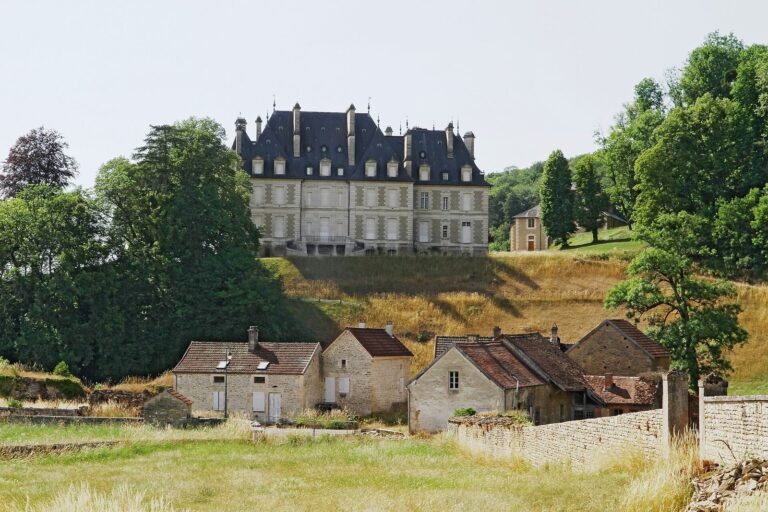
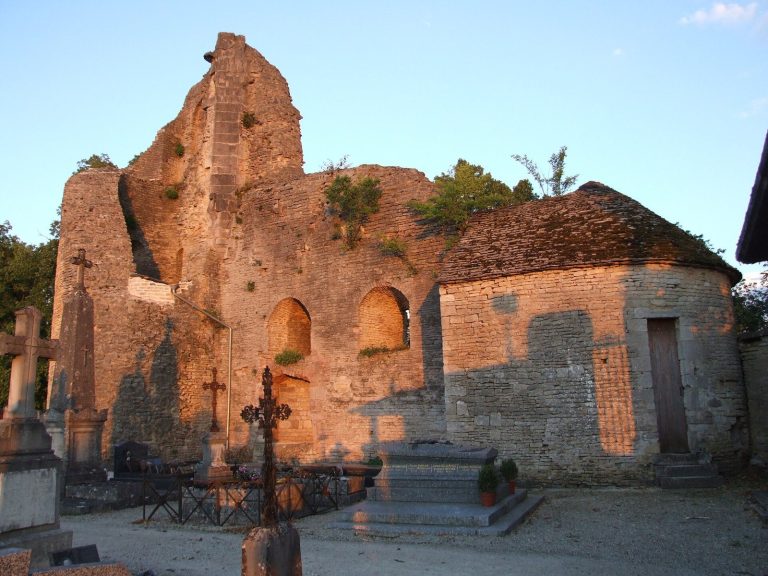
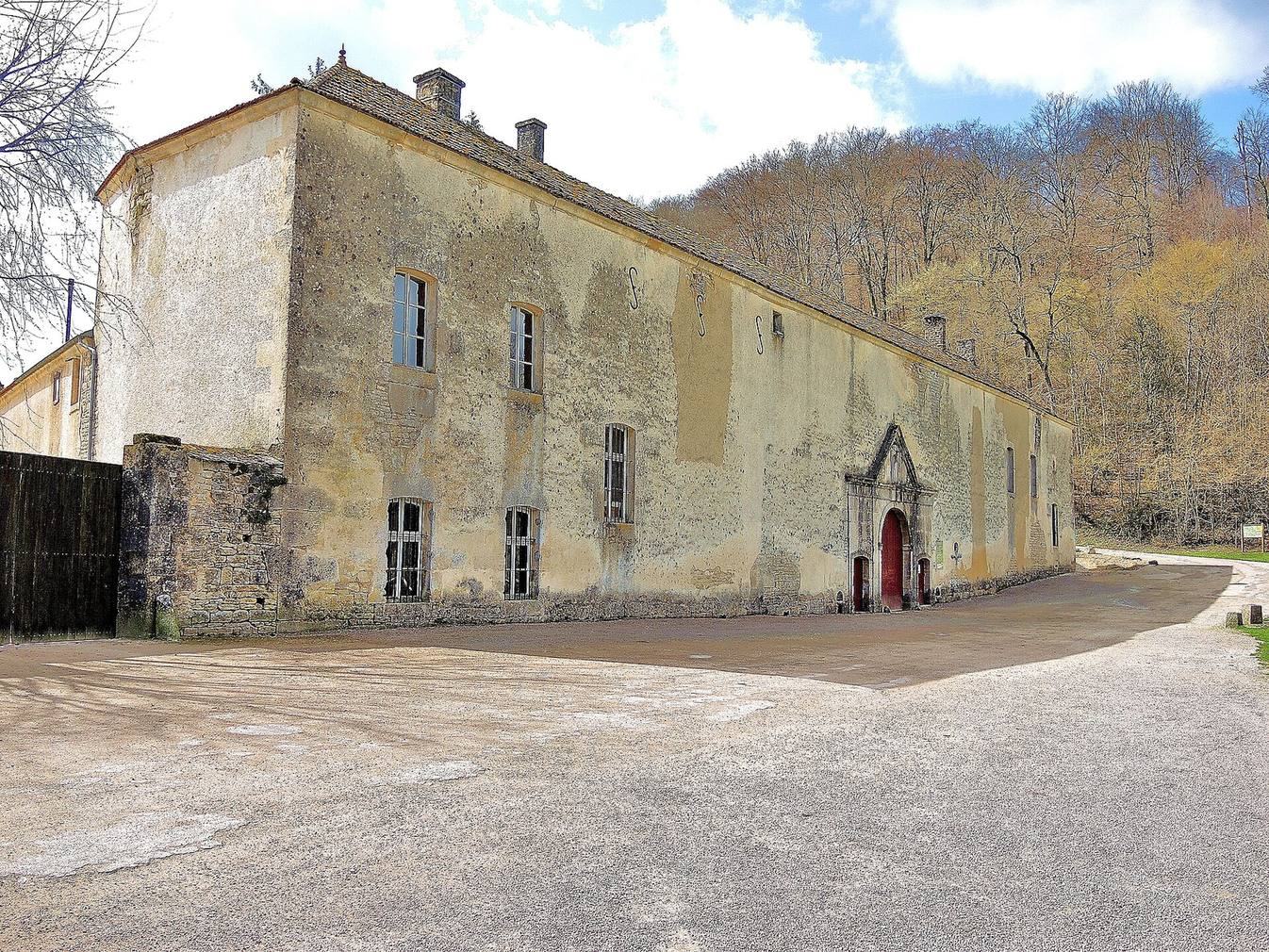
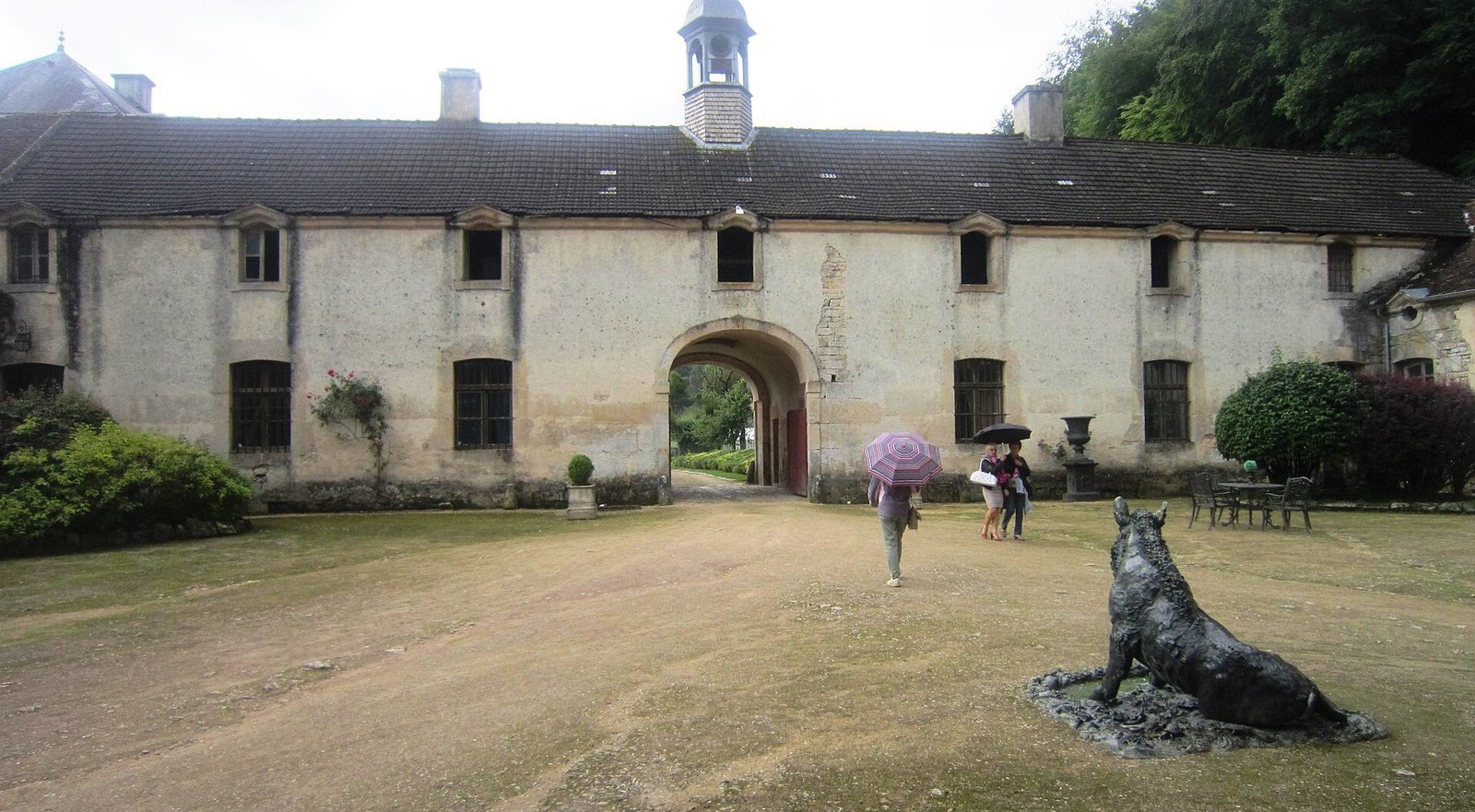
The monastery closed in 1791 during the French Revolution. In the nineteenth century, its religious buildings were dismantled or used as a source of stone, and the site was nearly abandoned. The surviving buildings were listed as historic monuments in 1992. Today the former abbey serves as a lodge for hunters and houses the Musée Opéra de la Vénerie, a hunting museum. It also keeps a pack of 150 Grand Anglo-French Tricolour hounds for boar hunting.
Remains
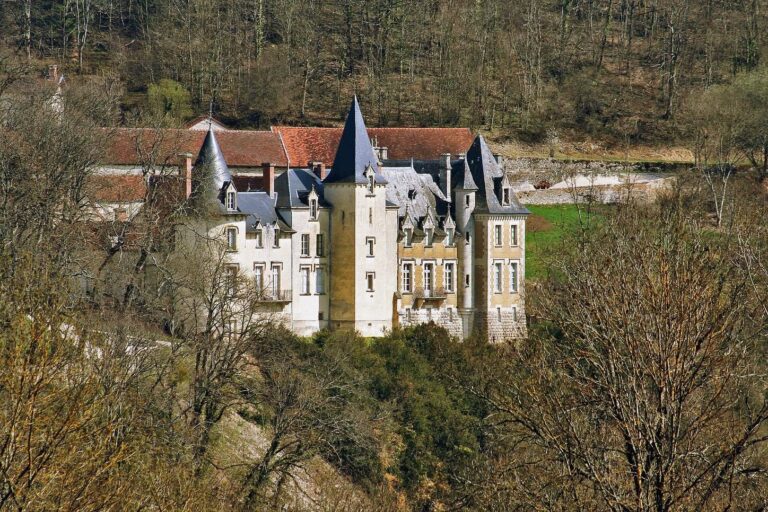
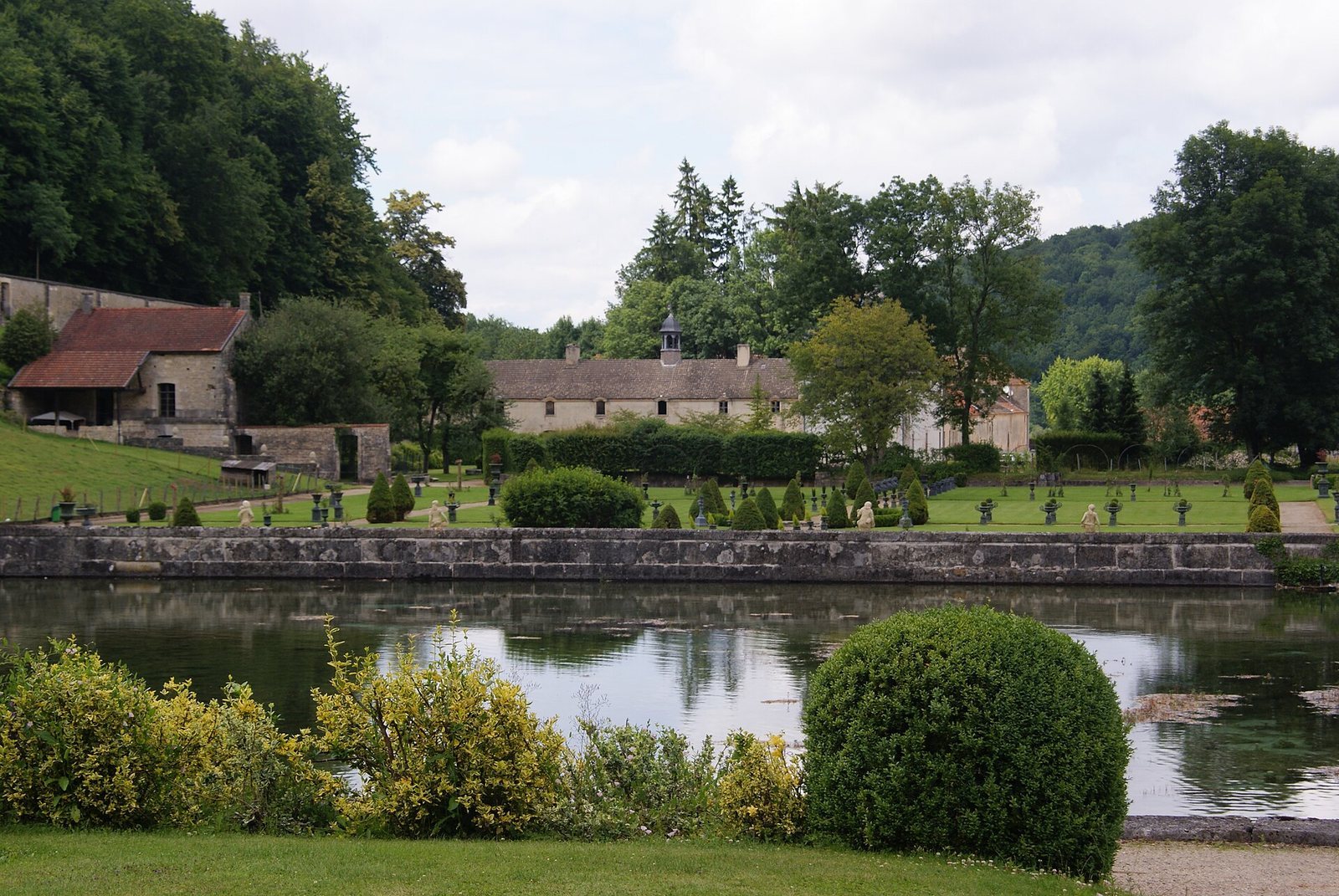
Val-des-Choux lies in a steep-sided, secluded valley in the Châtillon forest, southeast of Villiers-le-Duc. The monastery was arranged as three courtyards in succession, from the entrance buildings to the church and the inner monastic precinct.
The three courtyards
Outer courtyard
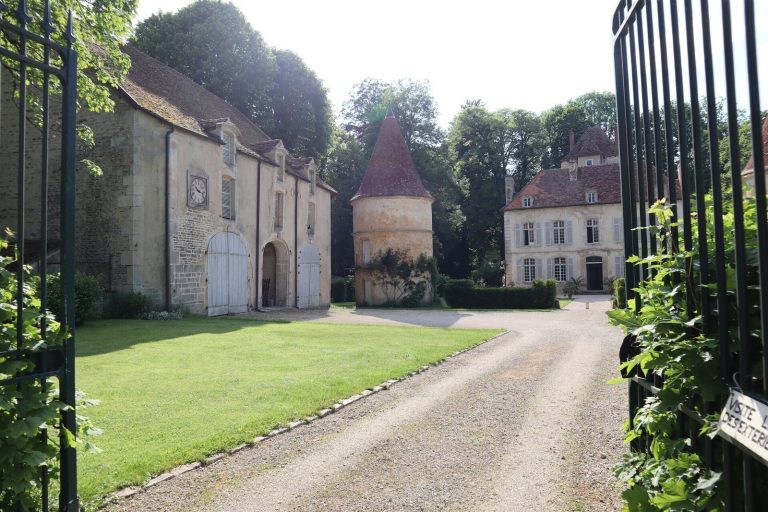
The first courtyard opens onto the gatehouse and held a chapel for travelers, a guesthouse, workshops, barns, and stables. Its echo room has acoustics that allow people to speak quietly to one another from opposite sides of a corner. It was intended for confessions by pilgrims with leprosy and other people with contagious illnesses.
Church courtyard
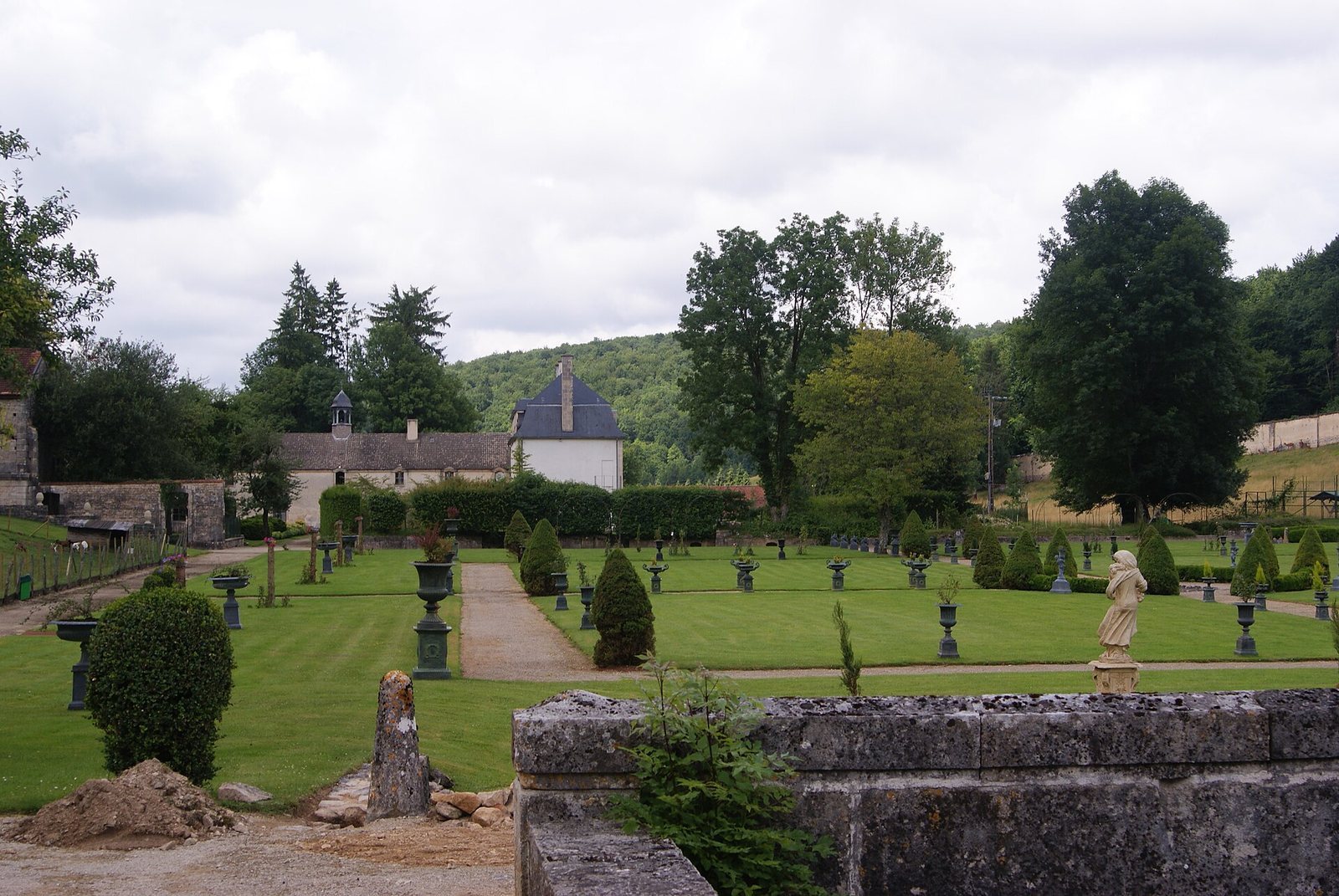
The church, dedicated to Our Lady and Saint John the Baptist, stood in the second courtyard and has been destroyed. The courtyard also contains the preserved residence of the commendatory abbot, who held the abbey’s title and revenues but was not necessarily its resident monastic superior. Some of the church’s statuary is now in the church of Saint John the Baptist at Villiers-le-Duc.
Inner courtyard and gardens
The third courtyard contained the cloister, the covered walk around the monastic court, and its dependencies; these buildings have been destroyed. Gardens extend behind the courtyards to a large basin once used as a fishpond. The gardens were restored in 1990, and a preservation association established in the 1990s laid out a Baroque garden.
Hermitage and relocated features
Viard’s cave
Viard’s hermitage cave remains visible on the slope beside the garden.
Tomb reliefs
The tomb of the Dukes of Burgundy was first erected at Val-des-Choux and later moved to Dijon. At its base, shallow carvings set within a blind arcade, a row of arches applied to a solid wall, provide the only known depictions of Valliscaulian monks.
Priory house at Rochefort-sur-Brévon
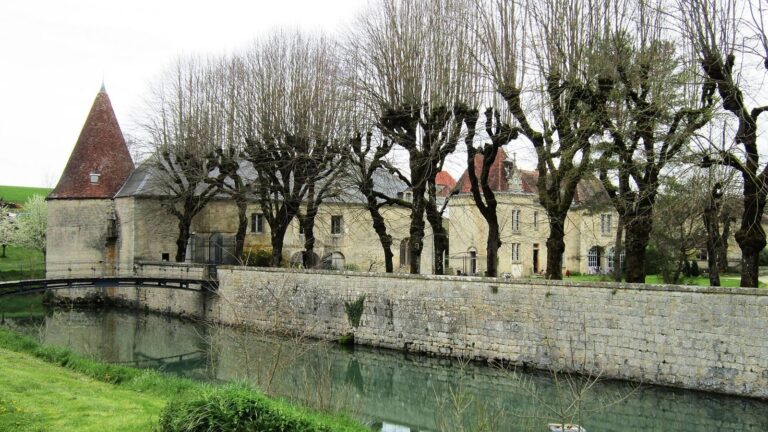
Around 1820, the priory house was dismantled stone by stone and rebuilt at Rochefort-sur-Brévon, on part of the site of an earlier fortified castle. Only traces of that castle remain, including its dovecote.