Haus Donk: A Reconstructed Moated Castle in Germany
Site at a Glance
- Popularity
- Medium
- Country
- Germany
- Primary era
- Medieval
- Eras represented
- Medieval, Early Modern, Modern
- Civilizations
- Carolingian, Electorate of Cologne, German, Holy Roman Empire
- Site type
- Domestic
- Remains
- Castle
On this page9 sections
History
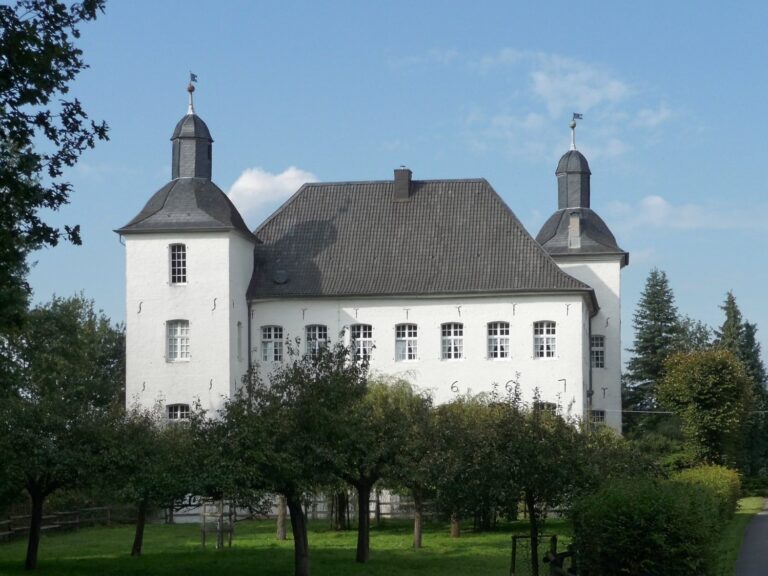
Haus Donk is a small former moated castle in Vorst, a district of Tönisvorst in Viersen district, Germany. Its origins are traced to 1259, while its right-hand half-timbered tower was built by the Franks around 900. The name Donk refers to a raised, buildable place in marshland.
Origins and Electoral Cologne
For a long period, the property was held as a male fief, a feudal holding inherited through the male line, of the Electorate of Cologne. This was the territory ruled by the Archbishop of Cologne as a prince-elector. Haus Donk served as a border fortification for the administrative district of Kempen, facing the neighboring duchies of Jülich and Geldern.
Destruction and reconstruction
The castle was destroyed in the nineteenth century and rebuilt in the 1970s. In the early 1990s, entrepreneur Rod Hützen acquired the property and arranged a comprehensive restoration and expansion carried out over two years.
Remains
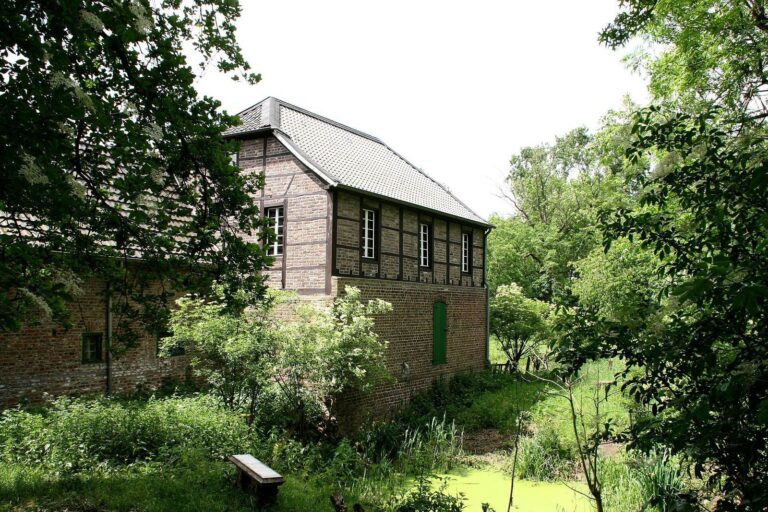
The reconstructed complex brings together a tower, a moat-enclosed outer farmstead, and the visible portion of the former manor house. Its buildings and grounds reflect several periods of construction and later alteration.
Towers and manor house
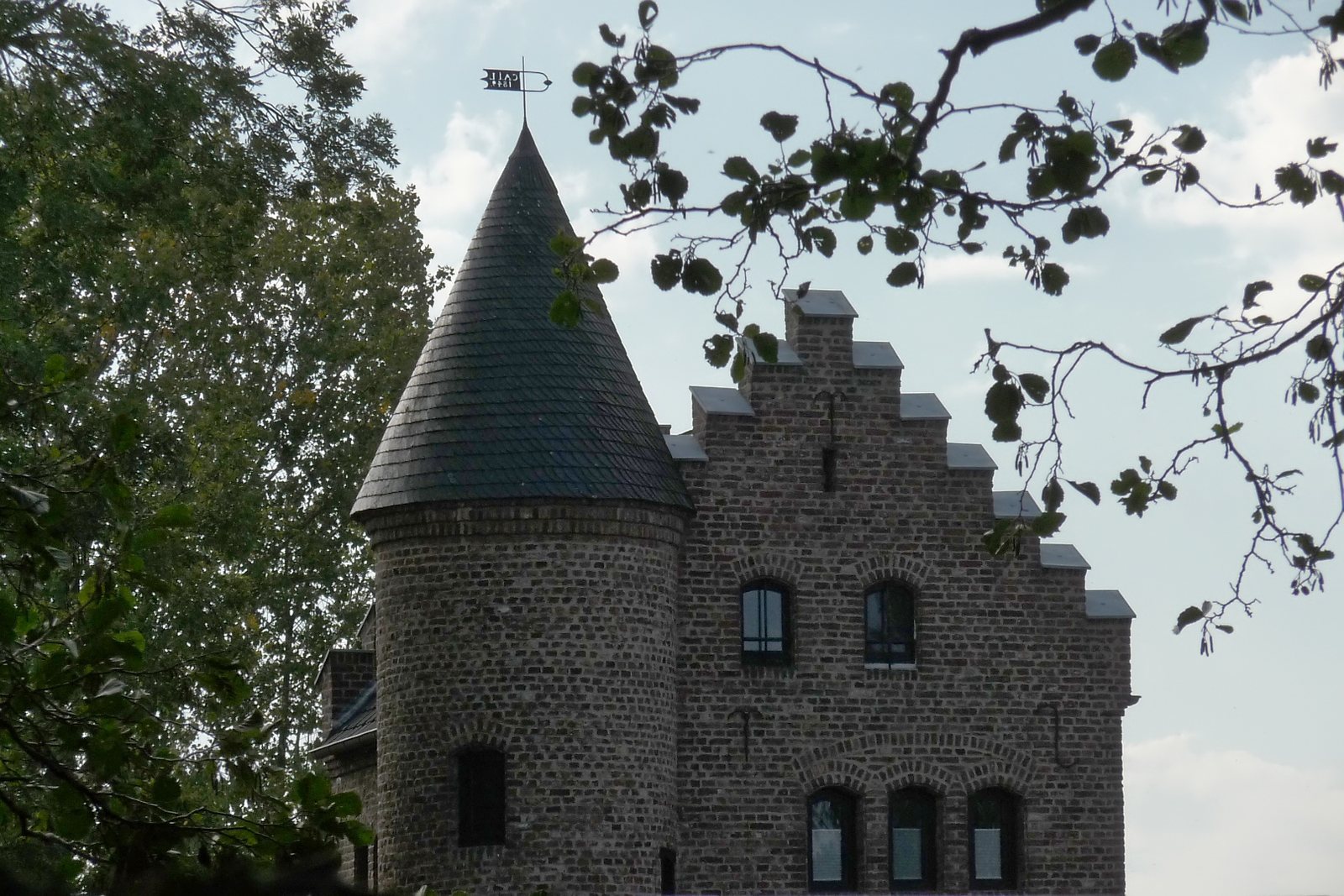
Half-timbered tower
The right-hand tower is half-timbered and stands on a motte, an artificial mound used as a fortified base. It has a slate roof with four dormers.
Renaissance tower
A second tower was built around 1550 during the Renaissance, a European cultural and artistic period that began in the late medieval era and continued into the early modern period.
Manor house
The visible manor house is only part of the former building, which was about three times larger. The present complex also includes an underground wing and various extensions on its south side.
Outer works
The outer bailey, an enclosed area outside a castle’s inner ward, served as a farmstead where daily life took place. A moat that secured the area remains recognizable.