Weinburg Castle am Saßbach: A Historic Castle in Styria
Site at a Glance
- Popularity
- Medium
- Country
- Austria
- Primary era
- Early Modern
- Eras represented
- Medieval, Early Modern
- Civilizations
- Duchy of Styria, Habsburg, Habsburg Austria, Holy Roman Empire
- Site type
- Military
- Remains
- Castle
On this page7 sections
History
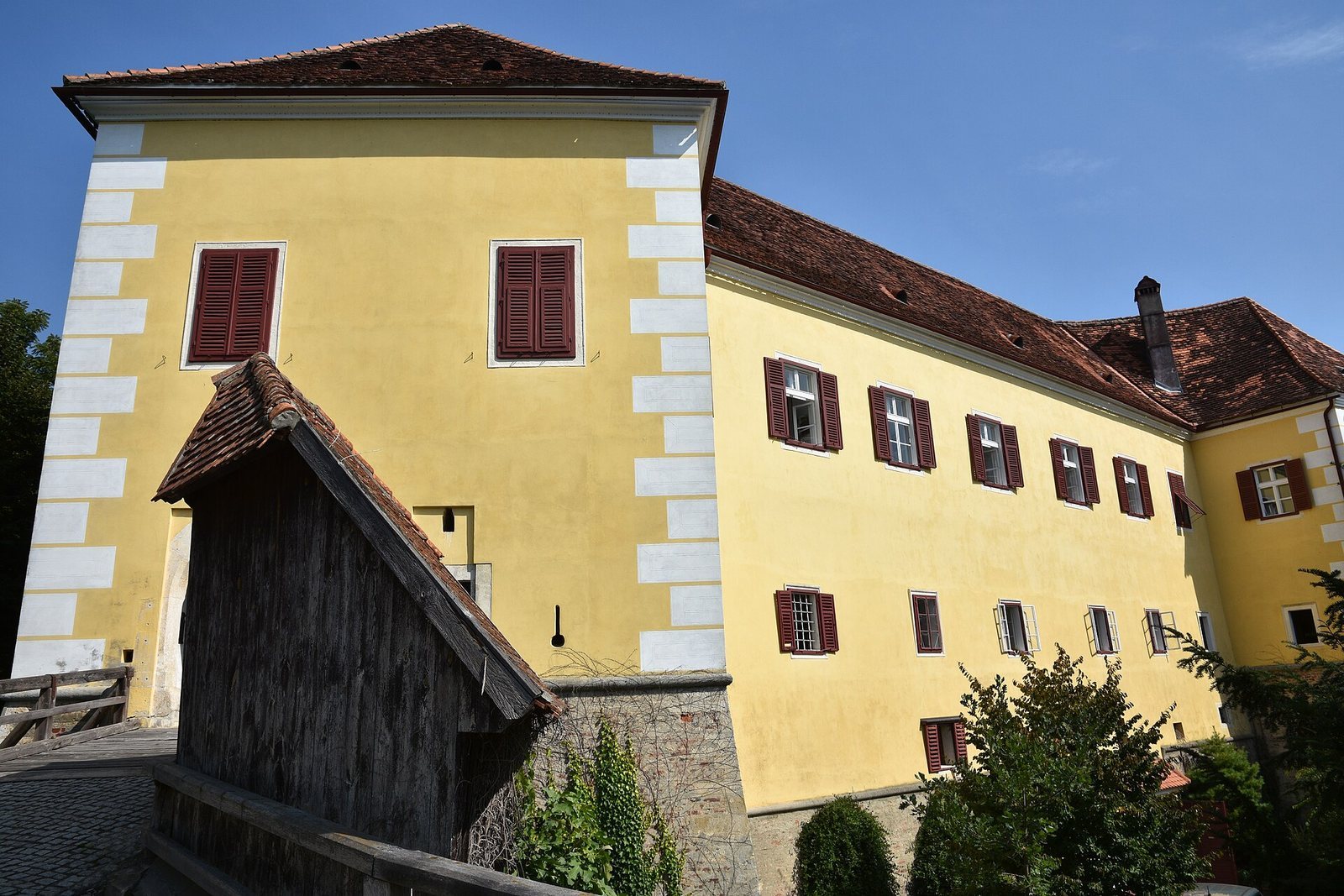
Weinburg Castle am Saßbach is a castle in southern Styria, Austria. The Styrian noble family of Wildoners built it, and its earliest record dates to 1278. Its present form dates from the sixteenth century.
Medieval Records and Sixteenth-Century Renewal
In 1303, the castle was called the House of Weinberg. In 1500, Maximilian I, a Habsburg ruler and Holy Roman Emperor, pledged the castle and its estate to Wolfgang von Graben, a member of the House of Graben, as security for a loan. Max Leisser enlarged the older fief, an estate held from a superior lord under obligations, in 1550. The castle belonged to Archduke Charles of Inner Austria, a Habsburg ruler of those lands, from 1576. Between 1578 and 1590, he ordered extensive renewal.
Chapel and Nineteenth-Century Use
The castle chapel was dedicated to Saint Catherine in 1608 and now serves as the local church. In 1837, Marie Caroline, Duchess of Berry, and her second husband, Count Ettore Lucchesi-Palli, acquired the castle, several years after purchasing Brunnsee Castle opposite. The secret society Burschenschaft Sylvania, a student fraternity, made Weinburg its headquarters from its founding in 1837.
War Damage and Restoration
Wartime damage in 1945 struck the castle, particularly its south wing. Adinolfo and Sarolta Lucchesi Palli, née Teleki de Szék, restored it afterward. The castle remains in the possession of the Lucchesi Palli family.
Remains
Castle Complex
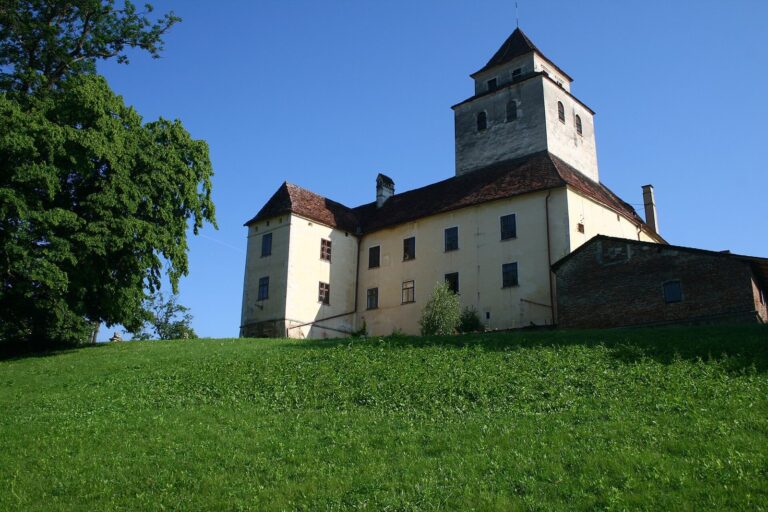
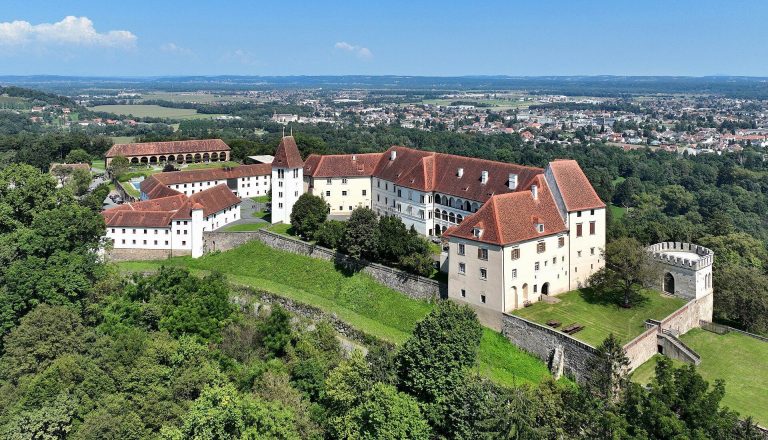
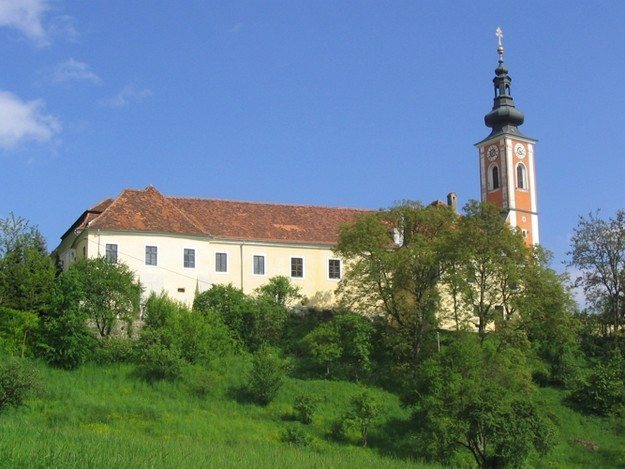
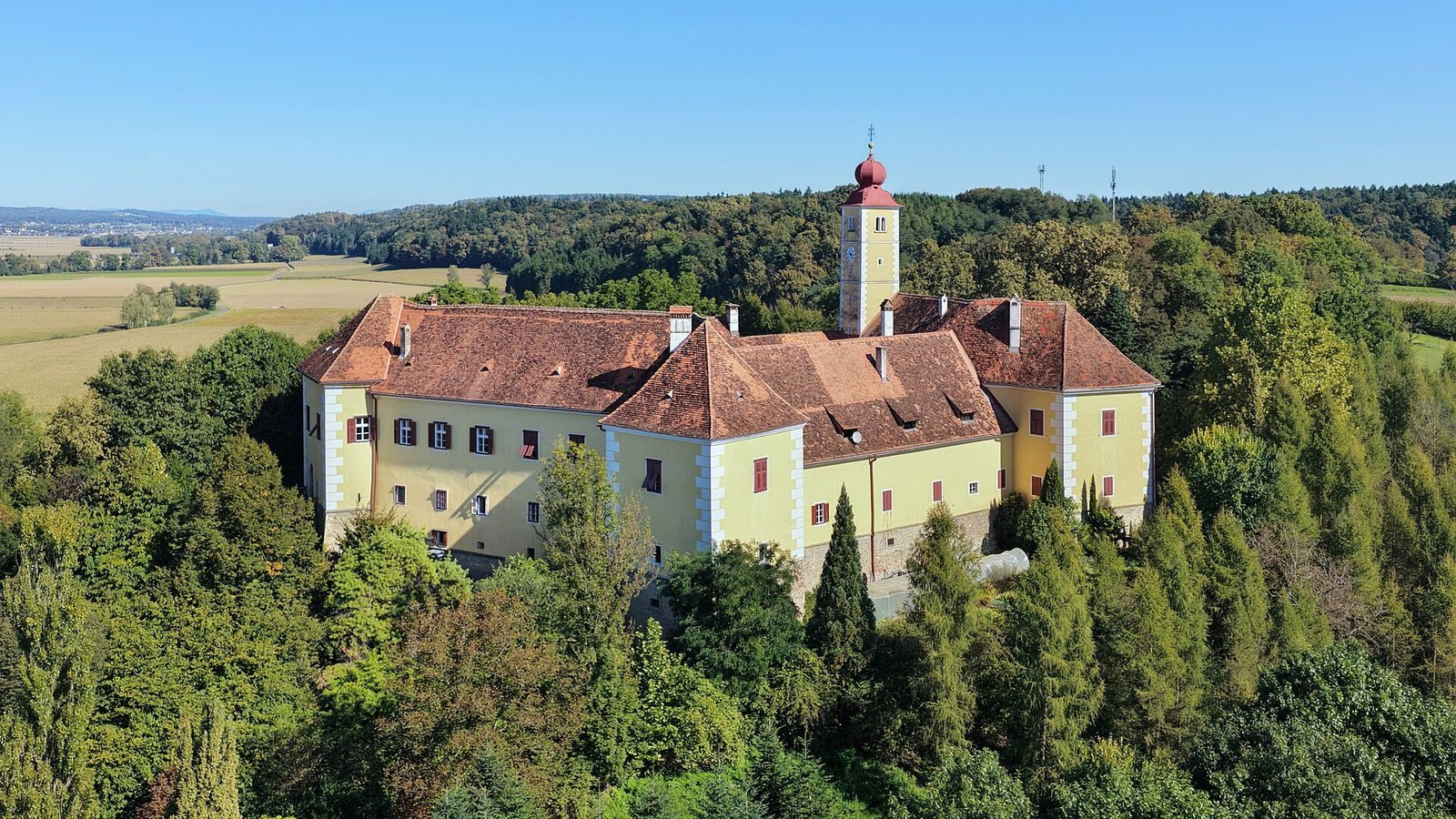
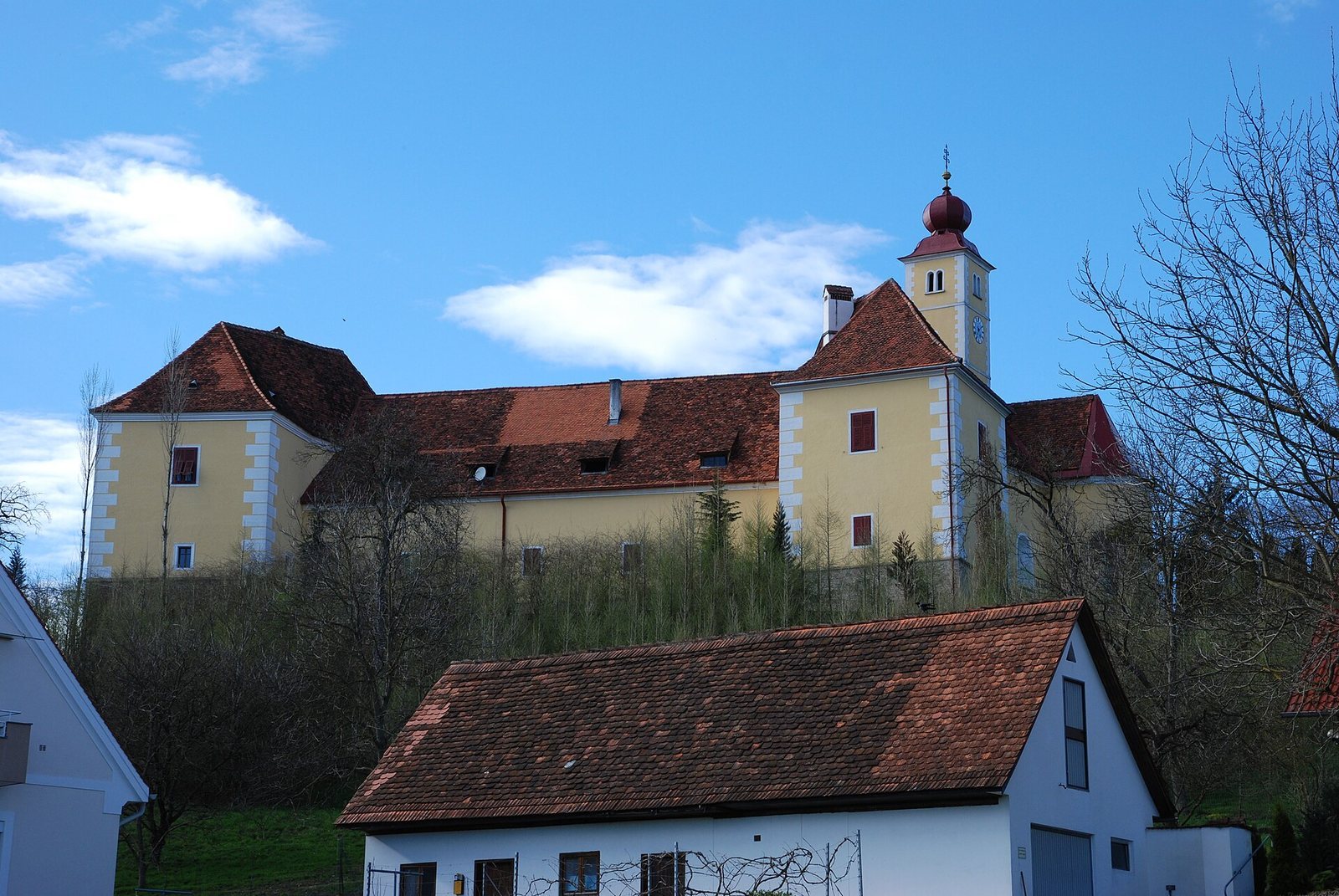
The castle stands on a rise in the Mur plain, in the municipality of Sankt Veit in Südsteiermark near the Slovenian border. Its two-storey plan forms an irregular pentagon around an arcaded courtyard. Three corner towers rise below the chapel’s bell tower. A stone statue of Saint John Nepomuk, a fourteenth-century Bohemian priest venerated as a saint, stands in front of the castle; the statue dates from the eighteenth century.
Chapel
Set in the east wing, the chapel is a Renaissance building on late-medieval foundations. Its high altar, made in the first quarter of the eighteenth century, has ribbonwork ornament formed from patterned, ribbon-like bands. Emperor Charles VI donated the altar. It contains a late-sixteenth-century painting of the Lamentation of Christ and an upper painting of Saint Charles Borromeo, an Italian cardinal later canonized as a saint. Other furnishings include a nineteenth-century pulpit, or raised preaching stand, a representation of Christ being scourged, and an eighteenth-century crucifix. The chapel’s two bells date from 1498 and 1581.