Haus Overbach: A Moated Castle and Monastery in Jülich, Germany
Site at a Glance
- Popularity
- Medium
- Country
- Germany
- Primary era
- Early Modern
- Eras represented
- Medieval, Early Modern
- Civilizations
- Duchy of Jülich, Holy Roman Empire
- Site type
- Domestic
- Remains
- Castle
On this page5 sections
History
Medieval origins and noble ownership
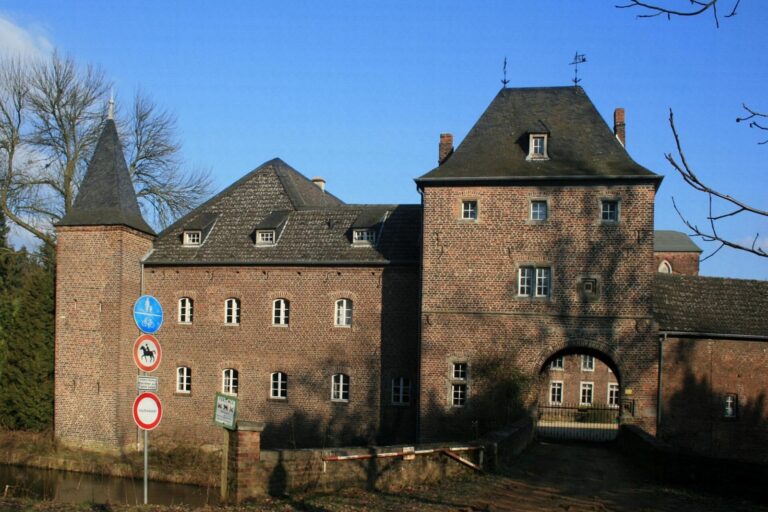
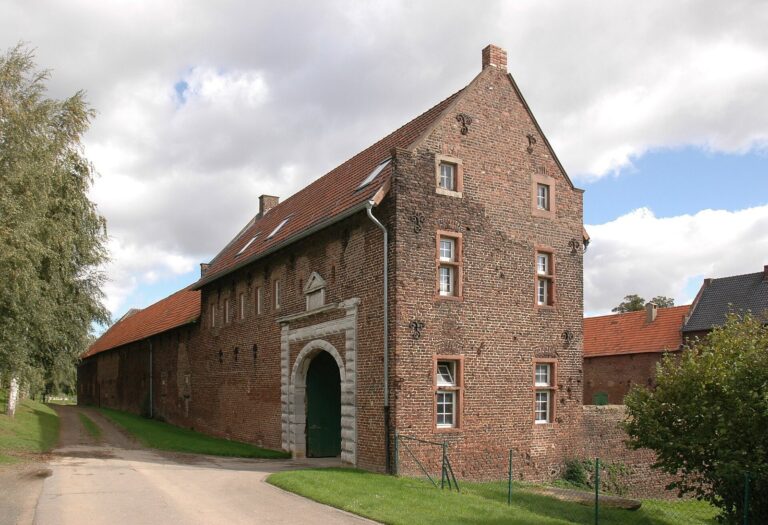
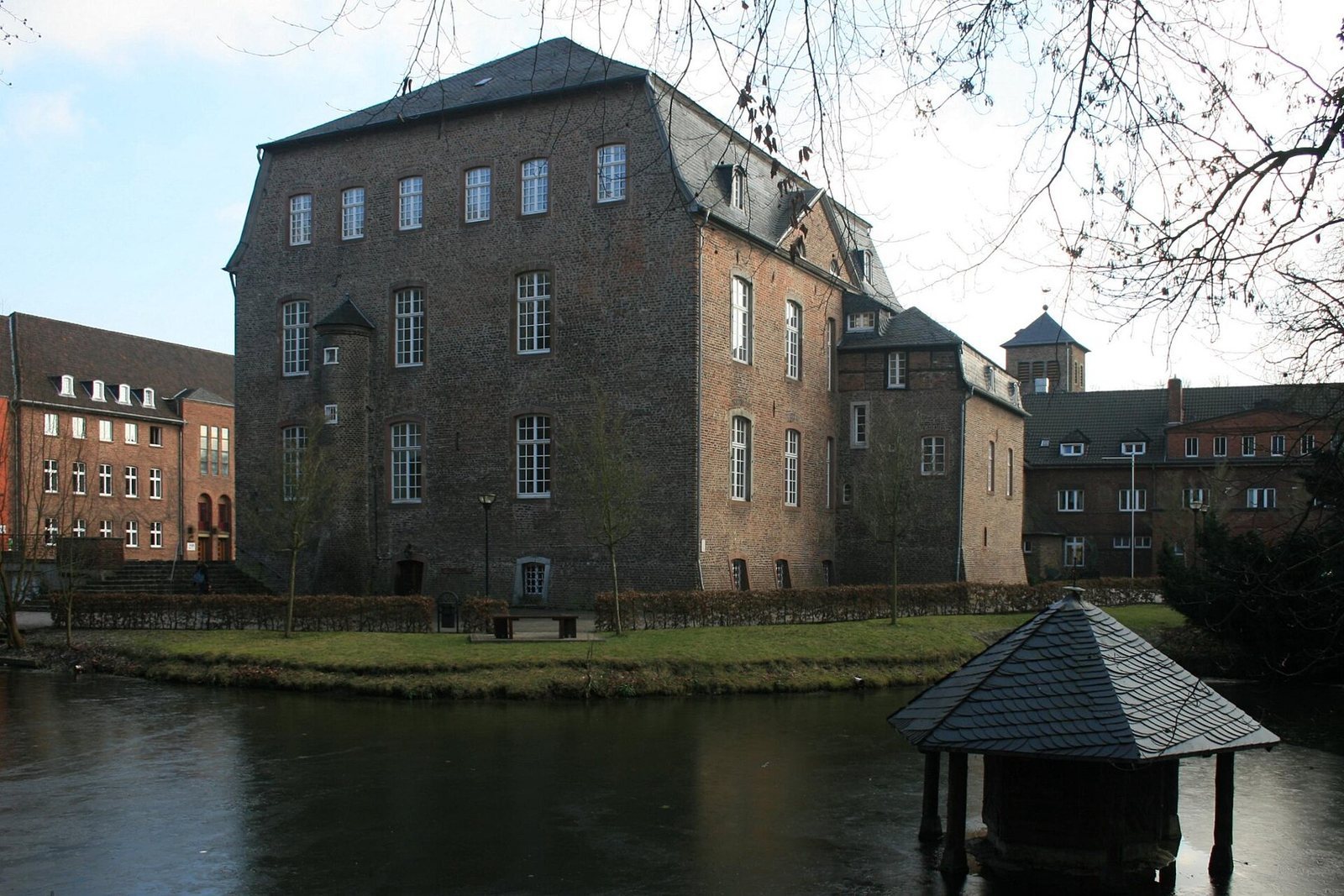
Haus Overbach is a Rhenish moated-castle complex in Barmen, a district of Jülich, Germany. It was first recorded as a knight’s seat in 1341. Eleven years earlier, Heinrich von Overbach had been noted as steward to Count William of Jülich.
In 1415, the estate included 61 Morgen, a traditional measure of land whose size varied by region. Around 1450 it belonged to the Grein family of Aldenhoven. In the late fifteenth century, Maria von Reuschenberg, born into the Grein family, inherited it, bringing Haus Overbach into the Reuschenberg family. The estate also appears on a sixteenth-century map and in a sketch made around 1720.
Changes of ownership and rebuilding
Around 1630, inheritance passed the estate to Johanna Adolpha von Cortenbach. Her marriage to Wilhelm Heinrich von Hatzfeld-Wildenburg brought it in practice into the Hatzfeld-Wildenburg family’s possession. As the family shifted its holdings farther south in Germany, it used the old knight’s seat as a pledge before selling it to its tenant, Franz Josef Hons.
In 1792, Hons sold Haus Overbach to Baron Reiner von Overschie-Wisbecq. The old buildings were demolished, and a new complex took their place. Reiner’s daughter and heir, Jeanette Francoise, married Count Theophil von Hompesch-Rurich in 1828. They had no children. The estate later passed to Countess Maria Luise von Hompesch, Theophil’s godchild and his brother’s daughter, through her marriage to Major Ludolf von Wenge-Wulfen. That marriage also produced no children, and the estate subsequently came into Paul Wolff-Metternich’s possession.
Monastery and school
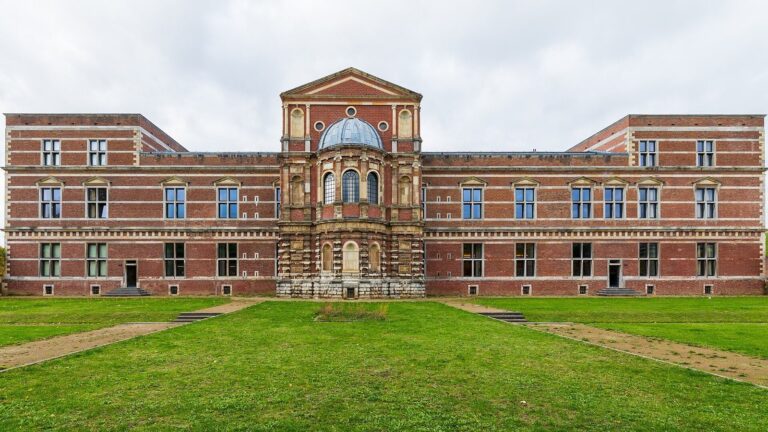
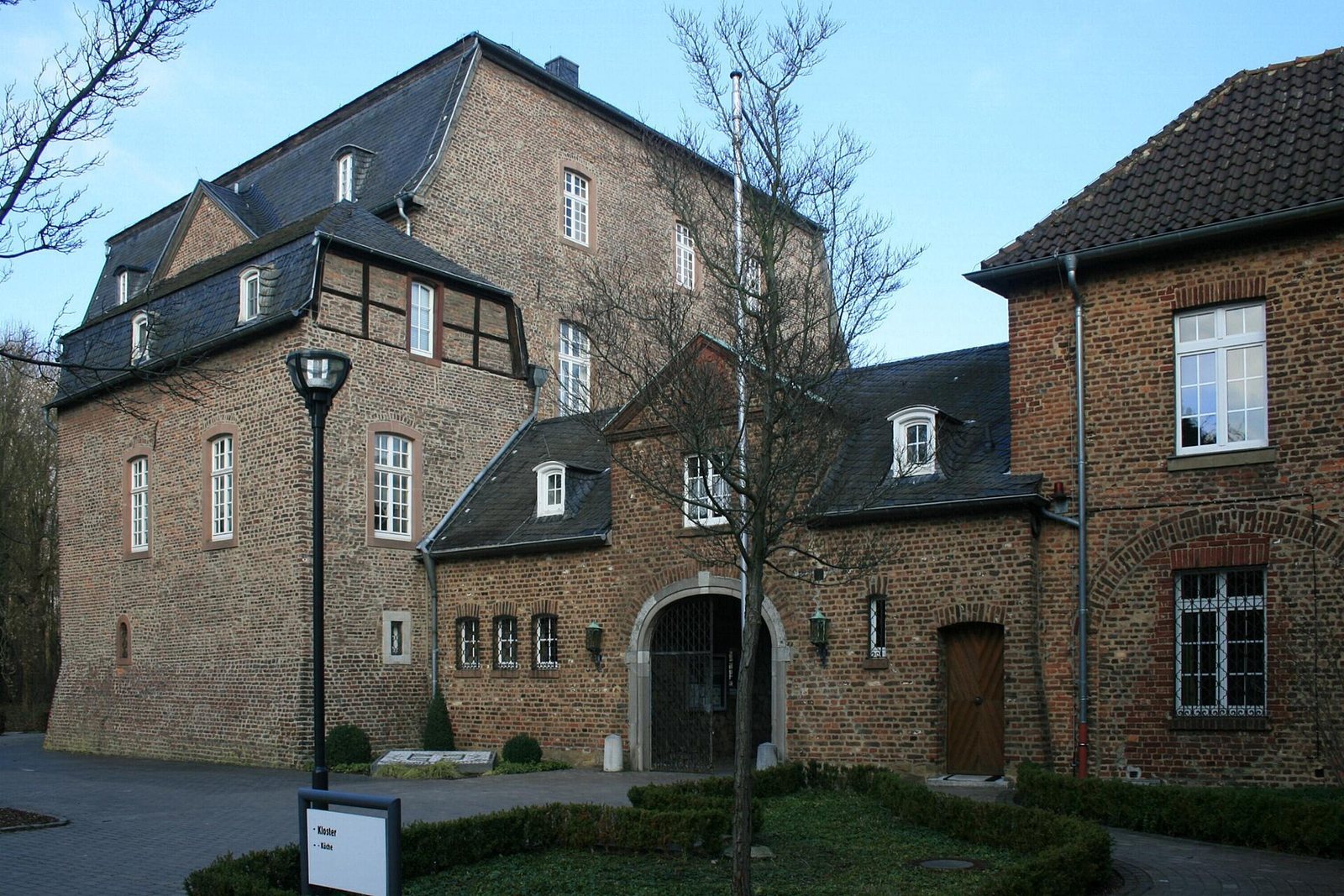
Wolff-Metternich sold Overbach to the Imperial Count von und zu Hoensbroech, who sold it in November 1918 to the Oblates of St. Francis de Sales, a Catholic religious congregation named for a French bishop and spiritual writer. The Oblates converted the complex into a monastery and mission school, a school connected with religious missionary work. The congregation still owns Haus Overbach, which serves its administration and monastery and houses Gymnasium Haus Overbach.
Remains
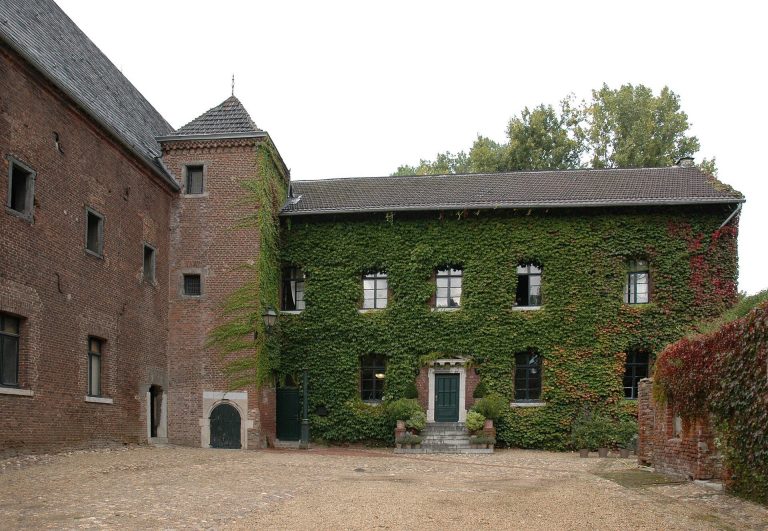
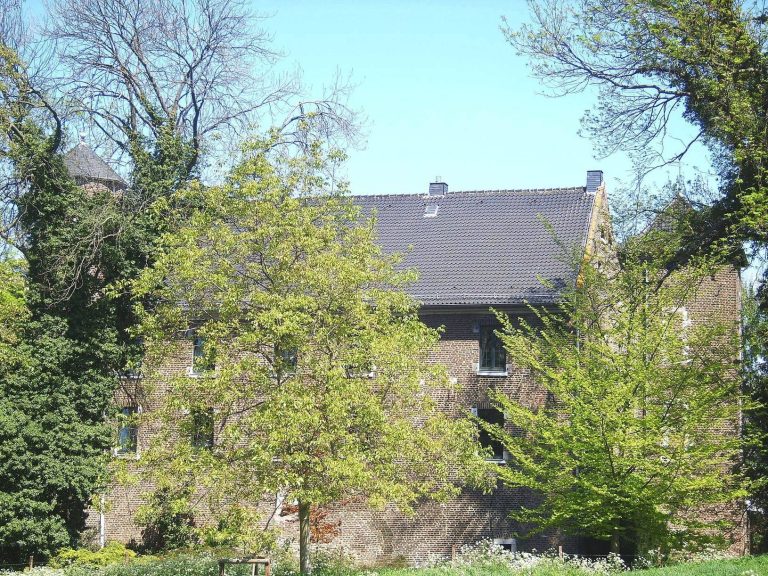
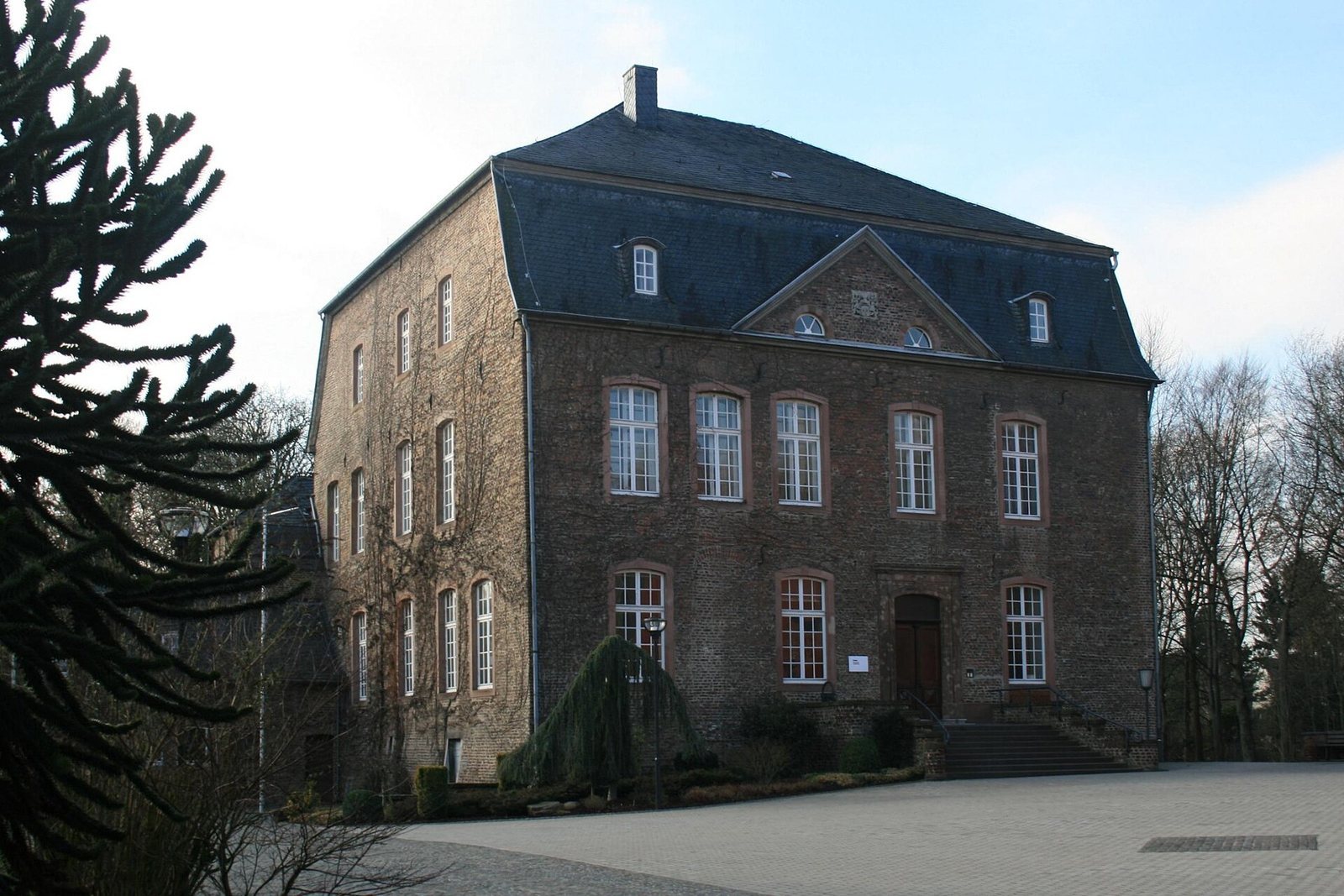
Haus Overbach comprises a building complex identified as a Rhenish moated castle. The manor house contains cellar vaults dating to around 1450.