Palazzo Sansedoni: A Medieval Palace in Siena
Site at a Glance
- Rating
- 5
- Popularity
- Very Low
- Country
- Italy
- Primary era
- Medieval
- Eras represented
- Medieval, Early Modern
- Civilizations
- Grand Duchy of Tuscany, Republic of Siena
- Site type
- Domestic
- Remains
- Elite Residence
On this page6 sections
History
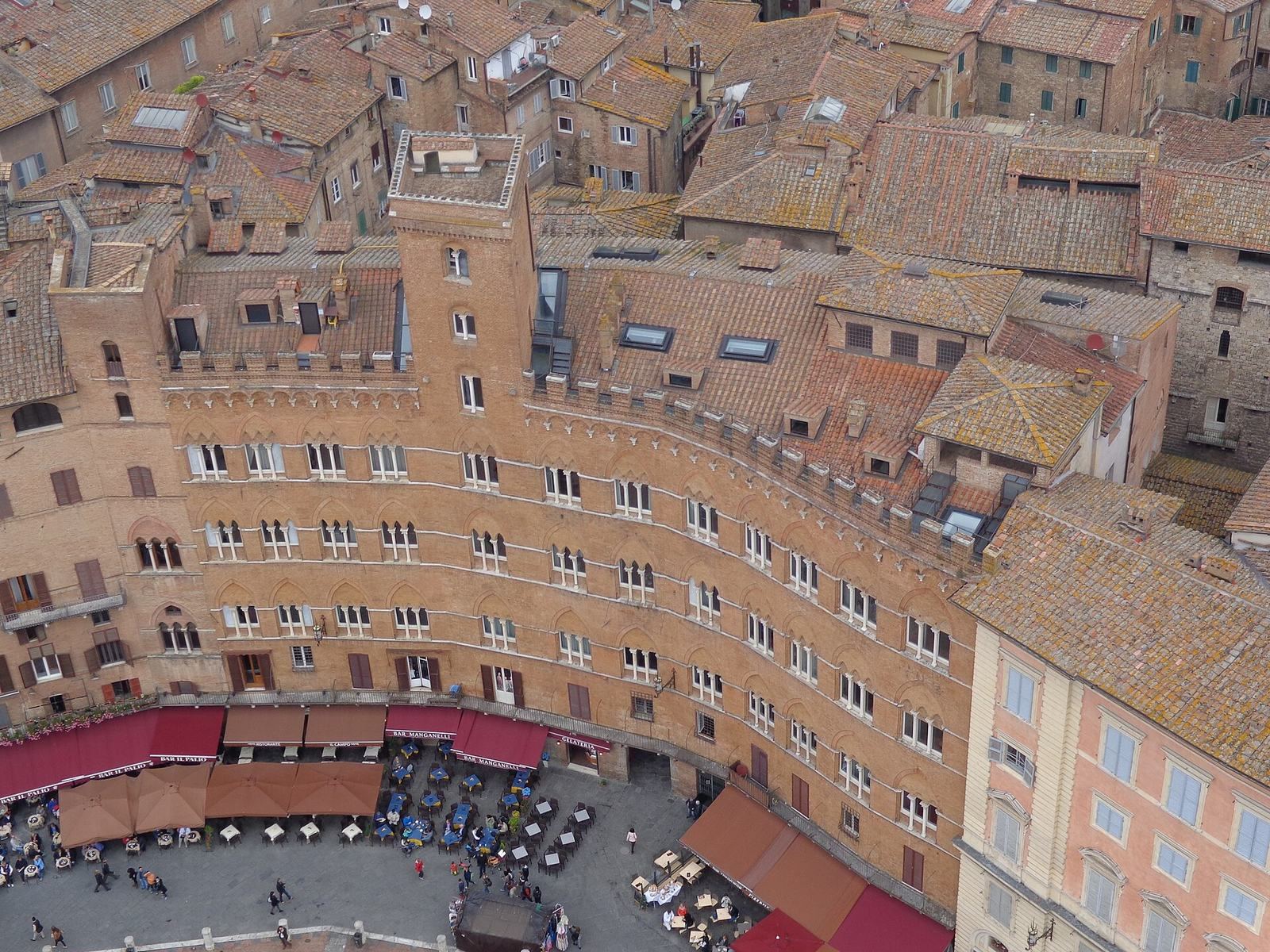
Palazzo Sansedoni is a medieval palace on Piazza del Campo in Siena, Italy. It took shape during the 13th century, when about five private houses were joined into one complex. The work closed an access passage between Via di Città and the piazza and continued for nearly a century.
Medieval expansion and completion
In 1339, Agostino di Giovanni directed renovation and an extension toward Banchi di Sotto. A contract and design dated 1340 name Agostino di Giovanni, Agostino di Rosso, and Cecco di Casino as the master masons responsible for the work.
In 1466, the owner, Tofo di Cecco Sansedoni, was asked to complete the façade facing Piazza del Campo and fill in many of its window arches. The side facing the street had already been finished. During the Middle Ages, the palace’s square tower was lowered so that it would not rise higher than the Torre del Mangia across the piazza.
Eighteenth-century remodelling
In the 18th century, architect Ferdinando Ruggieri remodelled the piazza façade in a Gothic style, using forms associated with medieval architecture.
Remains
The palace combines a curved frontage facing Piazza del Campo with decorated rooms and a private chapel within.
Piazza-facing façade
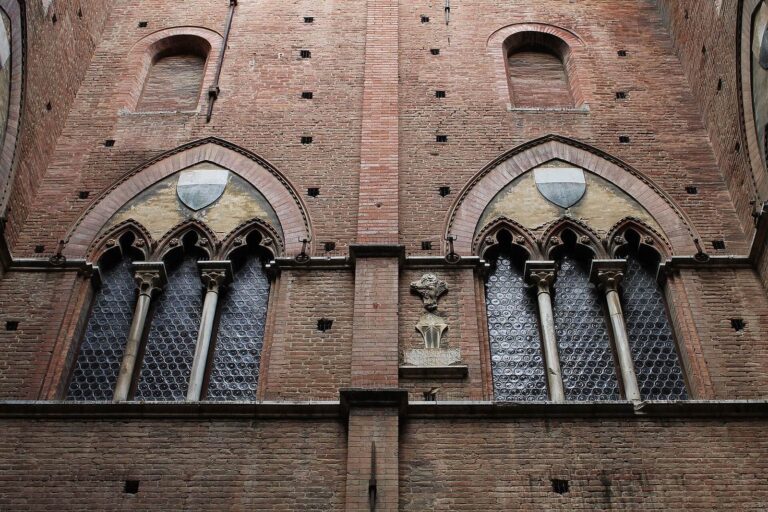
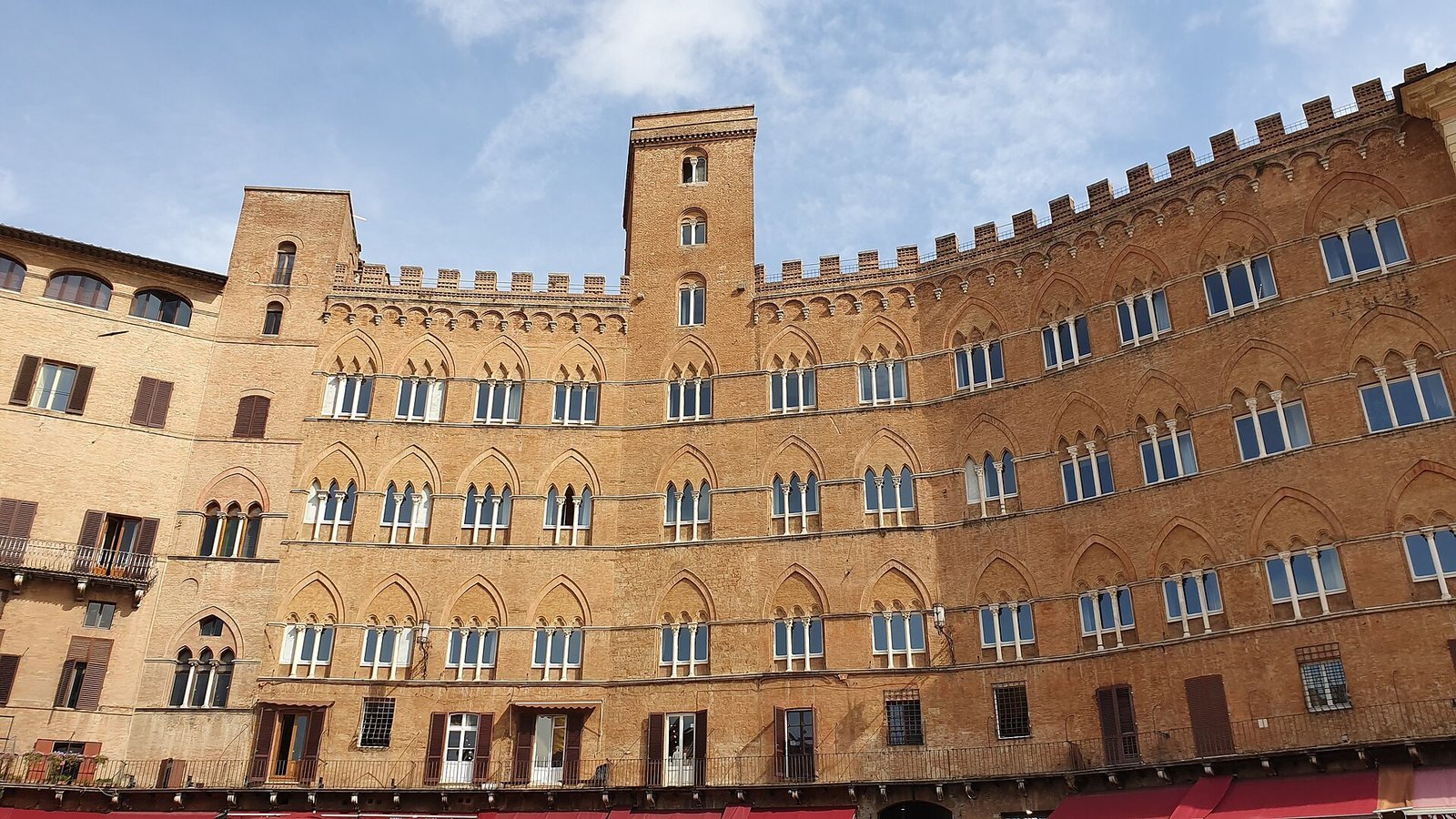
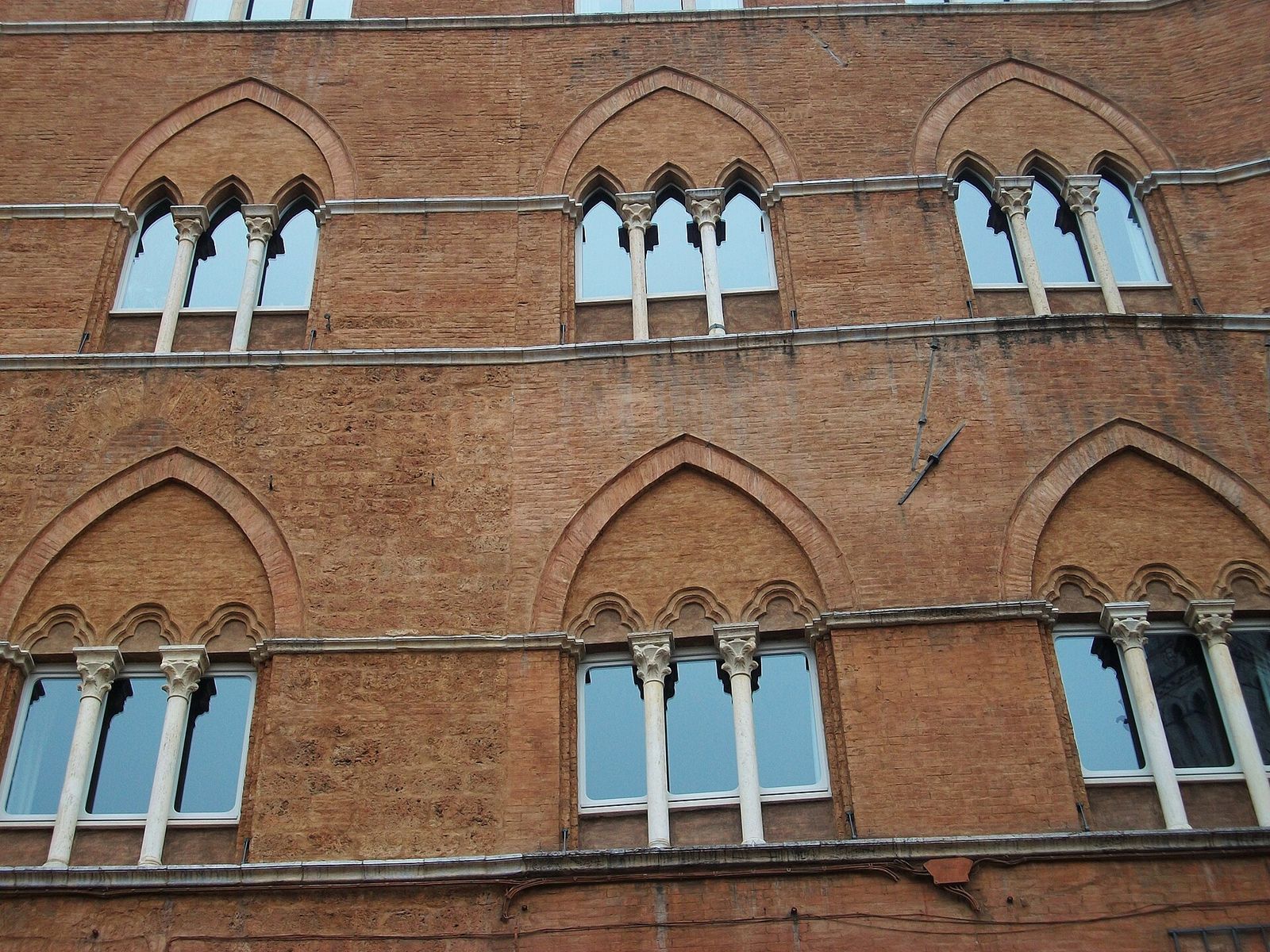
Built of red brick, the façade curves inward to follow the shape of the piazza and faces the Palazzo Pubblico across the square. Three rows of windows, each divided into three openings by slender columns, run across its front. Above them are crenellations, a parapet with alternating raised blocks and gaps, and a square tower. Some window openings appear partly blocked by a lower brick wall. The ground floor is thought to have contained numerous shops opening onto the street and the piazza.
Interior decoration and chapel
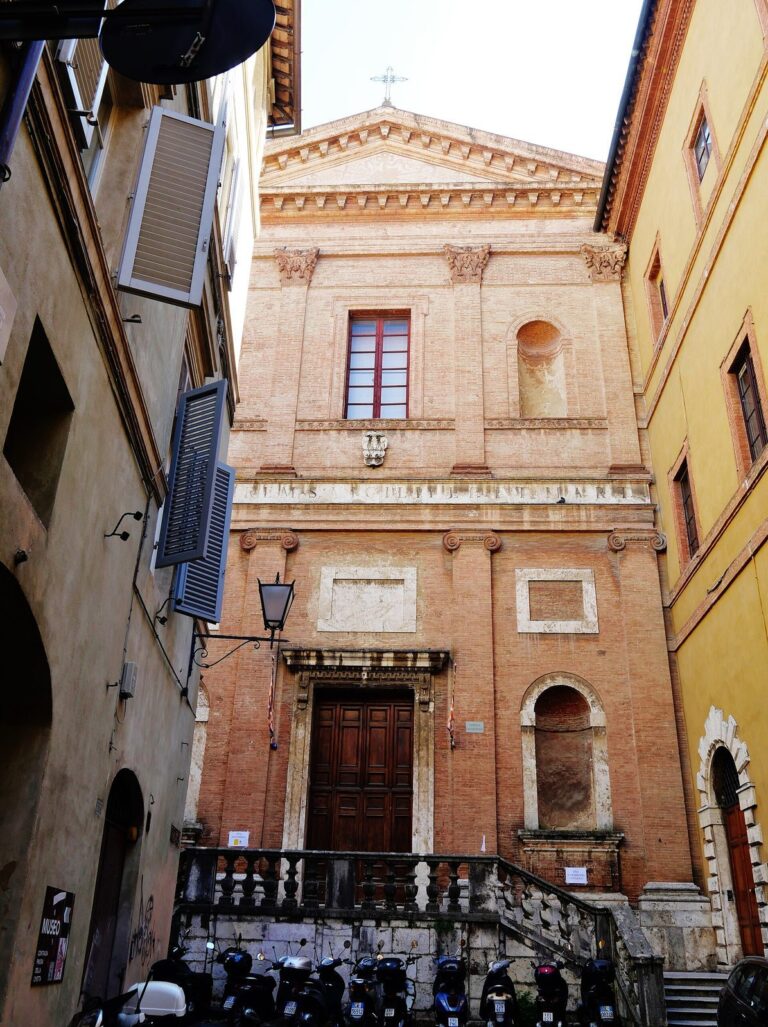
Interior rooms have 18th-century decoration attributed to the painters Francesco and Giuseppe Melani, Giovanni Domenico Ferretti, and Anton Domenico Gabbiani. The private chapel contains a ceiling fresco by Gabbiani dated 1701. It depicts the Glory of Blessed Ambrogio Sansedoni, honouring a 13th-century Dominican friar and preacher from Siena.