Borgia Apartment: A Papal Residence in the Apostolic Palace
Site at a Glance
- Popularity
- Very High
- Country
- Vatican City
- Primary era
- Medieval
- Eras represented
- Medieval
- Civilizations
- Papal States
- Site type
- Domestic
- Remains
- Elite Residence
On this page23 sections
History
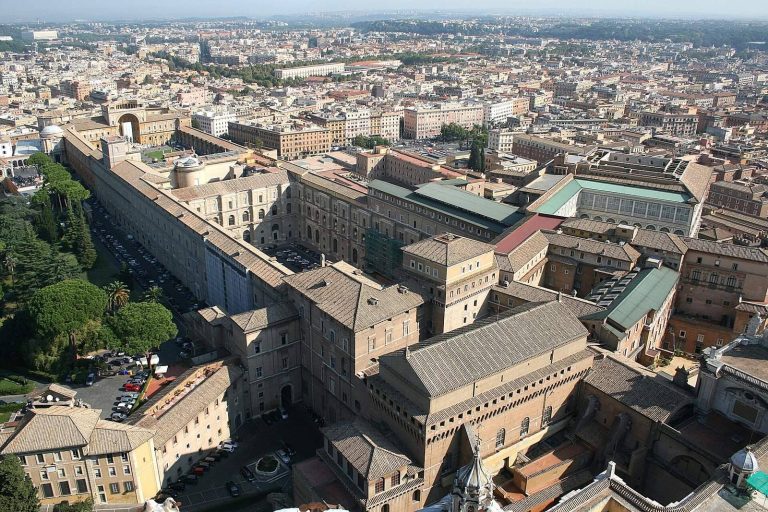
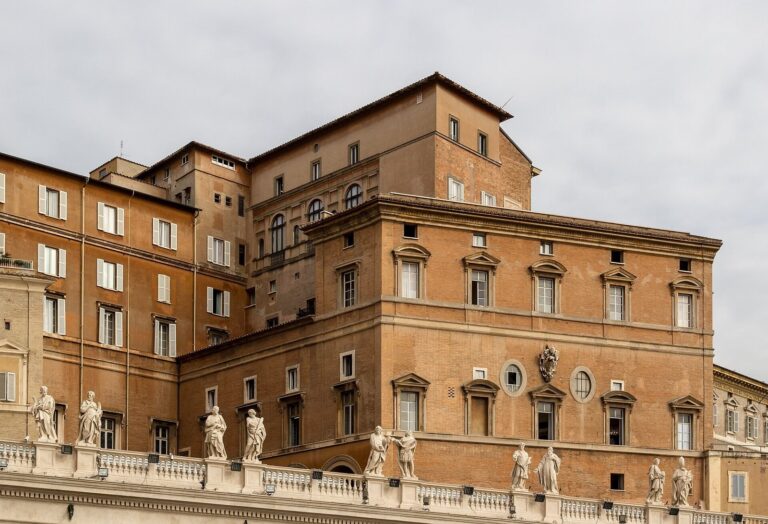
The Borgia Apartment is a six-room suite in the Apostolic Palace of Vatican City, adapted by Pope Alexander VI as a private residence for himself and his family. Its decoration, commissioned in 1492 and completed by 1494, joined Christian teaching with ancient Roman imagery and themes from medieval encyclopedias.
The palace rooms and Borgia residence
The suite brought together rooms of different dates. The Room of the Pontiffs was built between 1277 and 1280, while the Rooms of the Liberal Arts, Saints, and Mysteries date to 1447-1455. Alexander VI, born Rodrigo Borgia, renovated existing rooms and added a tower that was later lowered and altered.
Decoration under Alexander VI
Alexander commissioned the painter Bernardino di Betto, known as Pinturicchio, and his workshop to decorate the suite. Work began in autumn 1492 and was finished by 1494, possibly after Pinturicchio had departed. The unified undertaking was the most ambitious project of his career. Its imagery celebrated Christian doctrine, drew on classical Roman subjects and medieval encyclopedias, and promoted the Borgias’ supposed divine origins.
The scheme also drew on International Gothic, a late-medieval style noted for refined forms and intricate ornament, and Hispano-Moorish traditions shaped by artistic exchange between Christian and Islamic cultures in medieval Iberia. These influences were associated with Alexander’s Valencian origins. Papal-court humanists Annio da Viterbo and Paolo Cortesi probably devised the imagery, while Francesco Colonna may also have contributed.
The rooms may have served several private and official purposes. The Room of the Liberal Arts has been interpreted as Alexander’s study, personal library, or the seat of an ecclesiastical tribunal. Two adjoining smaller rooms may have been a bedroom and bathroom. The Room of the Mysteries may have hosted private audiences or Mass for a small group, while the Room of the Saints may have been a private papal space. The Room of the Pontiffs was intended for official ceremonies.
Later use and restoration
A collapse in the Room of the Pontiffs in 1500, probably caused by neglect, led to repainting during the later pontificate of Leo X. After Alexander died in 1503, his successor Julius II abandoned the suite. The rooms then saw little use for centuries and deteriorated. In the nineteenth century, Cardinal Angelo Mai used them as a library.
Water infiltration had badly damaged the painted decoration. Pope Leo XIII commissioned a restoration led by painter Ludwig Seitz from 1889 to 1897, and the rooms opened to the public that year, renewing interest in Pinturicchio’s work. Questions about the authorship of parts of the decoration remained unresolved. A further restoration in the twentieth century removed painted additions. Work begun in 2016 revealed a damaged section of the Resurrection fresco showing Indigenous Americans, believed to be the earliest known European depiction of them.
Since 1973, some rooms have housed works from the Vatican Collection of Modern Religious Art.
Remains
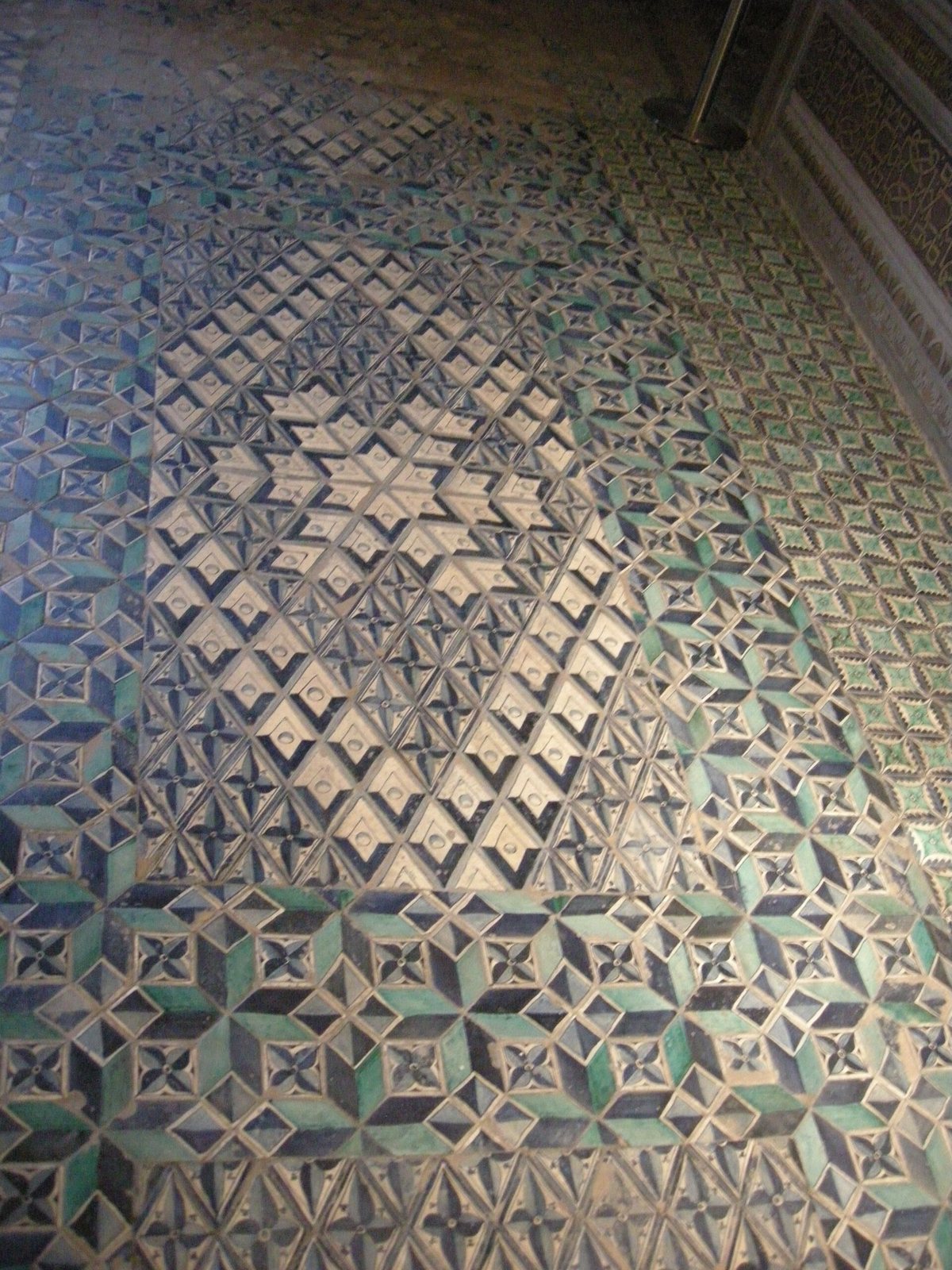
The six monumental rooms share frescoed vaults and painted or raised stucco decoration on their upper walls and ceilings, but their ceilings and painted subjects differ. A lunette is a decorated field beneath a vault or arch, often semicircular or pointed. Fifteenth-century floors include polychrome maiolica, a form of tin-glazed pottery, made in Manises, Spain.
Room of the Sibyls
Ceiling and planetary imagery
Geometric panels in the vault are formed in gilded stucco. At the centre are the date 1494 and Borgia emblems: flames and a radiant double crown. Round paintings show Roman sacrificial scenes among gold-ground foliage and hybrid creatures in an antique style. Other sections pair fantastic creatures on blue grounds with hexagons depicting Astronomy and the seven planets, based on Florentine woodcuts from the later fifteenth century. Venus is particularly linked to the Borgia bull. Repainting has made the planetary scenes difficult to attribute securely. Three show Umbrian training, while four, including Mercury, suggest a Florentine hand, possibly that of the illuminator Littifredi Corbizzi.
Prophetic lunettes
Twelve blue-ground lunettes pair biblical prophets with sibyls, figures of pagan prophecy, whose scrolls carry predictions. The pairings are Jeremiah with the Phrygian Sibyl, Hosea with the Delphic, Daniel with the Erythraean, Baruch with the Samian, Zechariah with the Persian, Obadiah with the Libyan, Haggai with the Cumaean, Amos with the European, Jeremiah with the Agrippine, Isaiah with the Hellespontine, Micah with the Tiburtine, and Ezekiel with the Cimmerian. The images place pagan and biblical prophecy alongside one another. The lunettes are attributed to Niccolò di Bartolomeo della Bruggia of Pisa; the sacrificial scenes have been tentatively attributed to Raffaellino del Garbo.
Room of the Creed
Ceiling and lunettes
The geometric ceiling combines papal emblems with Borgia devices. Twelve blue-ground lunettes show Apostles and prophets holding passages from scripture, expressing connections between the Old and New Testaments. Their pairings are Peter and Jeremiah, John and David, Andrew and Isaiah, James the Elder and Zechariah, Matthew and Hosea, James the Younger and Amos, Philip and Malachi, Bartholomew and Joel, Thomas and Daniel, Simon and Malachi, Thaddaeus and Zechariah, and Matthew and Obadiah. The figures have formal, angular poses. Around the windows, decorative scenes include fish, deer, cupids, and musical subjects. The lunettes are attributed to Piermatteo d’Amelia, also known as the Master of Toscolano.
Room of the Liberal Arts
Vault and personifications
A cross arch divides the room’s two continuous, tunnel-shaped vaults, which are decorated with gold motifs on pink or blue grounds. Seven large lunettes personify the Liberal Arts, the medieval group of Grammar, Rhetoric, Dialectic, Arithmetic, Geometry, Music, and Astronomy. Six lunettes are pointed; the Astronomy scene is round-headed and faces the windows. Each personification is enthroned among related figures. Paolo Cortesi appears as Cicero in the Rhetoric scene, while the figure of Euclid in Geometry may represent the architect Donato Bramante. The Rhetoric lunette bears Pinturicchio’s only signature in the cycle, although his role is generally understood to have been the design. Antonio da Viterbo, known as Pastura, has been identified as a contributor to Rhetoric, Music, and Astronomy; Geometry is attributed to the Master of the Borghese Tondo.
Arch and wall paintings
A figure of Justice holding a sword and scales occupies the central arch. Wall paintings include Jacob fleeing from Laban and the story of Trajan and the Poor Widow. Stucco decoration carries Borgia emblems: a double crown associated with Aragon and Sicily, a flame, a bull, and a sun.
Room of the Saints
Vault paintings
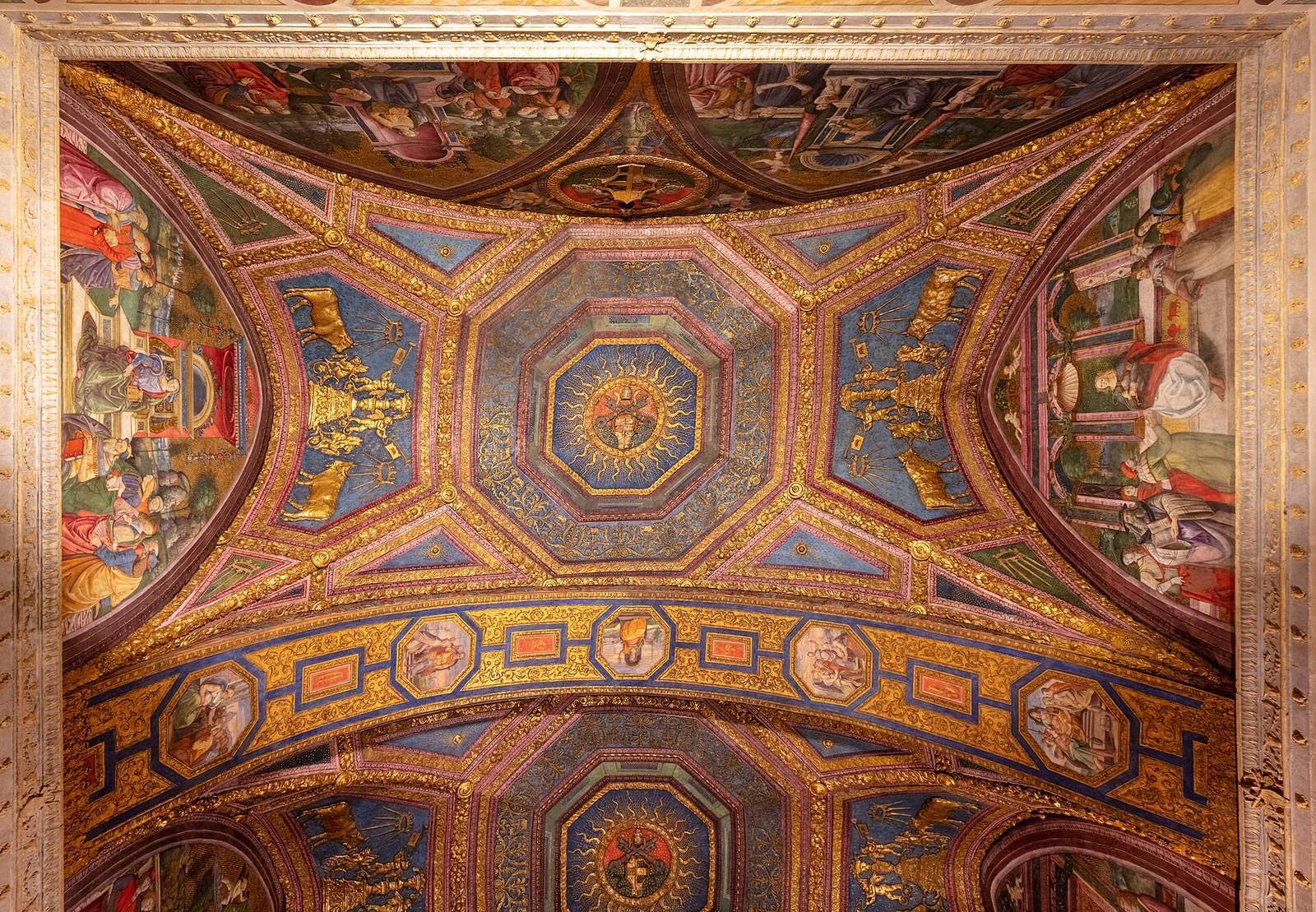
Two sections with intersecting vaults are separated by a large arch whose underside is painted. Eight sections of the vault tell the myth of Isis and Osiris, while five octagons on the arch show episodes in the story of Io and Isis. One scene places Isis between Hermes Trismegistus, a legendary sage associated with Hermetic writings, and Moses. The sequence follows Io’s transformation into a heifer, her rescue by Mercury, and her life in Egypt as Isis, where she teaches laws and writing. It then shows Isis and Osiris marrying, Typhon killing and dismembering Osiris, and Isis reassembling his body and burying it in a pyramid-shaped tomb. Osiris later appears as Apis, the sacred bull associated with him. Apis is shown as a golden image in a processional shrine topped by the Libyan Hercules, a North African form of the classical hero. The cycle has been interpreted as connecting seasonal changes with the Sun and Moon, and Osiris’s death and return with Christ’s death and resurrection.
Wall paintings and doorway image
The pointed wall lunettes, two of them rounded, depict the Visitation; Anthony the Abbot and Paul of Thebes as hermits; Barbara fleeing from a tower; Susanna and the Elders; the Martyrdom of Sebastian; and Catherine of Alexandria disputing with philosophers before the emperor Maximinus. The Disputation includes a triumphal arch with a golden bull and the inscription PACIS CVLTORI, meaning “to the cultivator of peace.” It alludes to the “Borgian peace” and the end of the Reconquista, the Christian reconquest of Muslim-ruled territories in Iberia, in 1492. Susanna’s scene includes a fountain and wild animals, with the elders’ punishment in the background. Gold highlights recur across the paintings.
Some proposed portrait identifications remain uncertain. Catherine may represent Lucrezia Borgia and the emperor her brother Cesare; an onlooker may be Pinturicchio, a richly dressed man may be Andrew Palaeologus, and a turbaned figure may represent the Ottoman sultan. Above a doorway, a round painting of the Madonna and Child reading is attributed to Pinturicchio.
Room of the Mysteries
Vaults and prophets
An arch joins the room’s two rectangular sections, each covered by intersecting vaults. Round paintings of prophets carry scrolls related to the scenes below. The first section shows David, Isaiah, Solomon, and Malachi; the second shows Zephaniah, Micah, Joel, and Jeremiah. Triangular gold-ground areas and blue frames carry Borgia devices, including the bull and double crown.
Marian scenes: Annunciation and Adorations
The wall lunettes form a cycle of seven joyful mysteries from Mary’s life, set against the seven sorrowful mysteries. They show the Annunciation, Adoration of the Shepherds, Adoration of the Magi, Resurrection, Ascension, Pentecost, and Assumption. In the Annunciation, a checkered floor in perspective leads to a triumphal arch and a hilly landscape, above which God appears among angels. The scene also includes a curtained bedroom, trees evoking an enclosed garden, white lilies, and the dove of the Holy Spirit. Its use of Florentine perspective is combined with a manner associated with an Umbrian painter working from Pinturicchio’s design, and with abundant pastiglia, raised decoration finished with gilding.
The Adoration of the Shepherds has undergone substantial restoration and shows stylistic links with Ghirlandaio and Botticelli. It is attributed to Bartolomeo di Giovanni, who is also credited with the Adoration of the Magi, a scene influenced by Filippino Lippi.
Resurrection and later scenes
The Resurrection uses a composition associated with Perugino, but the guards’ poses and the scene’s depth give it a more dynamic arrangement. Pinturicchio painted Alexander VI kneeling beside the opened sarcophagus; the pope’s cloak is richly set with gems. The three soldiers have sometimes been identified as Alexander’s sons Giovanni, Cesare, and Goffredo, an interpretation generally rejected.
Assistants, including Tiberio d’Assisi and Pastura, contributed extensively to the Ascension, Pentecost, and Assumption. The Assumption is the most accomplished of the three and is enriched with gilded pastiglia. It includes the delivery of Mary’s girdle, with a kneeling man at the right usually identified as Cardinal Francesco Borgia.
Room of the Pontiffs
Vault and central medallion
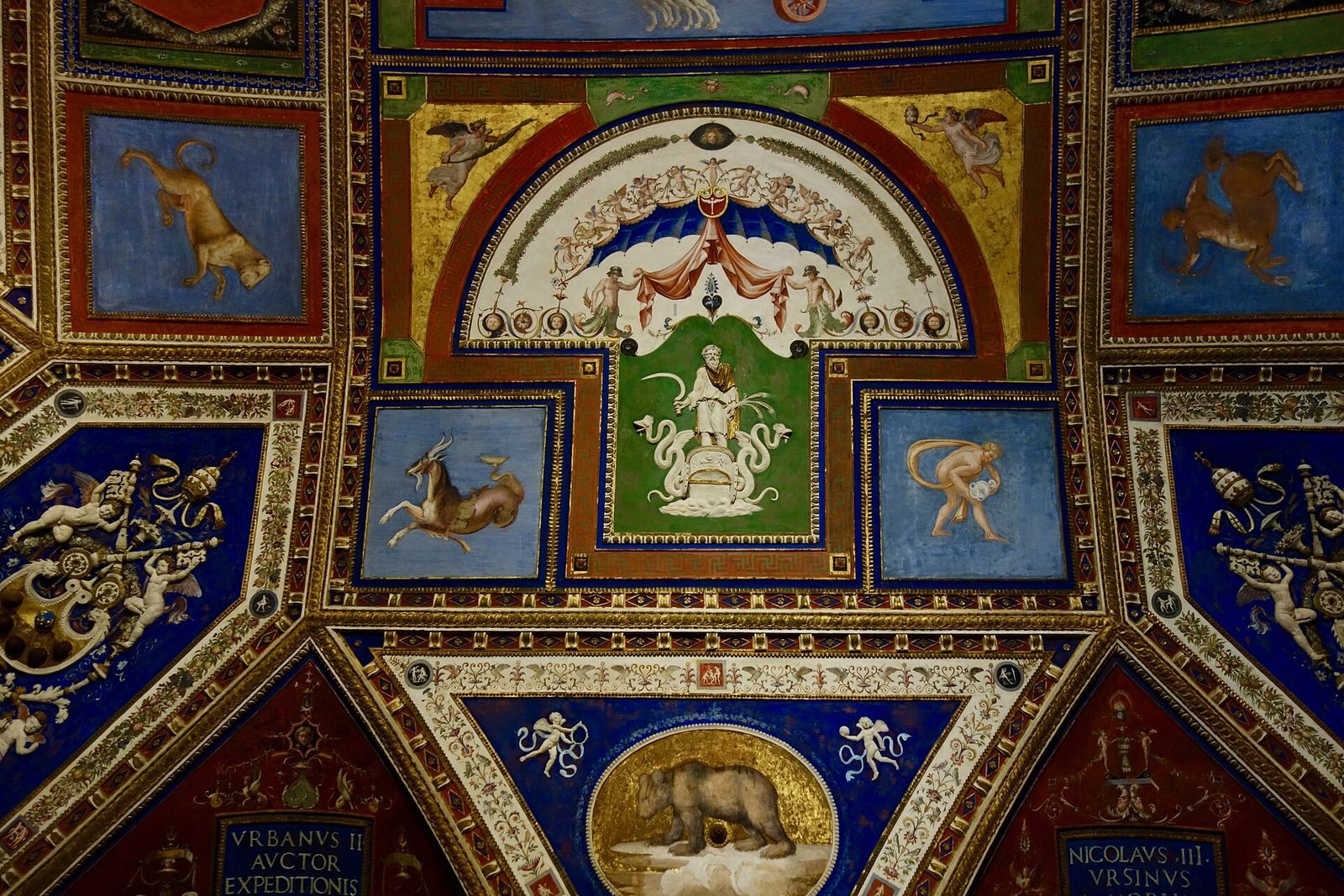
The largest room has a vault decorated with frescoes by Giovanni da Udine and Perin del Vaga, and relief stucco ornament by Lorenzo Sabbatini and his assistants. This ornament, known as grotesque decoration, draws on ancient Roman wall designs. A blue-ground central medallion shows angels holding the papal tiara and the keys of Saint Peter. It sits within an orange frame filled with antique-style figures in a single colour.
Panels and zodiac signs
Four blue-ground panels show the sign of Leo; Apollo, the classical Sun god, riding a chariot drawn by four white horses; an eagle recalling Jupiter’s abduction of Ganymede; and a swan recalling Jupiter and Leda and the birth of the twin brothers Castor and Pollux. The two long-side lunettes contain grotesque ornament. Nearby panels show the remaining zodiac signs, arranged according to the astrological chart cast for Leo X’s birth rather than in their usual sequence.