Hildesheim Town Hall: Seat of the City Administration
Site at a Glance
- Popularity
- Medium
- Country
- Germany
- Primary era
- Medieval
- Eras represented
- Medieval, Modern
- Civilizations
- German, Holy Roman Empire
- Site type
- Civic
- Remains
- Town Hall
On this page5 sections
History
Medieval origins and later changes
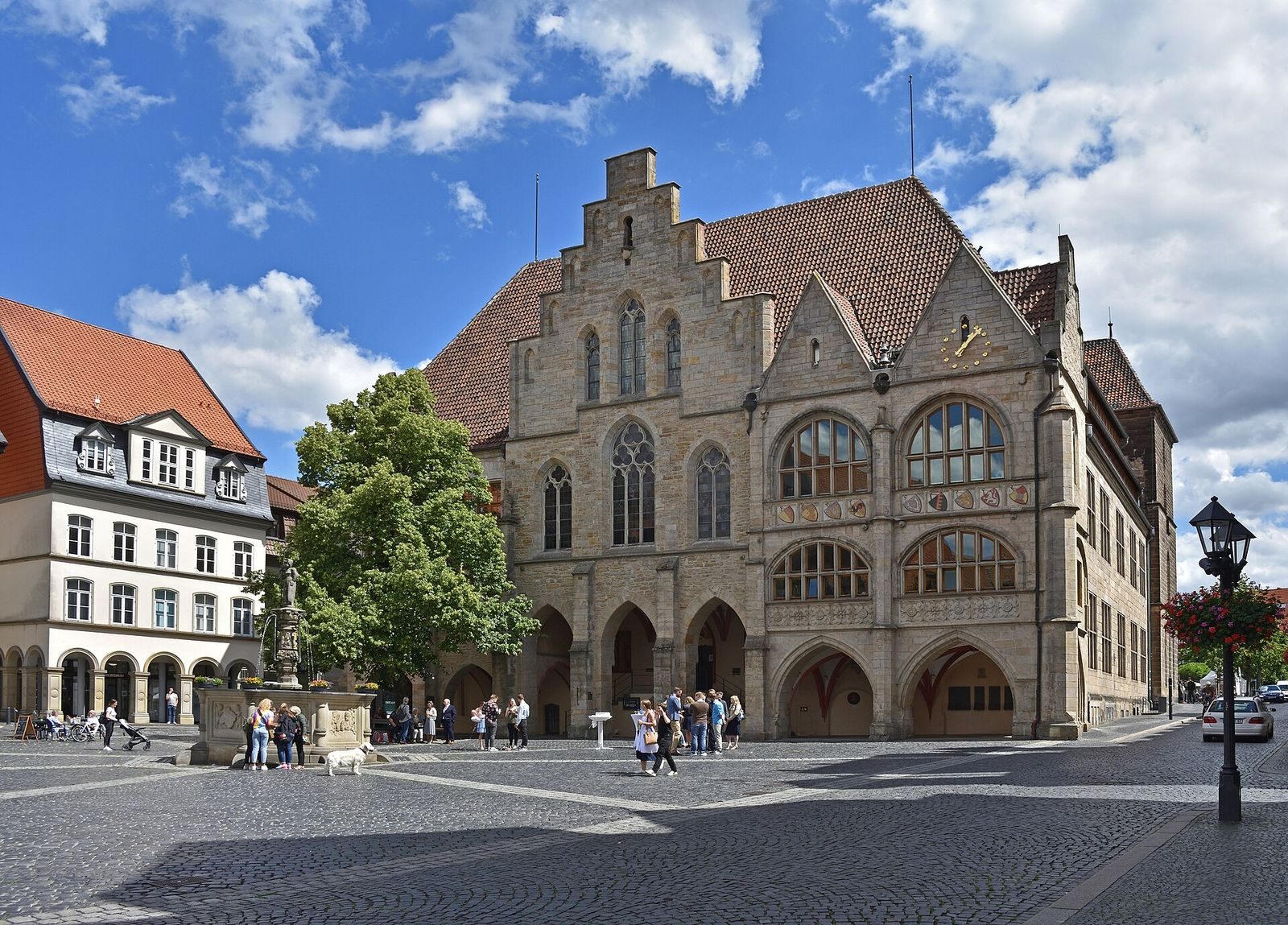
Hildesheim Town Hall is the seat of the city administration, located on the east side of the historic marketplace in Hildesheim, Germany. A predecessor may have occupied the site in the 13th century. The later sandstone Gothic building was constructed in the first half of the 14th century, with its core dating to around 1325, and underwent extensive remodeling in the first half of the 15th century.
Further alterations were made between 1883 and 1892 under Gustav Schwartz, the city’s municipal building master. Allied air raids during the Second World War largely destroyed the town hall, which was rebuilt in 1954. Architect Gerhard Graubner designed a northern extension added in 1959. The extension was altered during the reconstruction of the historic façades in the 1980s.
Remains
Marketplace façade
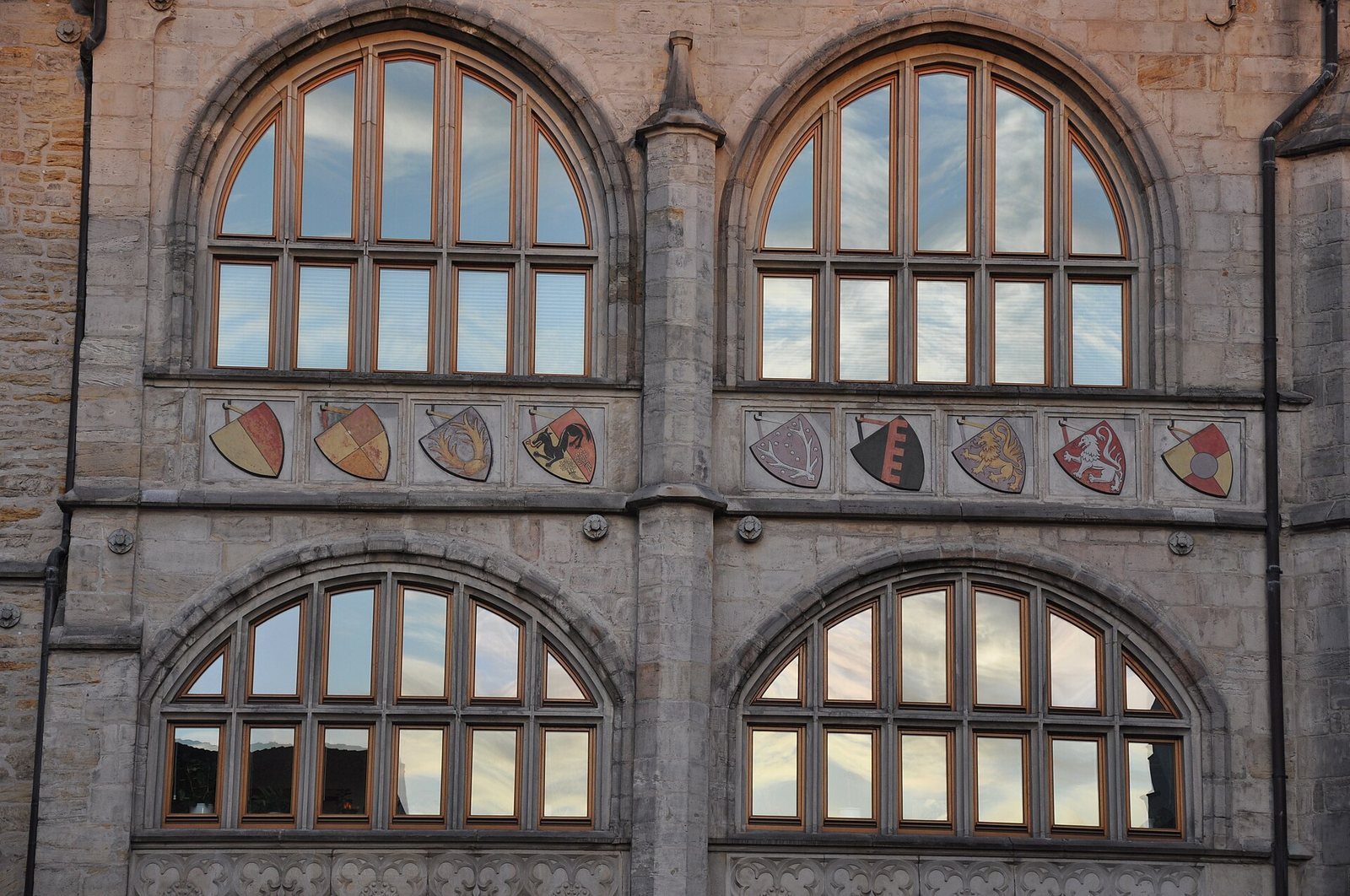
The town hall’s central stepped gable rises above a structure built with regularly cut ashlar blocks and irregular rubble stone. On the western side, facing the marketplace, tracery stonework decorates the windows, while continuous arcades run along the façade. Coats of arms displayed there represent, from left to right, the Prince-Bishopric of Hildesheim, Hildesheim before 1528, the administrative districts of Winzenburg and Peine, the County of Dassel, the districts of Wohldenberg, Poppenburg, and Schladen, and Alfeld. The Prince-Bishopric was an ecclesiastical territory whose bishop also exercised princely authority.
Eastern side and ceramic work
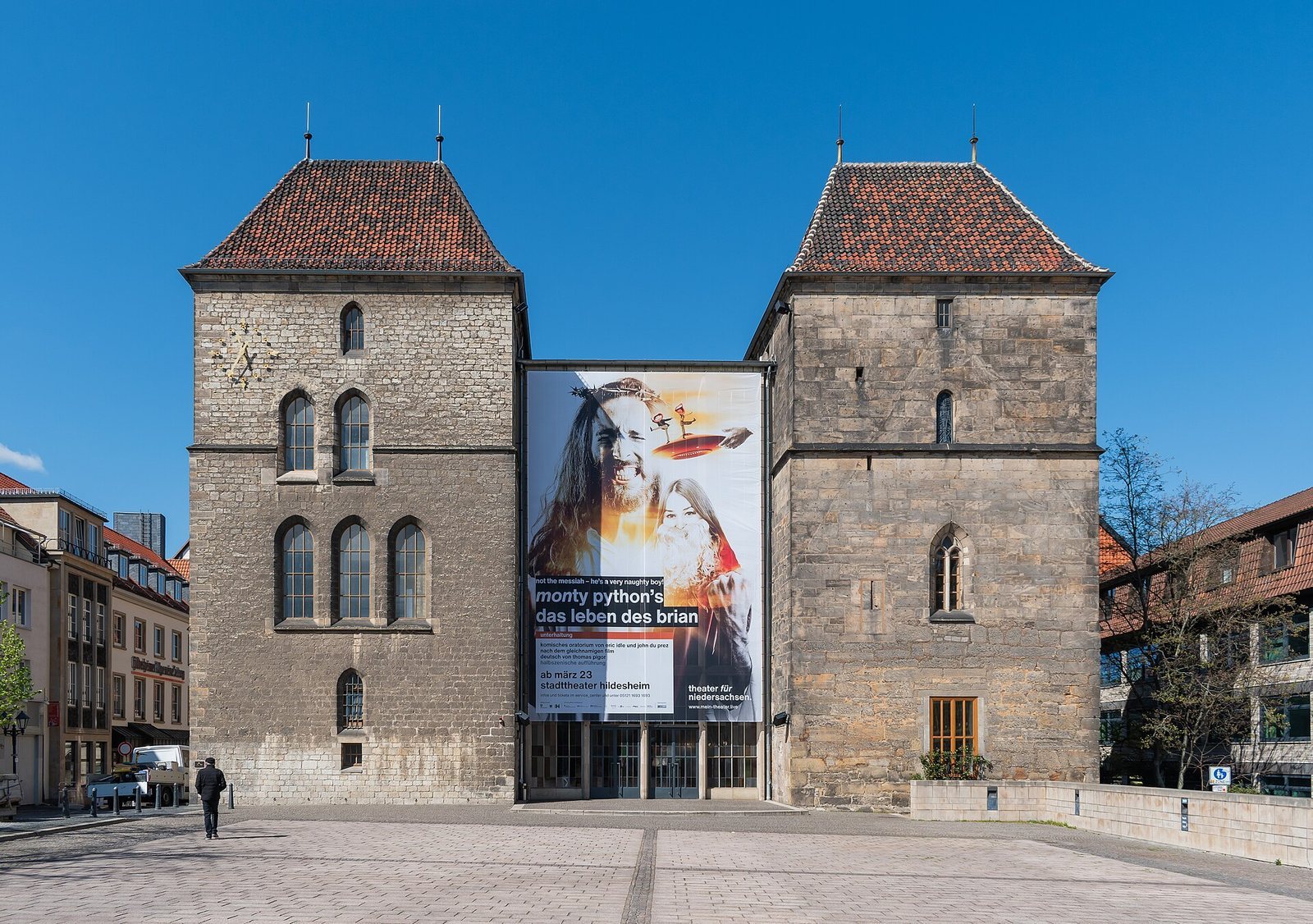
Facing An der Lilie square, the eastern side has a postwar glass façade framed by two towers that suffered very little war damage. A ceramic wall panel beside the eastern entrance depicts the medieval Butchers’ Guildhall, a building used by a craft guild for meetings and administration. The work, donated to the town hall in 1954 by the South Hanover-Hildesheim Chamber of Industry and Commerce, includes a majolica, a form of glazed earthenware, about one metre high. It bears the signature “Werkstatt Hohlt” and is by sculptor and ceramic artist Otto Hohlt.