Parish Church of St Mary the Virgin in Monken Hadley: A Church of England Parish Church
Site at a Glance
- Rating
- 4.8
- Popularity
- Low
- Country
- United Kingdom
- Primary era
- Medieval
- Eras represented
- Medieval, Early Modern, Modern
- Civilizations
- British, English
- Site type
- Religious
- Remains
- Church
On this page12 sections
History
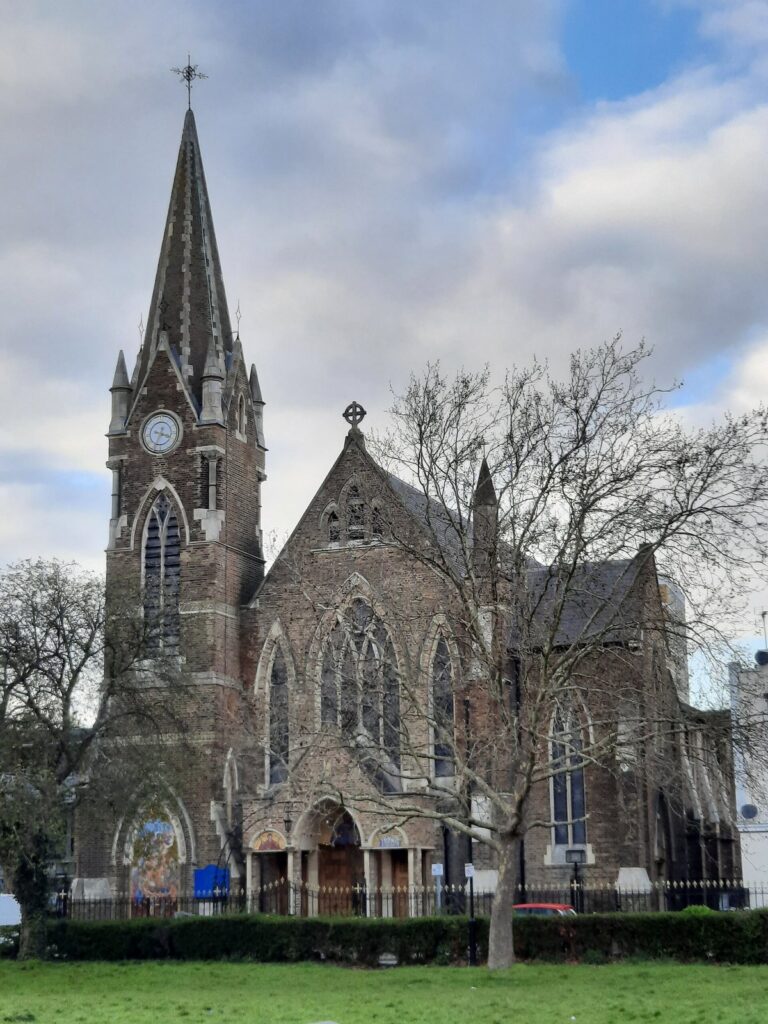
The Parish Church of St Mary the Virgin in Monken Hadley is a Church of England parish church in the United Kingdom. Its administration falls within the Diocese of London, the area overseen by a bishop, and the Archdeaconry of Hampstead and Deanery of Barnet, smaller church-administration districts. Although the church’s early history is uncertain, a church is believed to have stood on the site for more than 800 years. The present building was rebuilt in 1494 in the Perpendicular style, a late English Gothic form marked by strong vertical lines and elaborate window tracery.
Medieval origins and rebuilding
The rebuilding may have followed damage during the Battle of Barnet in 1471, a battle in the Wars of the Roses, a series of conflicts over the English crown. The Gooder family, prominent in Hadley during the fifteenth and sixteenth centuries, may have helped fund the church’s construction.
Victorian renewal
The parish and church were strongly influenced by the Oxford Movement, also called Tractarianism. This nineteenth-century movement within the Church of England sought to renew worship by drawing on older Catholic traditions. In 1848, architect G. E. Street carried out a major renovation. The south porch was rebuilt in 1855; later Victorian additions included an organ, a new pulpit and stained glass in all the windows. A vestry was added in 1888.
The beacon and later history
The medieval signal beacon was blown down in January 1779 and carefully repaired, although signal beacons were no longer needed. It later became an emblem of the local area and the badge of a nearby Church of England primary school. The church served as the model for another Church of St Mary the Virgin in Chappaqua, New York, in 1904. It has held Grade II* listing since 1949, a statutory category for buildings of particular importance and more than special interest.
During the Blitz, Germany’s sustained bombing campaign against Britain in the Second World War, the east window and other stained glass were destroyed. The chapel of St Catherine was restored in 1958 and continued in use as a chapel. The church remains a focus of Eucharistic worship, Christian worship centred on Communion, in the surrounding district, and it maintains a strong choral tradition. Its beacon was lit in 2022 for the Platinum Jubilee of Queen Elizabeth II, marking 70 years of her reign.
Remains
Medieval plan and exterior
Church and porch
The surviving church includes two chapels in its transepts, the crosswise parts of the building, dedicated to Saint Anne, traditionally regarded as Mary’s mother, and Saint Catherine, a Christian saint venerated in several traditions. The date 1494 is carved above the west door, between a wing and a rose. In Street’s 1848 renovation, the pulpit, galleries and plastered ceiling were removed, the stonework was repointed, and the aisle walls were shifted outward by about 18 inches. The vestry added in 1888 stands north of the chancel, the area around the altar.
West tower, bells and beacon
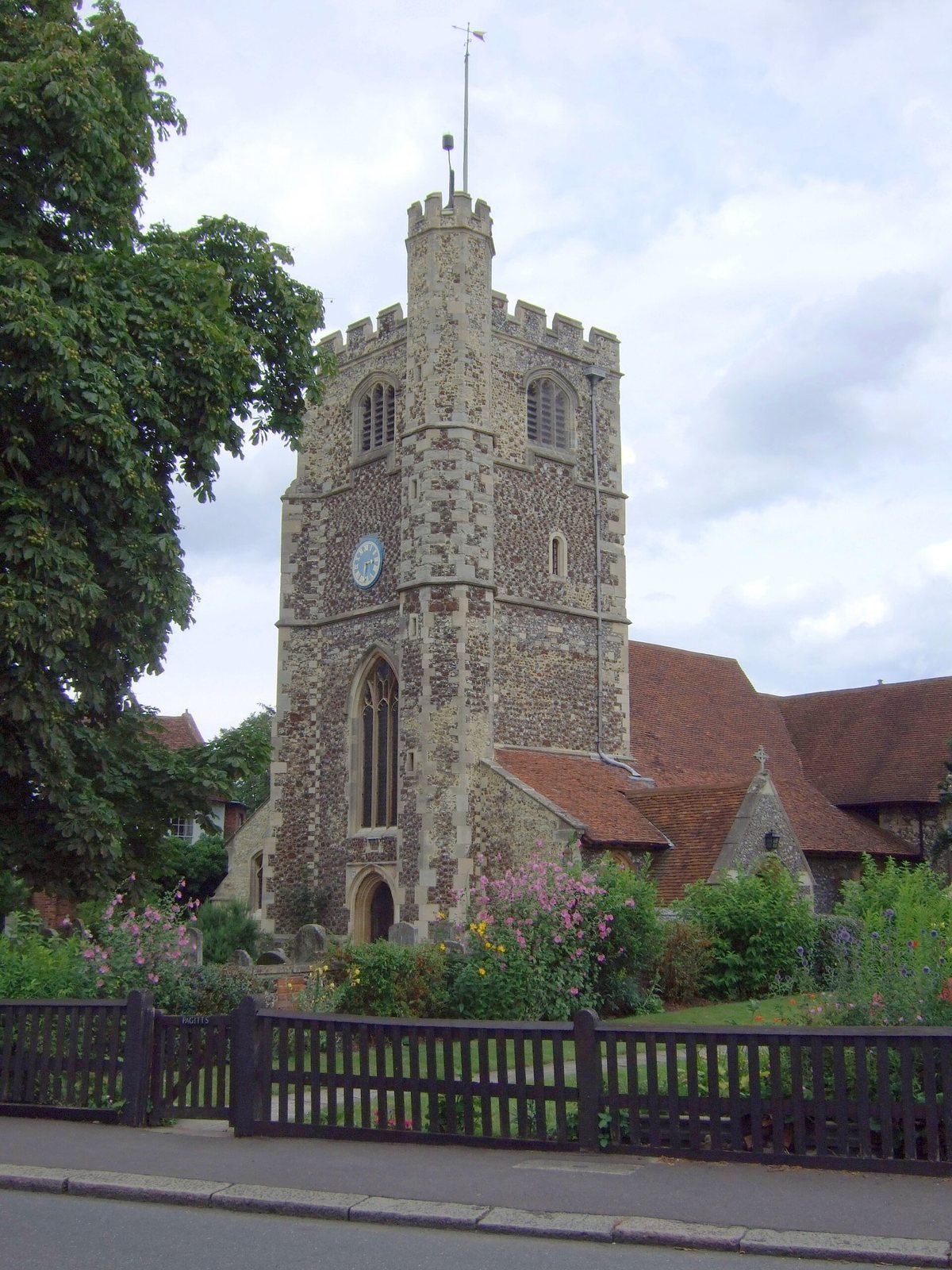
A square tower stands at the church’s west end. It is built of flint, with freestone quoins, dressed stones at the corners that can be cut and worked in any direction. The tower holds nine bells: six larger bells, three dating from the early eighteenth century and three from the late nineteenth, and three smaller ones. Eight are hung for change ringing, which produces changing sequences of notes; the ninth is a sanctus bell, rung during the Sanctus in the Communion service. The bells are in good order and regularly rung.
A copper signal beacon sits at the south-west top of the tower. It belonged to an ancient chain of signal beacons and may also have helped guide people across Enfield Chase, a former hunting ground north of London. The structure has been described as a firepan or pitchpot, a container for burning fuel to make a signal fire.
Interior features and memorials
Font and organ
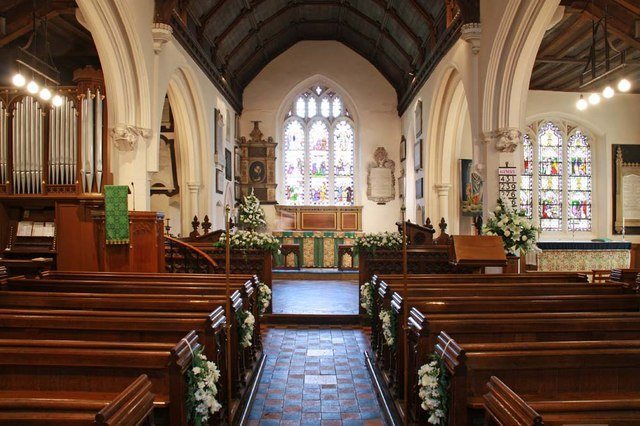
The font, a basin used for Christian baptism, dates from the late fifteenth century and has a modern cover. An organ was installed in the former chapel of St Anne, north of the chancel.
Memorial sculpture and brasses
A well-preserved monument by Nicholas Stone commemorates Sir Roger Wilbraham, an English lawyer who served as Solicitor-General for Ireland and died in 1616, along with his wife Mary Baber and their three daughters. The church’s brasses, engraved metal memorial plaques, include a group dated 1442 for Philip and Margaret Green and Margaret Somercotes, transferred from an earlier building. Other brasses commemorate Walter and Agnes (1494), William and Joanna (1500), John Goodere (who died in 1504), Thomas Goodere and his wife (1518), and William Gale and his family (1614).
Painted glass and carving
Painted glass remained in the north-transept window in 1827. One design was a Gooder rebus, an image that represents a name or word: it showed a partridge carrying an ear of wheat, with a scroll bearing the name Gooder. A pillar capital also bore two partridges holding ears of corn in their beaks.