Albotin Monastery: A Medieval Rock-Cut Monastery in Bulgaria
Site at a Glance
- Popularity
- Medium
- Country
- Bulgaria
- Primary era
- Medieval
- Eras represented
- Medieval
- Civilizations
- Unclassified
- Site type
- Religious
- Remains
- Monastery
On this page7 sections
History
Albotin Monastery is a rock-cut monastery in Albotin meadow, between Gradets and Rabrovo and near Deleyna in Bulgaria. It was active in the 14th century and is now abandoned.
Monastic life
The monastery’s church served both monastic prayer and public worship. A baptistery, a place used for baptism, points to its role in public services. Lay burials found among those of clergy suggest that the monastery was a respected sanctuary and a desired burial place for its donors.
Later history and memorial observance
A 1560 register of the Vidin kaza, an Ottoman administrative district, names Altovin, a village that had disappeared by then. The readily accessible monastery later provided shelter for shepherds and stonemasons. Treasure hunters looted the site, and it was vandalized.
The church’s dedication is unknown, but it is thought to have been dedicated to the Resurrection of Christ. This belief is linked to a continuing memorial observance below the monastery on the second day of Easter. People gather for chain dances in memory of the dead. The custom is especially important to Vlachs, a historical name for Romance-speaking communities in the Balkans. They hang portraits of deceased relatives from the branches of a centuries-old tree in the meadow. Dances before noon honor individual deceased people, while those in the afternoon honor the living. Bulgarians and Vlachs also gather dictamnus, a flowering herb, and distribute a sprig for each deceased person.
The abandoned monastery remains affiliated with the Bulgarian Orthodox Church, an Eastern Orthodox church, through the Vidin Diocese, a bishop’s territorial jurisdiction, and the Kula archpriesthood, a smaller regional clerical district.
Remains
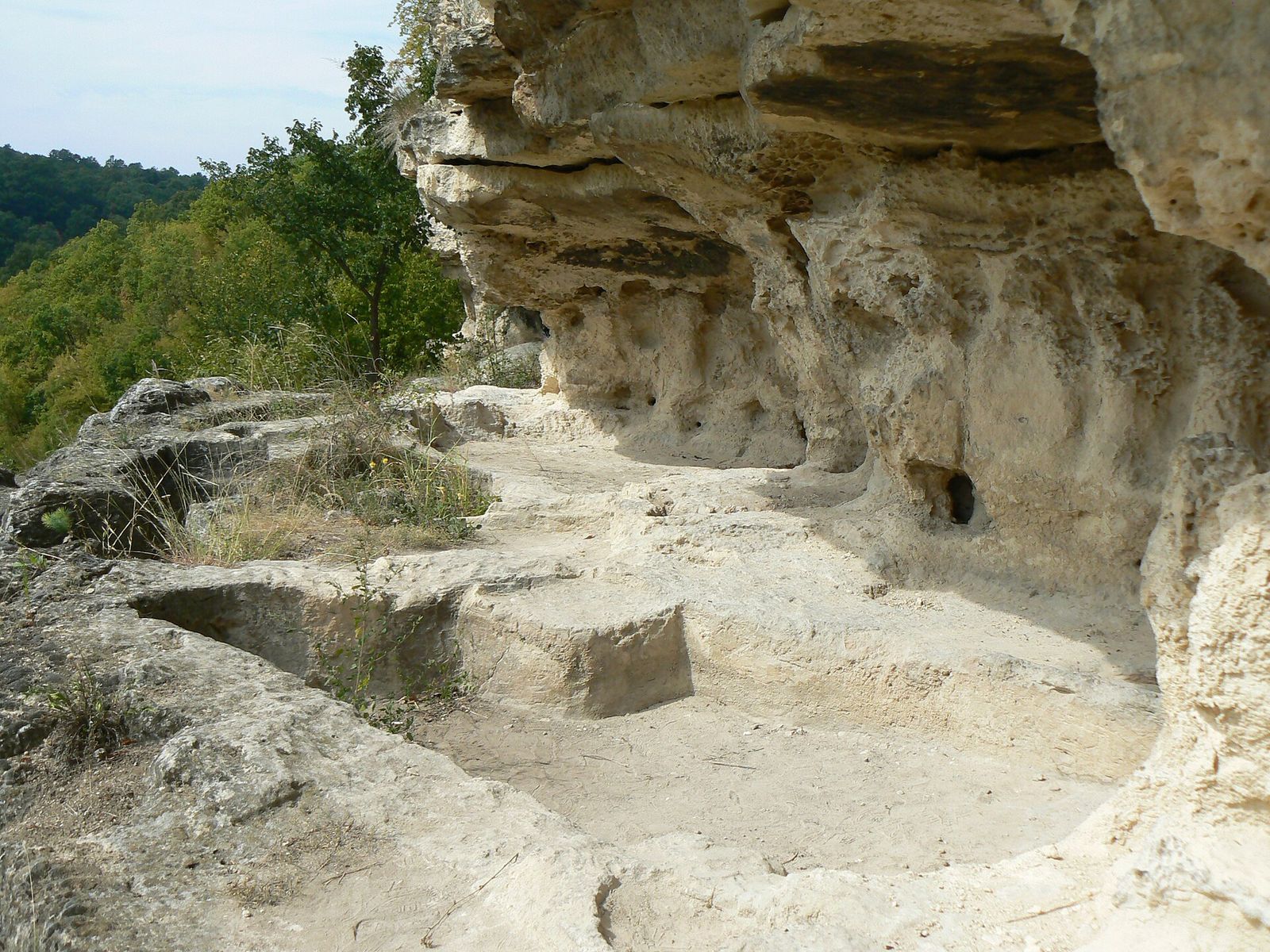
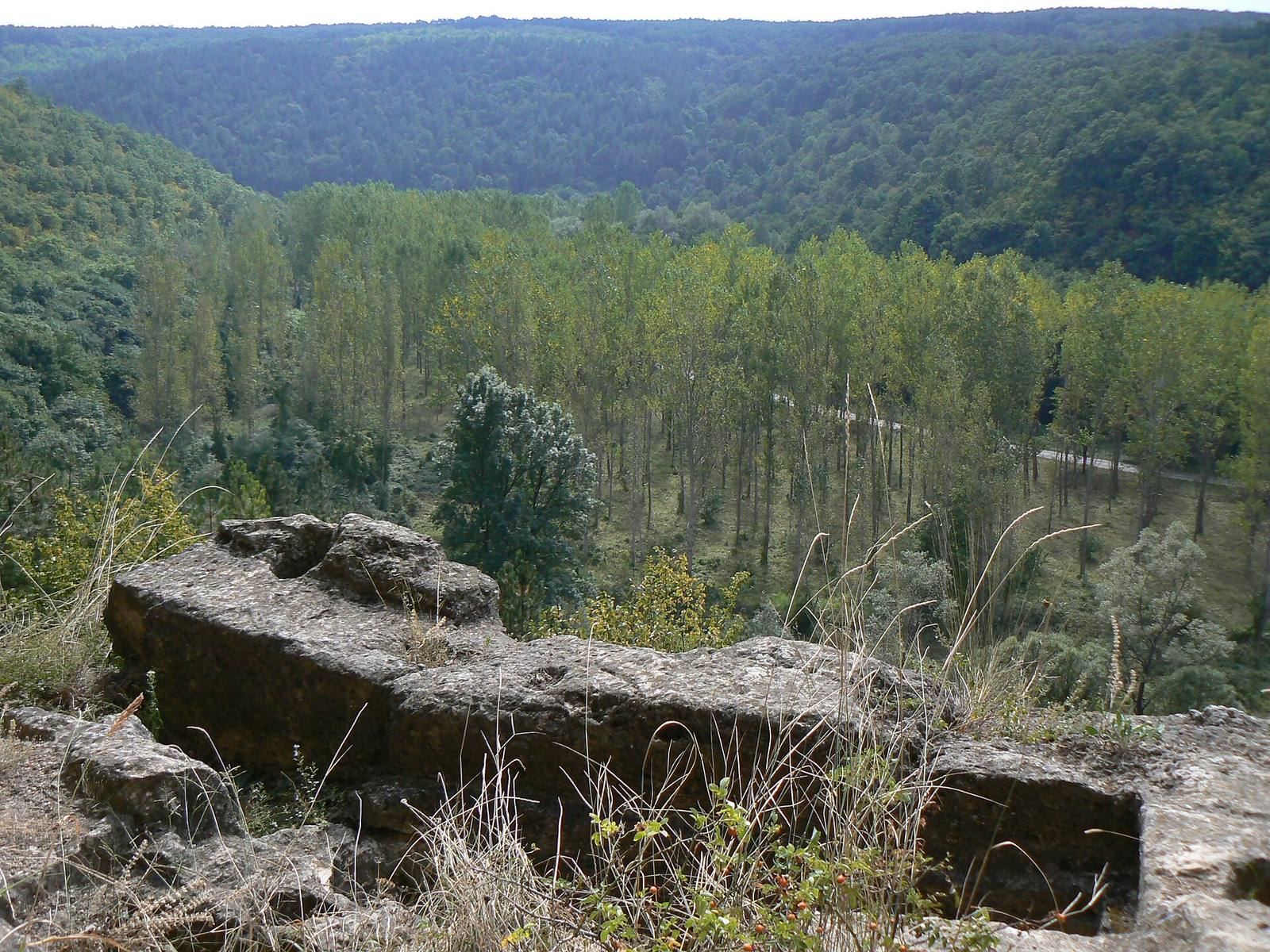
The complex occupies a limestone formation on the north side of the Topolovets River, about 25 metres above it. Shallow natural caves and rock shelters are combined with rooms and niches carved for religious and domestic use. The eight rooms form a row through the site.
The church
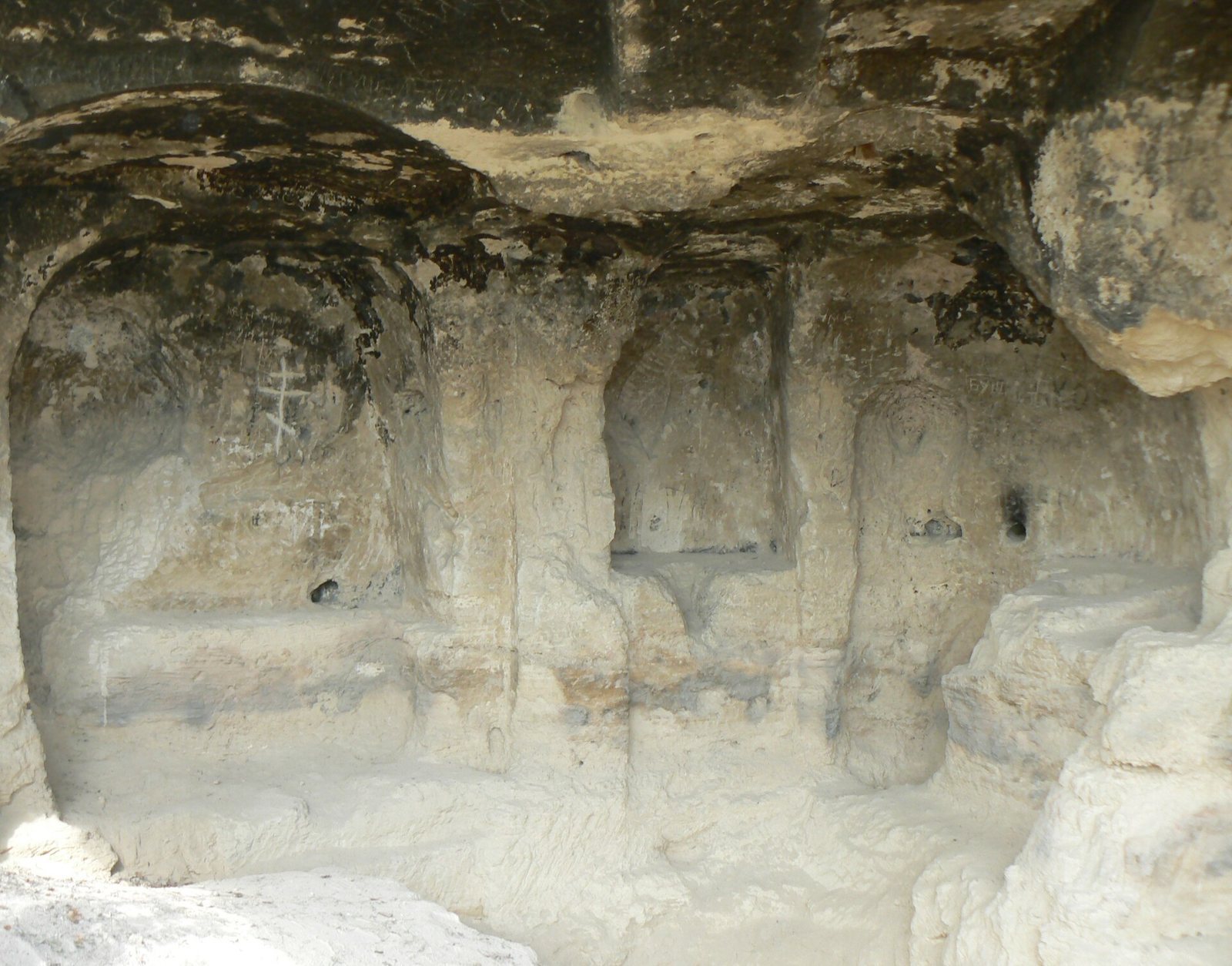
The church stands in the middle sector, at the deepest part of the rock formation’s curve. Its three naves, or lengthwise sections, extend from west to east. The southern and southwestern parts are destroyed. A baptistery forms part of the church, where fragments of frescoes and inscriptions also survive.
Monastic rooms and water storage
A second level occupies the northwestern section. Its largest room after the church probably served as a communal dining room. The western part contains monastic cells, a kitchen, a cellar, and storerooms. Two cisterns for storing water are cut into the rock.
Burials and approach features
Twenty-nine Christian graves have been uncovered at the site. Finds include earrings, other ear ornaments, and bracelets. The Haiduk Fountain stands at the beginning of the steep, narrow sandy path leading to the monastery.