Haus Welschenbeck: A Lowland Castle and Noble Estate in Germany
Site at a Glance
- Popularity
- Medium
- Country
- Germany
- Primary era
- Unclassified
- Eras represented
- Unclassified
- Civilizations
- Unclassified
- Site type
- Domestic
- Remains
- Manor House
On this page6 sections
History
Origins and Feudal Tenure
Haus Welschenbeck is a former lowland castle and noble estate in the Möhne Valley, on Belecke territory in Germany. It began in the 13th century as a small residence for the lower nobility and initially housed a castle retainer, a household officer who owed service that could include defending the castle. In 1222, the Archbishop of Cologne acquired the estate and gave it to his niece, Countess Wallburg of Kessel, when she married Berthold von Büren. The von Büren family thereafter held the estate as feudal lords, granting it as a fief, land held in return for obligations, to vassals who served them.
Destruction and Transfer in the Fifteenth Century
The von Plettenbergs were among the estate’s vassals. Walter von Plettenberg, a commander of the Teutonic Order, a religious and military order, at Dobeln, sold the estate to the House of Landsberg in 1424. In 1445, during the Soest Feud, a 15th-century conflict between Soest and the Archbishop of Cologne, the castle was destroyed and its inhabitants killed. Its owner, Johann von Landsberg zu Welschenbeck, had supported the Cologne prince-electors, as had the nearby towns of Belecke, Warstein, Rüthen, and Hirschberg. Soest troops met fierce resistance, but ignored an order to withdraw and stormed the castle. In 1465, the von Plettenbergs relinquished their remaining rights, and the castle passed by sale to Dietrich von Erwitte.
The Estate in the Sixteenth and Seventeenth Centuries
Welschenbeck was among the estates whose owners could take part in the Duchy of Westphalia’s provincial diets, assemblies for eligible estate-holders. Dietrich von Erwitte was liable for 35 talers in 1543. In the late 16th century, the estate passed first to the Ovelacker family and then to Friedrich von Siegen. Friedrich sold it in 1624 to Dietrich Ottmar von Erwitte, a major general in Bavarian service. During the Thirty Years’ War, the major European conflict of 1618–1648, the estate served for a time as the headquarters of Dietrich’s troops. He died at the Battle of Breitenfeld in 1631.
Dietrich’s son Ferdinand joined the Benedictine monastic order and later became abbot of Werden. His sister, Elisabeth Maria, inherited the estate and married Gottfried Arnold von Doornick. Mauritius von Büren, the feudal lord, challenged the transfer to the Doornicks in a lawsuit that lasted from 1631 to 1721. Benedictines and Jesuits, members of the Society of Jesus, also supported the feudal lord’s side in the dispute.
Disputes and Changes in Estate Status
During Caspar von Doornick’s tenure, disputes concerned hunting rights. From 1759 to 1765, the estate and the Mülheim commandery, a local establishment of the Teutonic Order, litigated over encroachments by both sides. The ecclesiastical court at Werl ruled against the Order. The estate also disputed matters with Belecke, whose citizens had poached there during wartime hardship.
In 1765, the heiress married Hermann Adolph von Nagel, and the estate passed to the von Nagel-Doornick family, which retained it thereafter. After the Holy Roman Empire, the political entity that ended in the early 19th century, came to an end, Welschenbeck lost its former rights and became part of Belecke’s municipal territory. The family nevertheless kept its landholdings, comprising about 140 Morgen of arable land and 100 Morgen of meadows and woodland; the traditional land measure varied in size by region. In 1862, the castle ruins were demolished, and the castle-retainer’s house to their north was converted into a manor house.
Remains
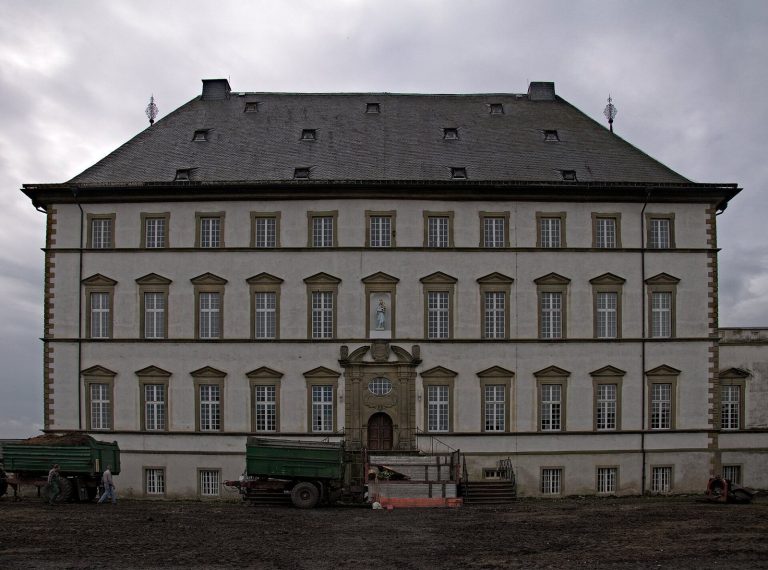
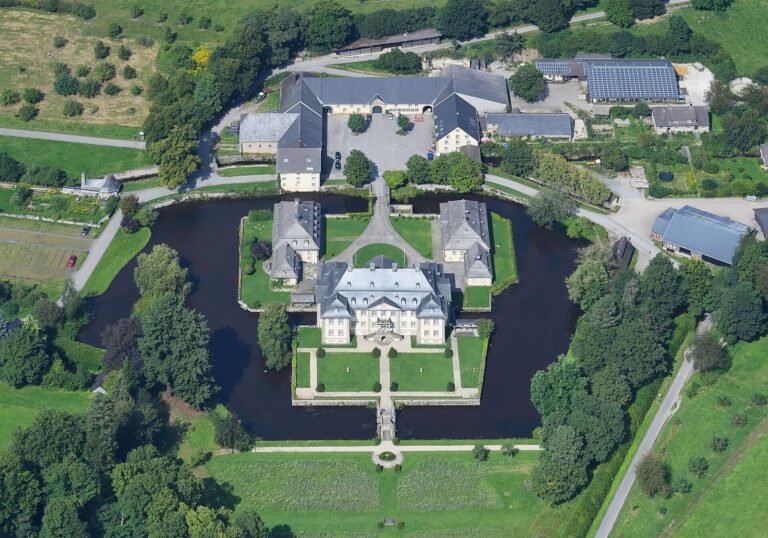
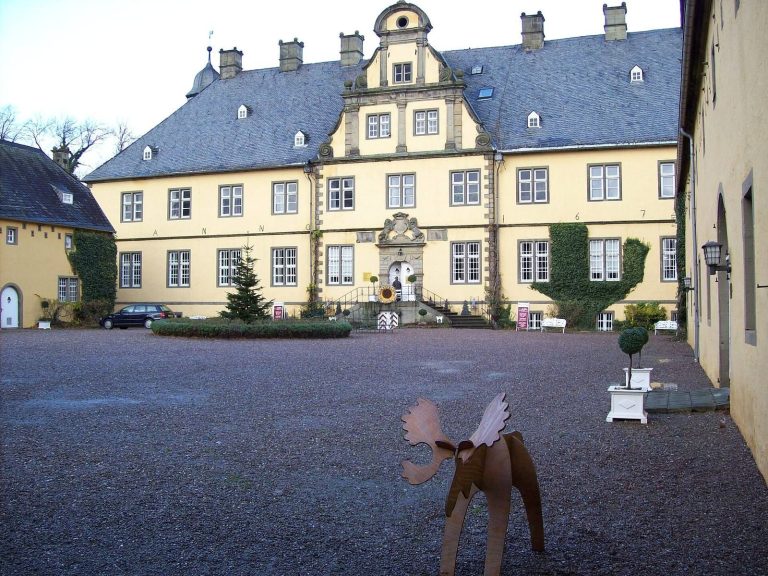
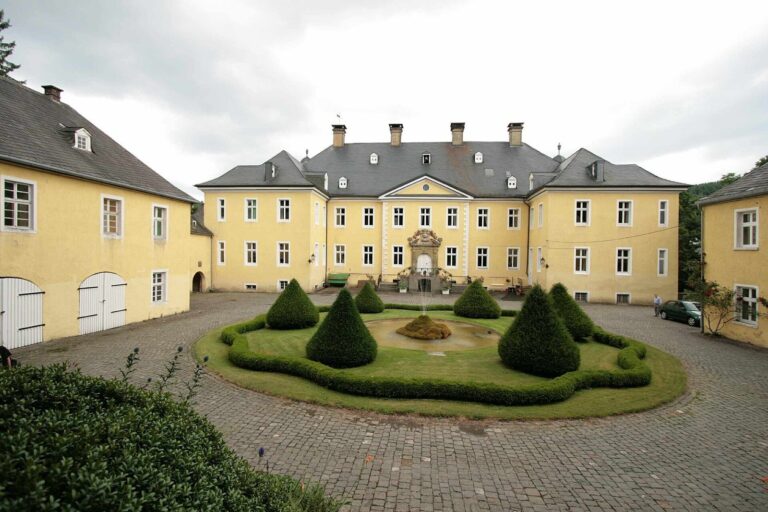
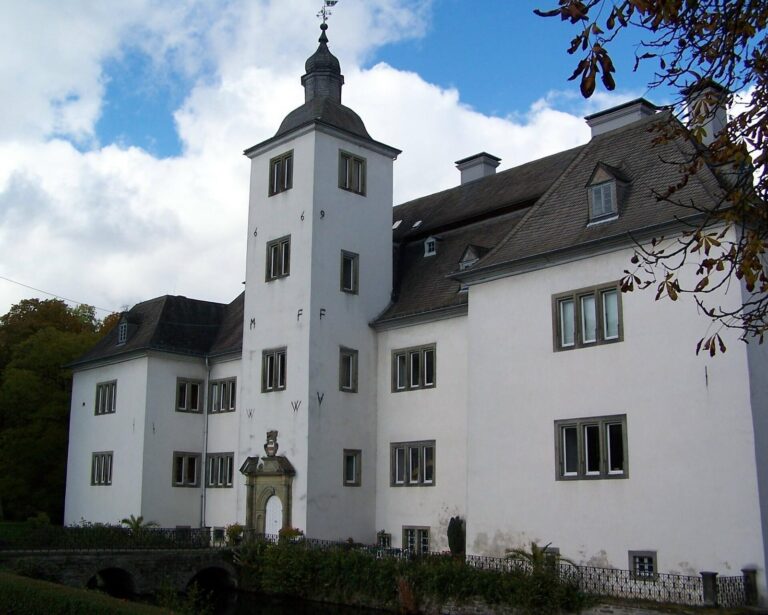
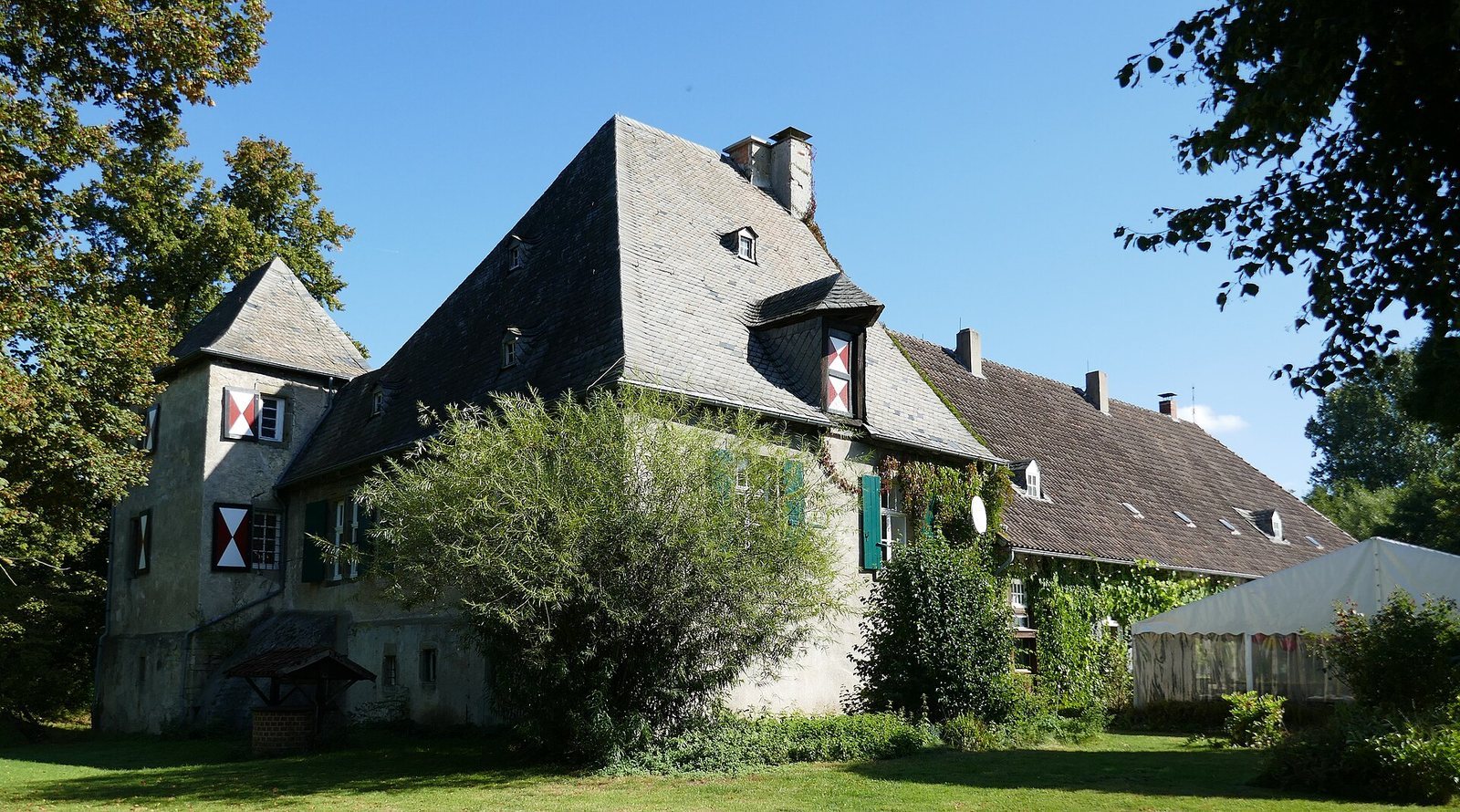
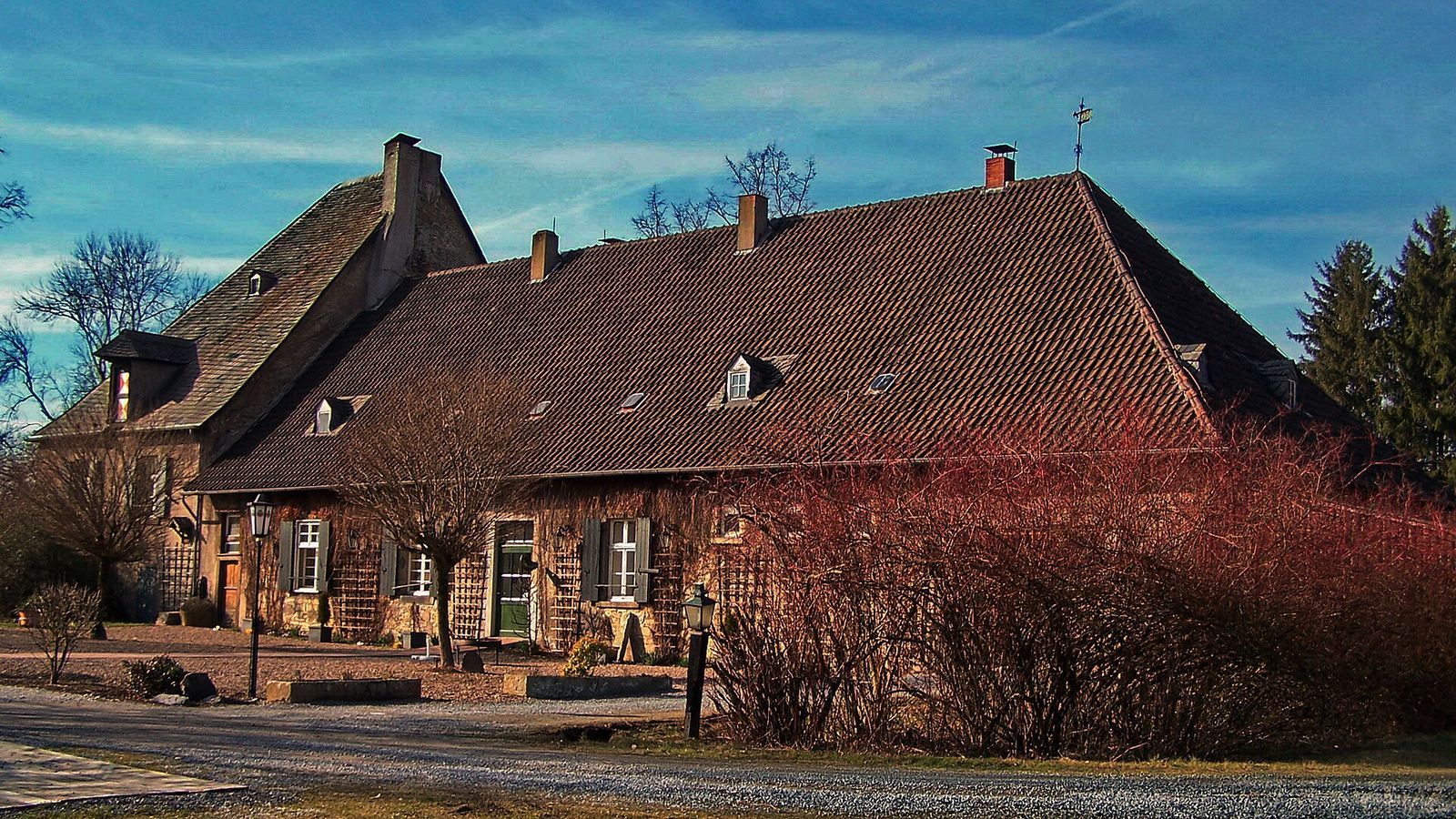
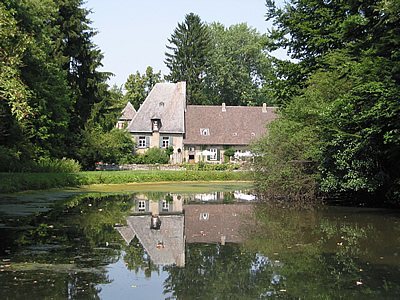
The surviving site includes a manor house and the island of the former lowland castle, which is surrounded by a pond associated with the house. The castle stood in the Möhne Valley on Belecke territory, directly on the boundary with Mülheim, now part of Warstein. The plain manor house has one and a half storeys and a tower-like annex at its northwest corner, which is probably older. A linden tree beside the house has a circumference of about 5.40 metres, measured one metre above the ground.