Blumenau Castle: Eduard von Kielmansegg’s Retirement Residence
Site at a Glance
- Popularity
- Medium
- Country
- Germany
- Primary era
- Modern
- Eras represented
- Early Modern, Modern
- Civilizations
- Holy Roman Empire, Kingdom of Hanover
- Site type
- Domestic
- Remains
- Castle
On this page7 sections
History
The medieval castle and the Blumenau estate
Blumenau Castle is a nineteenth-century residence in the Blumenau district of Wunstorf, Lower Saxony, Germany, built in 1865 as Eduard von Kielmansegg’s retirement home. It is regarded as a landmark of the district. A medieval water castle, known as the New House, also stood somewhere in Blumenau, though its precise location is unknown. It was established after the Counts of Wunstorf left their earlier castle in Wunstorf.
In 1317, during conflict with the Bishopric of Minden, the counts had to agree to the demolition of their Wunstorf castle and were permitted to build another at Borstelde. By 1320, a castle called Blumenau existed there. A charter of 1446 explicitly identified Borstelde with Blumenau. That year, the Count of Wunstorf sold his possessions to Magnus, Bishop of Hildesheim.
The estate passed to the Welfs in 1447. This ruling dynasty, associated with Brunswick-Lüneburg and Hanover, made the castle the seat of the Amt Blumenau, an administrative district and the office responsible for it.
The nineteenth-century residence
The administrative office moved to Wunstorf in 1852. In 1865, Eduard von Kielmansegg built the present castle as his retirement residence. A Hanoverian statesman, he served as prime minister of the Kingdom of Hanover, a German state that existed from 1814 to 1866. The castle is now privately owned and has been converted into condominiums.
Remains
The surviving buildings
The surviving architecture includes the nineteenth-century residence and an estate building associated with the former administrative district. The two structures use brick and half-timber construction respectively.
Blumenau Castle
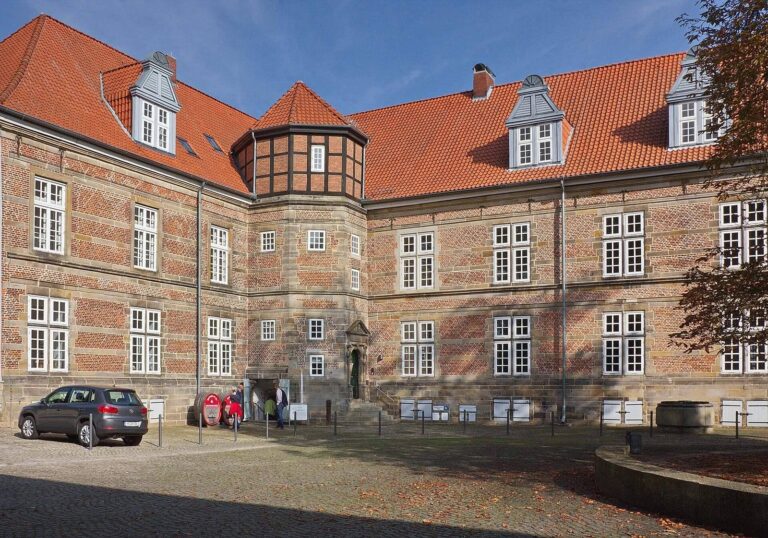
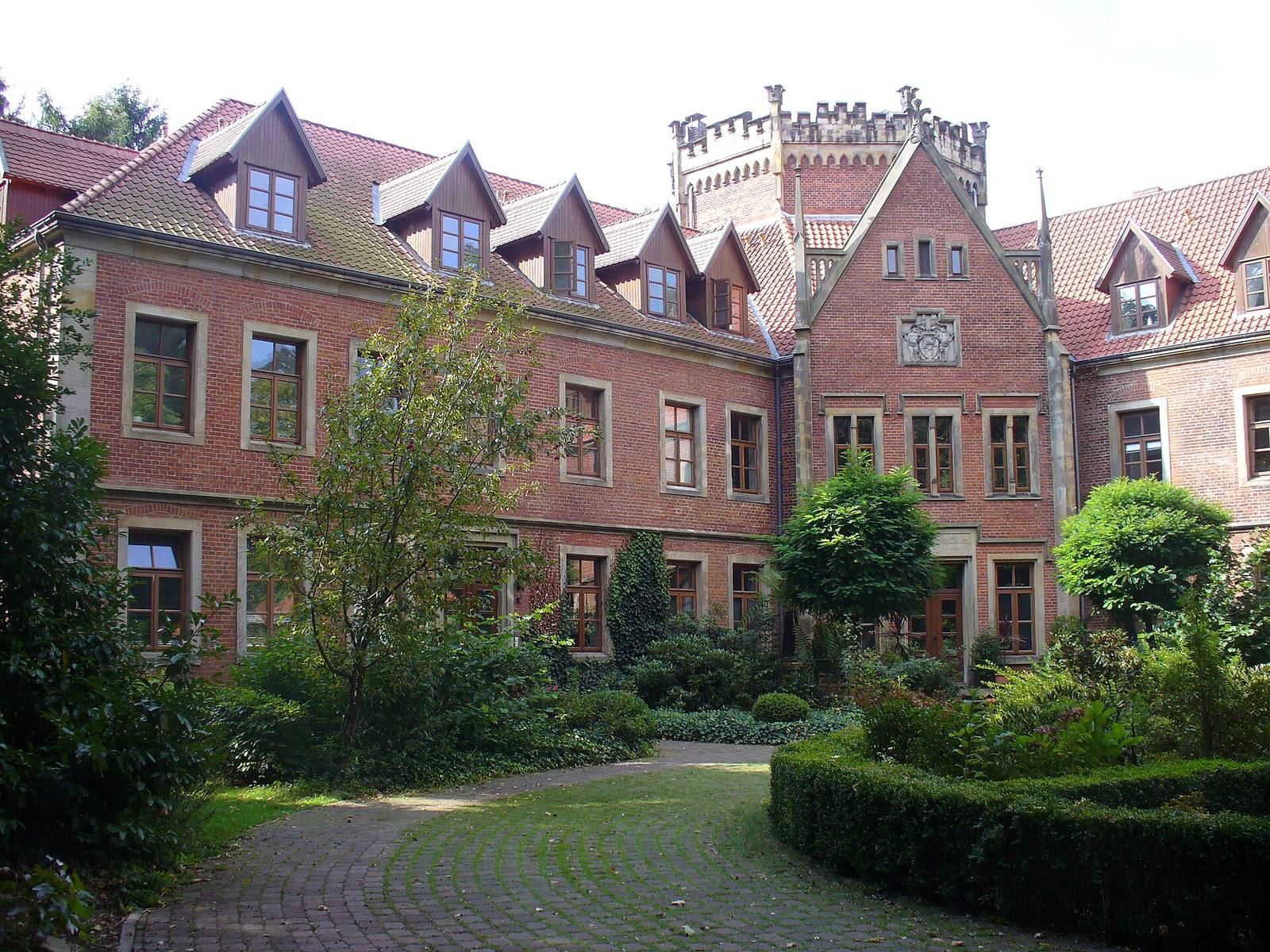
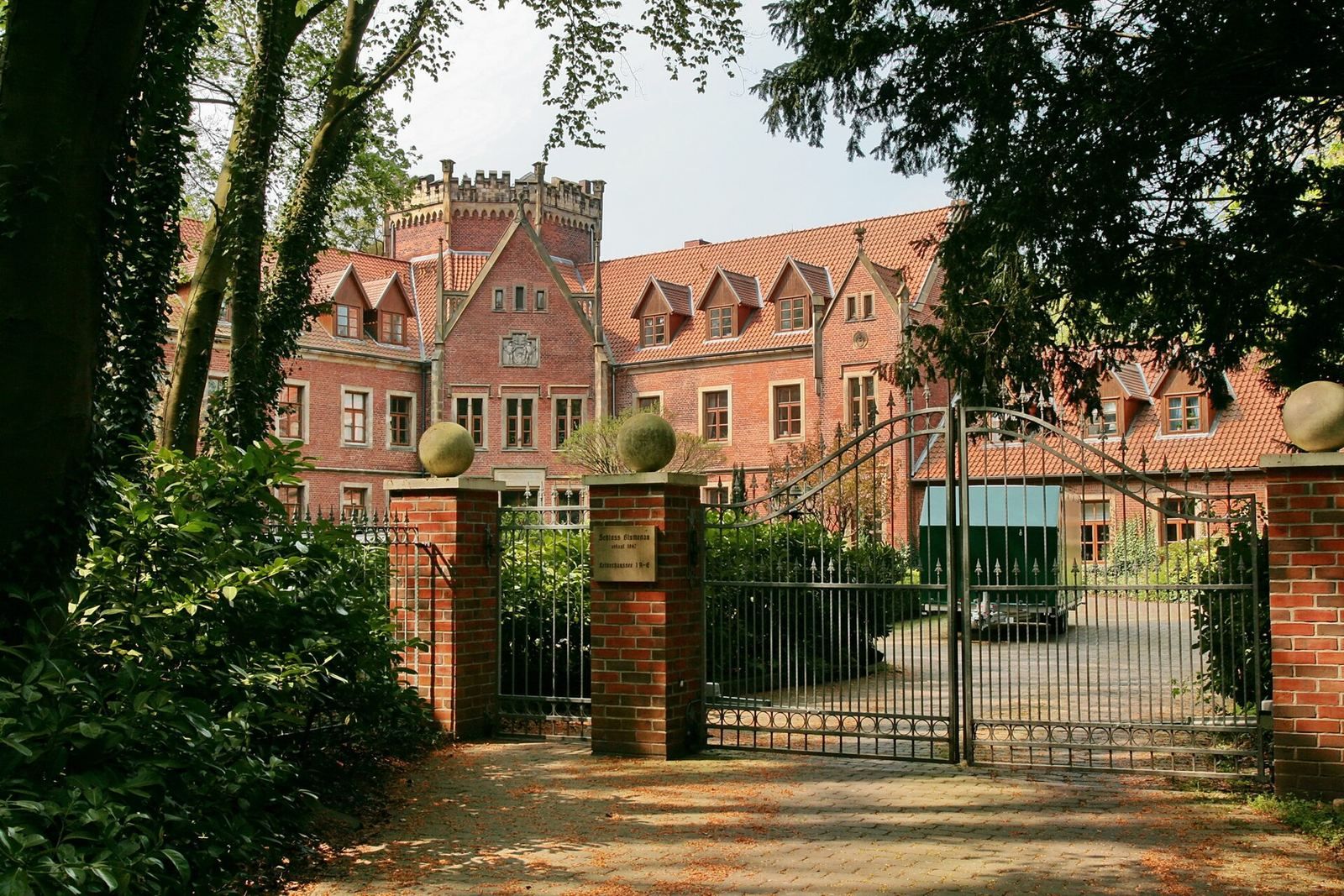
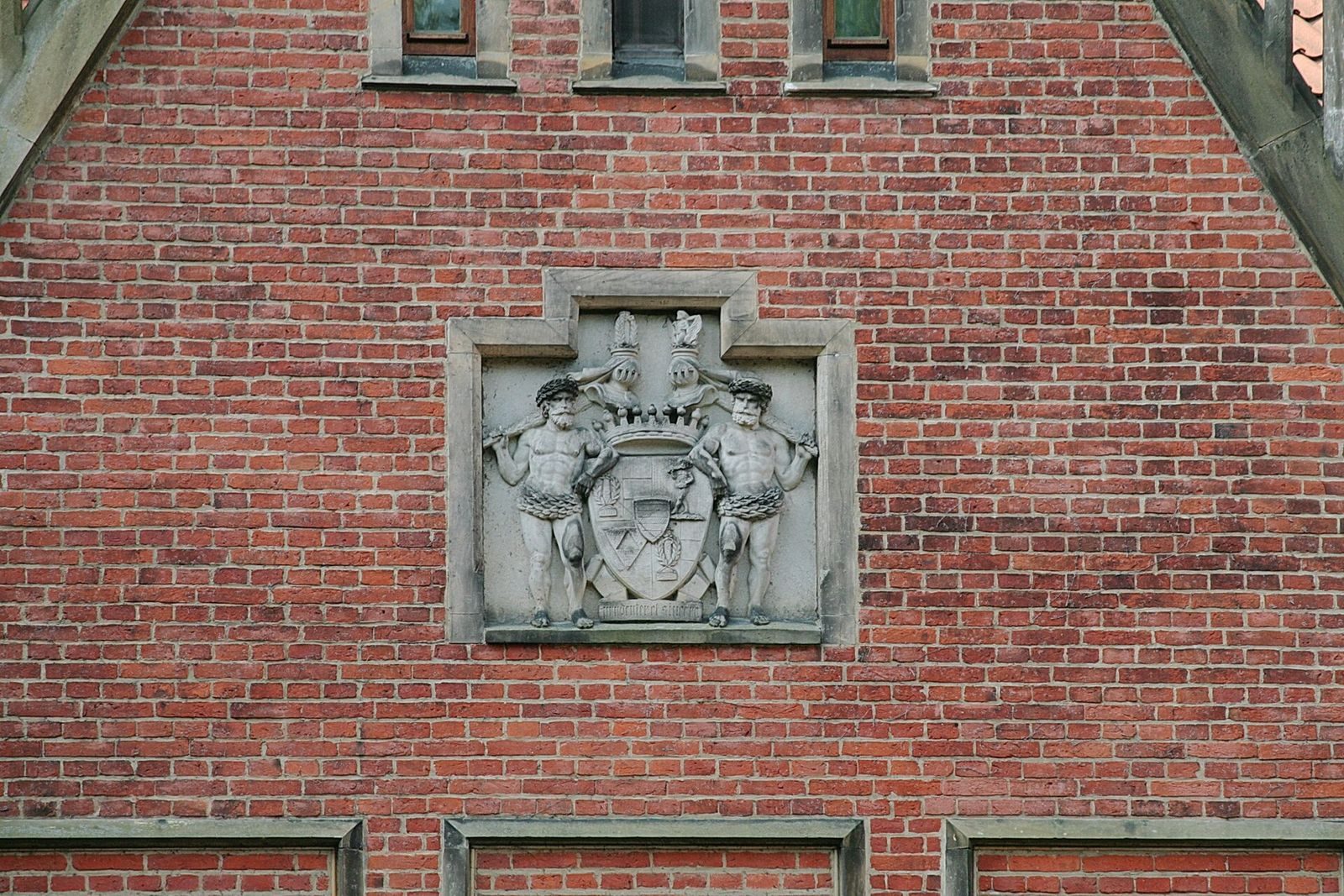
The residence is an angular, two-storey brick building. An octagonal entrance tower occupies its center and is topped with battlements. Light sandstone detailing and Gothic-inspired elements accompany a design that blends local and British building traditions and recalls British castle architecture. Repairs were carried out in 1985 and 1986.
The Amtshof
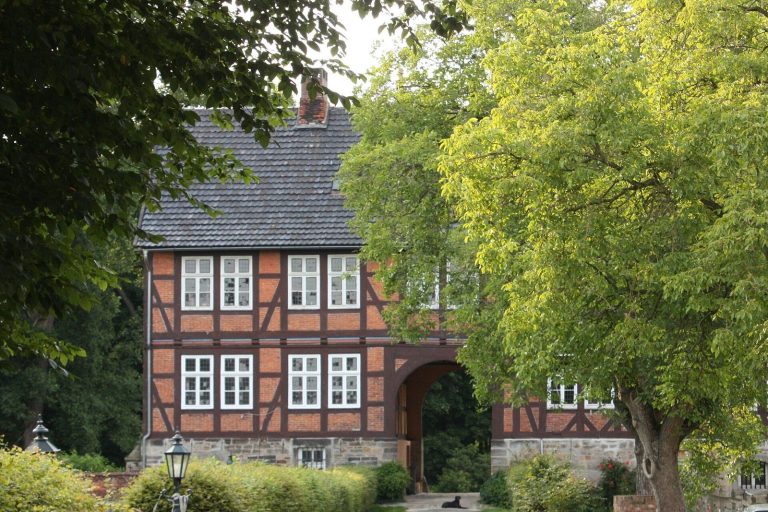
The Amtshof, an estate associated with an administrative district, was built around 1750. It is a three-winged, half-timbered building.