Palace in Jedlinka: A Historic Residence in Lower Silesia
Site at a Glance
- Rating
- 4.4
- Popularity
- High
- Country
- Poland
- Primary era
- Unclassified
- Eras represented
- Unclassified
- Civilizations
- Unclassified
- Site type
- Domestic
- Remains
- Elite Residence
On this page8 sections
History
Settlement and spa
In the thirteenth century, Jedlinka, then called Tannhausen, belonged to Bolko I the Strict, a Piast duke who ruled Jawor and Świdnica. The settlement was also associated with the Kynsburg lordship, a territorial estate linked to Kynsburg Castle in Silesia.
The Seherr-Thoss family had owned the settlement since 1648. After healing springs were discovered, Johann Christoph Freiherr von Seherr-Tross, whose title means baron, founded a spa there.
Palace and private ownership
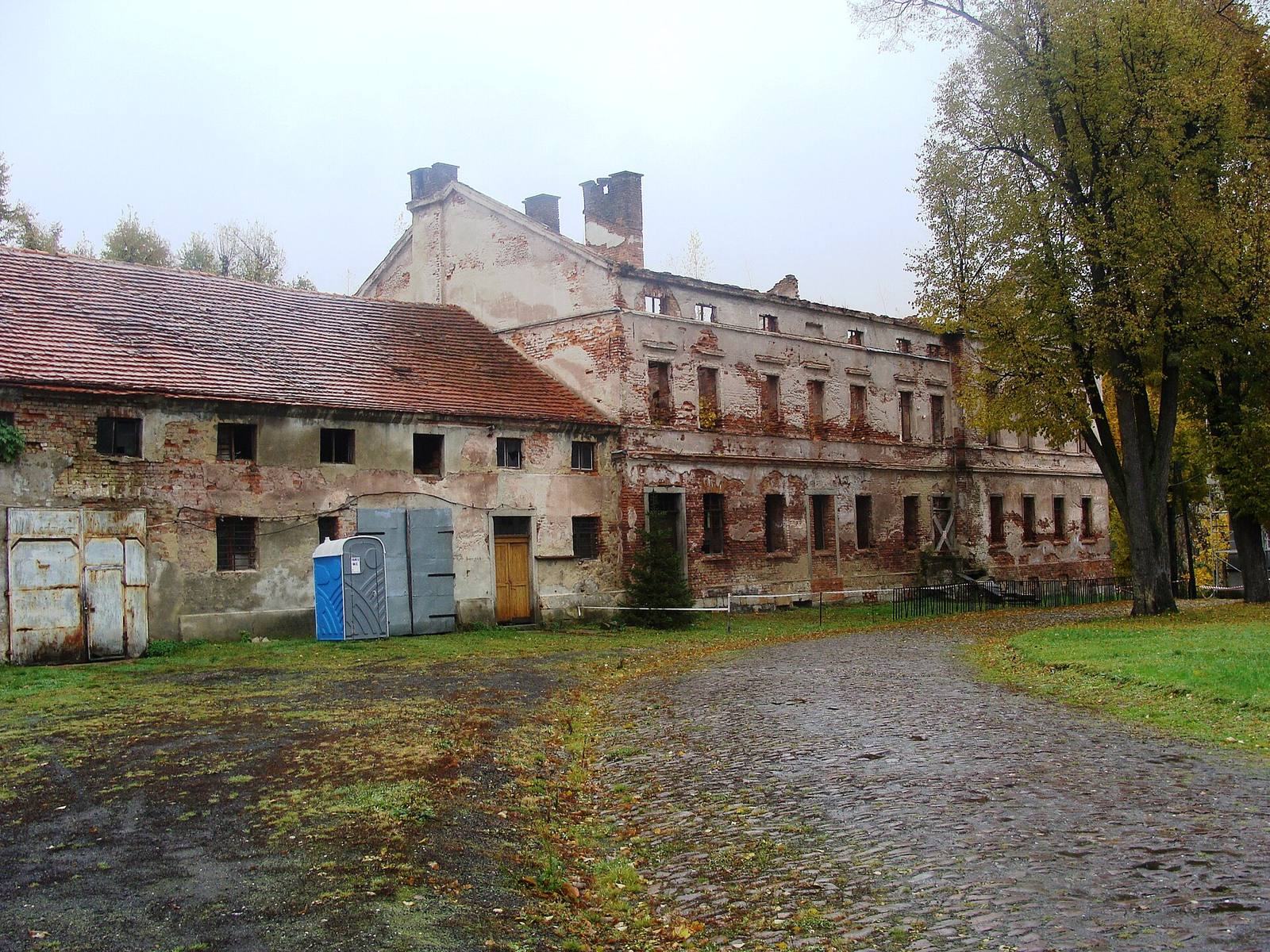
The palace’s construction date is uncertain. It was remodeled in the second half of the nineteenth century. In 1861, Carl Krister, a porcelain manufacturer from Waldenburg, acquired it. The von Klitzing family took ownership in 1880, and Gustav Adolf Böhm later became its last private owner before the Second World War.
War and later use
During the Second World War, the palace was confiscated in connection with Project Riese, a Nazi German construction project in Lower Silesia. In 1944 and 1945, the Nazi engineering and construction organization Organization Todt used it for a design office.
After the region passed to the Polish People’s Republic, the palace became the headquarters of a state agricultural farm, and hay and other materials were stored there. It entered the historic register in 1978.
After 1989, the palace was acquired privately and restoration followed. In 2004, Felix Investments, owned by the Leda family, bought the palace and grounds. The palace and adjoining buildings were subsequently restored.
Remains
The restored complex
The palace
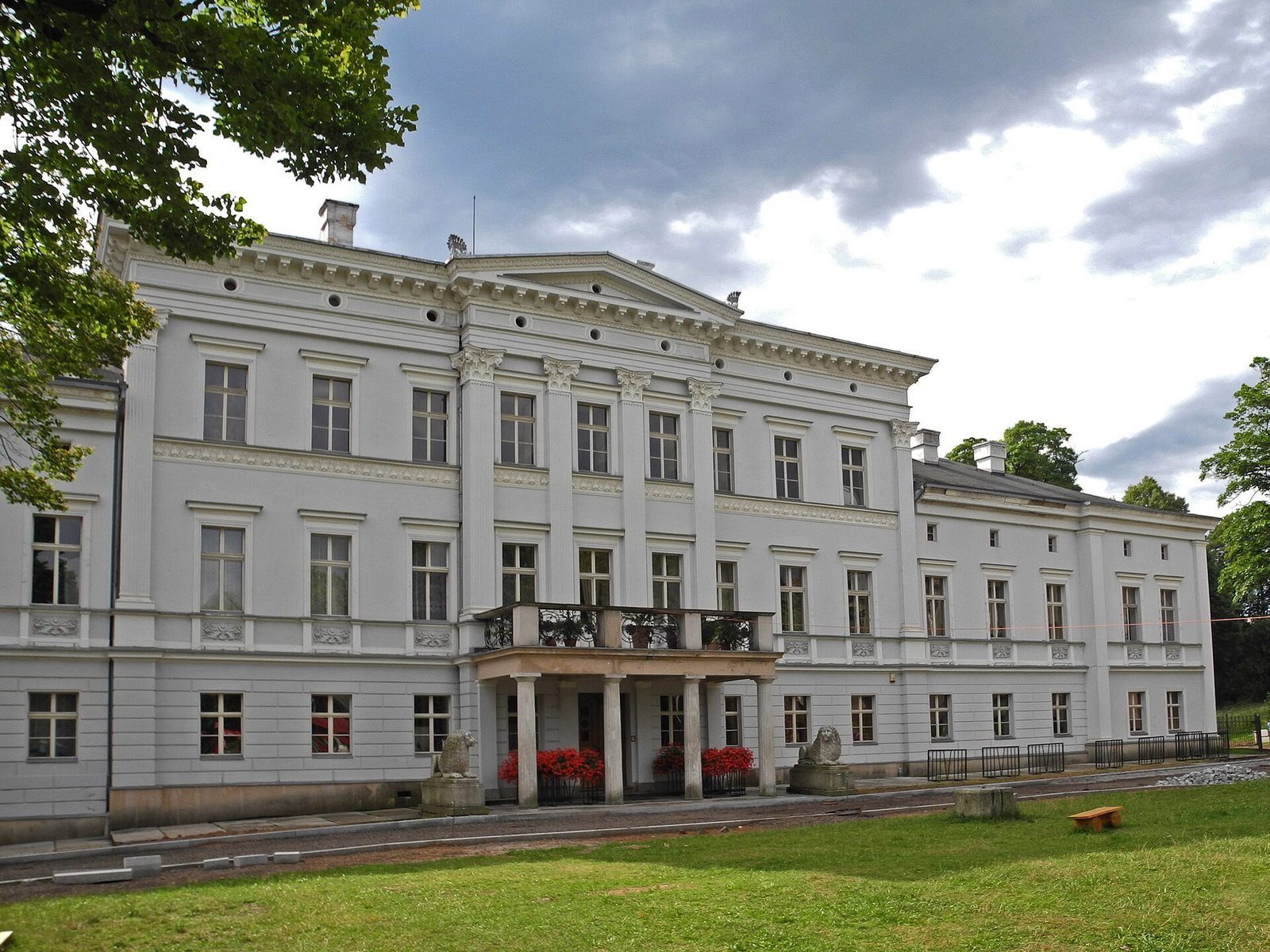
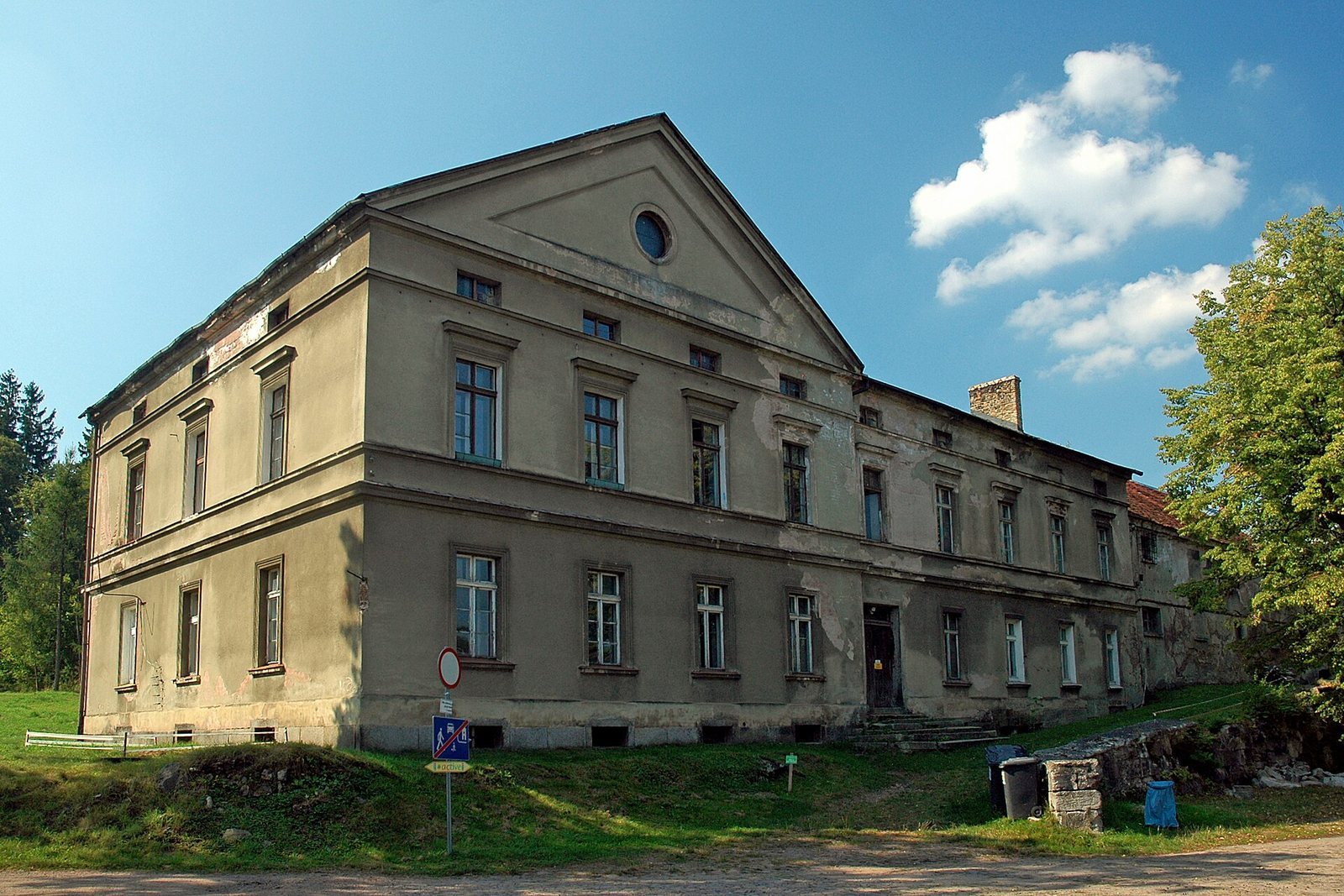
The complex includes the palace and adjoining buildings. The palace is described both as a Baroque manor, a style associated with dramatic forms and rich ornament, and as a Neoclassical palace, drawing on Greek and Roman models. Its design is attributed to Carl Gotthard Langhans, a Prussian architect associated with Neoclassical architecture. The palace now serves as a museum and also contains a hotel, a hostel, and ballrooms.
Adjoining buildings
A former outbuilding has been converted into Hotel Pałac Jedlinka. Since 2014, a building within the former palace-and-park complex has housed the Jedlinka Brewery and a restaurant room.