Broumov Abbey: A Benedictine Monastic Complex in Czechia


Site at a Glance
- Rating
- 4.6
- Popularity
- Medium
- Country
- Czechia
- Primary era
- Early Modern
- External website
- Open
- Eras represented
- Medieval, Early Modern, Modern
- Civilizations
- Habsburg, Holy Roman Empire, Kingdom of Bohemia
- Site type
- Religious
- Remains
- Fortified Monastery
On this page17 sections
History
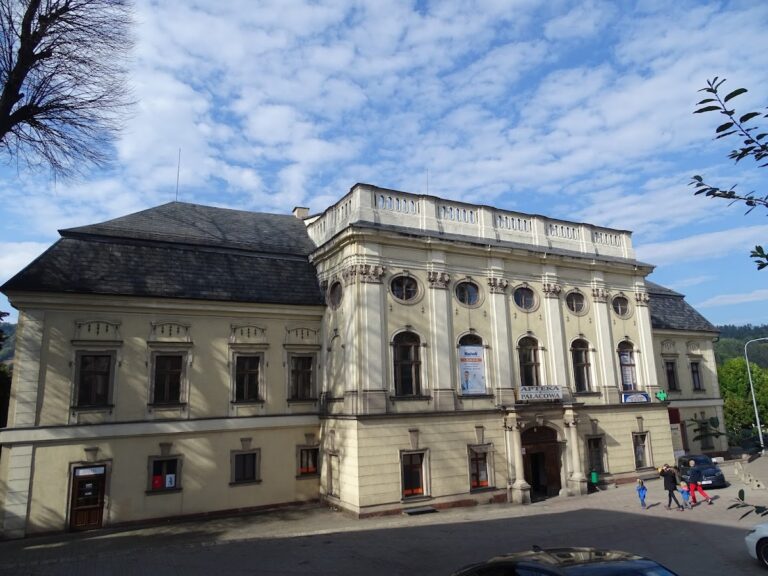
Broumov Abbey in Czechia, located in the town of Broumov, is a Benedictine institution whose foundation is generally placed in the fourteenth century and whose surviving complex has a predominantly Baroque character. Together with Břevnov Abbey in Prague, it formed the Břevnov–Broumov double abbey, a connected institutional arrangement sharing a common historical and administrative identity.
Medieval Foundation
The abbey developed on the site of an earlier fortress in territory granted to the Benedictines of Břevnov by King Přemysl Otakar I around 1213. A predecessor provostry, an administrative monastic house governed on behalf of an abbey, was established after 1258. The settlement grew into the town of Broumov around the middle of the thirteenth century.
Between 1290 and 1322, Abbot Bavor of Nečtiny developed the provostry into a fortified monastic complex. Its buildings included a church dedicated to Saint Adalbert. By the fourteenth century, Broumov also had a Latin school, which later became the monastery gymnasium. Its pupils included Arnošt of Pardubice, the first archbishop of Prague, the later archbishop Matouš Ferdinand Sobek of Bílenberk, the historian Bohuslav Balbín, the priest Josef Regner Havlovický, the writer Alois Jirásek, and the finance minister Alois Rašín.
Refuge of the Břevnov Community
In 1420, Hussite forces burned Břevnov Abbey during the Hussite Wars, religious and political conflicts in fifteenth-century Bohemia associated with the followers of Jan Hus. Abbot Mikuláš II and members of the convent fled to fortified Broumov with the treasury, library, and other valuable objects, including the Codex Gigas. The abbots subsequently used the title “Abbot of Břevnov in Broumov,” later changed to “Abbot of Břevnov–Broumov.” Broumov consequently became an important center of the double abbey’s cultural and economic life. The Codex Gigas was taken to Sweden as war booty in 1648.
The provostry and the town were destroyed by fire in 1559. As the Reformation gained strength toward the end of the sixteenth century, monastic life declined. The Catholic Counter-Reformation, the Catholic Church’s response to the Protestant Reformation through renewed organization, education, patronage, and expansion, brought a period of revival after 1620. The monastery gymnasium was reformed in 1624, and the abbots Thomas Sartorius, Othmar Daniel Zinke, and Benno Löbl sponsored extensive construction and artistic work.
Baroque Renewal and Economic Expansion
Near the end of the Thirty Years’ War, the European conflict that affected central Europe between 1618 and 1648, Swedish forces plundered the monastery. A major fire caused further damage. The Benedictines nevertheless achieved a strong economic position under Abbots Sartorius, Zinke, and Löbl. Commercial activity and the organization of linen production by several hundred domestic weavers generated resources for rebuilding the monastery and constructing the associated group of Broumov churches.
The rebuilding transformed the medieval complex. The originally Gothic church was converted into a Baroque single-nave building with side niche chapels between 1663 and 1669, under Abbot Thomas Sartorius and the direction of the Italian master builder Martino Allio of Löwenthal. Christoph and Kilian Ignaz Dientzenhofer continued the work, which was completed under Abbot Othmar Daniel Zinke. The principal monastery complex was rebuilt in 1728–1733 by Christoph Dientzenhofer and his son Kilian Ignaz, giving it the Baroque appearance seen today. Repairs followed two fires in the second half of the eighteenth century.
The abbots later generally lived at Břevnov. Broumov acquired the Sloupno estate in 1672, and in 1703 Abbot Othmar Daniel Zinke acquired the former Benedictine monastery at Wahlstatt in Silesia. He re-established it with monks and made it dependent on Broumov until its secularization in 1810. As Czech nationalism grew within the Habsburg monarchy, the bilingual abbey informally alternated German and Czech abbots, helping maintain the unity of its monastic community.
Division, Expulsion, and State Control
In 1939, following the Munich Agreement and the incorporation of the Sudetenland into Germany, the Holy See separated the Břevnov–Broumov double abbey into two independent abbeys. German Benedictines remained at Broumov under Abbot Dominik, while Czech monks remained at Břevnov. The Nazi regime confiscated the monastery gymnasium. During the Second World War, two monks were sent to Dachau. After the war, a Czechoslovak militia murdered two German monks at the monastery.
In 1946, the remaining German monks were expelled under the Beneš Decrees and resettled in Bavaria, where they re-established the monastery at Rohr. Benedictines from the United States then attempted to repopulate and administer Broumov, but the communist regime expelled them from Czechoslovakia by 1950. From that year, the monastery served as an internment camp for religious men and later for nuns from various orders. The interned women endured severe conditions and were compelled to work in factories and agriculture in Broumov and the surrounding area. Political changes in 1968 allowed them to work in charitable institutions, and the remaining Dominican sisters moved to women’s monasteries in Moravia in 1990.
Restitution and Reunification
From 1974, the main monastery building was used by the State Central Archive to store strictly guarded archival collections. Preparations for a reconstruction that was never realized began after 1980. The buildings were restituted to the Břevnov Benedictines in 1990, and administration continued from Břevnov. The complex entered the Czech architectural-heritage rescue program because of its deteriorated condition after communist-era neglect. Extensive work on the monastery and garden in 2014 revitalized the surviving complex.
Broumov Abbey has been a Czech national cultural monument since 1995. The Břevnov and Broumov abbeys were legally reunited by a decree of the Vatican Congregation for Institutes of Consecrated Life on 7 February 2018, after which the head of the reunited institution held the title Archabbot of Břevnov and Broumov. The Educational and Cultural Centre Broumov now continues the site’s educational and cultural role through concerts, lectures, exhibitions, scientific discussions, and educational programs.
Remains
The complex occupies the site of the earlier fortress and retains the organization of a fortified Gothic provostry transformed into a Baroque monastery. Its principal building contains the three-storey convent and prelature, the residence and administrative center of the abbot and senior monastic administration. The surviving complex also includes the monastery church, refectory, historical library, museum, garden, and service buildings.
Monastery Buildings and Church
Convent and Prelature
The convent and prelature form the principal three-floor monastery building rebuilt in 1728–1733 by Christoph and Kilian Ignaz Dientzenhofer under Abbot Othmar Daniel Zinke. Its present form expresses the Baroque rebuilding of the earlier monastic complex. The former monastic cells have been restored as guest accommodation, while part of the prelature houses the Broumov Region Museum.
Church of Saint Adalbert
The church of Saint Adalbert began as a Gothic basilica and was reshaped into a Baroque single-nave church with side niche chapels. Martino Allio of Löwenthal directed work carried out in 1663–1669, and Christoph and Kilian Ignaz Dientzenhofer continued the transformation. Kilian Ignaz Dientzenhofer designed the interior decoration. Bernard Spinetti executed stucco work, Jan Karel Kovář and Felix Anton Scheffler contributed paintings and frescoes, Petr Brandl’s paintings are also present, and Václav Vavřinec Reiner painted the altarpieces in the side chapels. Repairs followed two fires in the later eighteenth century.
Library and Heraldic Decoration
The historical library contains approximately 17,000 volumes and is among the rare surviving monastic libraries in Czechia. Baroque cartouches on the buildings carry the abbey’s arms, with two shields beneath a mitre. The Břevnov shield shows a silver log with three stumps, while the Broumov shield bears three silver diagonal bands, the middle one marked by three roses. Abbatial monograms and the letters “AB,” an abbreviation of the Latin title Abbas Braunensis, appear within the heraldic decoration.
Turin Shroud Copy
A copy of the Turin Shroud made in 1651 was found in 1999 inside a wooden case above the Chapel of the Holy Cross. It was concealed behind a gilded stucco wreath carrying the inscription Sancta Sindon. The Archbishop of Turin, Julius Caesar Barbera, presented the copy to the later Prague archbishop Matouš Ferdinand Sobek of Bílenberk, who donated it to Broumov Abbey. It is described as the only one of approximately forty such copies in Central Europe.
Underground Mummies
The underground area contains thirty-four mummies transferred in 2000 from the crypt of the parish church at Vamberk, where conditions had been unsuitable. Most are the mummified remains of prominent townspeople, chiefly from the eighteenth century. They include Magdaléna Grambová, a countess of Belgian origin associated with the beginnings of lace-making in Vamberk.
Monastery Garden
The garden was established around 1676 under Abbot Thomas Sartorius. Its front section was laid out as an ornamental Baroque Italian-style terrace garden with regular geometric patterns. A probable vegetable garden occupied the area behind it, while a park with a Baroque fountain was later created at the rear. The garden covers approximately 2.5 hectares and has the character of an English-style park, with a view toward the nearby Javoří Mountains.
Associated structures and installations include the Cook’s House, Gardener’s House, Gallery House, fountain, woodshed, functioning historic skittle alley, water tower, and a memorial to Abbot Jakub Chmel. These features underwent extensive revitalization and adaptation in 2014.
Monastery Mill
Medieval and Renaissance Mill
The monastery mill stands below the abbey beside the Stěnava River. A wooden mill occupied the site in 1296. Under Abbot Johannes III Chotowski, it was demolished and replaced by a stone building in 1570. The facade preserves Renaissance heraldry, initials, and the date 1570, while later Baroque alterations survive in the northern gable.
Nineteenth-Century Alterations
A cartouche above the entrance shows two lions holding a water wheel. The date 1884 appears between the arms of the wheel, and the initials of the miller František Gramer are set below in a shield. Gramer expanded the mill with a steam boiler in 1884. The building later served Czechoslovak state agricultural authorities and was adapted in 1984 as their local headquarters.
Nearby sites