Reifenstein Abbey: A Cistercian Monastery in Thuringia
Site at a Glance
- Popularity
- Medium
- Country
- Germany
- Primary era
- Early Modern
- Eras represented
- Medieval, Early Modern, Modern
- Civilizations
- Electorate of Mainz, German, Holy Roman Empire
- Site type
- Religious
- Remains
- Monastery
On this page16 sections
History
Reifenstein Abbey is a former Cistercian monastery in Kleinbartloff, Thuringia, Germany. Count Ernst II of Tonna-Gleichen founded it on 1 August 1162 at a site then called Albolderode. Cistercian monks, members of an order that developed from the Benedictine tradition, came from Volkenroda Abbey. Reifenstein belonged to a network of Cistercian houses linked to Morimond, one of the order’s early leading abbeys, and was dedicated to Mary and Margaret.
Foundation and expansion
The founder endowed the monastery with Albolderode, the settlements of Wirkeshagen and Druckenhaen, and the Mittelberg, Burghagen, and Sonder forests. His widow added property at Hermannshagen and Beringershagen in 1191. The founder’s nephew, Count Ernst von Velseke, had pledged to build a church but could not carry out the plan after damage and losses caused by war. In 1209, he pledged estates in Beberstedt and the Sonder forest to the abbey.
Landgrave Louis IV of Thuringia, a territorial prince in the Holy Roman Empire, placed the monastery under his protection in 1217. Pope Urban IV confirmed its rights in 1262. Through gifts and purchases, the abbey gained property in Kallmerode, Hausen, and Kleinbartloff, as well as substantial holdings in Beberstedt and Hüpstedt. By the late thirteenth century, its lands included about fifty nearby estates. It later exercised jurisdiction over its own properties. Its court district included Hausen, Kleinbartloff, and Kallmerode, and at times also encompassed Birkungen, Beberstedt, Hüpstedt, and the deserted medieval settlements of Luterode, Hedwigerode, and Kirrode. The abbey belonged first to the Diocese of Mainz and later to the Diocese of Erfurt.
Destruction and restoration
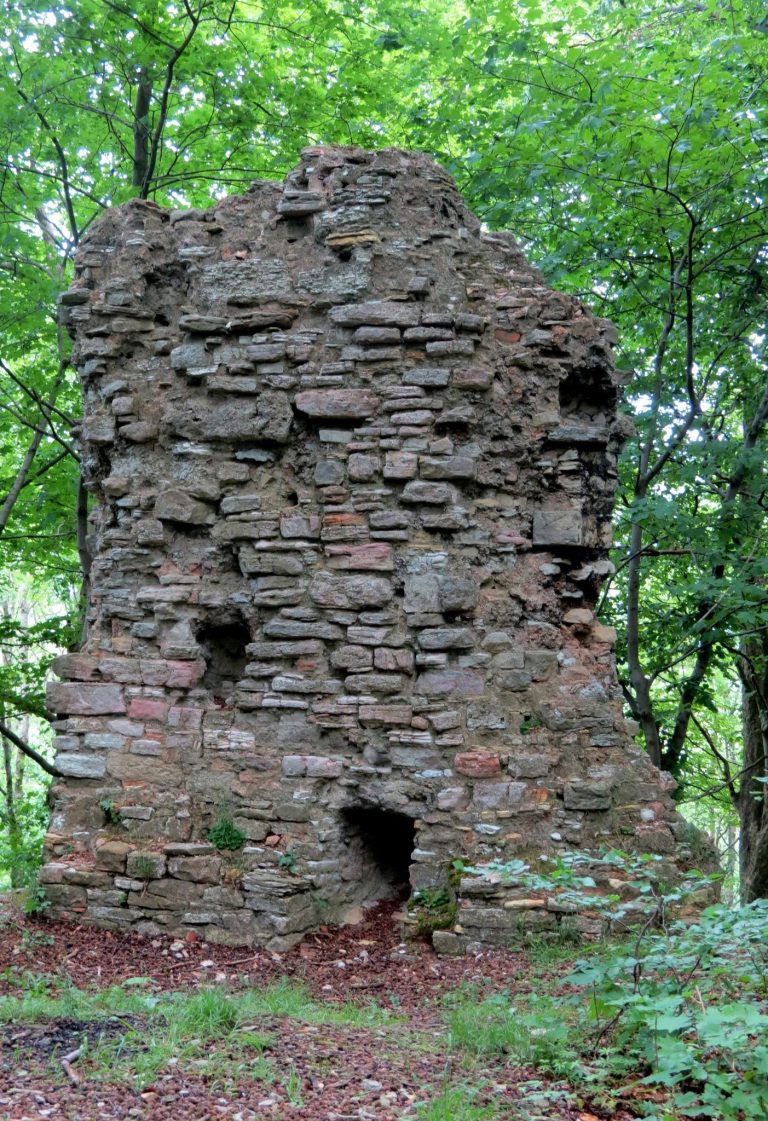
Raids and plundering affected the abbey repeatedly during the fourteenth and fifteenth centuries. In 1525, during the Reformation, a sixteenth-century movement that led to the formation of Protestant churches, and the German Peasants’ War, a major uprising of 1524–1525, violence again devastated the community. On 29 April, villagers from the abbey’s holdings entered and destroyed the church furnishings. Two days later, rebel forces led by Thomas Müntzer, a religious reformer and radical leader, badly damaged the monastery. Heinrich Pfeiffer, a former monk who had become a Lutheran and rebel leader, set it on fire. The monks fled to Heiligenstadt and Rusteberg.
The community had six monks in 1524. By 1539, just one remained among the ruins, and the site was deserted soon afterward. A monk was present again in 1575, and five or six lived there by 1579, though discipline was poor. The church was restored in 1582, and the monastery was rebuilt by 1585 under Abbot Philipp Busse, who also re-established order in the community.
Rebuilding and dissolution
During the Thirty Years’ War, the European conflict of 1618–1648, the monastery was plundered seven times and nearly burned to the ground. Abbot Philipp Busse was captured, six or seven monks were killed, and the survivors took shelter in caves and begged for bread. Reconstruction began in 1650. A Baroque building campaign, in an elaborate European style prominent in the seventeenth and eighteenth centuries, began under Abbot Wilhelm Streit and continued under later abbots. In 1738, the abbey had twenty-four members. It also weathered the Seven Years’ War of 1756–1763.
Secularization, the transfer of religious property to non-religious control, brought the abbey to an end on 2 March 1803. Its community then consisted of the abbot, twenty-three professed members, and three novices. The last abbot, Antonius Löffler, died in 1823. The abbey’s valuables were distributed among churches in Eichsfeld. Its library of 4,000 books, including 200 printed before 1501, went first to a Gymnasium, a German secondary school, in Heiligenstadt and eventually to the Berlin State Library in 1907.
Secular estate, school, and hospital
The former monastery became a Prussian state estate leased to private tenants. When Eichsfeld became part of the Kingdom of Westphalia, a Napoleonic client state in central Germany, the estate passed into the personal ownership of Napoleon’s sister Pauline Borghese. It returned to Prussian control after the kingdom collapsed.
A school for young women opened at Reifenstein in 1900, offering instruction in agriculture and domestic science, and continued until after the Second World War. From 1898, about forty schools of this kind adopted the Reifenstein name. In early 1943, Nazi Party officials threatened to close the school or convert it into a training institution for Nazi leaders unless its members joined the Party. The members agreed, and the officials did not return.
The site began operating as a hospital in 1949. The University of Jena acquired it in 1951 for a specialist clinic treating tuberculosis and bone diseases. It became a district hospital in 1964 and joined the Eichsfeld Klinikum in 2002. The abbey church has been used as a concert hall since 1995, and a new Catholic chapel opened at the site in 2004.
Remains
Plan and construction
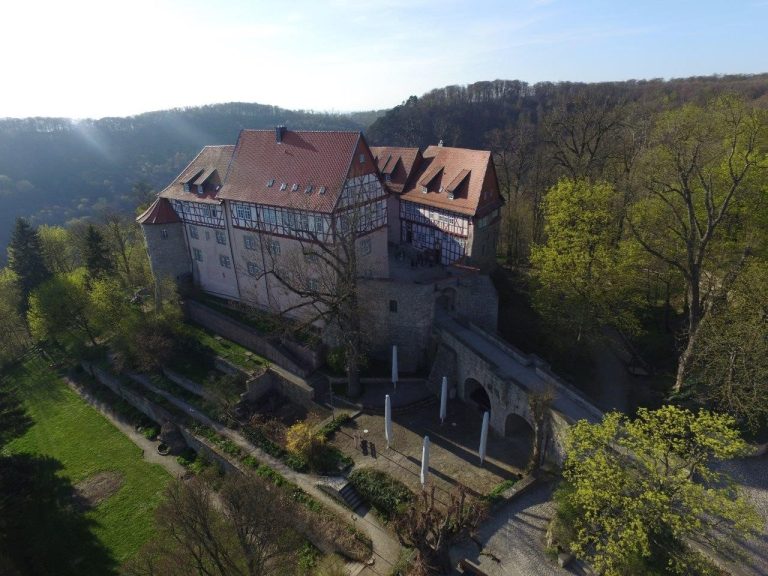
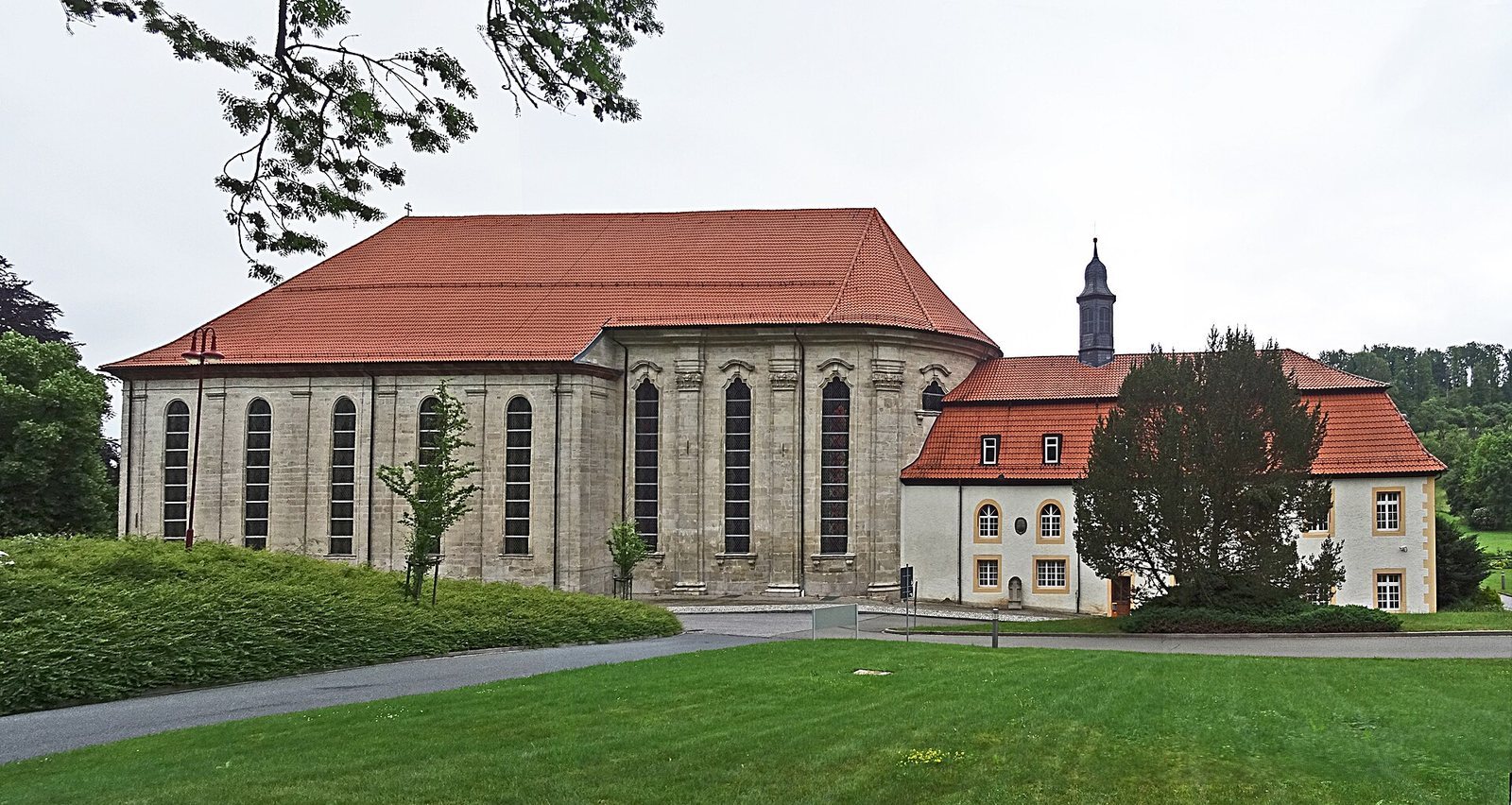
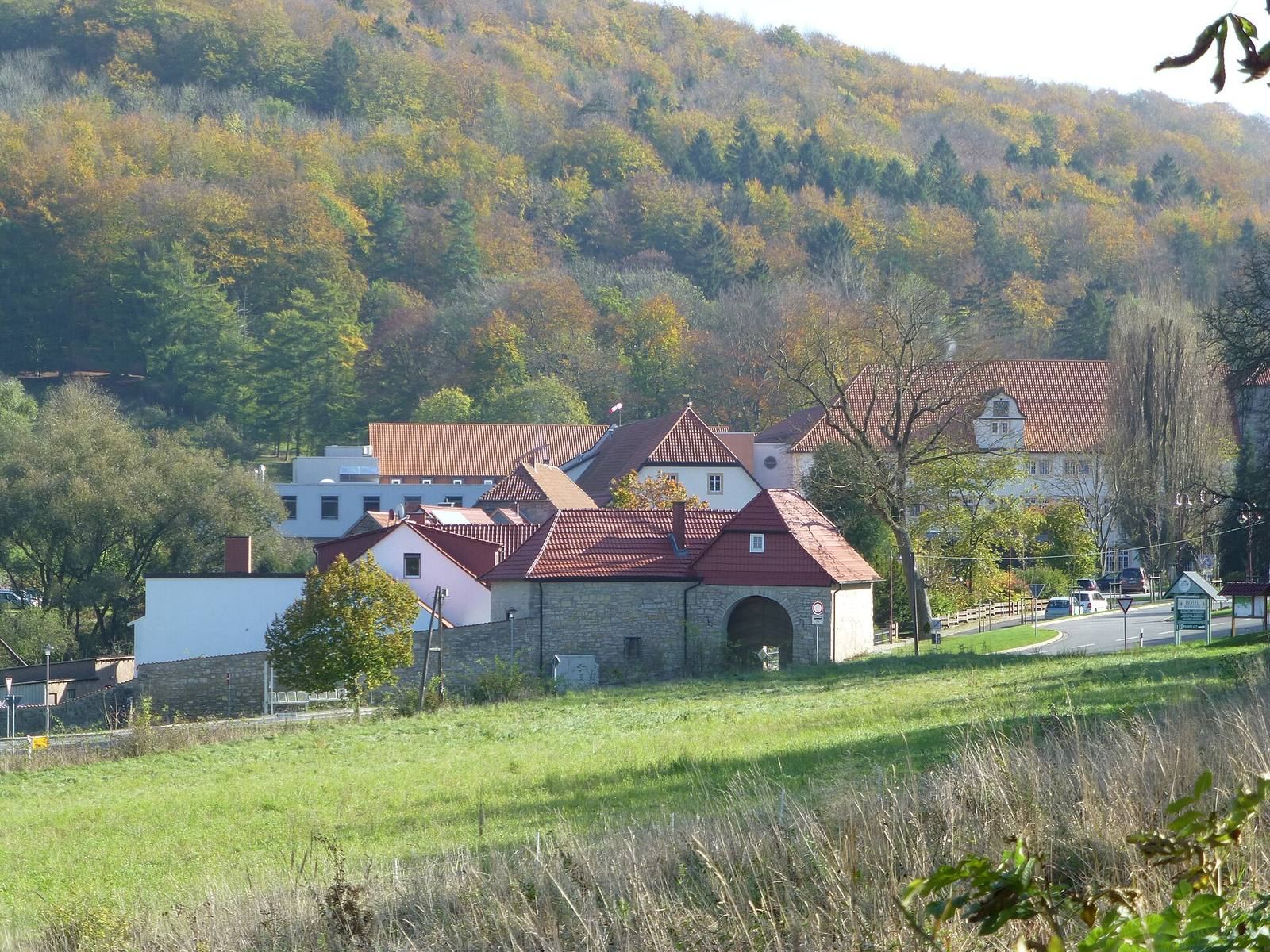
The abbey buildings form a four-sided complex about four kilometres south-southeast of Leinefelde. Two unequal inner courtyards are divided by a narrow library building erected around 1800. Groin-vaulted cellars, formed by intersecting curved ceilings, extend beneath the complex. The interior has been altered, and staircases at the northeast and southeast provide access to the upper floors.
Church and adjacent tower
Abbey church
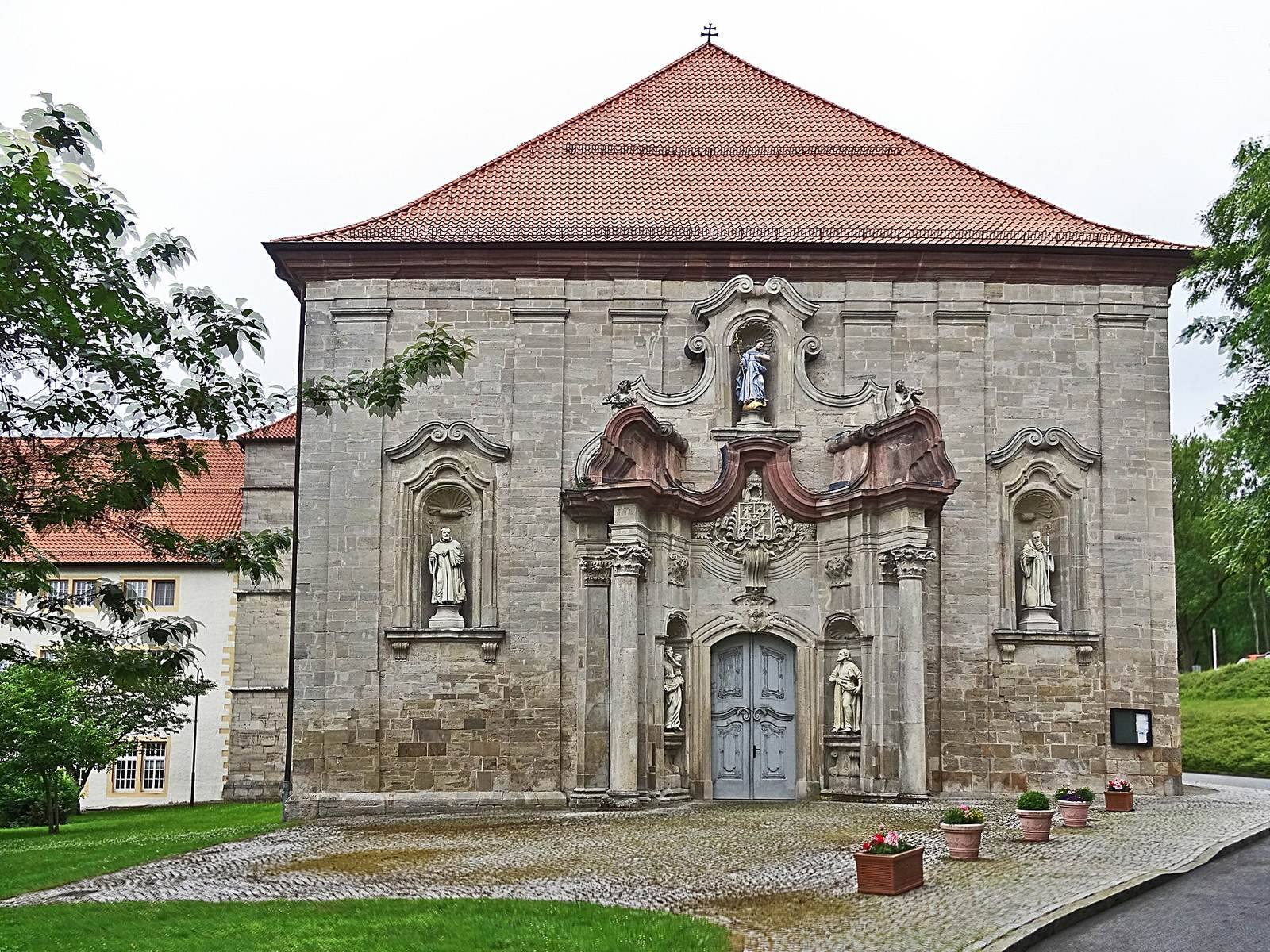
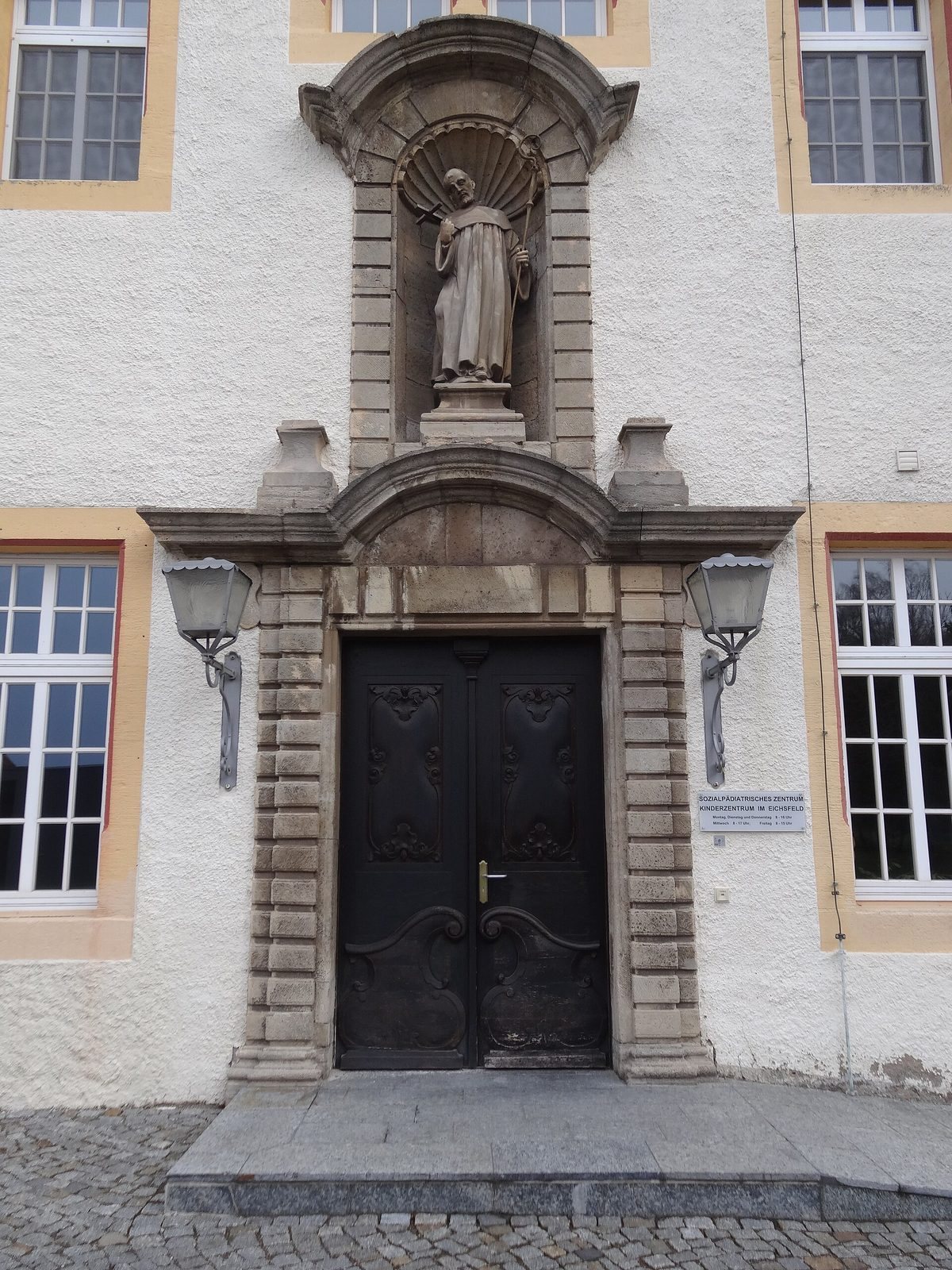
In the southwest of the complex, the church occupies the south wing alongside the sacristy. Built from cut sandstone blocks on the site of three earlier churches, it is a single-nave hall, with one main interior space. Wall-mounted supports carry intersecting groin vaults, and a monumental portal marks the west end. A high roof slopes on all sides above the building.
North tower
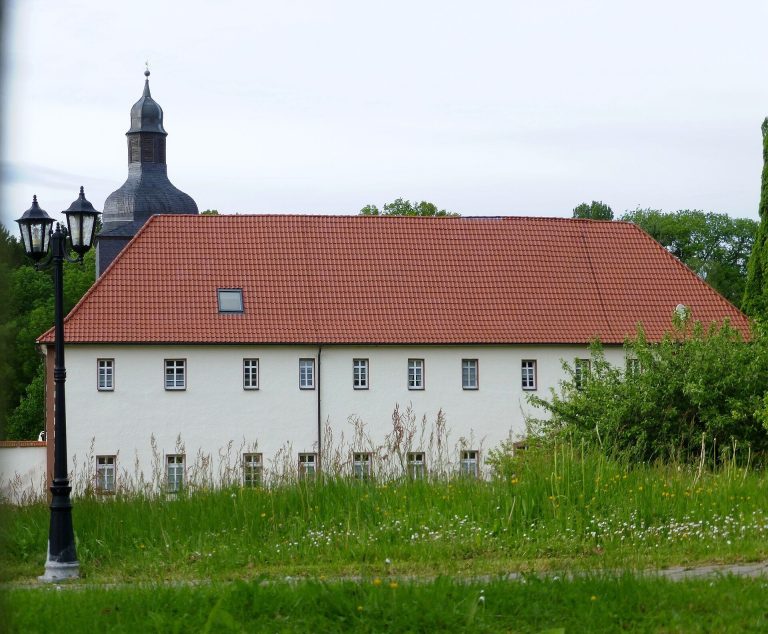
A four-storey tower with a pyramidal roof stands north of the church. Dating from around 1580, it is the oldest surviving building in the complex.
Residential and service buildings
Wings
The west wing has three storeys and a plastered exterior; it served as the abbot’s residence. The north and east wings each have two storeys, and the east wing contains the refectory. The south wing houses the church and sacristy.
Gatehouse and former monastic houses
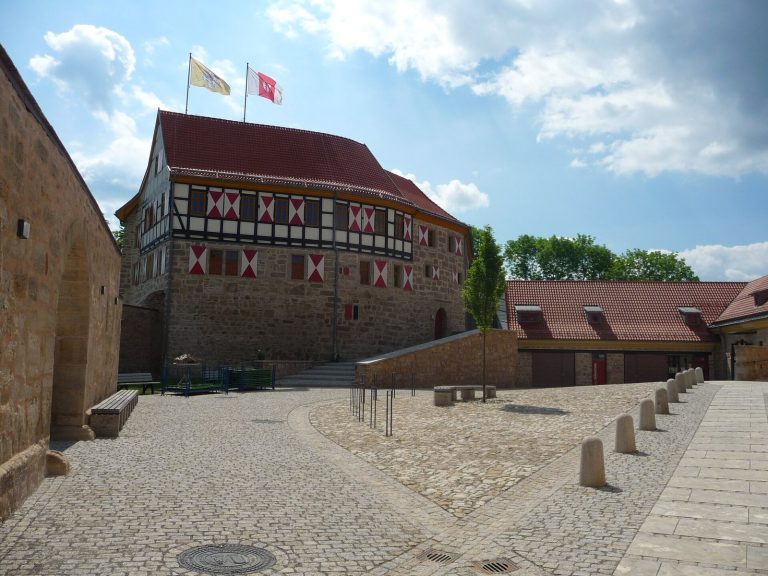
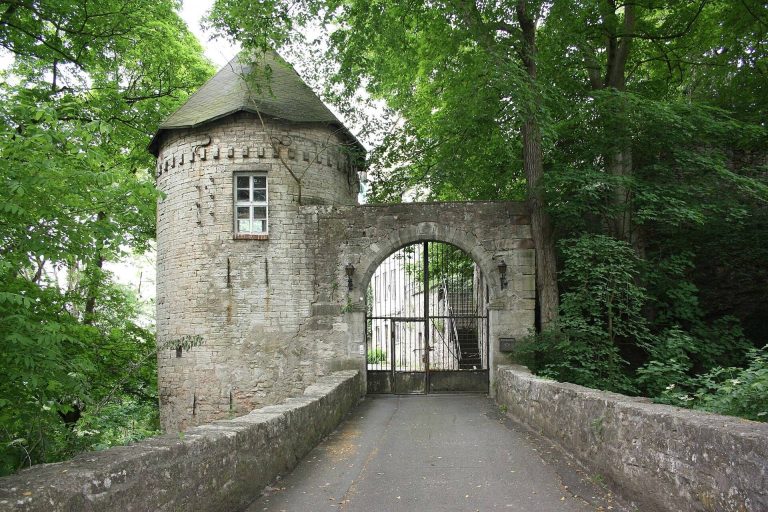
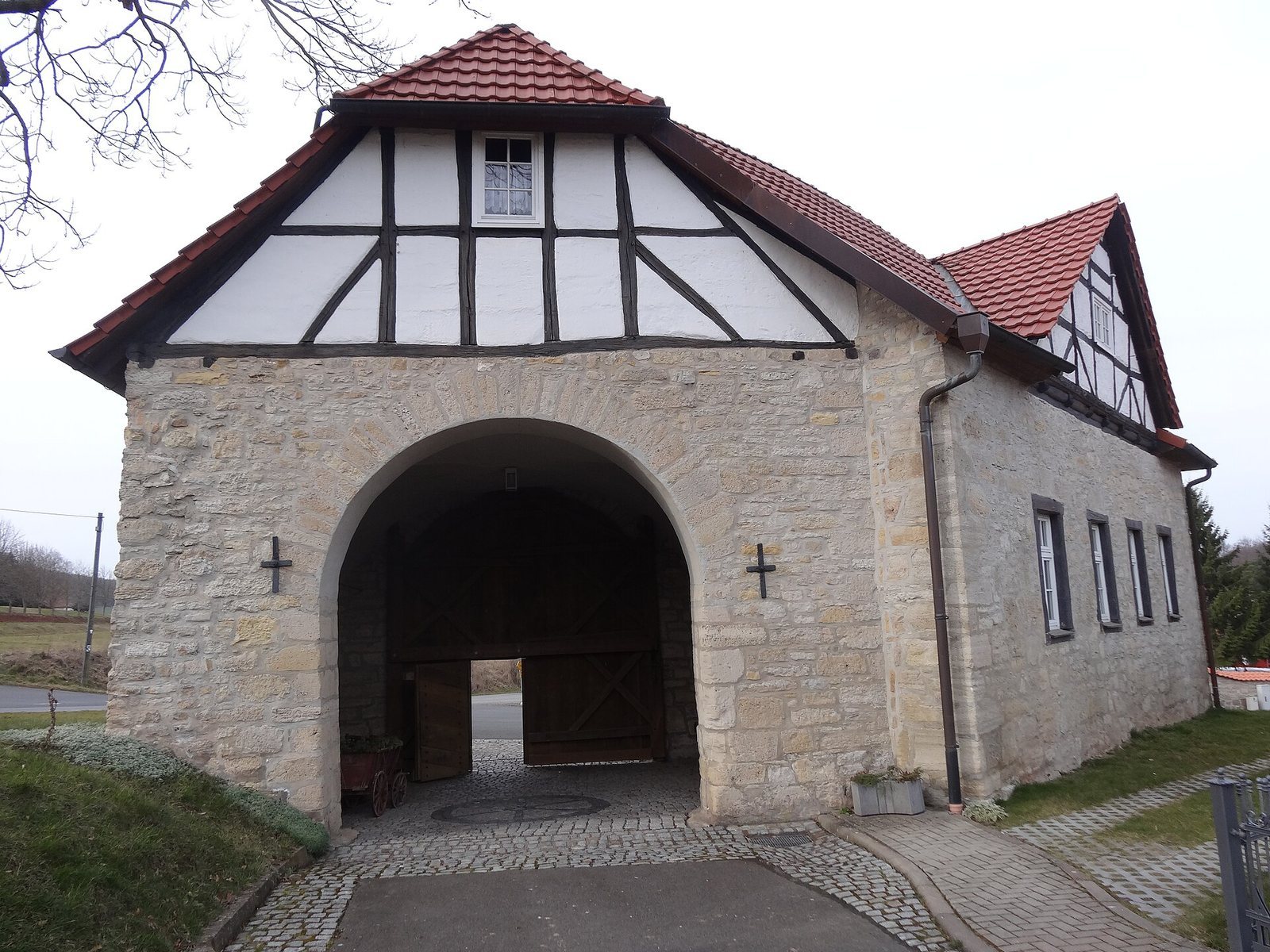
The gatehouse incorporates medieval building remains. Other parts of the complex include the Old Abbey in the northern extension, the Brothers’ House, and the Shepherd’s House. The Old Abbey was renovated in 1693. The Brothers’ House was renewed in 1699, the Shepherd’s House in 1700, and the north wing in 1708. The west wing was built in 1769–1770, while the Old Abbey and dormitory were altered in 1794–1795.
School grounds and natural features
Garden and school chapel
During the school’s operation, a stone wall about ten feet high enclosed the grounds. Behind the buildings lay a formal Baroque garden, with ornamental stone steps leading to a terrace. The grounds also included fruit and vegetable gardens, greenhouses for growing plants and flowers, and a commercially operated poultry farm; the school kept pigs and goats as well. A small organ in the school chapel was made playable again in 1942–1943, when students cleared mice’s nests from some of its pipes.
Seven Brothers Beech
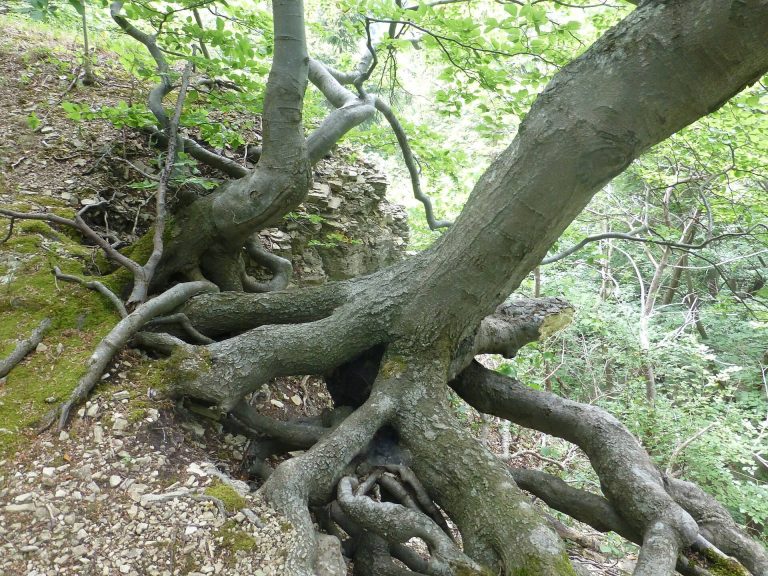
Nature monuments of regional importance are found on the abbey grounds and at the forest edge. Among them is the Seven Brothers Beech, a European beech estimated to be about 300 years old and considered the oldest of its kind in the Upper Eichsfeld. Its unusual trunk may have formed when seven young trees grew together, a possible explanation for the tree’s name.