Sessa Palace: A Historic Palace in Naples
Site at a Glance
- Rating
- 5
- Popularity
- Very Low
- Country
- Italy
- Primary era
- Early Modern
- Eras represented
- Early Modern
- Civilizations
- Kingdom of Naples, Spanish
- Site type
- Domestic
- Remains
- Elite Residence
On this page9 sections
History
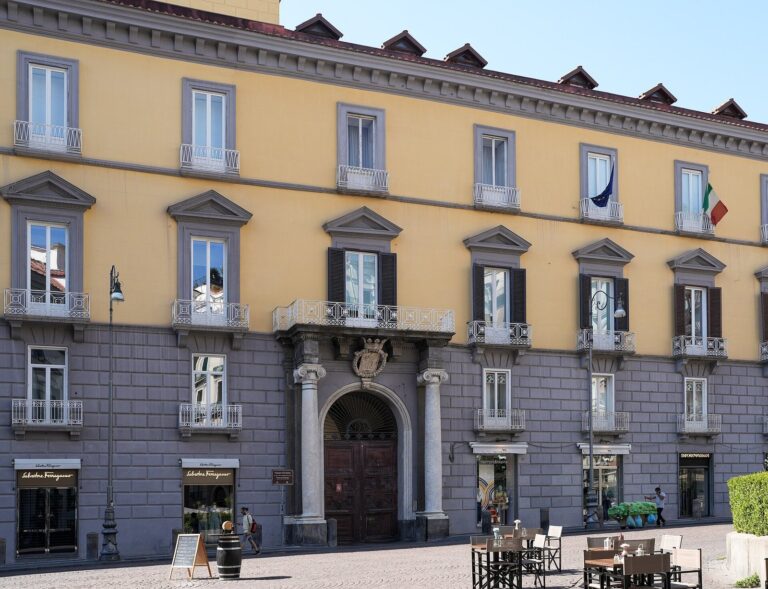
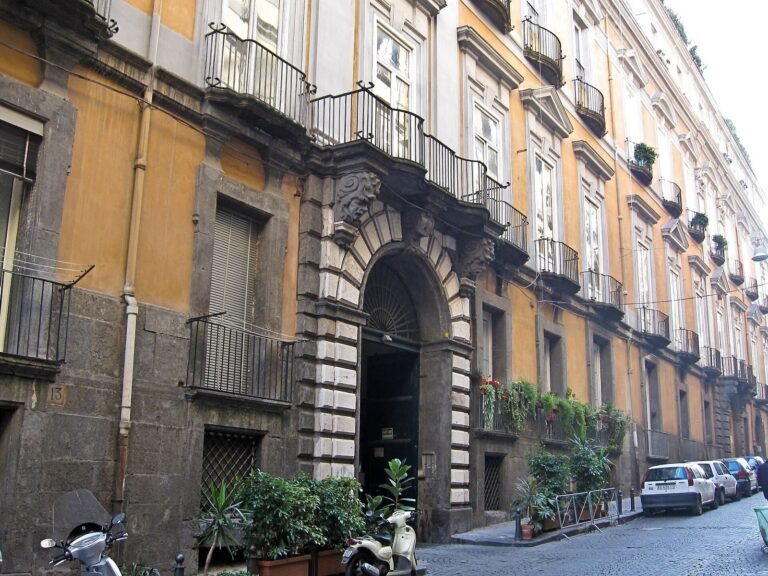
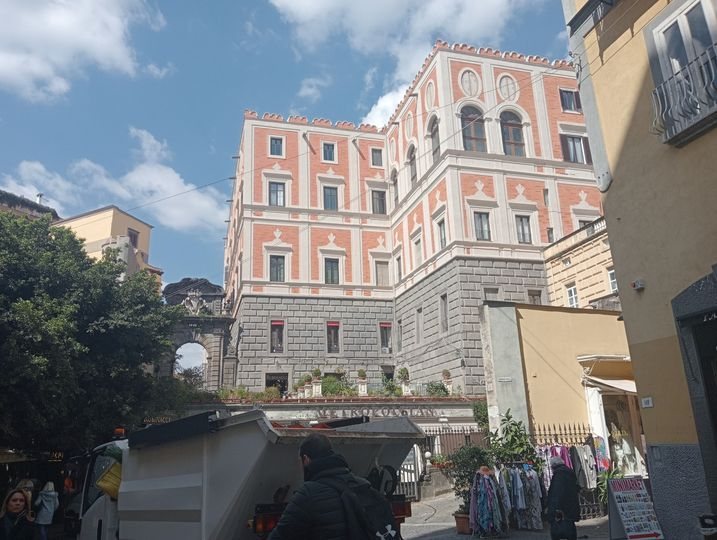
Sessa Palace is a historic palace in Naples, Italy. Its original construction date is uncertain, but its marble entrance portal is dated 1506.
Monastic site and eighteenth-century enlargement
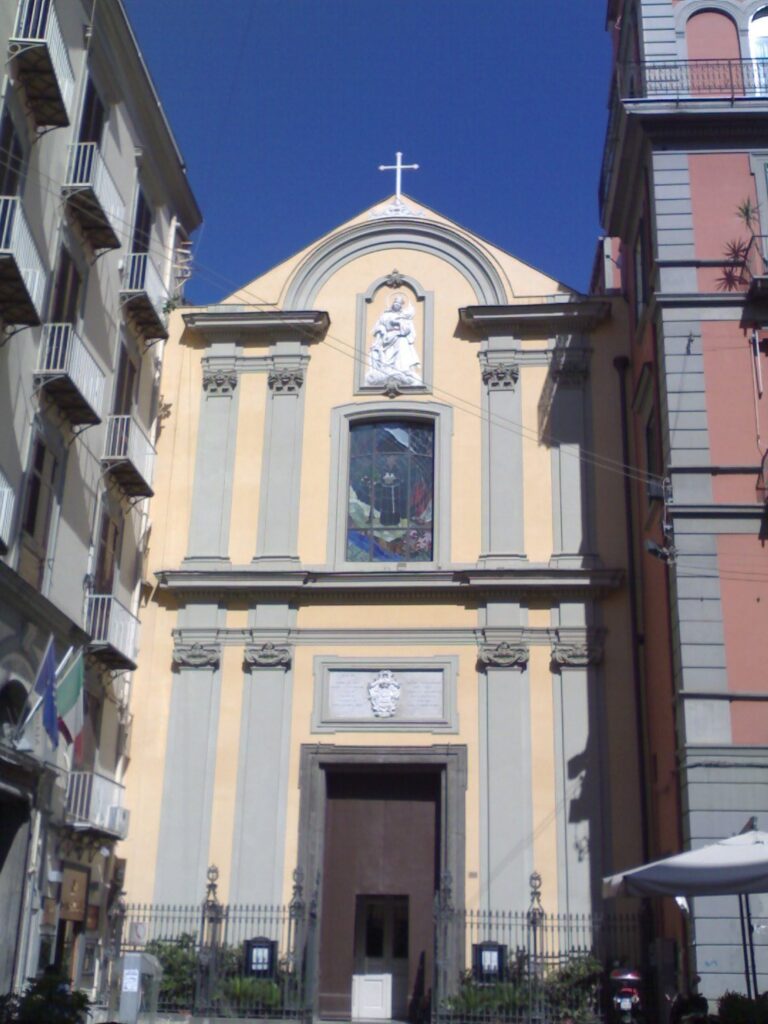
A monastery occupied the site from the sixth century, and the palace’s later development involved the former Abbey of Santa Maria a Cappella Vecchia. From 1744 to 1752, Neapolitan nobleman Giuseppe Asmundo di Sessa commissioned an enlargement and decorative campaign that partly incorporated and altered the abbey. Architects Giuseppe Genoino and Andrea Vaccaro carried out the work. Andrea continued a project begun by his father, architect and artist Domenico Antonio Vaccaro.
Embassy and social life
Under Bourbon rule of the Kingdom of Naples, the palace became the official seat of the English embassy. British diplomat William Hamilton lived there from 1764 to 1800 and hosted social and musical gatherings attended by prominent European visitors. Guests included French portrait painter Élisabeth Vigée-Le Brun, German writer Johann Wolfgang Goethe, who visited in 1787, and British naval commander Lord Nelson. Hamilton lived first with his wife Catherine Barlow and later with Emma, born Amy Lyon.
Later institutional uses
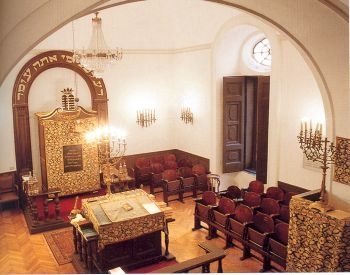
After the British embassy departed, the palace housed the Archbishop of Taranto and later the Prussian diplomatic mission. In 1864, a Rothschild baron helped establish a synagogue in part of the building for Naples’s Jewish community. It has remained there almost continuously. The Goethe-Institut, a German cultural organization, moved into the palace in 2012.
Remains
Plan and surviving features
Entrance and courtyard
The marble entrance portal leads into a space understood to have been the abbey courtyard. The palace was built over the former courtyard. A semicircular atrium opens toward it, with two symmetrical portals linking the spaces. The staircase opens toward the entrance hall and is reached through the atrium.
Terraces and street works
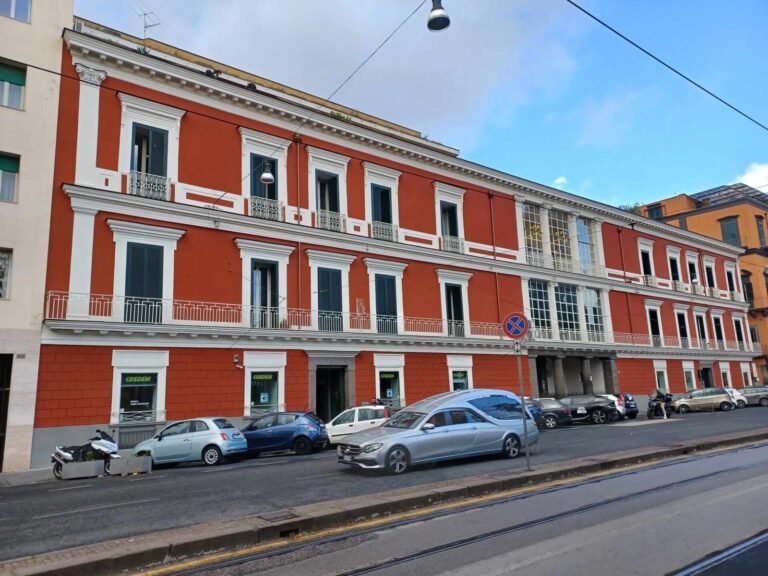
Long terraces once extended on both sides of the entrance portal. The right-hand terrace survives, while later building additions cover the left. The wing facing the sea was cut off when Via Pace, now Via Morelli, was constructed. The palace appears on the 1775 Carafa map; the 1877 Schiavoni map shows the effect of the street works.
Memorial plaque
A marble plaque at the palace commemorates the deportation of Neapolitan Jews to Nazi extermination camps during the Second World War.