Grey Abbey: A Cistercian Monastery in County Down
Site at a Glance
- Rating
- 4.5
- Popularity
- Medium
- Country
- United Kingdom
- Primary era
- Medieval
- Eras represented
- Medieval
- Civilizations
- Norman
- Site type
- Religious
- Remains
- Monastery
On this page6 sections
History
Grey Abbey is a Cistercian monastery at the eastern edge of Greyabbey village in County Down, Northern Ireland, United Kingdom. Founded in 1193 by Scottish monks from Holmcultram at the initiative of Affreca de Courcy, it is an early example of English Gothic architecture in Ireland. The Cistercians were a monastic order that followed the Rule of Saint Benedict and practised an austere communal religious life.
Foundation and medieval history
Affreca, wife of John de Courcy, lord of Ulster, was the abbey’s patron, an unusual role for a woman in the Cistercian order. A tradition connects her foundation of the monastery with gratitude for reaching Ireland safely after a dangerous sea crossing. Grey Abbey joined the order on 25 August 1193. Its institutional lineage ran from Holmcultram through Melrose to Clairvaux, a leading Cistercian abbey.
The monastery was first called “Yoke of God,” but soon became known as Grey Abbey, probably because of the off-white cowls worn by its monks. It remained relatively poor and declined markedly in the later Middle Ages. During the invasion of Ireland by Scottish military leader Edward Bruce from 1315 to 1318, the abbey suffered heavily.
Dissolution and later use
The abbey was dissolved in either 1539 or 1541. In 1572, the forces of Irish lord Brian O’Neill burned it to prevent English settlers seeking a foothold on the Ards peninsula from using it as a refuge. Hugh Montgomery restored the church in 1626 for use as a parish church. It received a new roof in the seventeenth century and served the parish until 1778, when it fell into ruin again. Restoration work in the nineteenth century contributed to further decay.
Grey Abbey is now a monument in state care, maintained by the Northern Ireland Environment Agency. In 2015, village residents formed the Friends of the Abbey association, which included reviving the monastic garden among its aims.
Remains
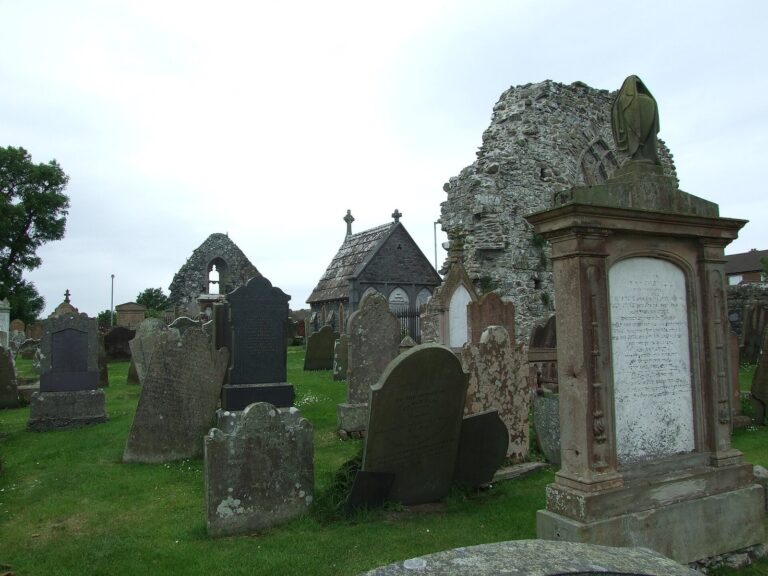
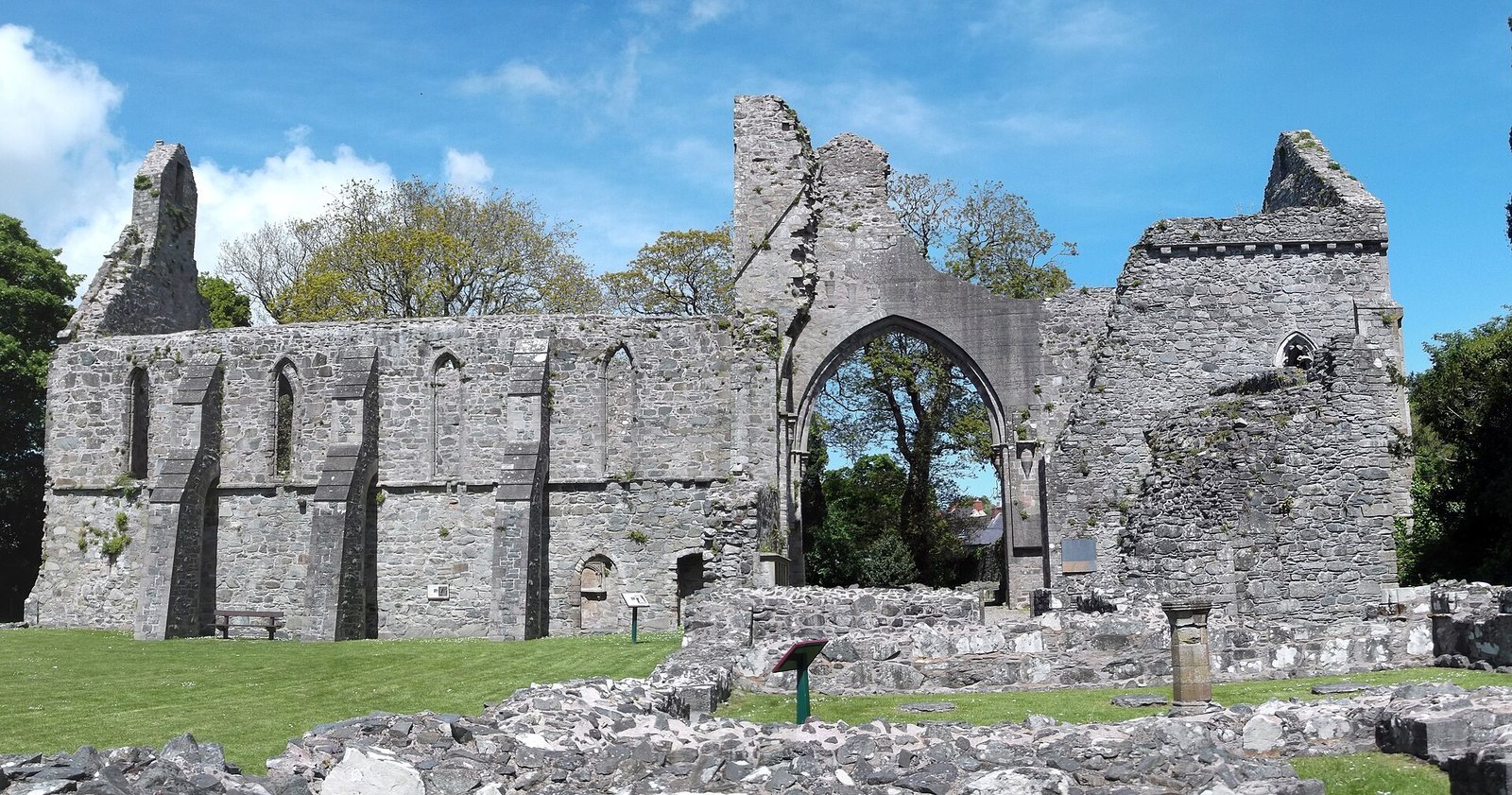
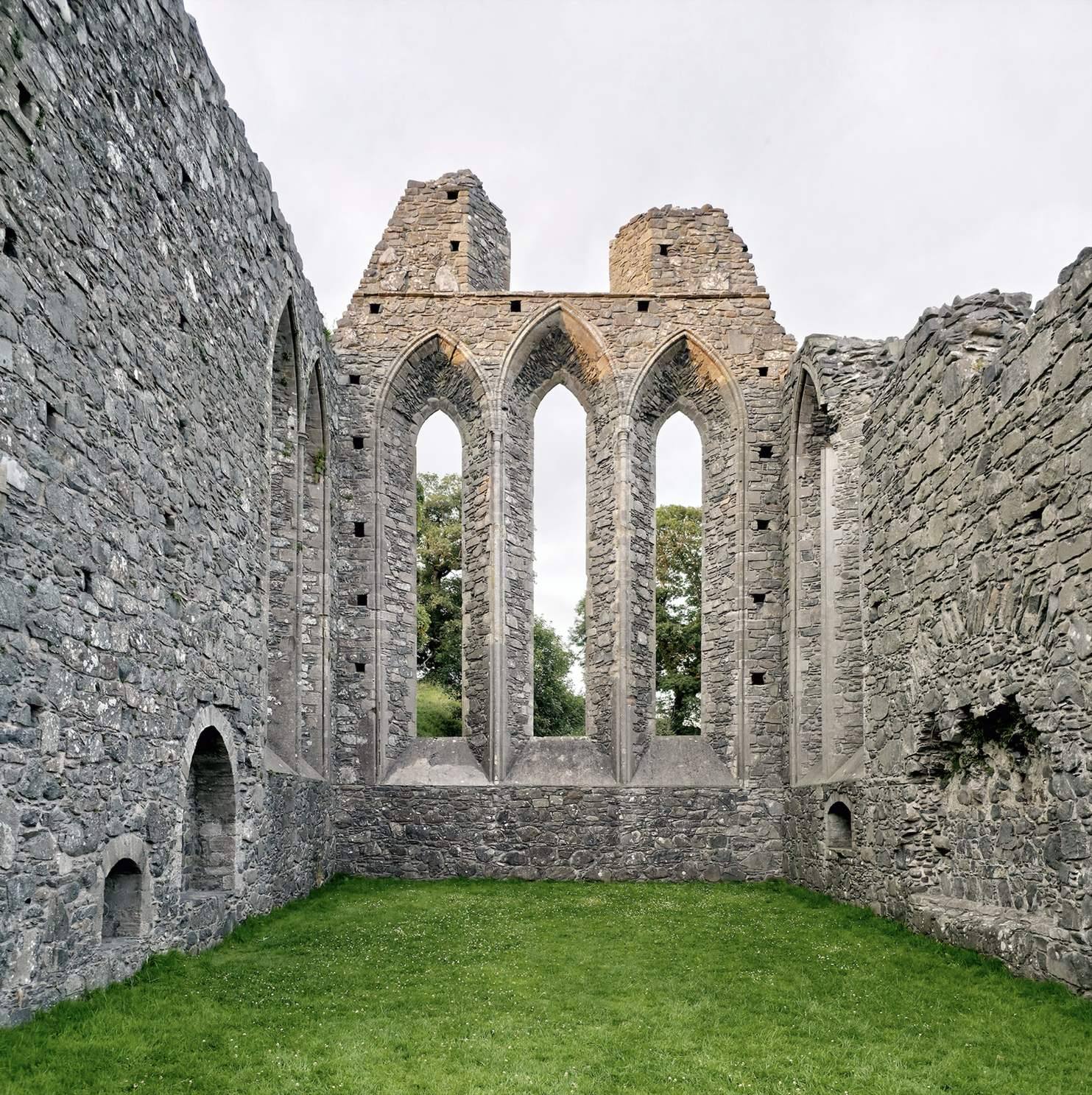
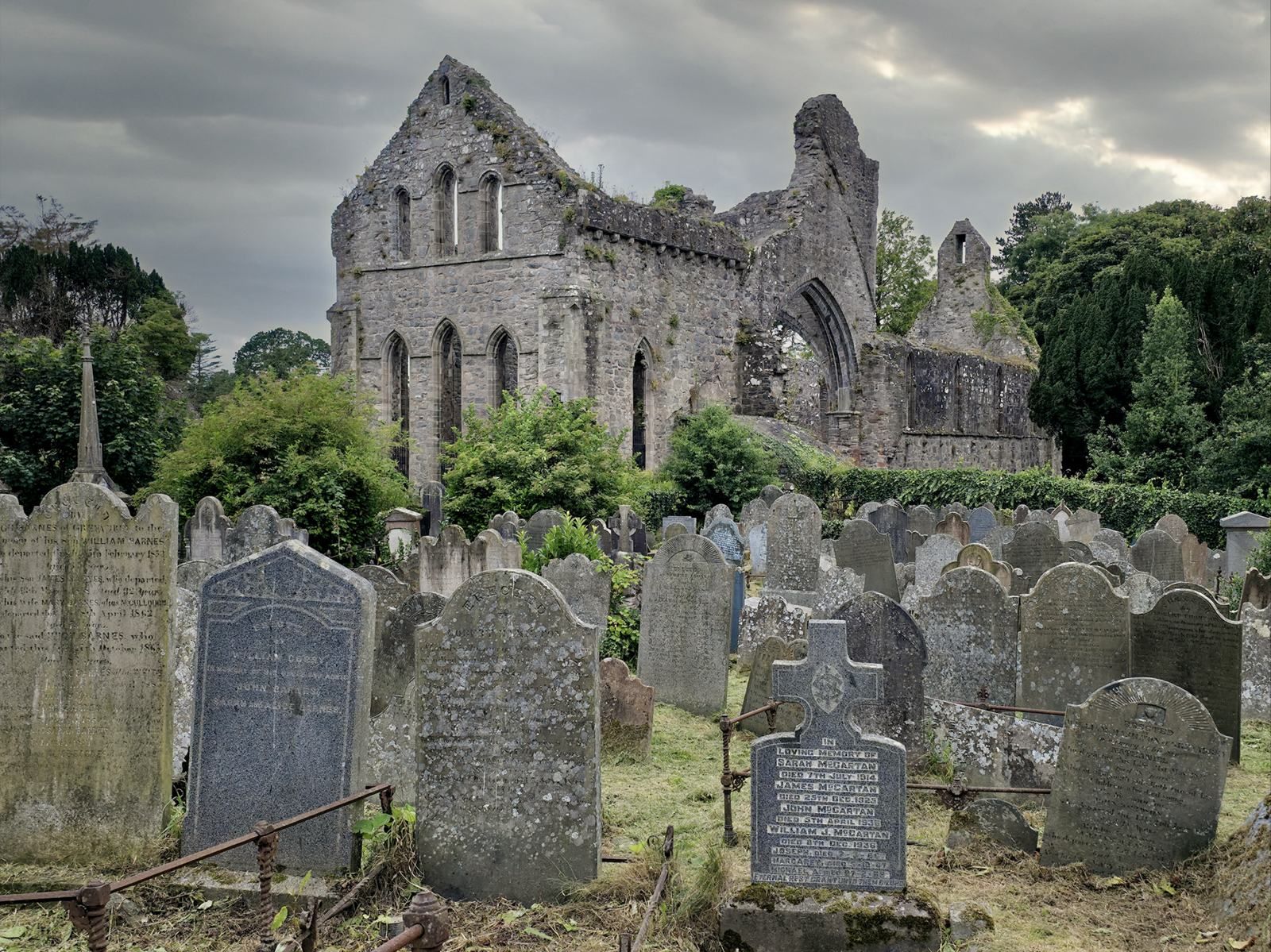
The extensive remains include the abbey church and convent buildings, set within the grounds of the former monastery. The surviving buildings are Gothic, and the convent structures date from before 1250.
Church and convent buildings
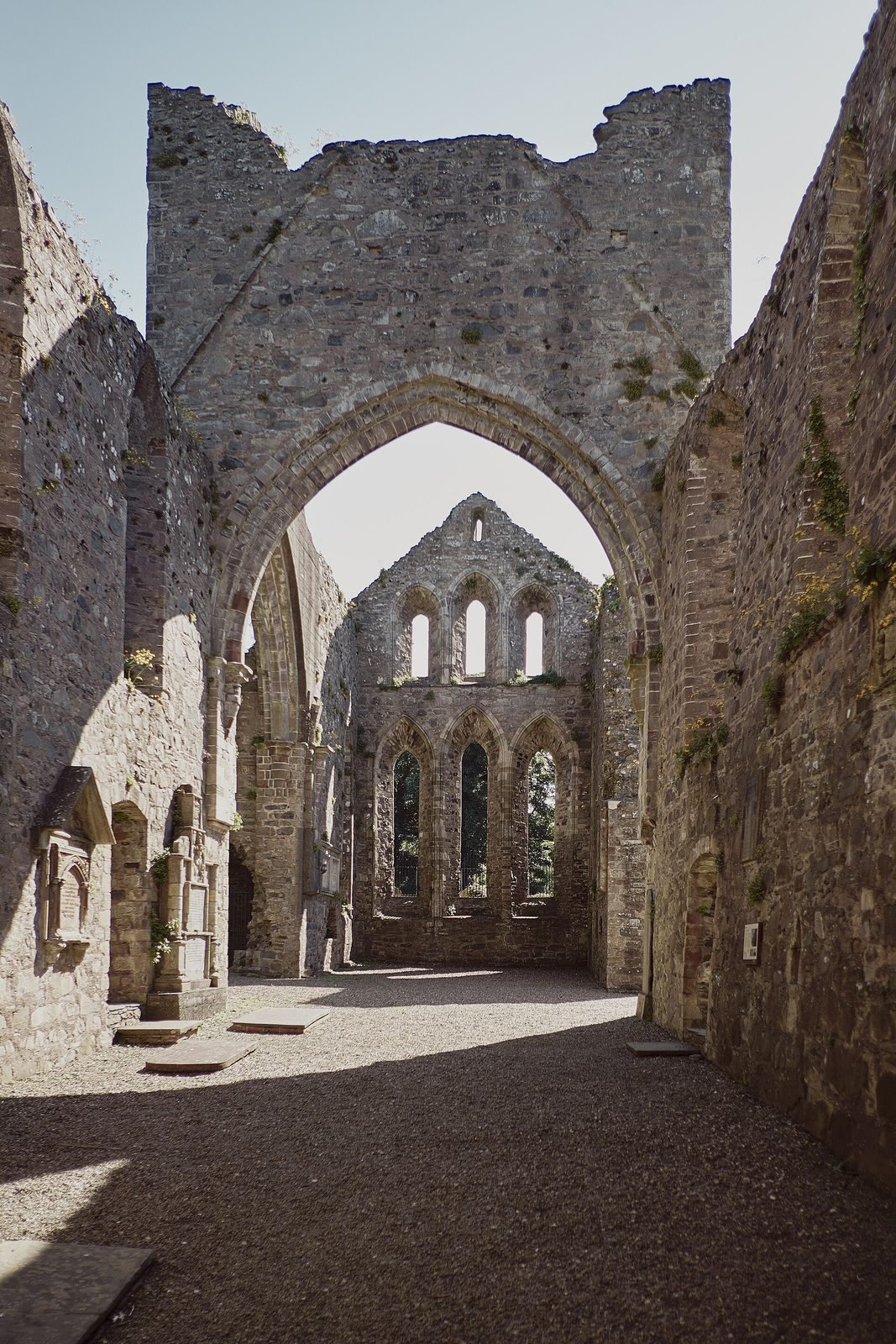
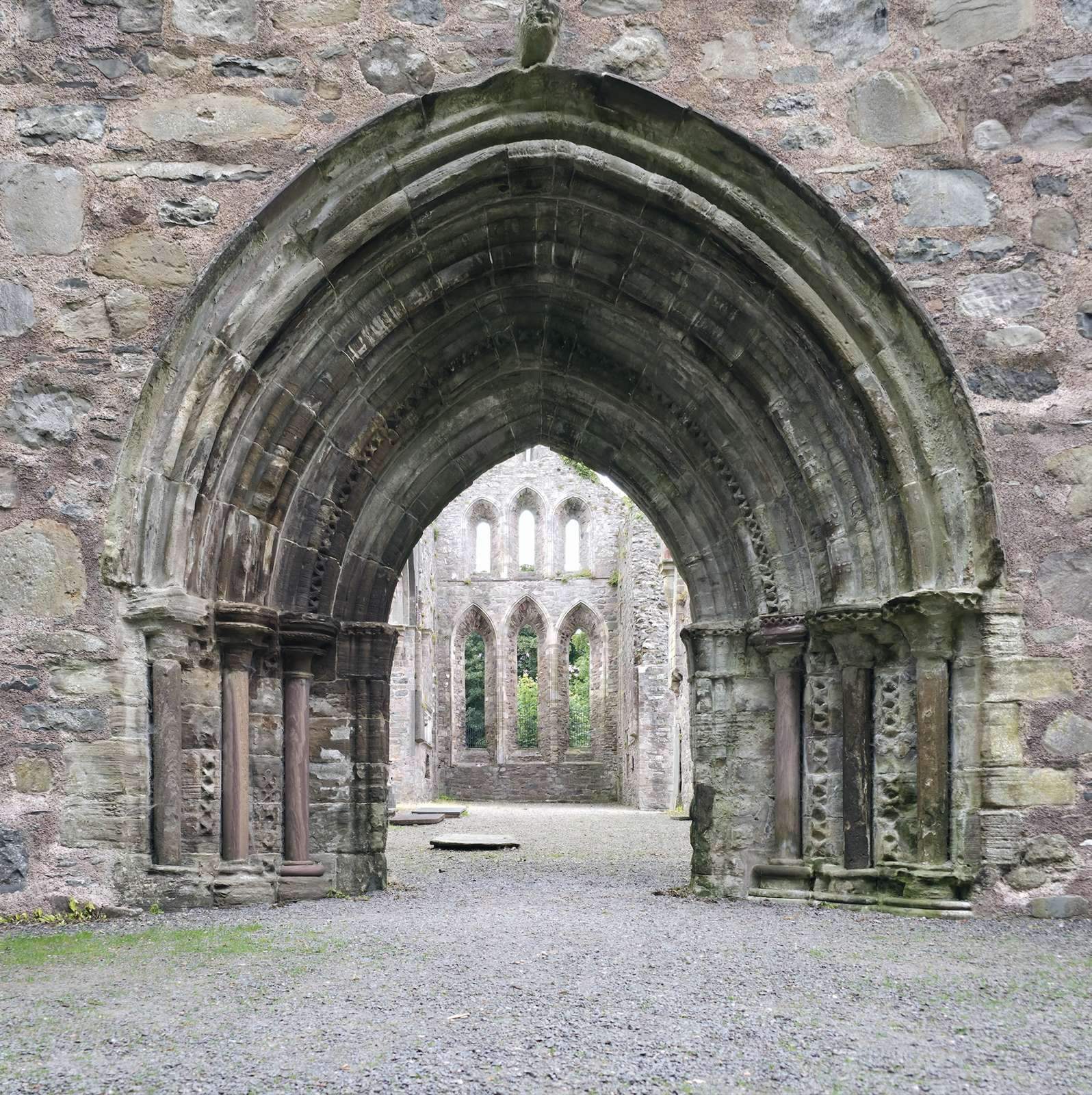
The church’s west portal is a notable feature of the ruins. Pointed arches, including tall, narrow lancet windows, place the buildings among Ireland’s early Gothic examples. Such arches were among the island’s earliest, and the earliest in what is now Northern Ireland; Grey Abbey is regarded as the first Gothic building in Ulster. The systematic use of rib vaulting, a ceiling structure supported by projecting ribs, contrasts with the earlier preference for round arches in Ireland.
Garden and associated features
A monastic garden contains about forty species of aromatic or medicinal plants. A tombstone is also associated with the abbey.