Kriegshoven Castle: A Water Castle in Germany
Site at a Glance
- Popularity
- Medium
- Country
- Germany
- Primary era
- Early Modern
- Eras represented
- Early Modern, Modern
- Civilizations
- Electorate of Cologne, German, Holy Roman Empire, Kingdom of Prussia
- Site type
- Domestic
- Remains
- Castle
On this page8 sections
History
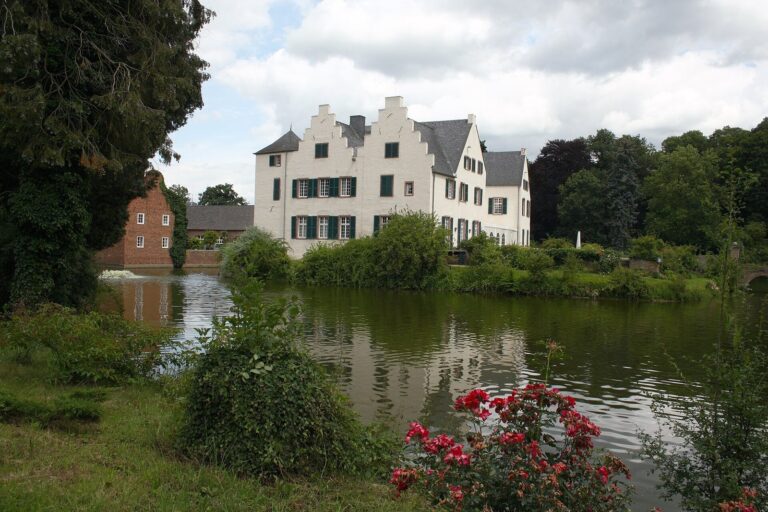
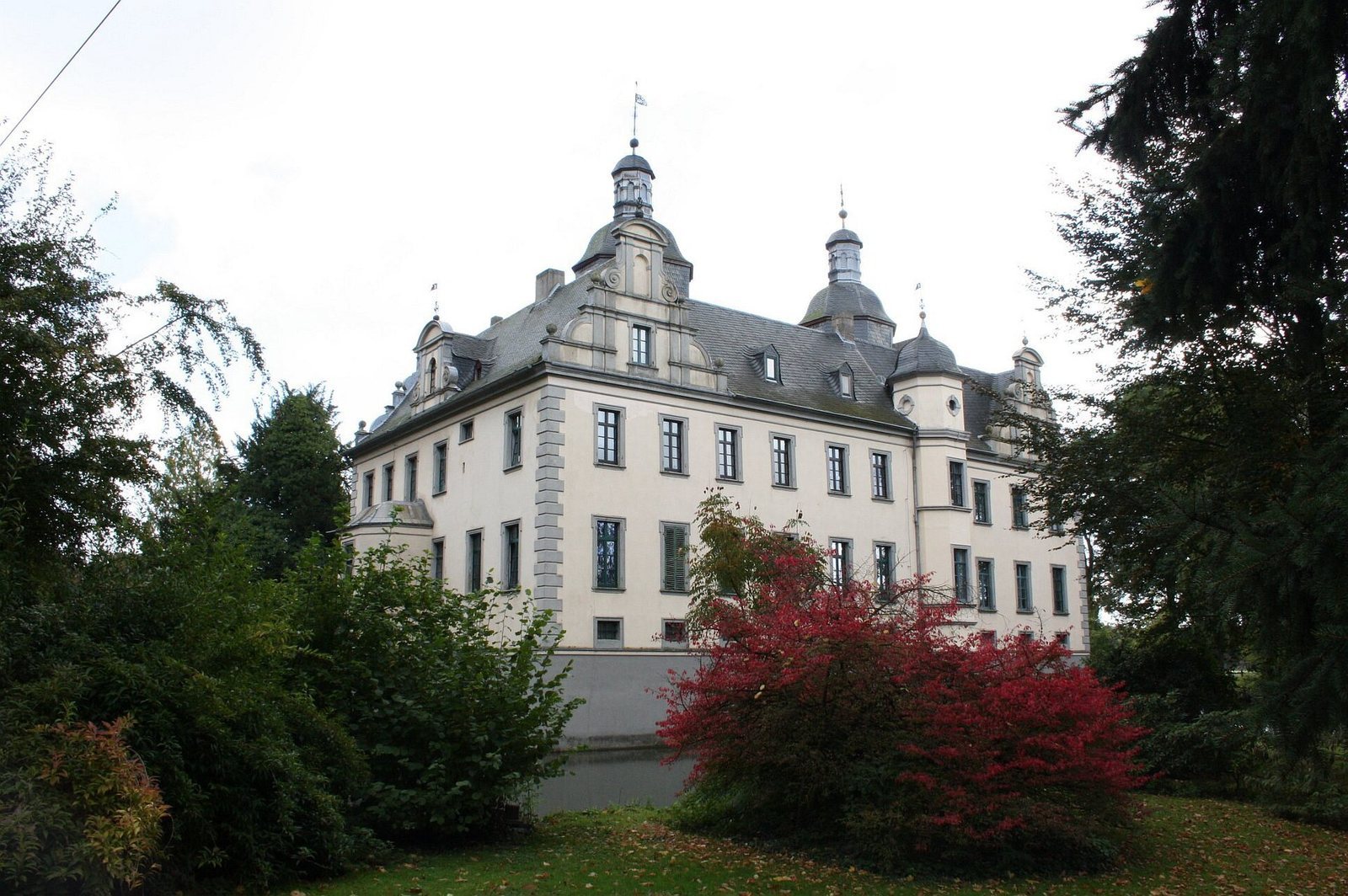
Kriegshoven Castle is a preserved water castle, a castle associated with water defenses, in Heimerzheim, within the municipality of Swisttal, Germany. Its foundation date is unknown, though it is known by the mid-13th century. Rebuilt in the 16th century, it retains the character of a Renaissance residence, a style drawing on forms associated with classical antiquity.
Medieval records and rebuilding
The lords of Kriegshoven are first recorded around the middle of the 13th century. In 1247, the sacristan of St Kunibert’s collegiate church transferred a pond to Heinrich von Creshovin, identified as the castle’s owner. A sacristan was a church official responsible for the sacristy and its furnishings, while a collegiate church was served by a chapter of canons.
Nineteenth-century ownership
Emil Wülfing, a senior government councillor, acquired the water castle in 1868 and enlarged the manor house by 1869. A senior government councillor was a high-ranking civil-administration official. After Wülfing’s death, the property passed to his son, also named Emil. The younger Emil was later succeeded by his son-in-law, Fritz Albert Eugen von Scherenberg, who was married to Maria von Wülfing. The castle remains in the von Scherenberg family’s ownership.
Remains
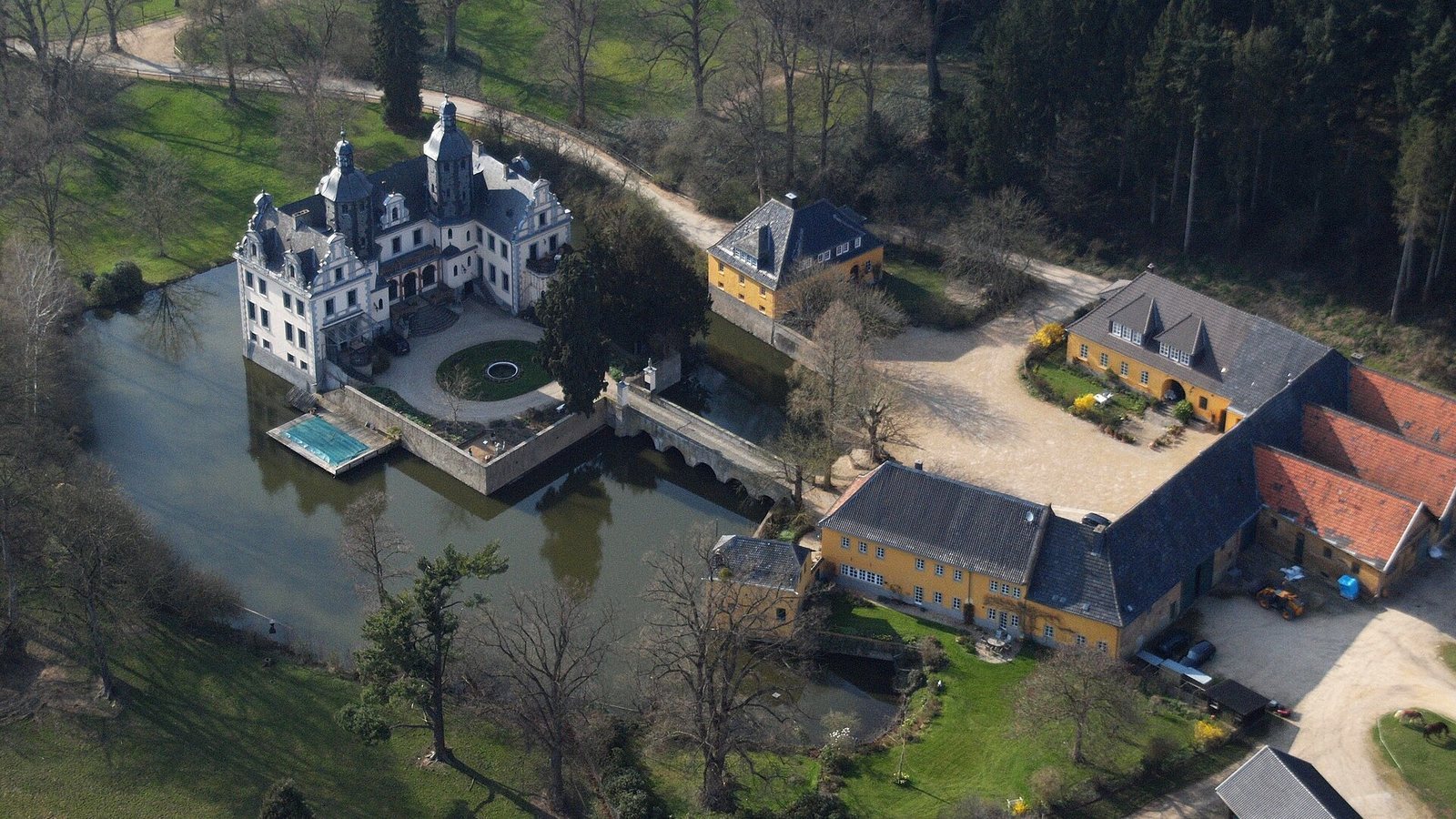
The castle occupies low-lying ground about one kilometre northwest of Heimerzheim. Its layout combined water defenses with a residence. Parts of the surrounding moats were filled in during the late 19th century.
Residential architecture
Surviving core
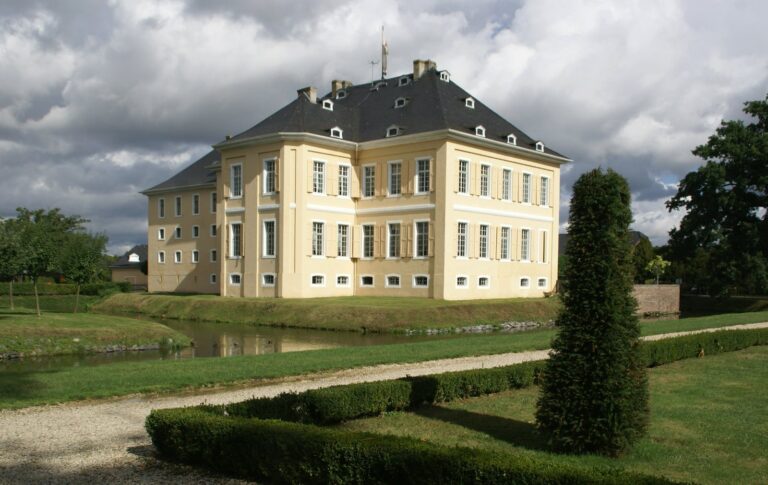
The surviving core is an angular, two-storey building.
Manor house
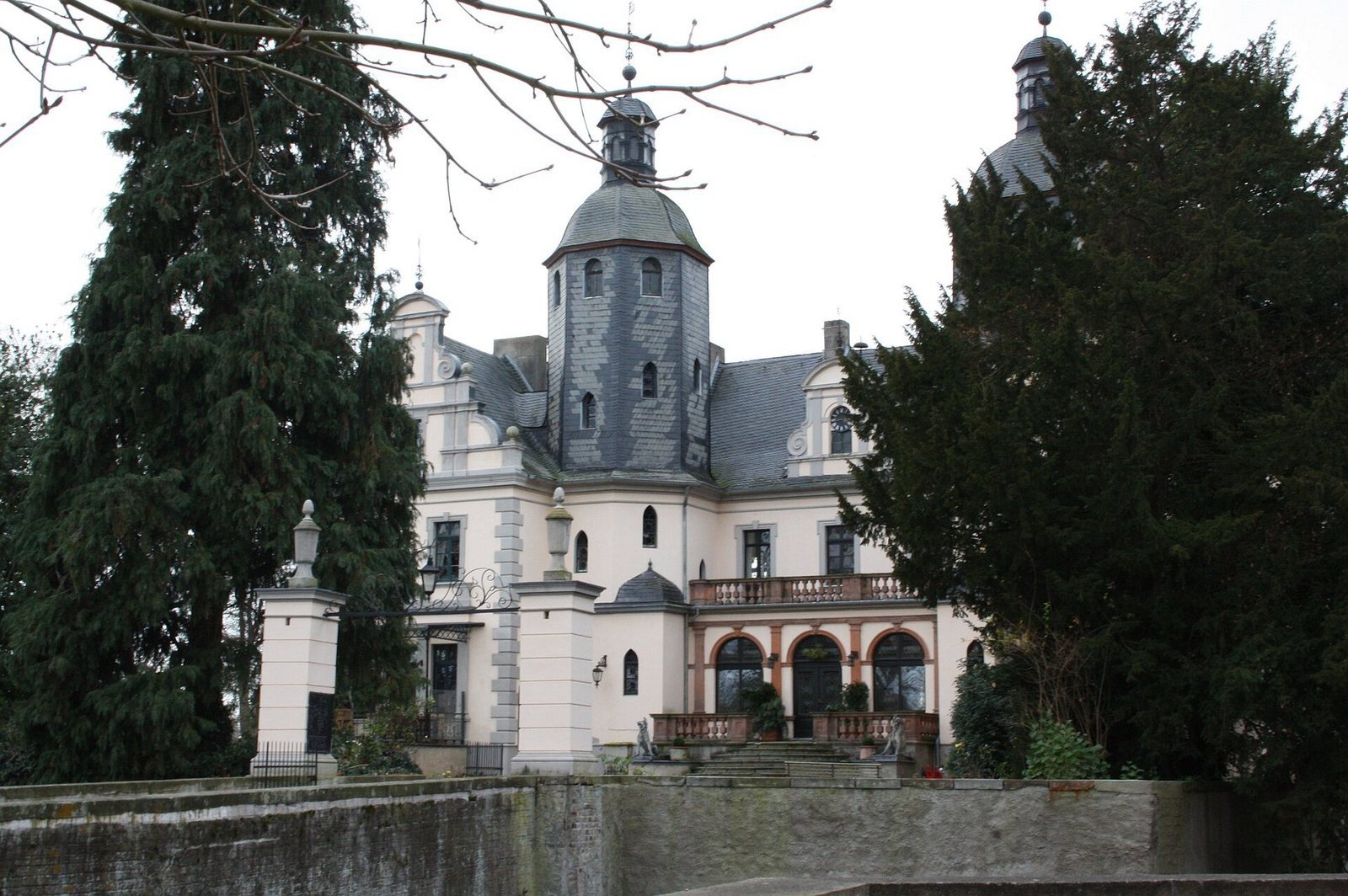
The manor house developed into a three-wing complex with Baroque forms, a style known for elaborate, dynamic design.
Mid-19th-century depiction
A depiction of the complex from the mid-19th century shows Neo-Gothic features. This Gothic-inspired design formed part of Historicism, the 19th-century revival of earlier architectural styles.