Kreuzlingen Abbey: An Augustinian Monastery in Switzerland
Site at a Glance
- Popularity
- Medium
- Country
- Switzerland
- Primary era
- Early Modern
- Eras represented
- Early Modern
- Civilizations
- Swiss
- Site type
- Religious
- Remains
- Monastery
On this page14 sections
History
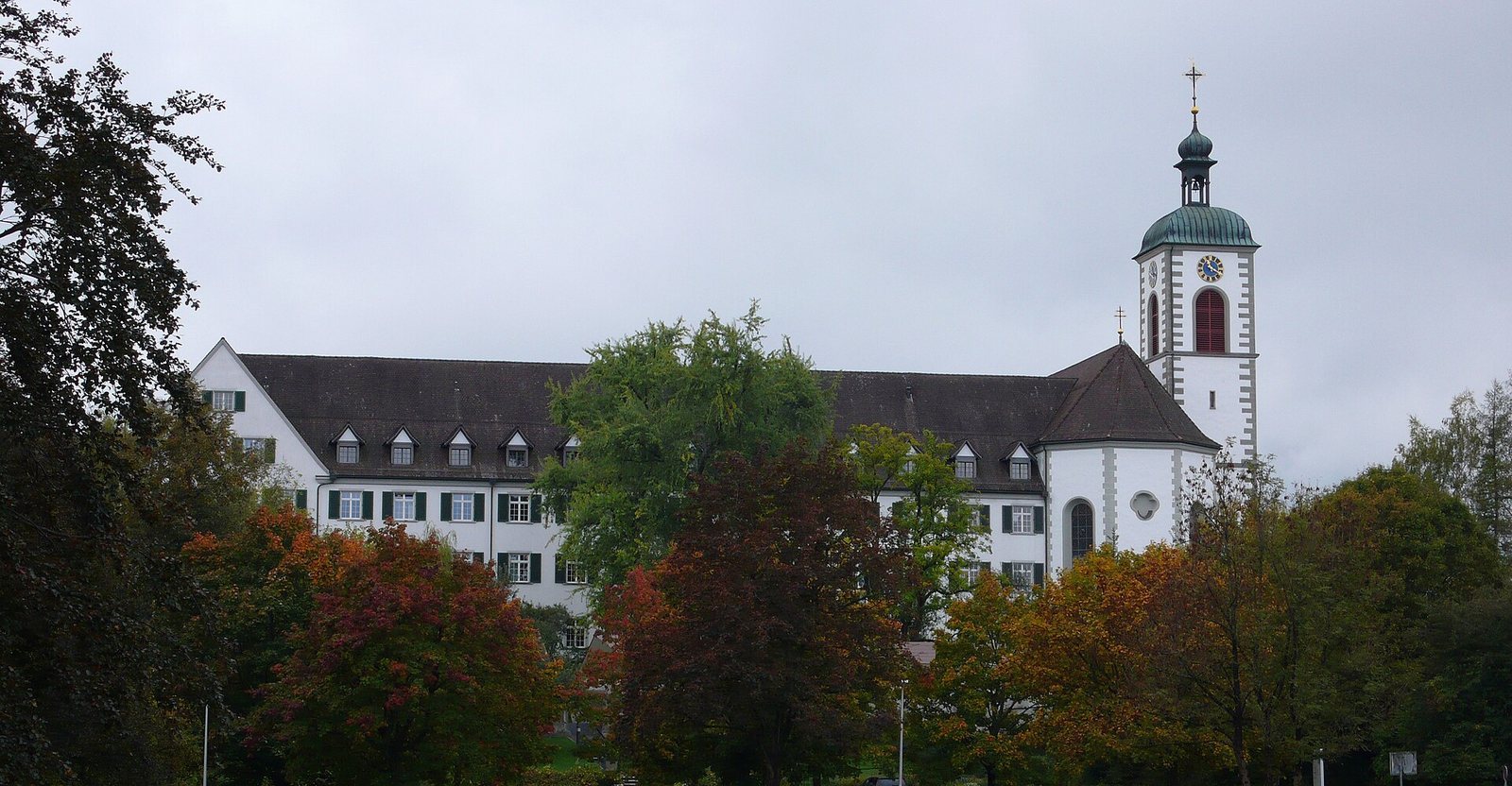
Kreuzlingen Abbey was an Augustinian canons’ monastery in Egelshofen, now part of Kreuzlingen, Switzerland. Founded around 1125 by Bishop Ulrich I of Constance, it was an early community of Augustinian canons, clergy who lived together according to the Rule of Saint Augustine. The abbey’s history began with an earlier hospital and continued through periods of imperial privilege, destruction and rebuilding, before its dissolution in 1848.
Hospital and foundation
The predecessor was a hospital founded by Conrad I, Bishop of Constance. After returning from Jerusalem, Conrad gave the hospital a fragment of the True Cross. Its name, Crucelin, referred to the relic and later developed into Kreuzlingen. The hospital burned during hostilities in 1093 and subsequently fell into disrepair. A document of 1125 described it as partly ruined. Bishop Gebhard III moved it to the nunnery at Münsterlingen; before 1125, Ulrich I transferred it to a church he had founded and joined the two institutions as a community of Augustinian canons.
Around 1125, Ulrich established the abbey at the eastern edge of Stadelhofen, dedicating it to Saint Ulrich of Augsburg and Saint Afra. Ulrich came from the same family as Saint Ulrich, a bishop who lived from 923 to 973. Afra was venerated as an early Christian saint. The abbey belonged to the Diocese of Constance.
Imperial standing and conflict
Pope Lucius II placed the monastery under his protection in 1144, followed by Emperor Frederick Barbarossa in 1145. Kreuzlingen became an Imperial abbey within the Holy Roman Empire, a central European political entity whose institutions included emperors and Imperial estates. Its abbots held the rank of Imperial prelates, high-ranking church leaders recognized within the Empire. By about 1150, they also ruled Hirschlatt, north of Friedrichshafen, which served as a refuge in wartime. A town wall built to protect Stadelhofen from Appenzell forces left the first monastery outside the suburb.
During the Council of Constance, held amid the Western Schism, a division over competing claims to the papacy, Abbot Erhard Dominik Lind sheltered the claimant John XXIII from 27 to 28 October 1414. In gratitude, John gave Lind an ornate mitre, or bishop’s ceremonial headwear, and allowed him and his successors to use pontifical insignia at Mass. These included a mitre, an episcopal ring and a crozier, a bishop’s staff.
In 1499, Egelshofen became a theatre of war during the Swabian War. Under the Peace of Basel on 15 October, the Swiss Confederates, an alliance of Swiss cantons, received Thurgau’s regional judicial authority and sovereign rights, through the mediation of the Duke of Milan. Angered by the settlement, Constance burned the abbey. The city was required to rebuild it, and Abbot Peter I von Babenberg rededicated its church on 17 April 1509. During the Reformation, the abbot and community remained Catholic.
Destruction, rebuilding and changing rule
In August 1633, Swedish troops crossed into Thurgau by way of Stein am Rhein despite Swiss neutrality. They advanced on Constance and laid siege to the city, but failed to capture it and lost several thousand men. After the troops left Egelshofen on 2 October, Constance destroyed the abbey again, claiming it had served as a Swedish stronghold. The decision was made to rebuild the monastery farther from Constance’s walls, at least a cannon-shot away.
The foundation stone for the relocated monastery was laid on 4 July 1650, and its church was consecrated on 25 October 1653. From the second half of the seventeenth century into the early eighteenth, the abbey prospered during the Counter-Reformation, a period of Catholic renewal. Its formal status as an Imperial estate lasted until 1632. After the Peace of Westphalia in 1648, it came under the protection of the Swiss Confederacy and effectively ceased to belong to the Empire, becoming a Thurgau cantonal monastery.
Kreuzlingen retained some connections to the Empire through its possessions at Hirschlatt and, from the eighteenth century, the provostship of Riedern am Wald. Under Abbot Johann Baptist Dannegger, the abbey acquired Riedern. The two houses were then administered in personal union, meaning the abbot of Kreuzlingen also served as provost of Riedern. The abbey’s remaining possessions within the Empire were secularized in 1803. Hirschlatt passed to Hohenzollern-Hechingen that year and was bought by the Kingdom of Württemberg in 1813.
Dissolution and reconstruction
From 1798, cantonal restrictions and the loss of substantial property through mediatization, the transfer of smaller entities’ rights and territories to larger states, brought the abbey close to closure. It sought to adapt by establishing a teachers’ school, an agricultural school and a progymnasium, a lower-level secondary school. From 1836, it could no longer accept new members. In 1848, the Thurgau government dissolved the abbey, confiscated its property and sold its possessions.
After the dissolution, the medieval library passed to the Thurgau Cantonal Library. The remaining monastery buildings became a teacher-training seminary, a predecessor of the Pedagogical Maturitätsschule Kreuzlingen, while the local Roman Catholic parish took over the abbey church for parish use.
A major renovation of the church took place in 1962–63. Welding work on the seminary roof caused a serious fire on the night of 19–20 July 1963, damaging the church and monastery buildings. Reconstruction, led by Hans Burkard and carried out from 1963 to 1967, aimed to reproduce the buildings faithfully. In 1967, the former abbey church received the Catholic Church’s honorific title of minor basilica.
Remains
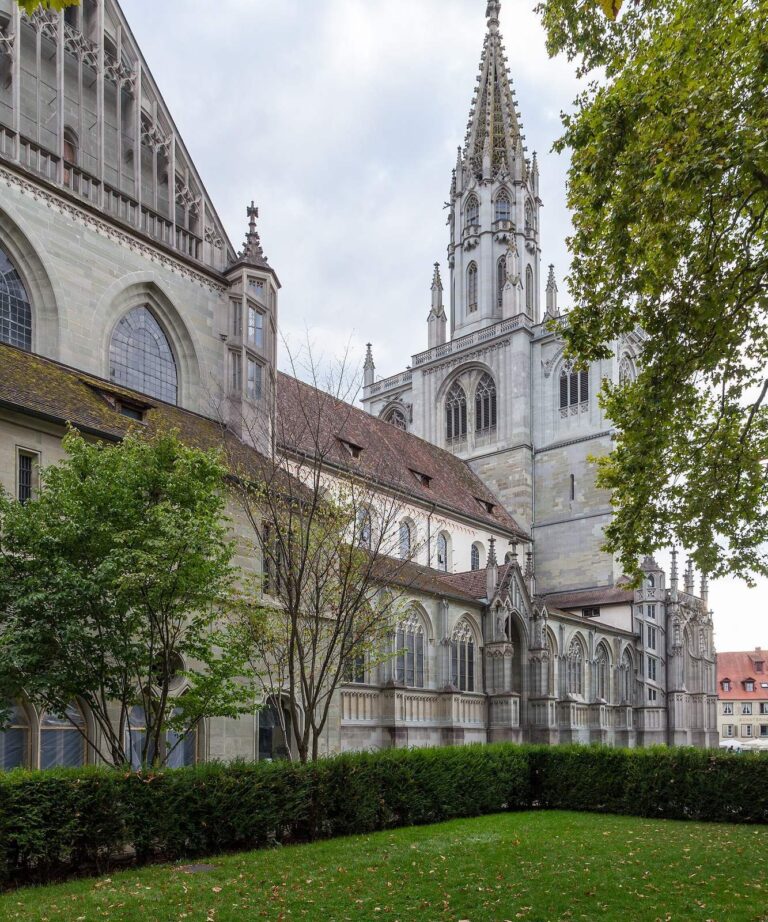
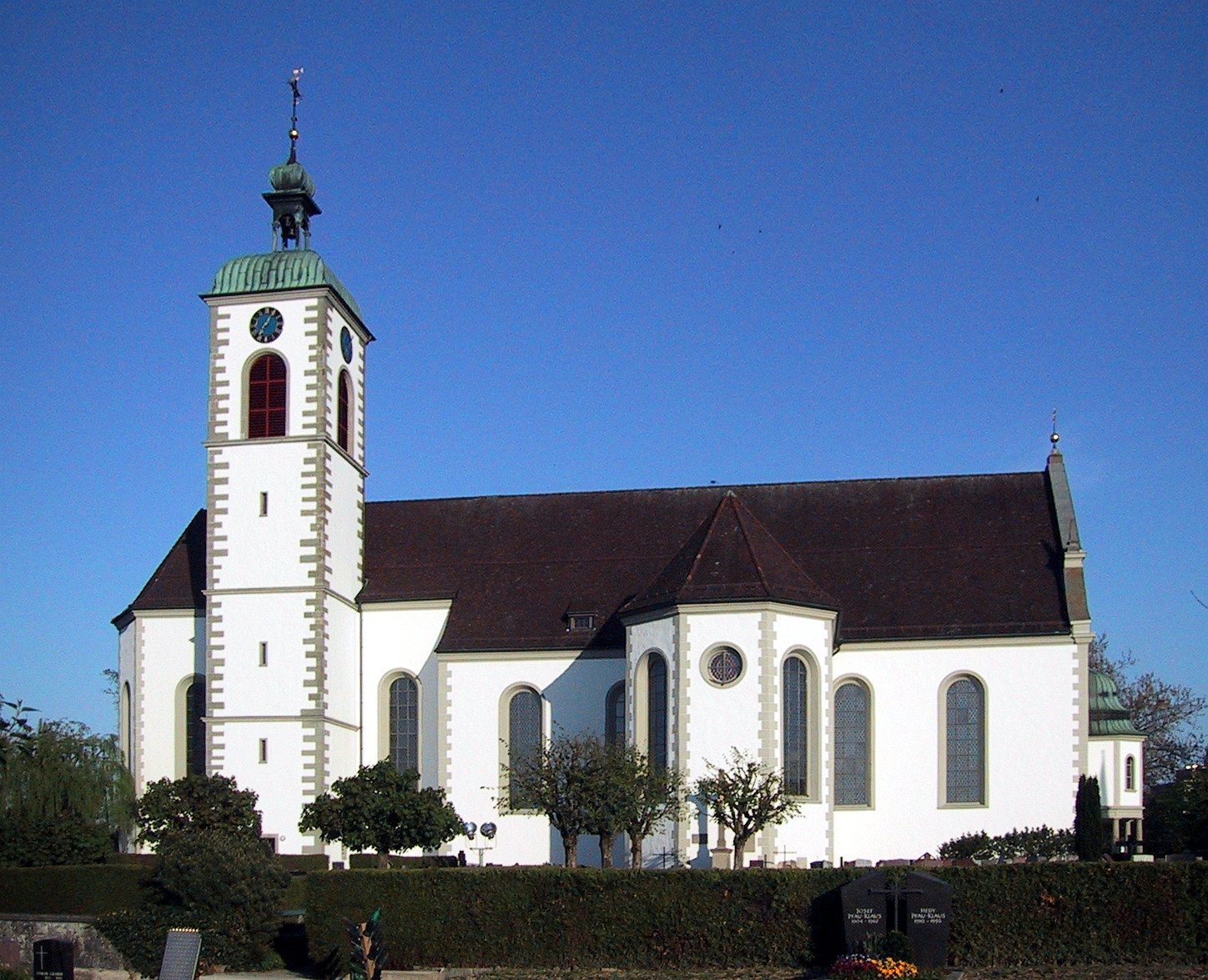
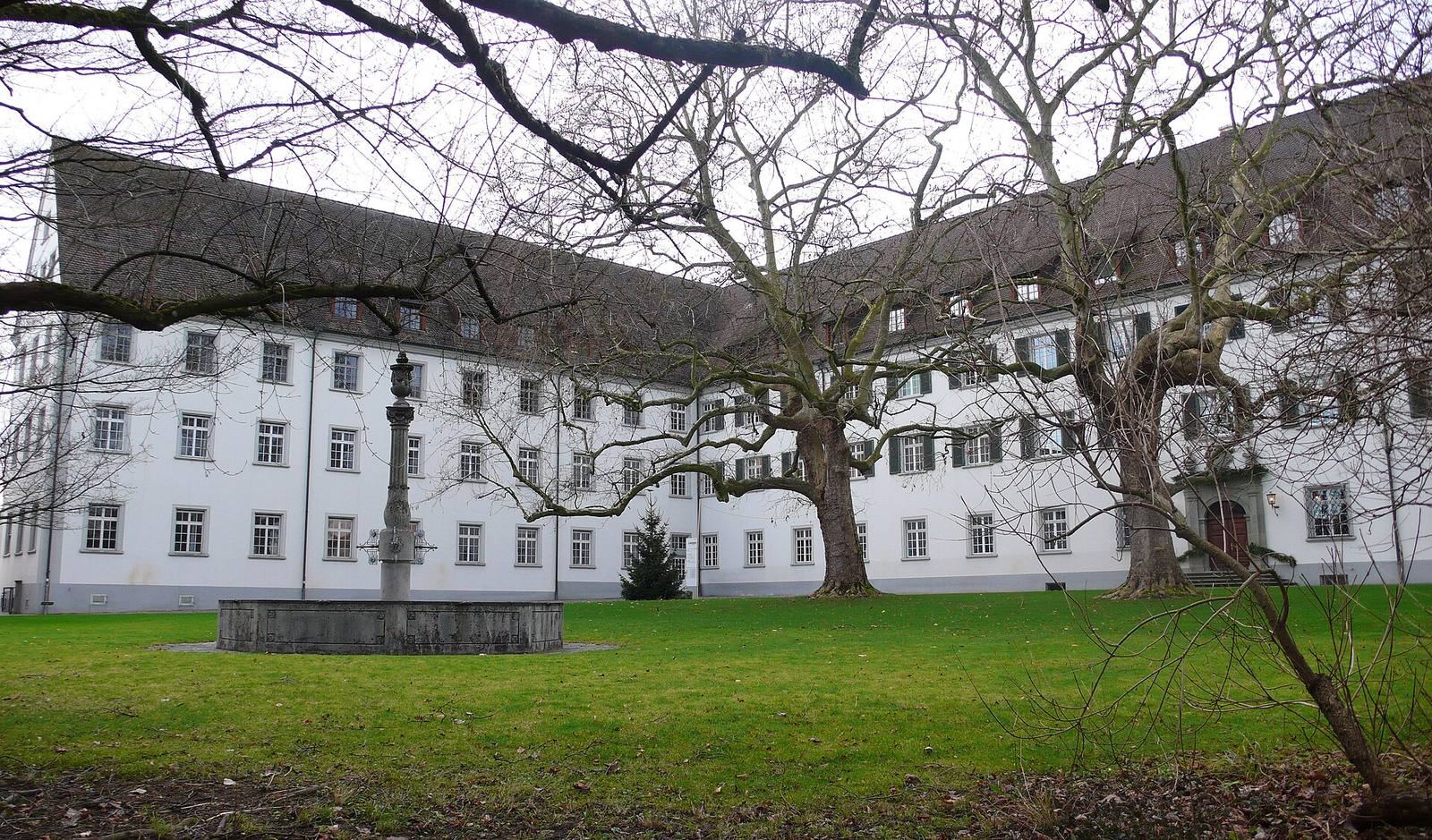
The former monastery complex includes an interior courtyard and a north wing associated with the basilica. Its church combines an early Baroque design with Rococo remodelling carried out in 1764. The surviving buildings and fittings also include elements that endured the 1963 fire and the subsequent reconstruction.
Church and monastery buildings
Abbey church
The church of Saints Ulrich and Afra was built between 1650 and 1653 in the early Baroque style. It was remodelled in 1764 in the Rococo style, an ornate form of art and architecture that developed in the eighteenth century. The fire of 1963 affected the building, but its surviving fabric includes the perimeter walls and grilles, the choir’s vaulted ceiling and the choir stalls. The church was reconstructed from 1963 to 1967.
Monastery complex
The former monastery includes an interior courtyard and a north wing associated with the basilica. Parts of the complex were remodelled in the Rococo style in 1764. The fire of 1963 damaged the monastery buildings, which were included in the reconstruction completed in 1967.
Chapel of the Mount of Olives
Built in 1760, the Chapel of the Mount of Olives contains a grotto-like scene arranged by Innozenz Beck. The composition includes about 250 original figures, each roughly 30 centimetres tall, carved from Swiss stone pine in a southeastern Alpine workshop around 1720–30. Much of the chapel’s wooden statuary survived the 1963 fire. The chapel also holds a miraculous crucifix and a Calvary, a representation of Christ’s crucifixion. Its ceiling painting, made by Franz Ludwig Herrmann in 1761, depicts Moses and the bronze serpent.
Interior fittings and collections
Paintings and sculpture
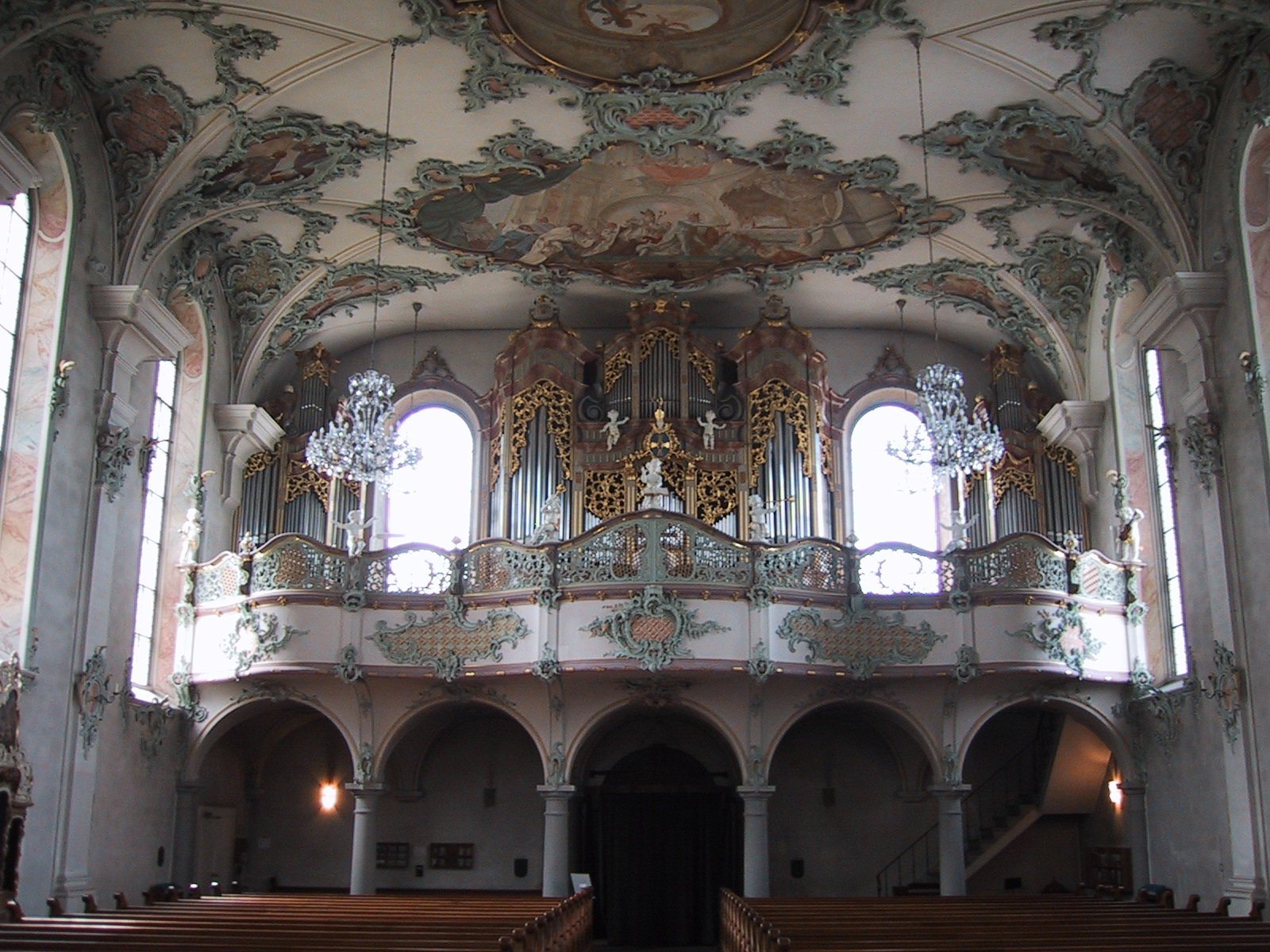
Herrmann’s church ceiling paintings show scenes from the life of Saint Augustine. Johann Jakob Hoffner made the choir screen in 1737, and Hans Christoph Schenk carved the larger-than-life statues of Saints Ulrich and Afra.
Organ and bells
Rieger built the church’s main organ in 1968. It has three manuals, or keyboards, and 36 stops, controls that select the sounds produced by its pipes. The tower holds seven bells. Six large bells made by Eschmann are tuned G°–B°–d′–f′–g′–b′, while a smaller bell made by Emil Eschmann sounds e″ and is rung on its own. The largest is the largest bell in the history of the Eschmann company.
Abbey objects and museum
The golden mitre associated with John XXIII’s gift to Abbot Lind is now displayed at Frauenfeld Castle. Since 1993, a small museum has occupied the top floor above the parish church’s sacristy. Its displays include objects from the former abbey and materials concerning the 1963 fire and the reconstruction that followed.