Vehn Castle: A Historic Estate and Chapel in Löhndorf, Germany
Site at a Glance
- Rating
- 5
- Popularity
- Very Low
- Country
- Germany
- Primary era
- Early Modern
- Eras represented
- Early Modern, Modern
- Civilizations
- Electorate of Cologne, Holy Roman Empire
- Site type
- Domestic
- Remains
- Castle
On this page6 sections
History
Vehn Castle is located in Löhndorf, a district of Sinzig in Rhineland-Palatinate, Germany. It first appears in a 1019 donation charter issued by Heribert, archbishop of Cologne from 999 to 1021. The charter transferred properties to Deutz Abbey, a Benedictine monastery in Cologne.
Fief holders and ecclesiastical change
After 1266, the farm and its lands were held as a fief, meaning property granted within a feudal relationship. The first holders were the burgraves of Landskron, noble officials associated with a castle and its territory. After 1370, the estate passed to the Lords Colve of Ahrweiler, and in 1564 to Wilhelm von Orsbeck. The von Hocherbach family held the fief from 1676 to 1795.
During French rule in the Rhineland, the state confiscated ecclesiastical properties and sold them at auction.
Chapel use and later ownership
When Löhndorf had neither a church nor a priest of its own, villagers held worship services in the castle chapel. After a parish was established and a village church built in 1830, the chapel was used only for private worship.
Bahlsen acquired the castle in 1965. It is now owned by a community of heirs from the von Nordeck and Bahlsen families.
Remains
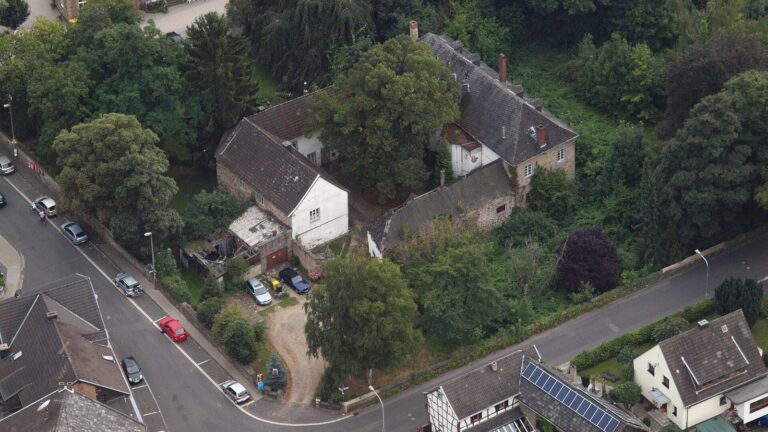
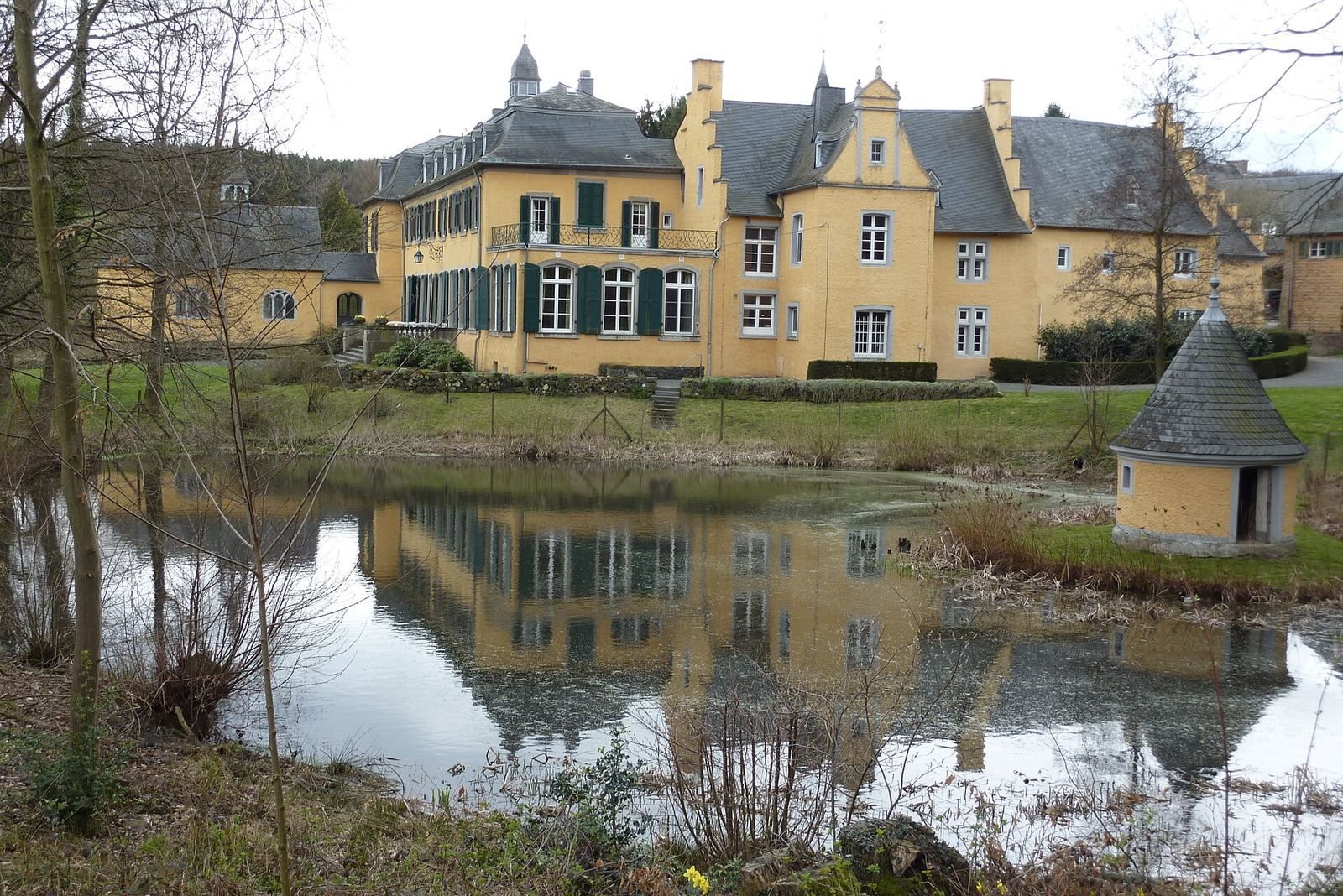
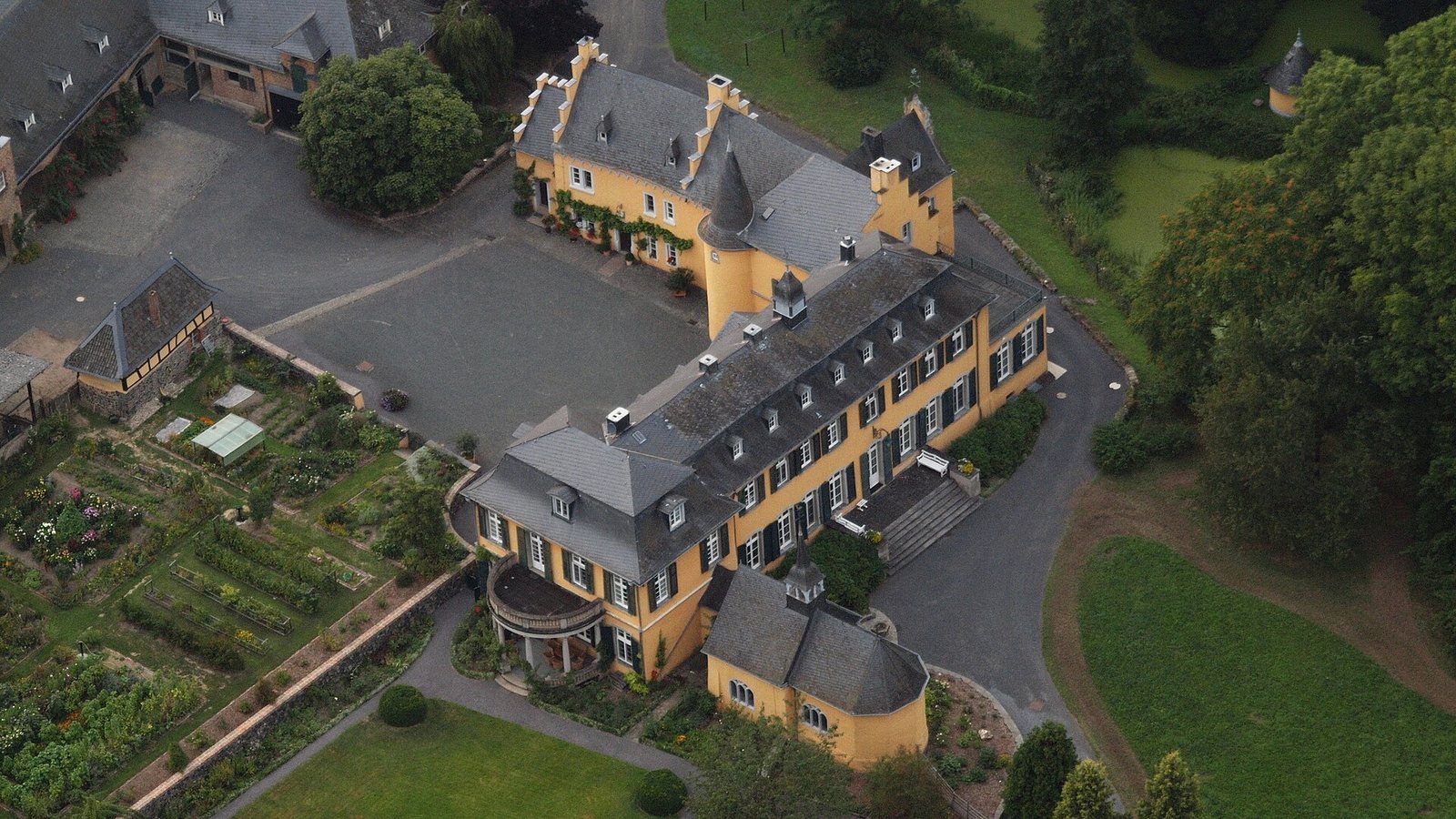
Set at the edge of a forest, the castle is arranged as a two-wing complex.
Castle complex
The north wing bears the date 1753. Major alterations in the first half of the nineteenth century added stepped gables and plastered part of the complex. At the entrance to the main wing is the von Hocherbach family coat of arms, and the wing also carries a four-sided roof turret.
Chapel
The present chapel building dates to the seventeenth century and has unusual proportions. Its nave, the church’s main area, is 3.95 metres long and 2.75 metres wide. The choir, traditionally the area for singers and clergy near the altar, measures 5.65 metres by 2.75 metres. The only earlier chapel furnishing still visible on site is a 1690 Baroque altar, in the artistic style that flourished in Europe from the seventeenth into the eighteenth century.