Bodendorf Castle: A Water Castle Guarding the Aachen-Frankfurt Military Road
Site at a Glance
- Popularity
- Low
- Country
- Germany
- Primary era
- Medieval
- Eras represented
- Medieval, Early Modern
- Civilizations
- Holy Roman Empire
- Site type
- Military
- Remains
- Castle
On this page5 sections
History
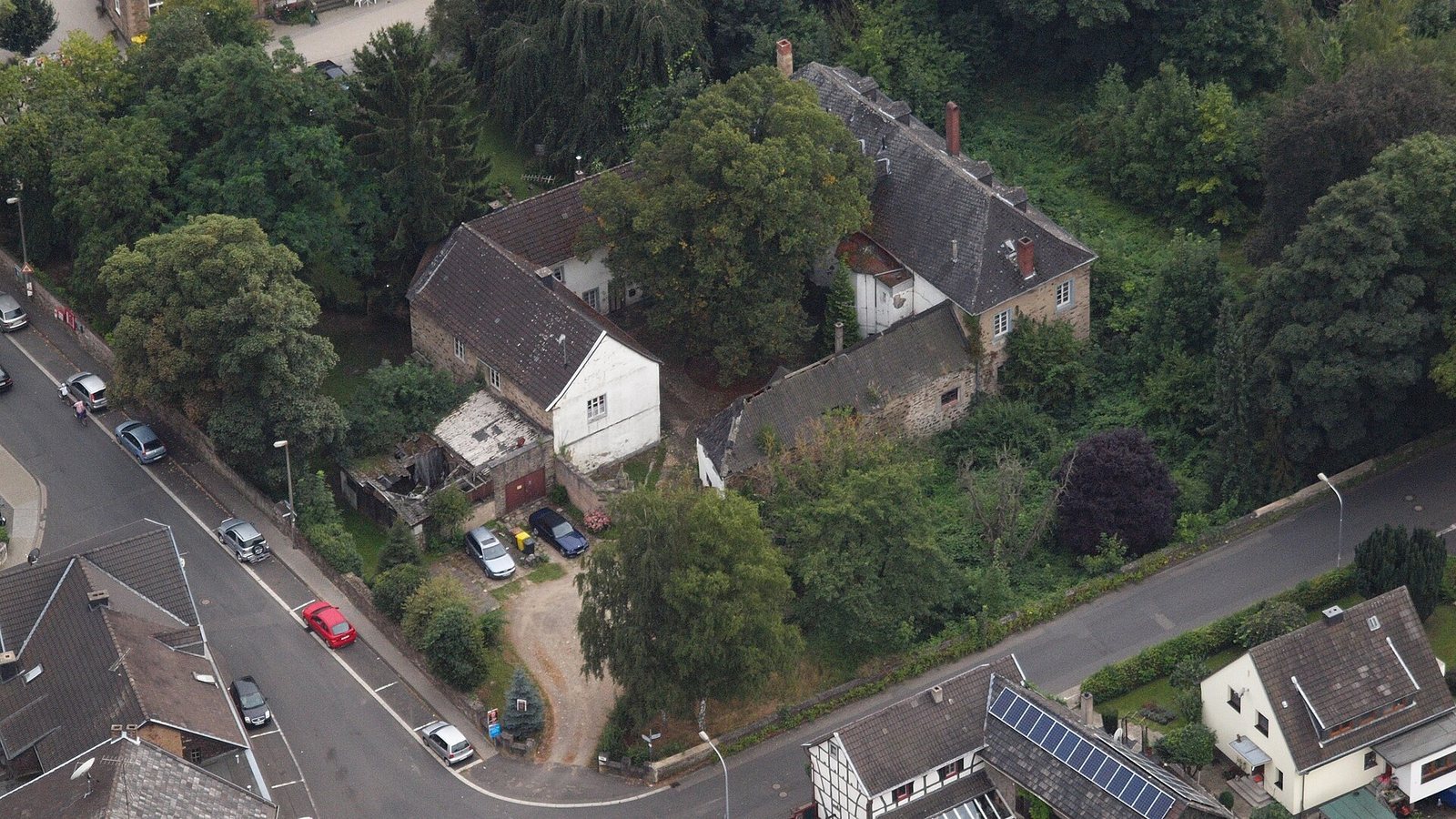
Bodendorf Castle is a water castle on relatively level ground in Bad Bodendorf, now part of Sinzig in Rhineland-Palatinate, Germany. Nicolo von Bodendorf built it in the early thirteenth century. Together with Landskron Castle, it guarded the Aachen-Frankfurt military road, which ran past the site.
Owners and early use
The knights of Bodendorf held the castle from about 1200 to 1400, followed by the knights of Randerode from about 1400 to 1450. The Spies von Büllesheim family owned it from 1450 to 1655. Calenius held the castle as collateral from 1600 to 1635, then owned and lived in it from 1635 to 1750. The Lords of Randerath also owned the castle at a later point.
Disrepair and wartime attacks
The castle stood empty and fell into disrepair between 1533 and 1608, before being rebuilt. In 1642, during the Thirty Years’ War, a major European conflict fought from 1618 to 1648, imperial troops under General von Weerth plundered and burned the castle and village. The castle was rebuilt after the war. Further plundering and arson took place in 1667 and 1676, and French troops attacked it in 1692.
Later ownership and use
The Oekoven family owned the castle from 1750 to 1803. The Lade family held it from 1830 until the mid-nineteenth century, followed by Joseph von Groote in the mid-nineteenth century. Franz Freiherr Spies von Büllesheim Maubach owned it from 1912, and the Vanselow and Hunzinger families owned it from 1940.
In 1929, alternative-medicine practitioner Matthias Leisen acquired the castle after discovering a nearby radium-bearing spring. He used its water to treat patients at the castle.
Remains
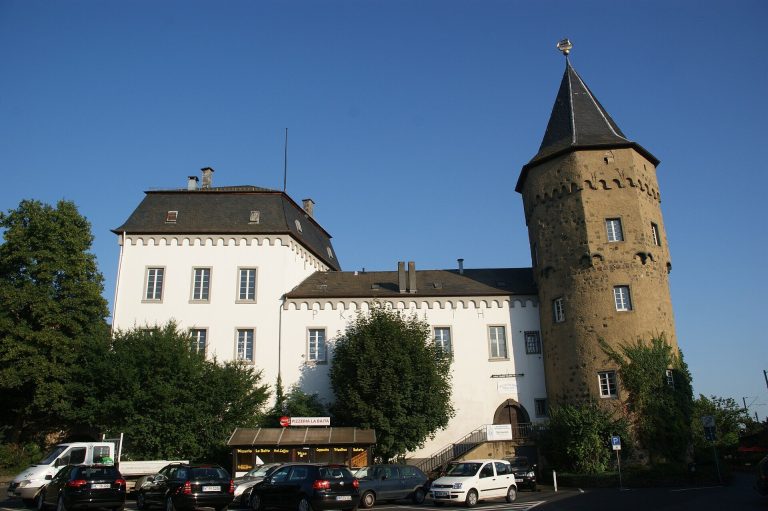
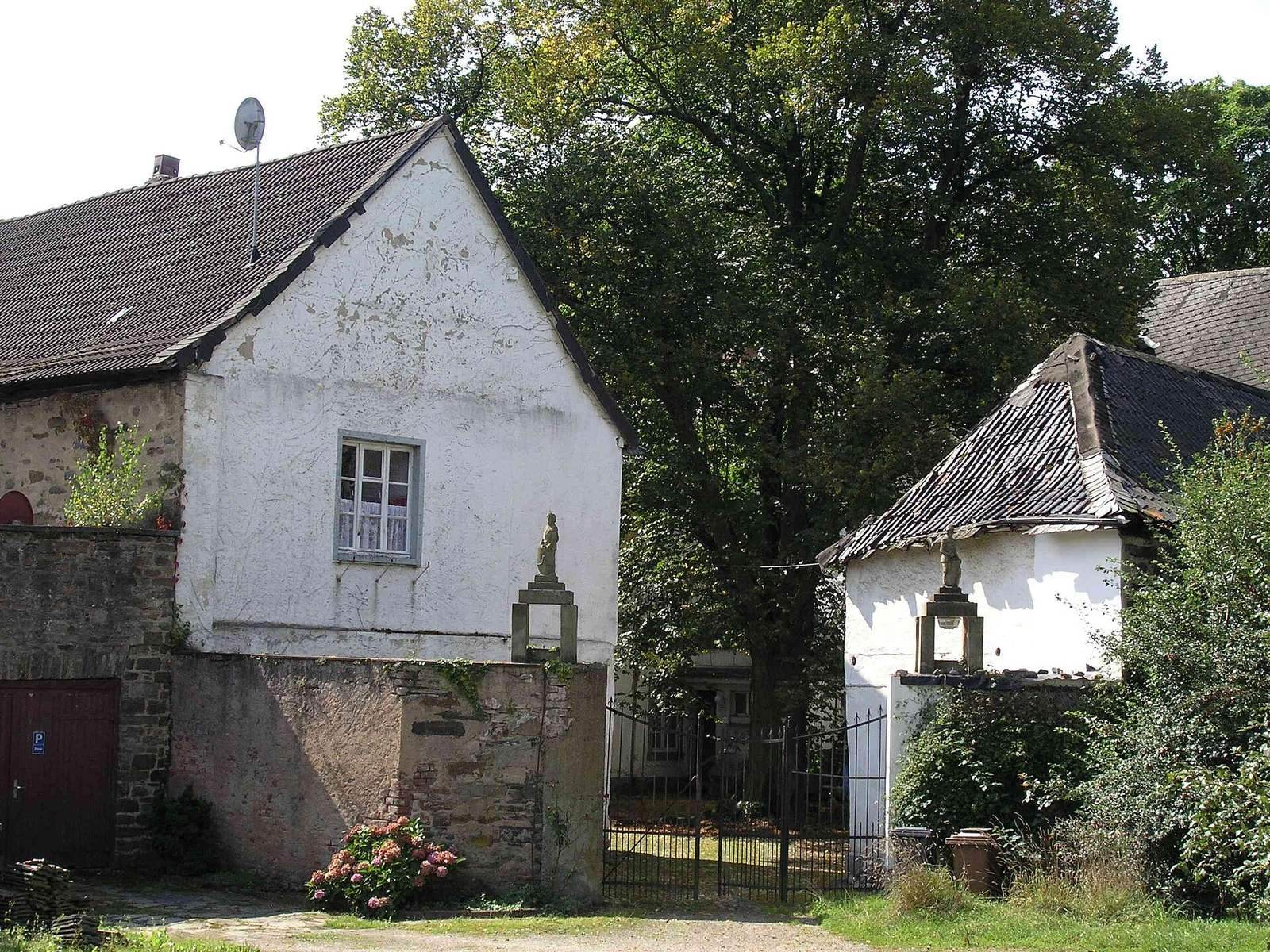
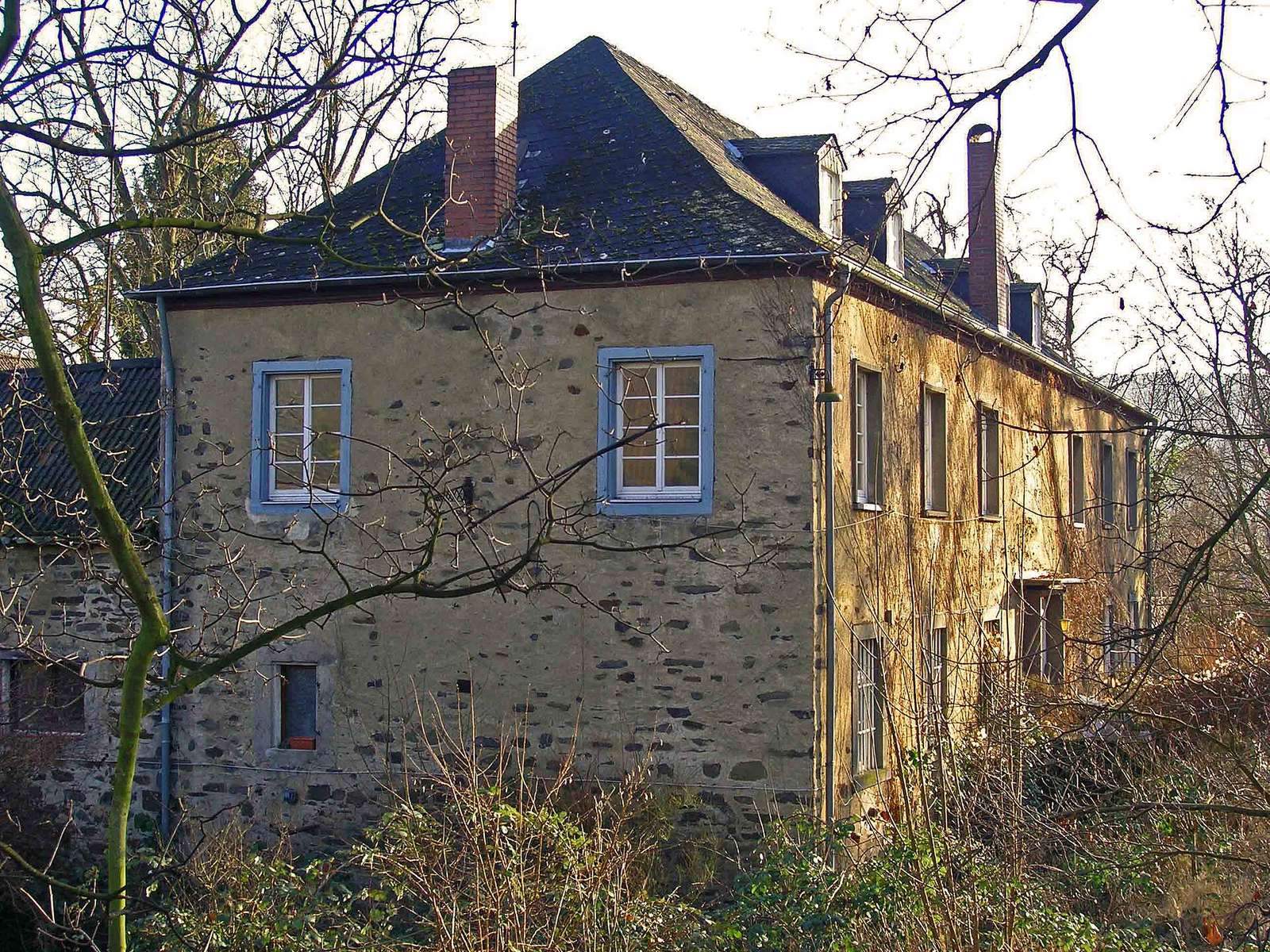
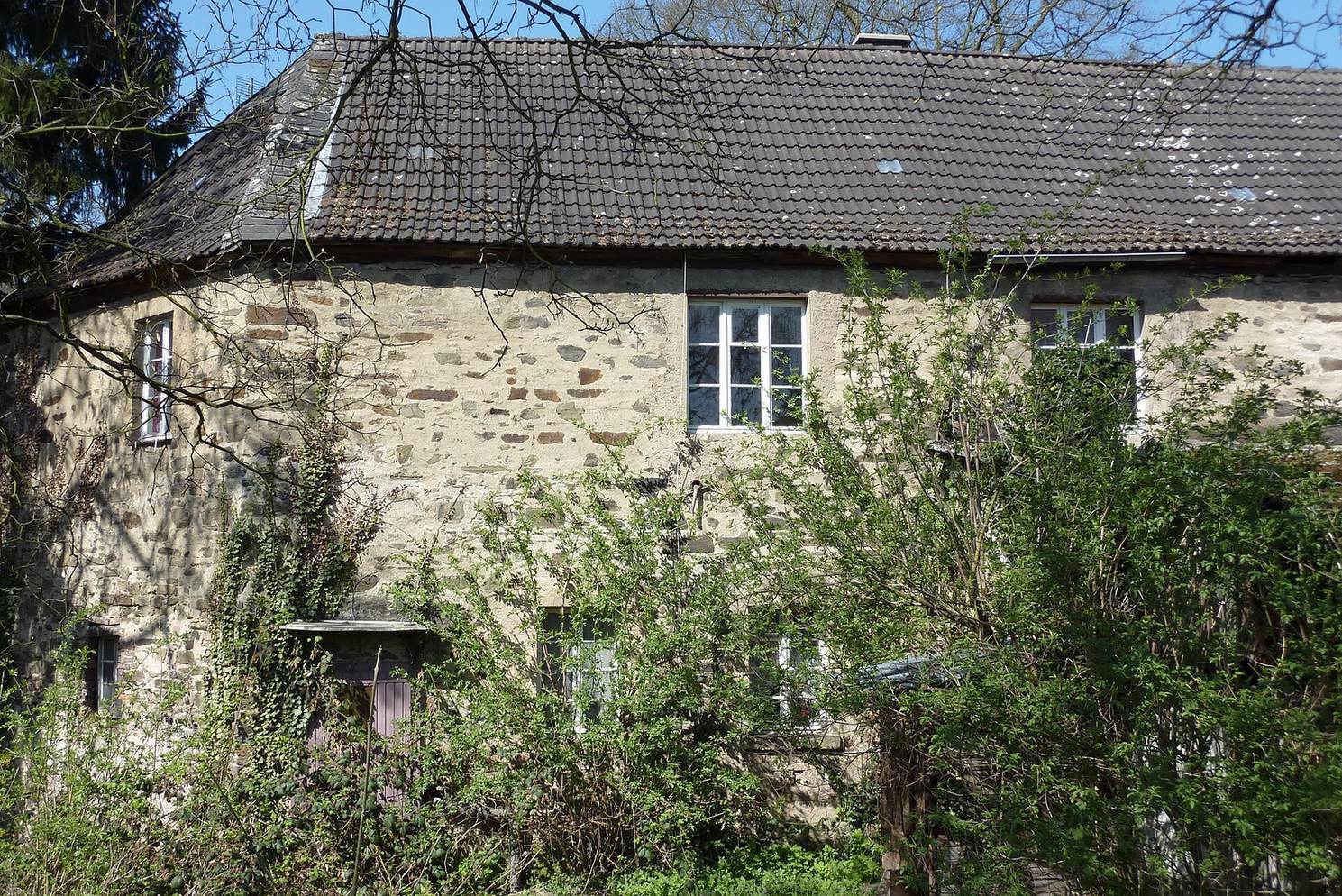
The surviving castle has a four-wing plan and a hipped roof. A surrounding wall and moat were added in 1772. The tower had fallen into disrepair and was demolished soon afterward, while the moat was later filled in. The inner courtyard was redesigned in the eighteenth century with cobblestone paving and a large lime tree.