Castel Mancino: Ruins of a Medieval Defensive Castle in Italy
Site at a Glance
- Popularity
- Medium
- Country
- Italy
- Primary era
- Medieval
- Eras represented
- Medieval
- Civilizations
- Unclassified
- Site type
- Military
- Remains
- Castle
On this page4 sections
History
The site now known as Castel Mancino is a ruined medieval castle in Italy, built by the Borrello family between the tenth and eleventh centuries to defend the area from incursions described as barbarian.
Borrello foundation and early lordship
Around the middle of the twelfth century, control passed to the Di Sangro family. After the 1268 Battle of Tagliacozzo, fought during Charles I of Anjou’s struggle with Conradin, a German Hohenstaufen prince who claimed the Kingdom of Sicily, Charles confirmed the Di Sangro family’s possession of the fief, a territory held under the feudal system.
In 1283, the D’Aquino family took over governance of the castle and a wider group of territories. These included Scanno, Castrovalva, the fortified settlement of Opi, part of Castel di Sangro, and the localities of Collangelo, Iovana, and Civitella.
Abandonment and later ownership
From the fourteenth century, changing socioeconomic conditions and damaging earthquakes contributed to the castle’s gradual abandonment. The earthquake of 1456 was especially severe. Around the middle of the fifteenth century, the fief and castle passed to the D’Avalos family, who held them until the end of the sixteenth century, when the Di Sangro family regained the territories.
Several noble families held the fief in succession from 1630. The Massa family of Sorrento was the last to rule the area, remaining in power until feudalism was abolished in 1806. The castle’s deterioration accelerated during the seventeenth century. In the twentieth century, shepherd-poet Cesidio Gentile first gave its enclosure the name Castel Mancino.
Remains
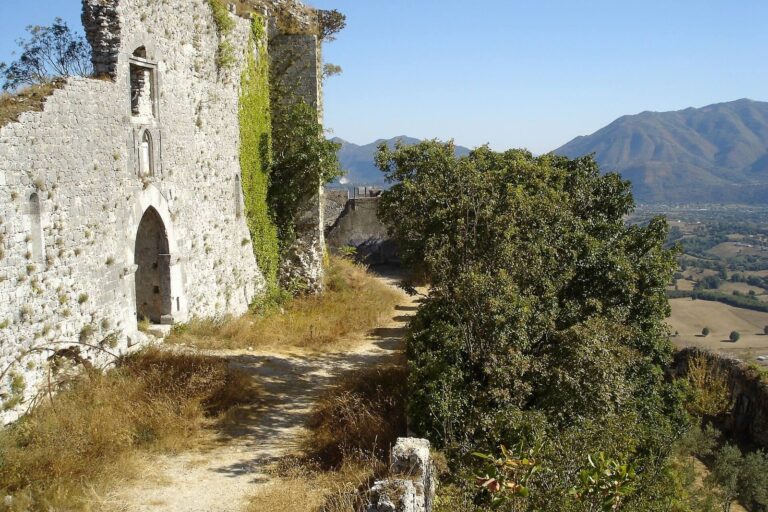
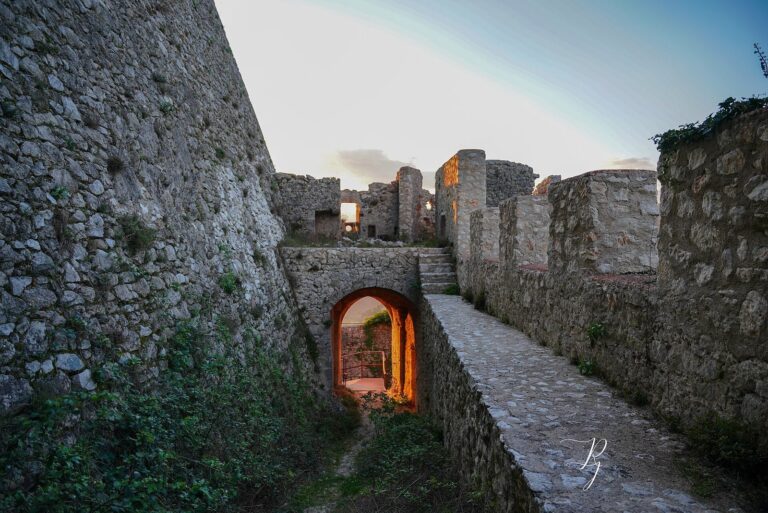
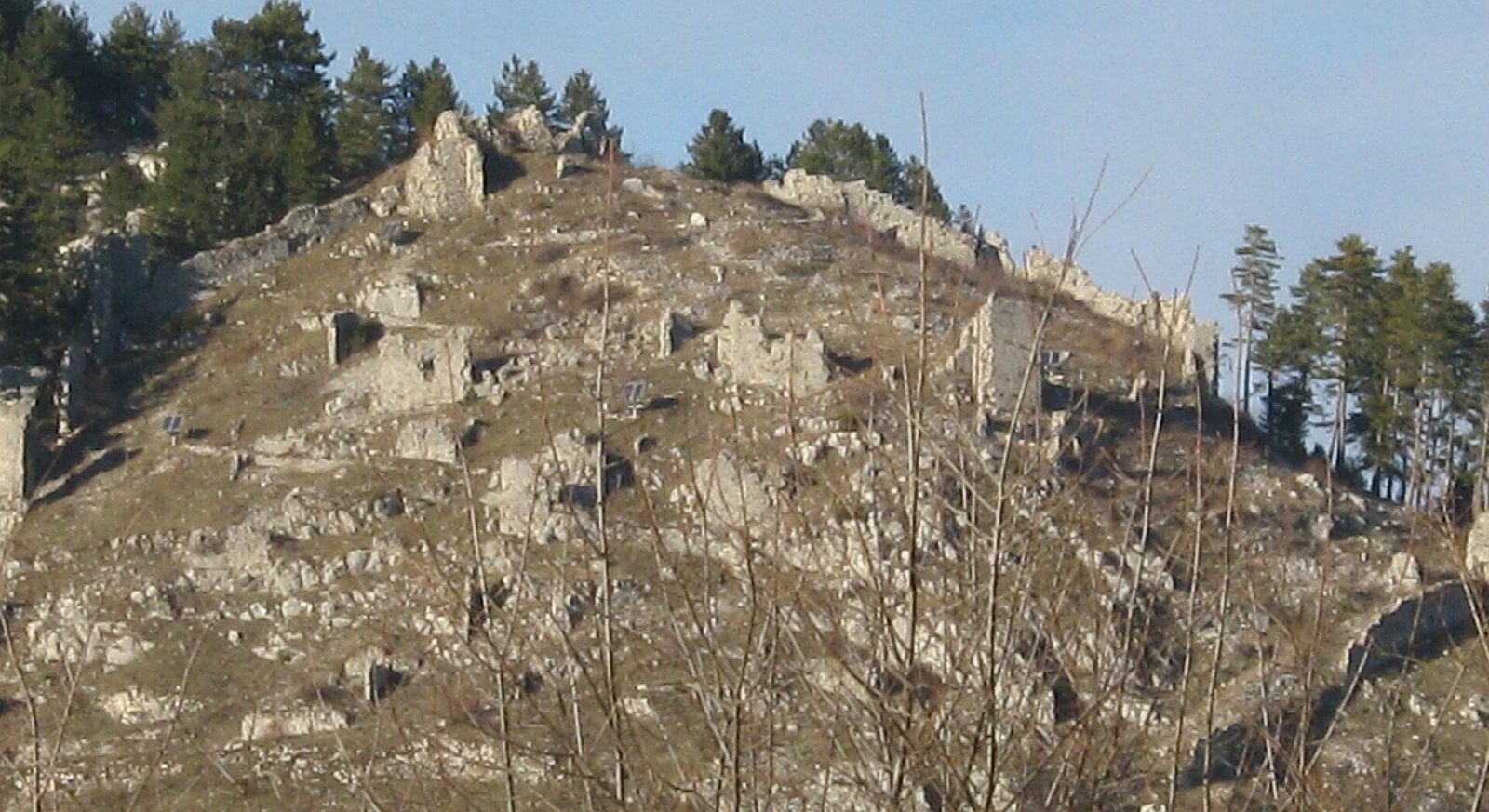
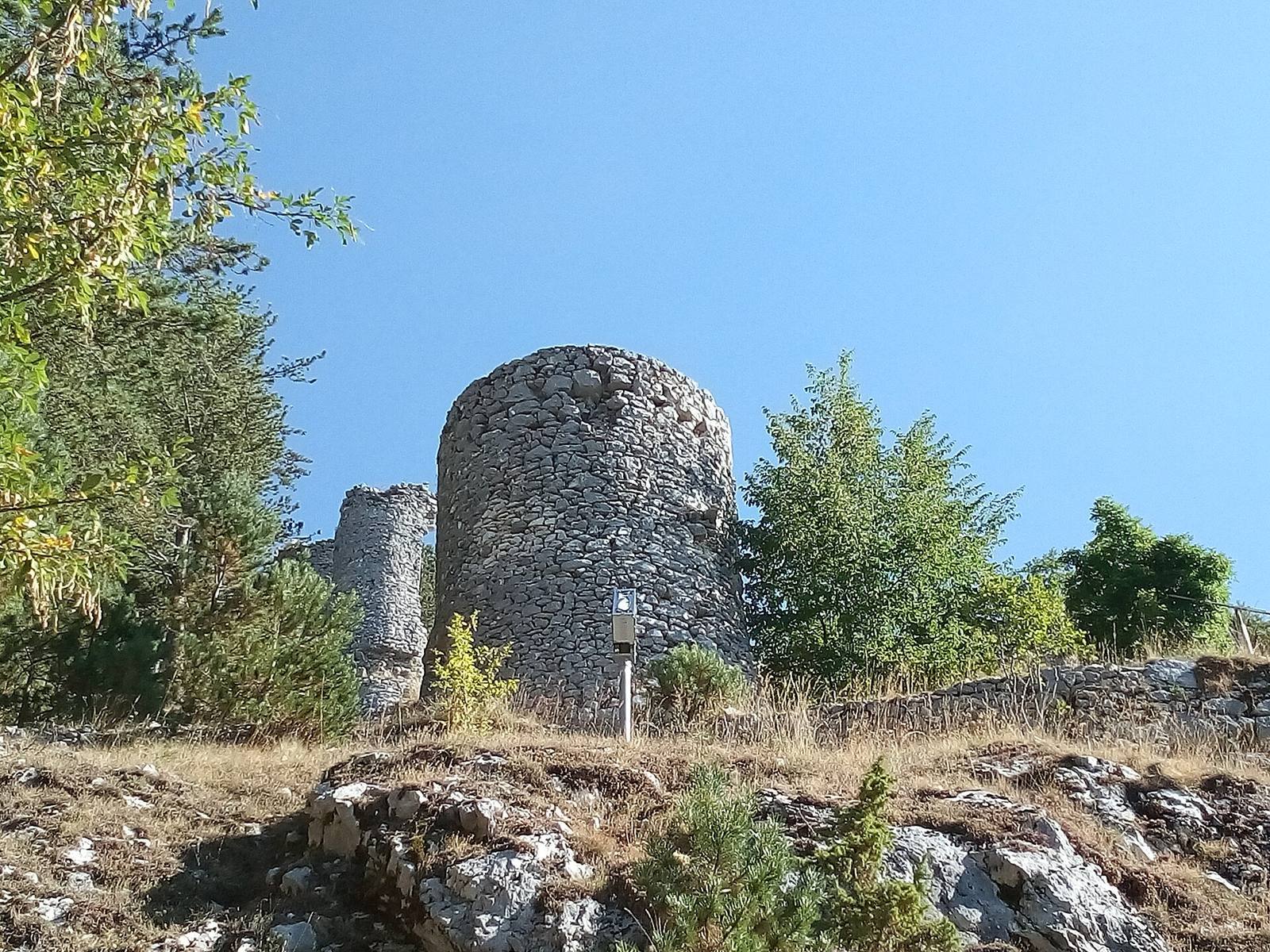
The castle stood at Colle del Castello, on the summit of the Colli dell’Oro above the modern town centre, at an elevation ranging from 1,275 to 1,332 metres above sea level. At its greatest extent, it comprised a rectangular keep, the castle’s principal fortified tower, and a large perimeter wall fitted with five watchtowers. The enclosure and towers survive as ruins.