Veere City Hall: A Late Gothic Civic Building and Carillon
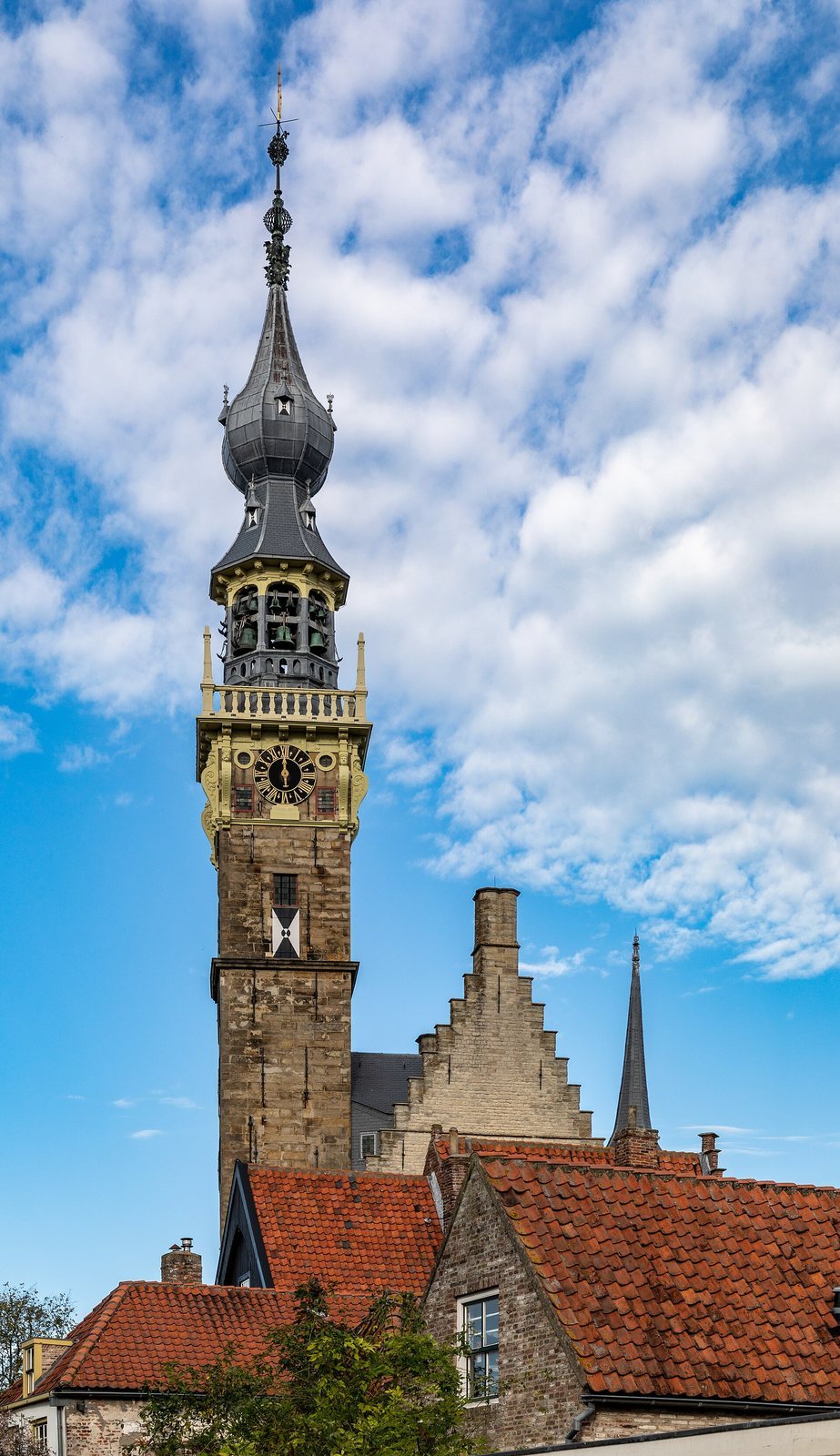
Site at a Glance
- Rating
- 4.6
- Popularity
- Medium
- Country
- Netherlands
- Primary era
- Medieval
- Eras represented
- Medieval, Early Modern, Modern
- Civilizations
- Duchy of Burgundy, Dutch
- Site type
- Civic
- Remains
- Town Hall
On this page11 sections
History
Construction and civic use
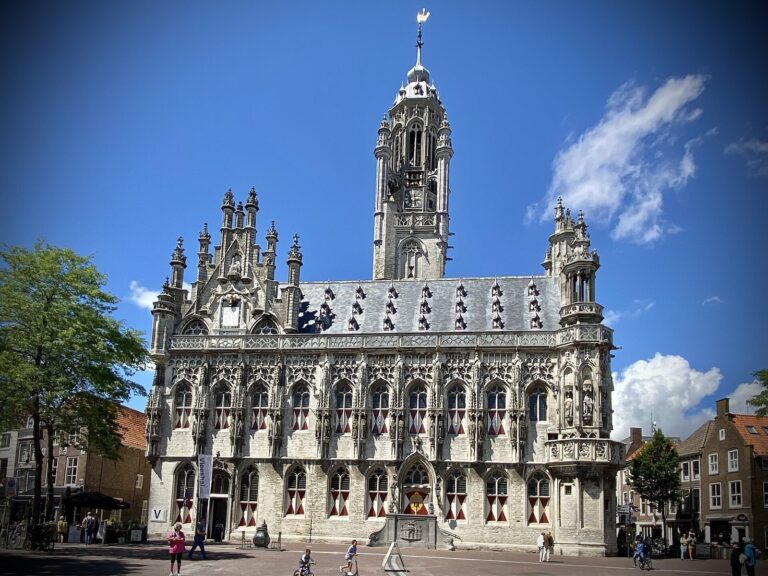
Veere City Hall is a late Gothic civic building on the Markt in Veere, Netherlands. Hendrik IV van Borsele, Lord of Veere, commissioned it, and construction began in 1474 under Flemish builder Everaert Spoorwater. Work was completed in 1477. The building is also attributed to Kelderman the Elder, a member of a family of architects and builders active in the Low Countries.
The courtroom on the ground floor was used by Veere’s municipal government to administer justice until 1811. The building now houses Museum Veere and is also used for weddings.
The tower and early carillon
A clock made by Jan Drake was installed in Veere’s earlier city hall in 1403, together with an hour bell weighing about 700 pounds. A smaller group of bells arranged to play short sequences may have existed by the fifteenth century. City accounts from 1465–66 and 1473–74 refer to chime components, while an eight-bell chime and a mechanism for playing it automatically are recorded by 1584.
Around 1591, the city hall’s tower was demolished and replaced with a design by Adriaen de Muur of Bruges. In 1594, twenty bells by Peter II van den Gheyn were installed with a new clock and a baton keyboard, a set of hand-operated levers for striking bells. The tower’s bell music developed through further changes over the following centuries.
Recasting and decline
By about 1642, the Hemony brothers had developed the ability to make accurately tuned carillons, sets of tuned bells played by keyboard or automatic mechanism. Veere did not acquire an instrument by the brothers. After the town’s bells had deteriorated, Peeter van den Gheyn of Leuven cast a new set of 35 in 1735, and a larger playing drum, which triggers the bells automatically, was fitted. Cyprianus Crans replaced a damaged bell in 1748. In 1790, Andreas Jozef van den Gheyn replaced nine bells that were not adequately tuned, including Crans’s.
The carillon could be played by hand until 1850, after which its baton keyboard fell out of use and the instrument deteriorated. The Van Bergen foundry replaced three bells in 1872. The carillon then played only automatically, until that mechanism also failed. In 1908, a gift from Queen Wilhelmina, Marquise of Veere, to the town’s mayor made repairs possible.
Wartime and modern restoration
The carillon was out of operation during the war and until 1946. Its bells remained in the tower despite wartime requisitions. A ruling made at the 1907 Second Hague Peace Conference prohibited the seizure of historically valuable artworks in enemy territory. The Veere Foundation established a committee that raised money for repairs, with advice from Rotterdam carillonneur Ferdinand Timmermans. Petit & Fritsen replaced ten bells, and the hand-operated keyboard was restored.
In 1972, carillon specialist Jaap van der Ende advised on a further restoration by the Eijsbouts bell foundry. Three repaired historic bells by Van den Gheyn returned to the tower; Eijsbouts also made replicas of Van den Gheyn bells and twelve new small bells in the higher musical register. The return of the distinctive 1594 hour-striking bell was envisaged. In 2003, the clockwork was overhauled, the keyboard replaced, and the bells rehung. Restorations of the city hall took place in 1885, 1930–35, and 2013–14; during the latest work, Eijsbouts also inspected the carillon. The building became a national monument in 1967 and is included in the Dutch Government Service for the Preservation of Monuments’ Top 100.
Remains
Exterior
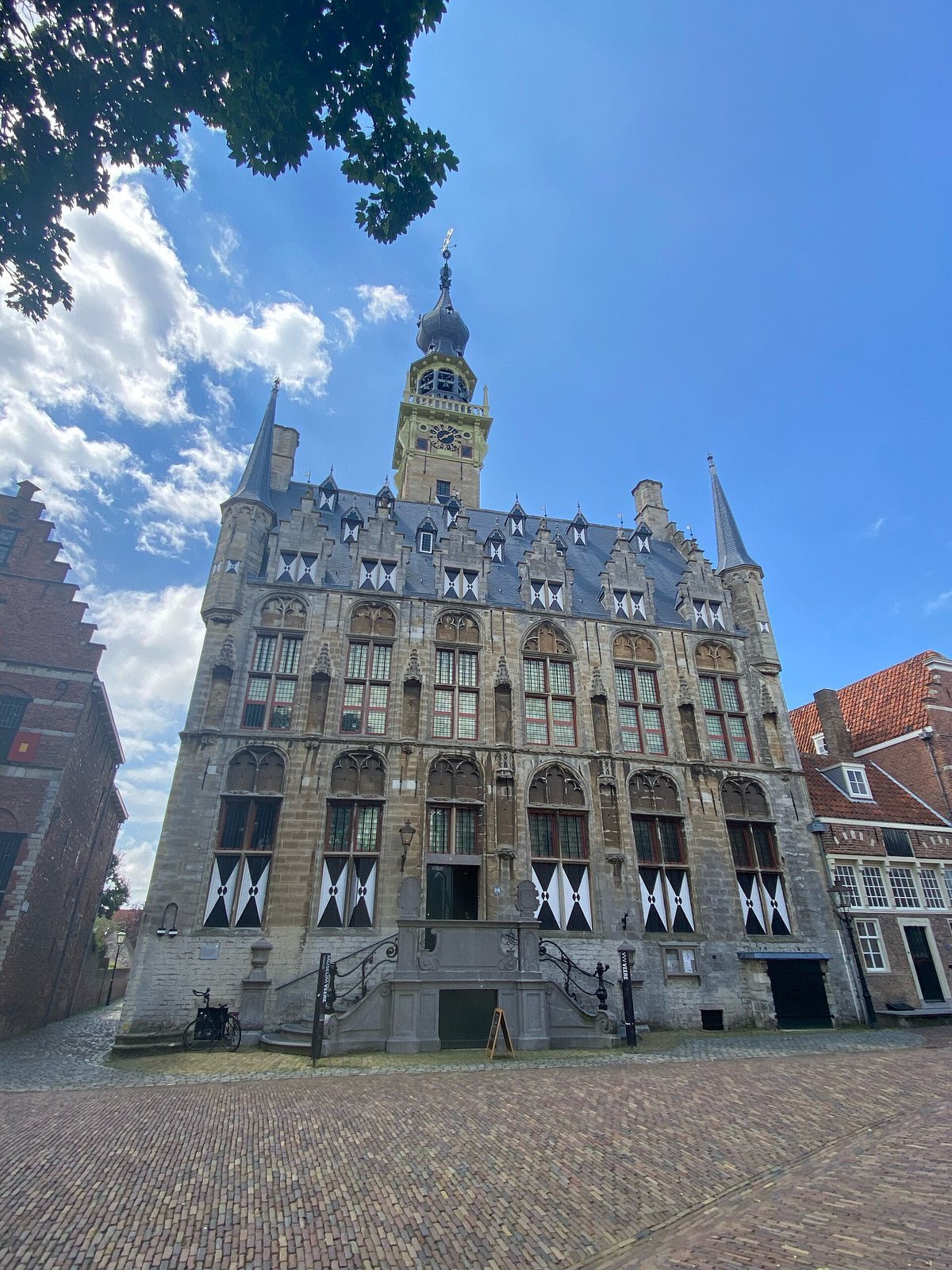
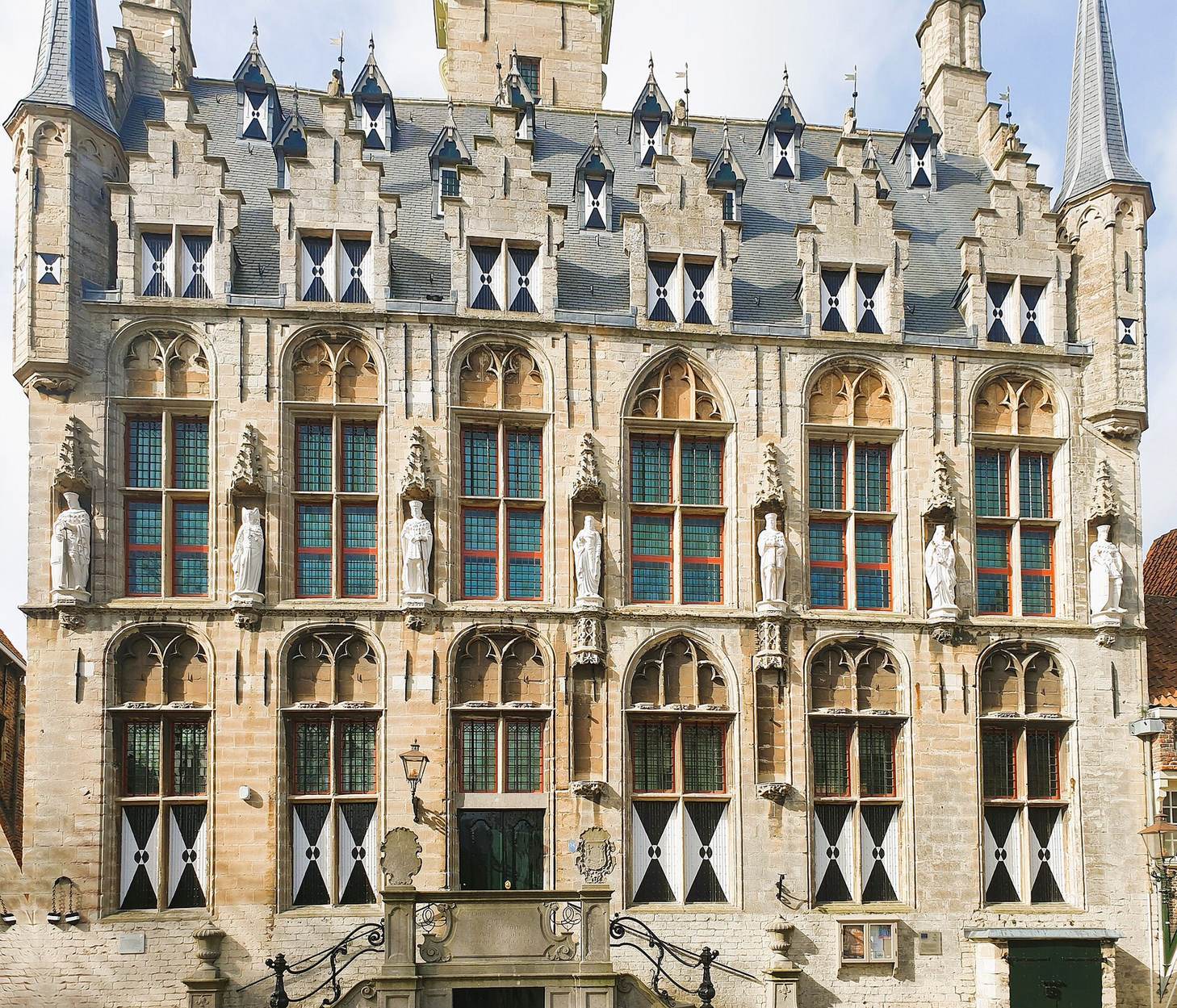
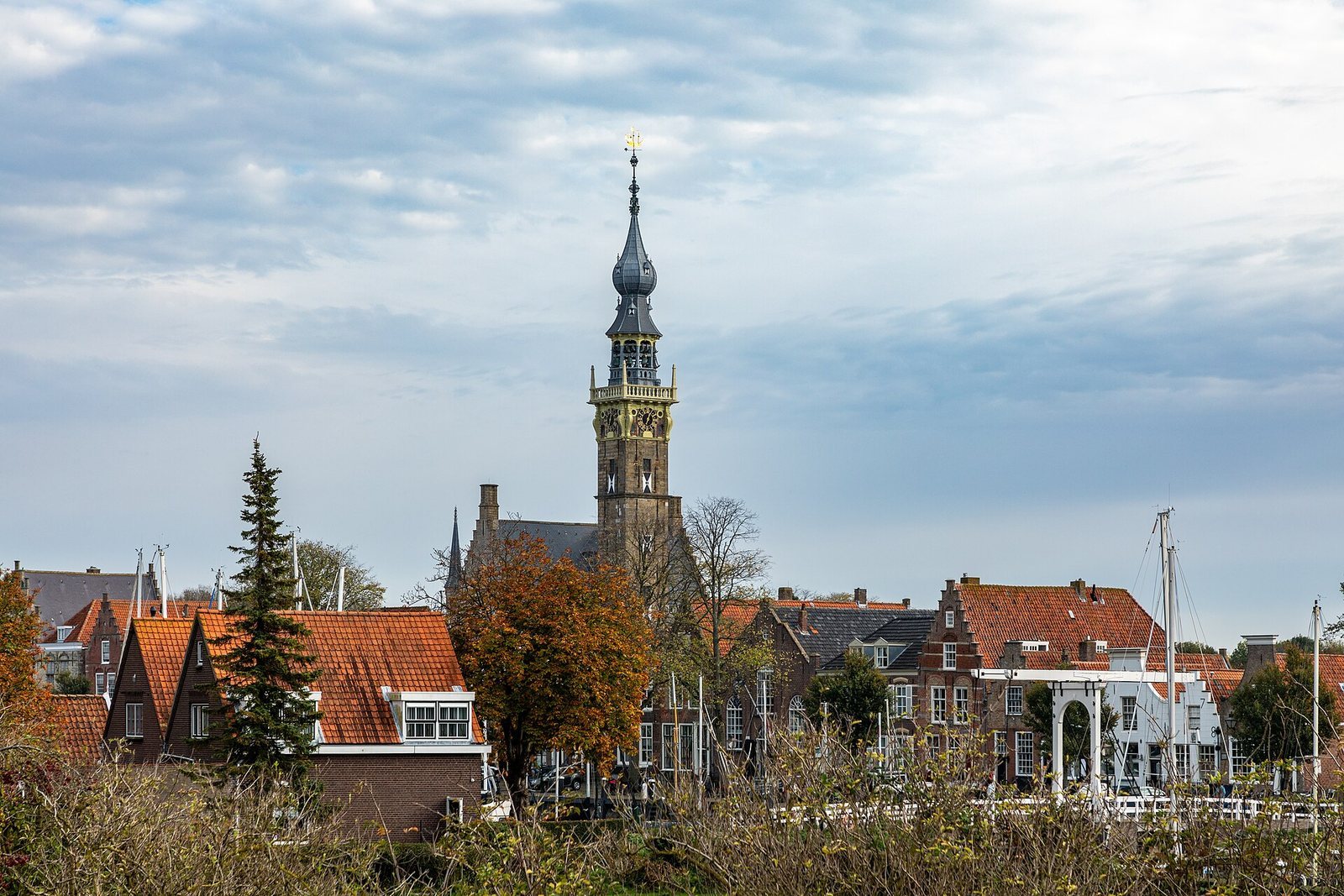
The city hall has a stone façade and a slate roof pierced by numerous dormers. A stair at the entrance dates to the nineteenth century. Seven projecting niches divide the façade into two levels and hold statues of four lords and three ladies of Veere: Henri, Jacqueline, Adolphe, Charlotte, Wolfard, Jeanne, and Philippe. Octagonal turrets flank the façade, each with three rows of small windows. Above them, the belfry, dated 1595, rises beneath an onion dome and contains the carillon.
Interior and museum
The ground-floor courtroom and a wedding room on the first floor remain among the building’s principal interior spaces. Museum Veere’s permanent exhibition includes a gilded silver cup associated with Maximilian of Burgundy, a sixteenth-century nobleman and Lord of Veere.
Carillon
Bells
The carillon has 47 bells. Its lowest bell sounds G1 and weighs about 540 kilograms. The listed groups include 17 bells cast by Peeter van den Gheyn in 1734–35, nine by Andreas Jozef van den Gheyn in 1790, two by Petit & Fritsen in 1948, and eighteen, mainly in the higher register, cast by Eijsbouts in 1972. Peter II van den Gheyn’s hemispherical hour-striking bell, made in 1594, was removed to the museum and later returned to the tower.
Mechanism and playing
The automatic drum’s melodies change three times a year and draw on old songs, psalms, and hymns. They usually include a song from Adriaen Valerius’s collection, reflecting his residence in Veere. During former carillonneur Kees van Eersel’s tenure, nearly the whole collection was played on the drum over time. The drum sounds at the hour and half-hour, followed by the hour strike on the hour or the half-hour bell at the half-hour. It operates day and night, and a motor winds its driving weights.