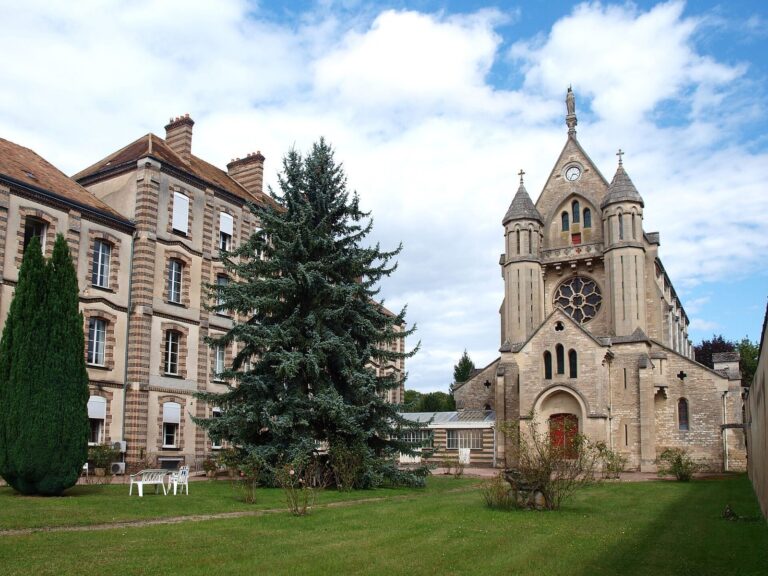
Vauluisant Abbey: A Cistercian Monastery in France
Site at a Glance
- Popularity
- Medium
- Country
- France
- Primary era
- Early Modern
- Eras represented
- Early Modern
- Civilizations
- French
- Site type
- Religious
- Remains
- Monastery
On this page16 sections
History
Vauluisant Abbey was a Cistercian monastery in the Alain valley of France, between the forests of Othe and Lancy. Founded in 1127 by monks from Preuilly, it belonged to the diocese of Sens and was dedicated to Our Lady. The Cistercians were a monastic order centered on communal religious life and strict observance of its rule.
Foundation and early growth
In 1125, Hugh I of Champagne gave up his counties to his nephew Thibaut IV as he left to join the Knights Templar, a medieval religious-military order, in the Holy Land. The Cistercians then entrusted responsibility for Vauluisant to Preuilly, which had ties to the new regional ruler. The Traînel family, previously linked to Pontigny through its lordship of Venisy, also shifted its religious support toward Preuilly. Vauluisant’s institutional lineage ran through that abbey, although monks of Pontigny may have begun the initial foundation.
On the advice of Bernard of Clairvaux, an influential Cistercian leader, monks from Preuilly established the monastery in 1127 near the boundary between the royal domain and the county of Champagne. They named the place “Shining Valley,” a meaning reflected in the name Vauluisant. By 1 April 1129, work had progressed enough for Henri Sanglier, archbishop of Sens, to consecrate a modest oratory. The abbey was fully operational by 1140, and its first church was consecrated in 1144. A later church was built around the turn of the twelfth and thirteenth centuries, and its choir was rebuilt several decades afterward. In 1149 the community established a daughter monastery at Varennes, a house founded from and institutionally linked to Vauluisant.
Land, roads and production
The community prospered for about two centuries as both a religious center and a large agricultural enterprise. Its first land acquisitions lay in southern Courgenay, while knights and lords initially obstructed expansion into the north. By the early fourteenth century, the estate extended across Courgenay, into much of Lailly and to more distant properties. The monks established farms, known as granges, at Beauvais, Toucheboeuf, Livanne, Cérilly, Armentières, Loges, Bernières, Beaulieu and Beauregard.
Vauluisant stood beside a major road running from Provins through Traînel toward Troyes, and another route connected it directly with Sens by way of La Charmée. In the twelfth century, the abbey lay between the fair towns of Provins and Troyes and the church center of Sens, where its monks maintained urban residences. The main road lost importance after Nogent entered the county of Champagne in the thirteenth century; a route between Nogent and Villeneuve-l’Archevêque offered only a limited replacement.
The estate’s work extended beyond farming. Its resources supported ironworking, quarrying and tilemaking, with timber from nearby forests supplying fuel for ironworks and kilns. Production exceeded the community’s needs, and the monks sold surplus goods in Troyes, Provins and Sens.
Warfare and rebuilding
During the Hundred Years’ War, repeated attacks and pillaging damaged the abbey, and its mills were destroyed. Repairs began in the mid-fifteenth century as royal authority recovered under Charles VII. Abbot Antoine Piscator undertook work on the ruined monastery.
After Antoine Pierre was elected abbot in 1502, Vauluisant regained prosperity and underwent enlargement and transformation. King François I visited several times, and Jacques de Savoie, the second duke of Nemours, was born at the abbey in 1531.
Commendatory rule and religious conflict
In 1534, Odet de Coligny displaced the community’s elected abbot and became Vauluisant’s first commendatory abbot. An abbot of this kind held the abbey’s revenues without necessarily directing its monks. Coligny later joined the Reformed Church, a Protestant tradition shaped by the Reformation, and was excommunicated. The commendatory arrangement contributed to the community’s spiritual and financial decline.
After French defeats at Pavia and Saint-Quentin, the Valois monarchy imposed heavy payments on the Church as it sought money to suppress the Protestant revolt. Vauluisant sold many of its farms, including Singerie, also called Pierre aux Sièges, and Perthe. These long-term transfers allowed the abbey to buy the properties back within a century.
During the French Wars of Religion, the sixteenth-century conflicts between Catholics and Protestants in France, an armed force partly destroyed the church in 1562. The abbey was pillaged repeatedly between 1571 and 1576.
Reform, dissolution and later estate
In 1636, Cardinal Richelieu imposed monastic reform. The former monks departed and a small community of reformed Cistercians took their place. They restored the abbey, paying for the work through timber sales, and the monastery briefly served as a novitiate, a community for preparing candidates for monastic vows, for Cistercians of the Strict Observance, a reform movement seeking stricter monastic practice. From the reign of Louis XIII, the monks also sought to recover farms sold during the religious wars and rebuild their holdings. The abbey was in excellent condition in 1790.
Revolutionary legislation prohibiting religious vows led to the abbey’s dissolution in 1791. The state sold the property as national property, land nationalized and put up for sale by the revolutionary government. From 1792, the estate became a site for demolition, and buildings and furnishings were dispersed.
After the Bourbon monarchy returned following Napoleon’s fall, Baron Campy, an officer and veteran of the Napoleonic era, acquired the estate. Banker and businessman Léopold Javal bought it in 1835, established a second residence there and developed a large, modernized farm. Annual mowing and ploughing competitions began on the estate in 1847, with a horseshoeing contest added in 1862. After the Second World War, the property passed to the Gamby family and remained privately owned. Parts of the remains were listed as historic monuments in 1930, 1951 and 1994, and a classification was made in 1951.
Remains
The surviving estate includes buildings from the abbey’s monastic and agricultural life, as well as later alterations. The monks diverted the small Alain River, changing the watercourse as part of their management of the site. Some artworks and architectural fragments remain at Vauluisant, while others are preserved in nearby churches and farm buildings or in the Louvre.
Buildings and grounds
Entrance and guest buildings
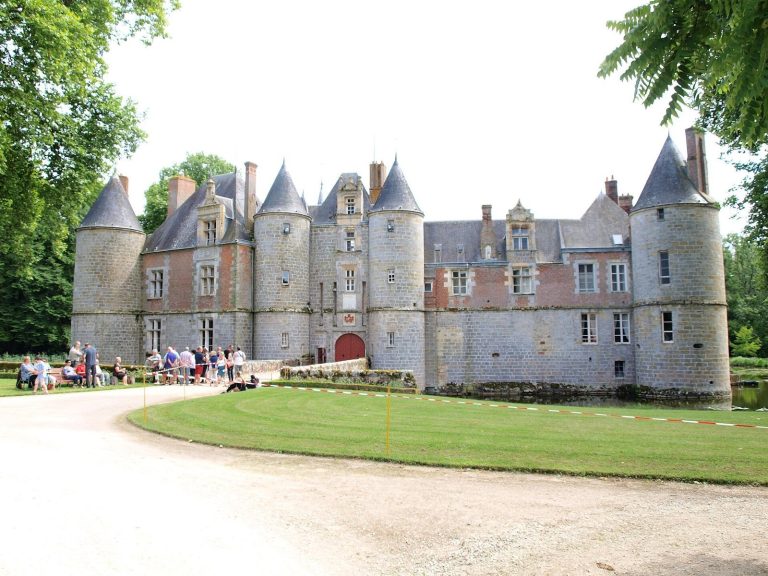
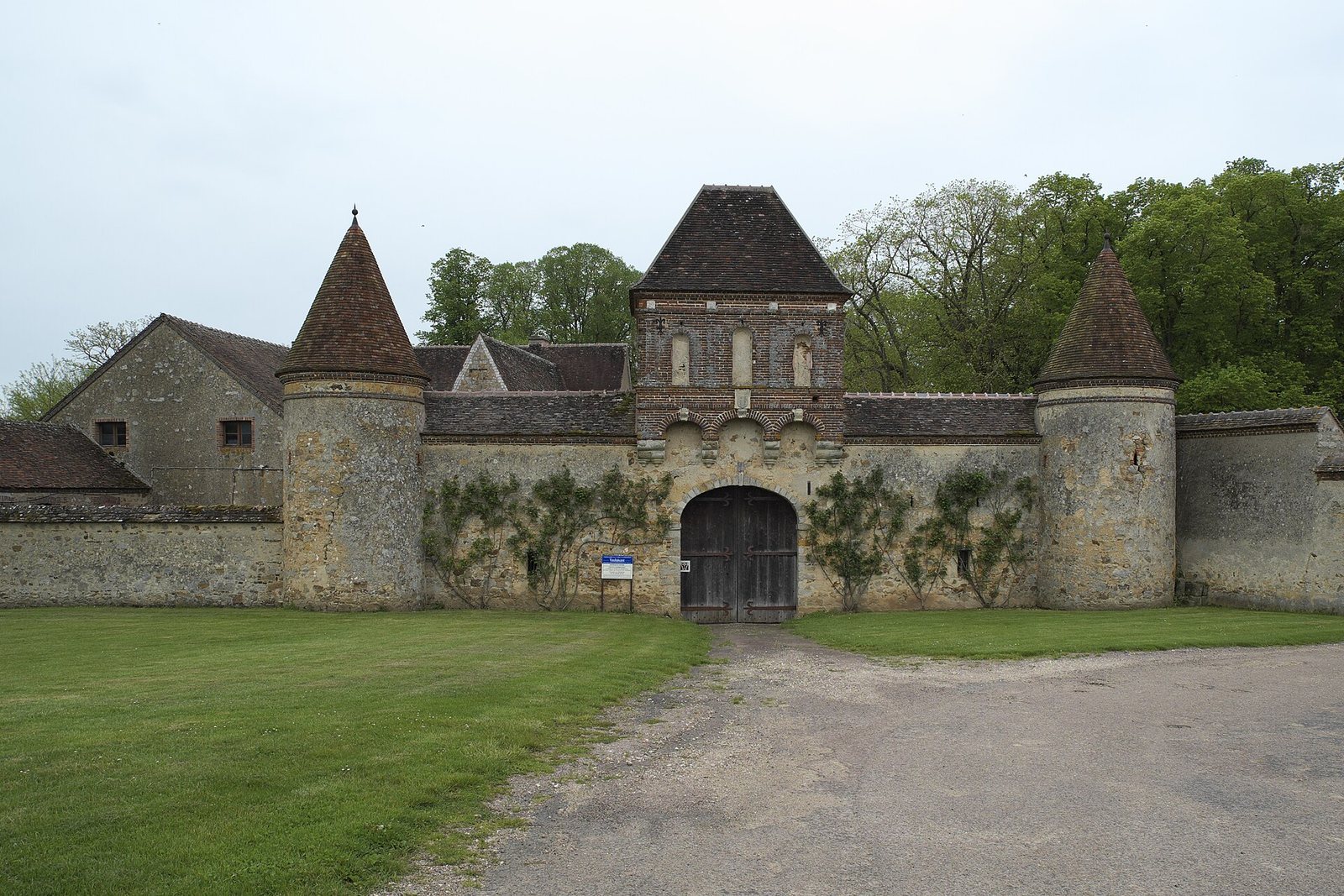
The sixteenth-century entrance gatehouse has a pair of round towers, each topped by a conical roof. Guest accommodation stood to its left. The surviving group also includes a chapel for visitors and a building associated with King François I.
Agricultural structures
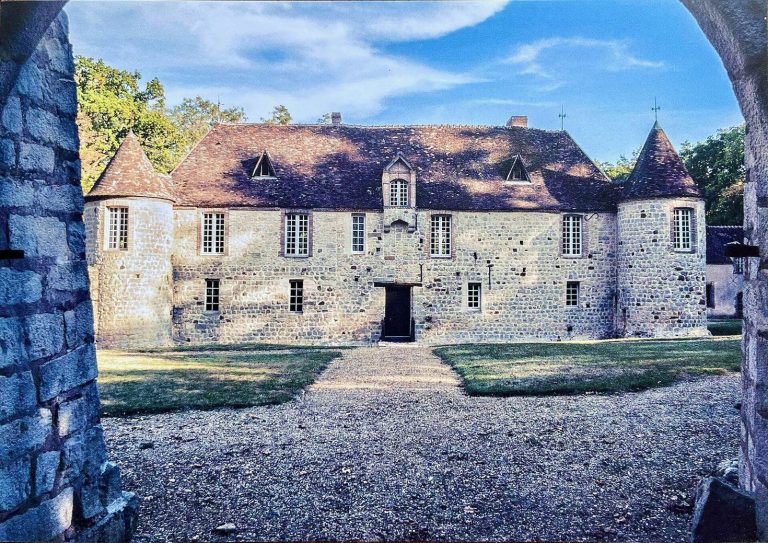
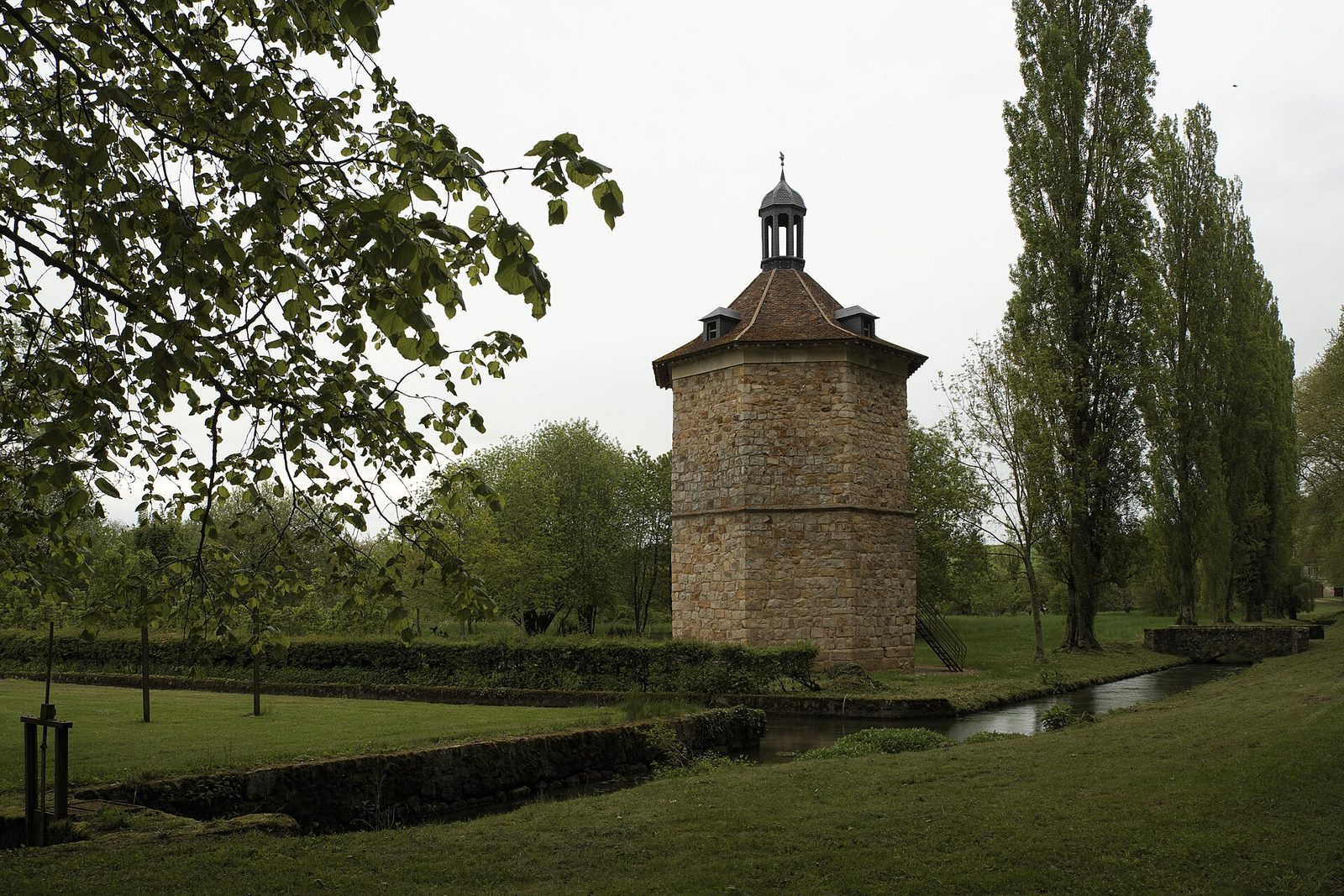
A tithe barn, used to store produce collected as tithes, was restored in the sixteenth century. An octagonal dovecote and a mill also survive among the estate’s agricultural buildings.
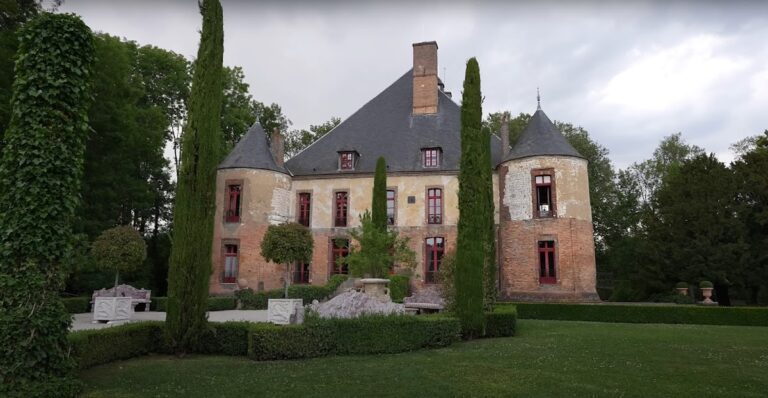
Vauluisant Castle
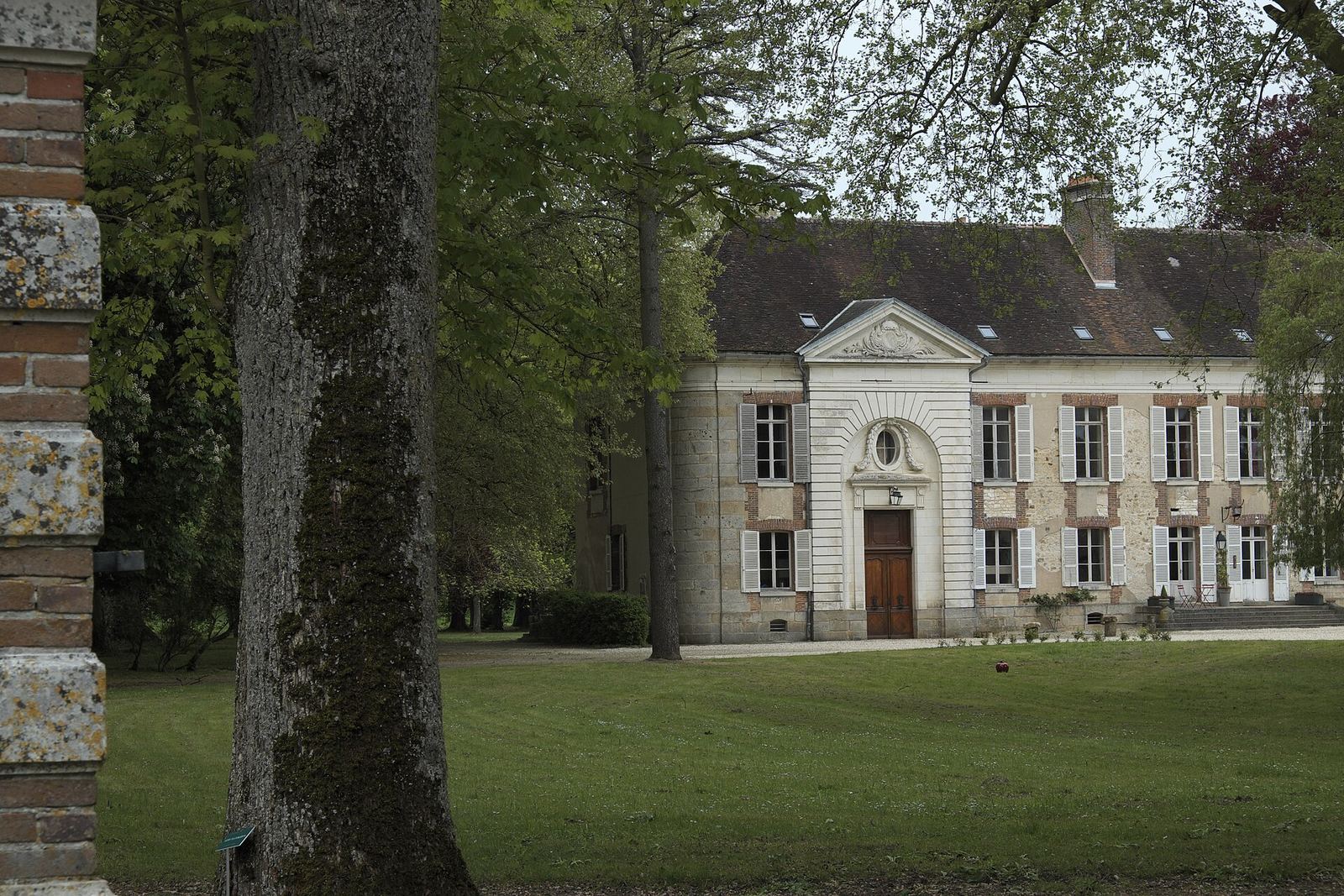
Vauluisant Castle is an altered monastic building. It was rebuilt in the eighteenth century and again from 1866, and its interior contains a monumental staircase dating to the eighteenth century.
Chapel and grounds
Sixteenth-century development included an enclosed park and a chapel. The chapel of St. Mary Magdalene underwent conservation beginning in 1965, alongside later work on the grange and other service buildings. The gardens were enlarged in the nineteenth century.
Objects and visual records
Sculpture and architectural fragments
A medieval tomb slab is kept in a barn at the abbey, while vault keystones from the site have been built into walls of nearby farm buildings. Three altars from Vauluisant are now in the church at Courgenay. A carved Entombment, dated 1528 and attributed to the unidentified sculptor known as the Master of Chaource, is in the parish church at Villeneuve-l’Archevêque.
Roman marble head
A marble head of the Diadumenos type, a classical figure shown tying a band around the head, was found on the estate in either 1863 or 1865. It is a Roman copy of a Greek bronze original and is now held in the Louvre. The find points to a Roman villa at the site around the middle of the second century CE.
Bird’s-eye view and records
A bird’s-eye view of the abbey, made in 1692 for Abbot Le Tellier, is held by the Bibliothèque nationale de France, France’s national library. Records of notable objects from the monastery were also compiled by François Roger de Gaignières.