Castle of Fondi: A Medieval Fortified Complex in Italy
Site at a Glance
- Rating
- 4.5
- Popularity
- High
- Country
- Italy
- Primary era
- Medieval
- Eras represented
- Classical, Medieval
- Civilizations
- Roman
- Site type
- Military
- Remains
- Castle
On this page7 sections
History
The Castle of Fondi, a fortified complex in Italy, began with a square tower built in the late 12th or early 13th century.
Medieval development
The Caetani, an Italian noble family, were the castle’s first owners. During its medieval development, the keep was rebuilt, an adjoining stronghold was added, and a cylindrical tower was later raised above the keep. In the 14th century, the family also developed a palace beside the castle.
Later use
In 1840, the keep’s battlements were demolished because they were considered dangerous. The castle served as a district prison from 1861 to 1931. A restoration followed in the 20th century, after which part of the complex was used as a civic museum.
Remains
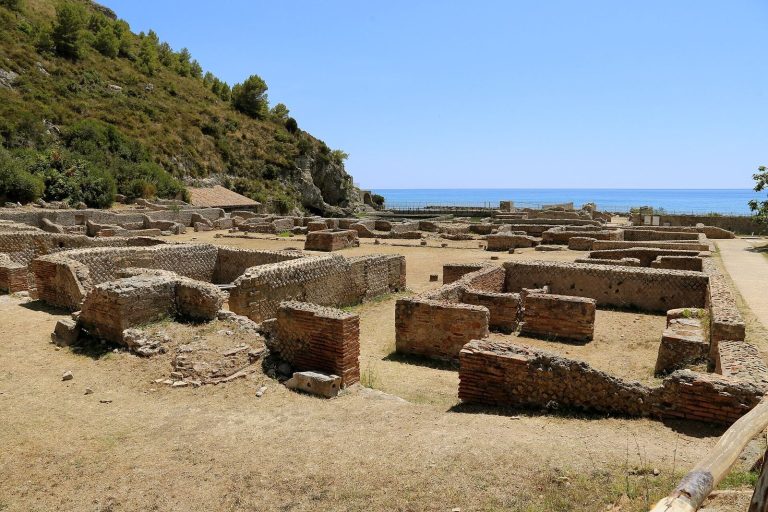
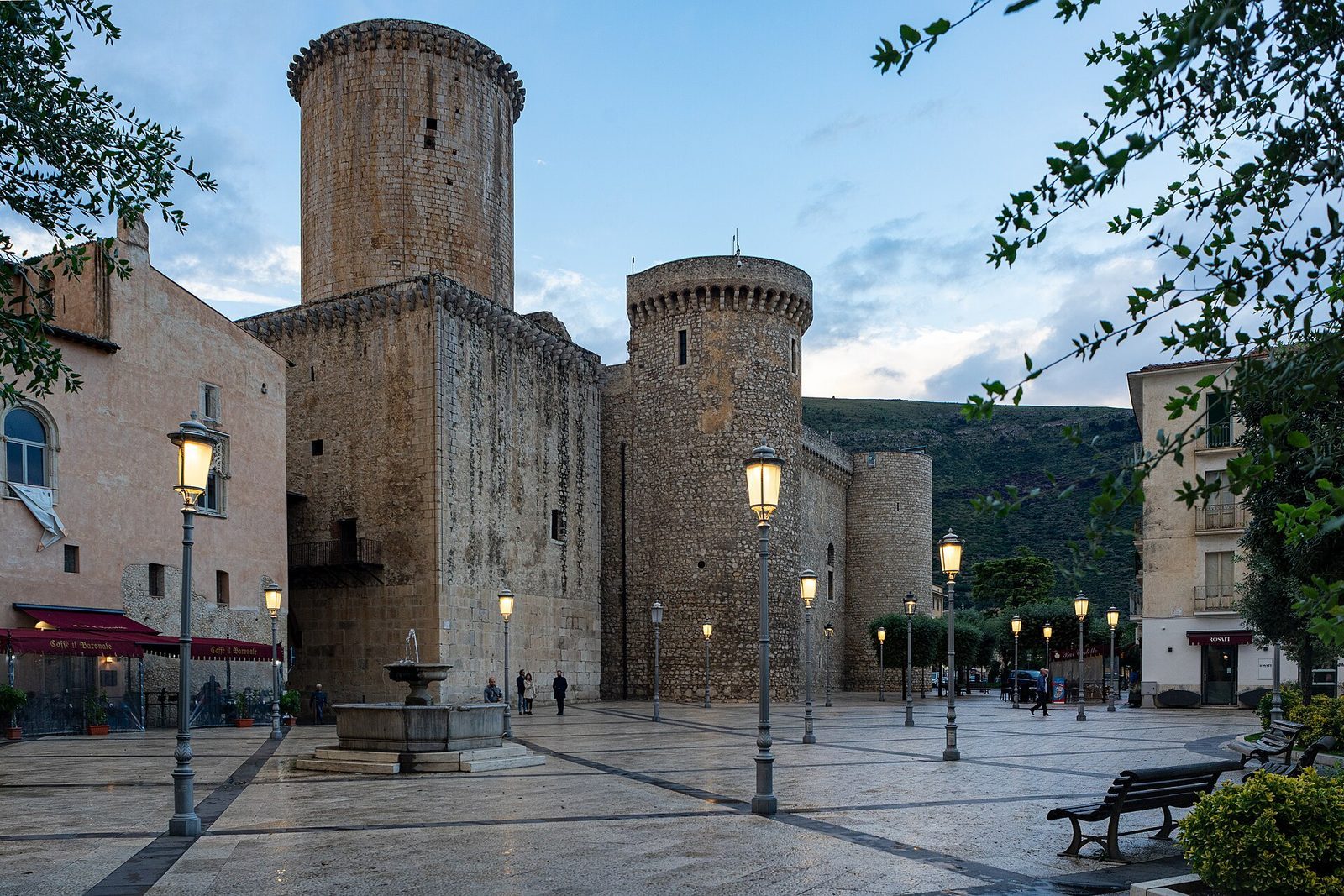
The castle’s layout brings together a principal tower and an adjoining stronghold, linked by a wooden bridge. The complex stands on Roman walls dating to the 1st century BC, built using opus incertum, a method of setting irregular stones into concrete. The castle reaches a recorded height of 33 metres.
Castle fortifications
Principal tower
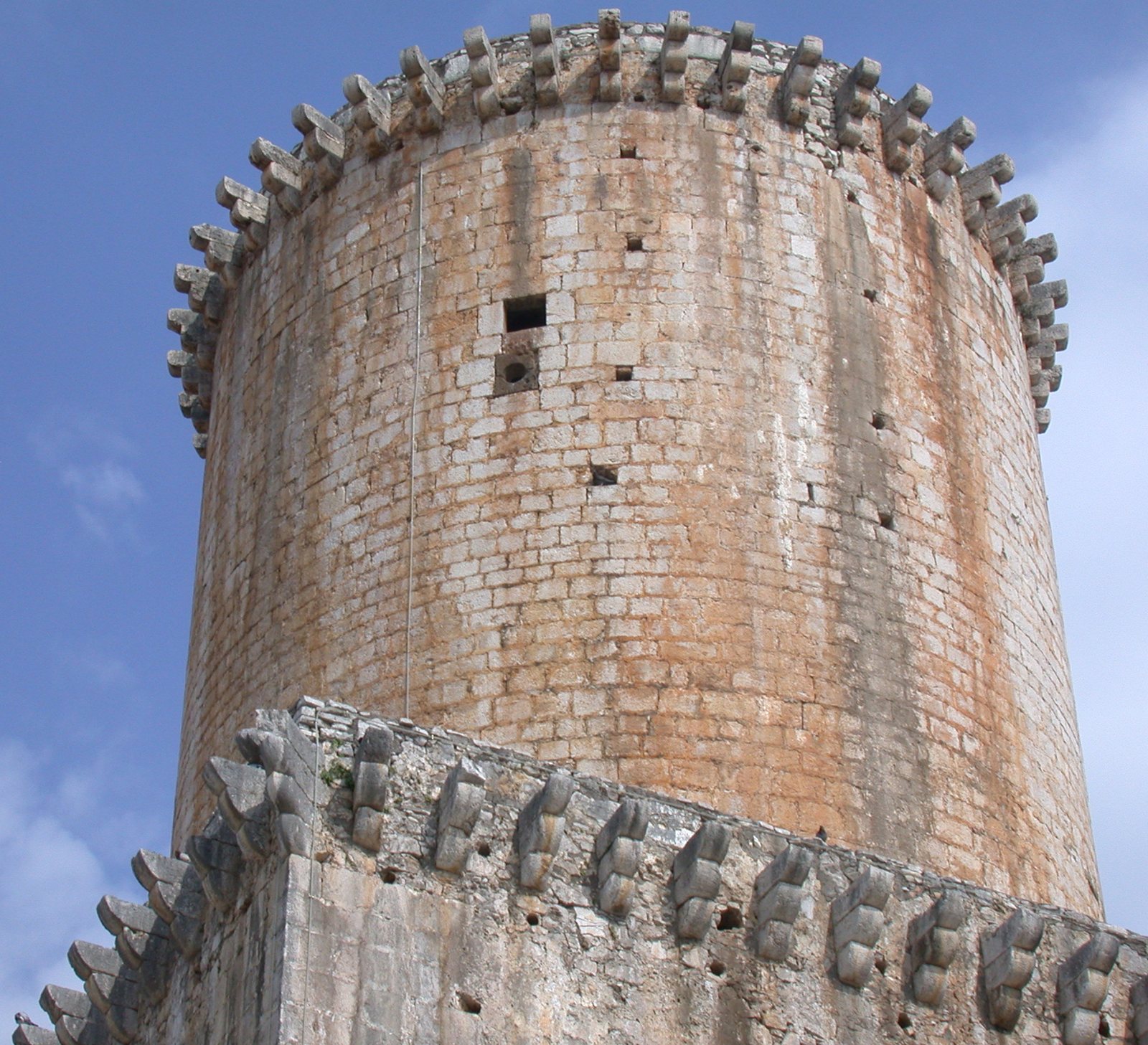
The principal tower combines a square keep, the castle’s main fortified tower, with a cylindrical tower above it. The square keep dates from the 12th to the 14th centuries, while the upper tower was built in the second half of the 15th century. Only the base of the earliest square tower remains. The upper tower has battlements, alternating raised sections and gaps along its top.
Adjoining stronghold
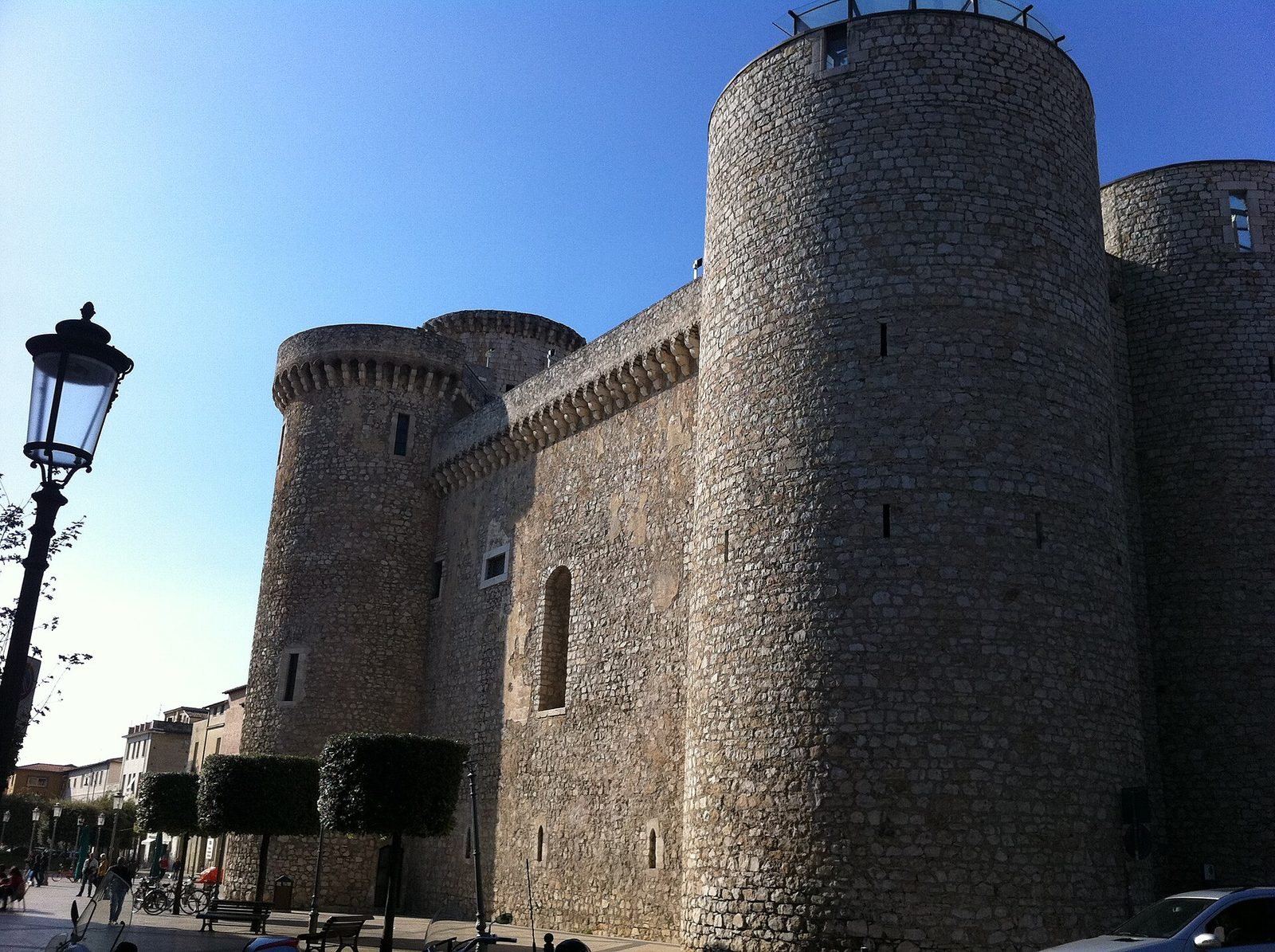
The rectangular stronghold dates to the 14th century. Its battlements and three cylindrical corner towers form the castle’s adjoining defensive structure.
The palace beside the castle is known as Palazzo Caetani and as the Baronial Palace.
Before the 20th-century restoration, prisoner-made graffiti could be seen in some of the castle’s rooms.