Lesnes Abbey: A Medieval Monastery in Southeast London
Site at a Glance
- Rating
- 4.7
- Popularity
- High
- Country
- United Kingdom
- Primary era
- Medieval
- Eras represented
- Medieval
- Civilizations
- English
- Site type
- Religious
- Remains
- Monastery
On this page13 sections
History
Foundation and religious community
Lesnes Abbey was a medieval monastery in Abbey Wood, southeast London, United Kingdom, founded in 1178 by Richard de Luci, a senior judicial officer of the English crown. Formally dedicated to St Mary and St Thomas the Martyr, it housed a small community of canons regular, priests who lived together under a religious rule. They belonged to the Arrouaisian congregation in the Augustinian tradition, and Arrouaise Abbey served as their parent house.
After the Norman Conquest of 1066, the area passed to Bishop Odo of Bayeux, half-brother of William the Conqueror. The Domesday Book of 1086 lists it as Loisnes, in the Hundred of Litlelai, a county administrative subdivision.
The foundation may have been an act of penance for de Luci’s part in the prolonged conflict between King Henry II and Archbishop Thomas Becket. The dispute culminated in 1170, when four of the king’s knights murdered Becket. De Luci resigned his office in 1179 and retired to the abbey. He died three months later and was buried in the chapter house on 14 July 1179.
Medieval community and local affairs
The abbey remained a small house. Its abbots took a leading part in draining the surrounding marshland, but the work and the cost of maintaining river embankments placed a lasting strain on its finances.
During the Peasants’ Revolt, an uprising in England in 1381, a group from Erith led by Abel Ker forced entry into the abbey. They made the abbot, an important local landlord, swear support for them, then marched to Maidstone to join the main force led by Wat Tyler.
Suppression and later ownership
In 1525, Cardinal Wolsey closed the abbey under a licence allowing the suppression of monasteries with fewer than seven inmates. The land was then used for farming. Henry Cooke acquired the site in 1541; it later passed to Sir John Hippersley, who salvaged building materials. Thomas Hawes of London bought it in 1632 and left it to Christ’s Hospital, a charitable school, the following year. Some of the stone is thought to have been reused at nearby Hall Place.
Excavation and preservation
The Woolwich and District Antiquarian Society excavated the site around 1909–1910. The former London County Council bought the ruins in 1930, and the grounds became a public park in 1931. Later restoration made some walls visible, while the abbey’s full outline can now be seen. The site is a scheduled monument, a legally protected archaeological site, and its ruins are Grade II listed for special architectural or historic interest.
Remains
Site layout and buildings
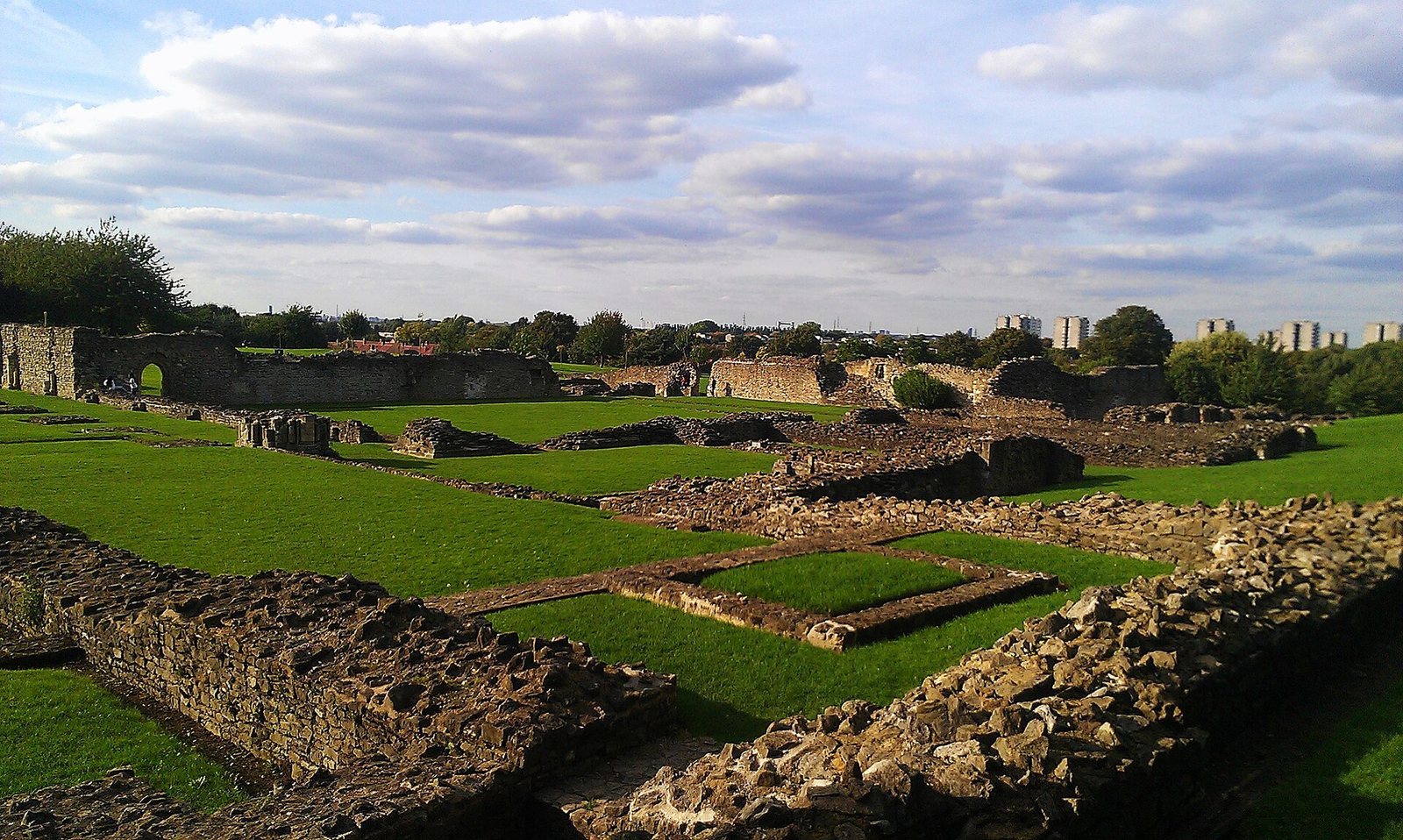
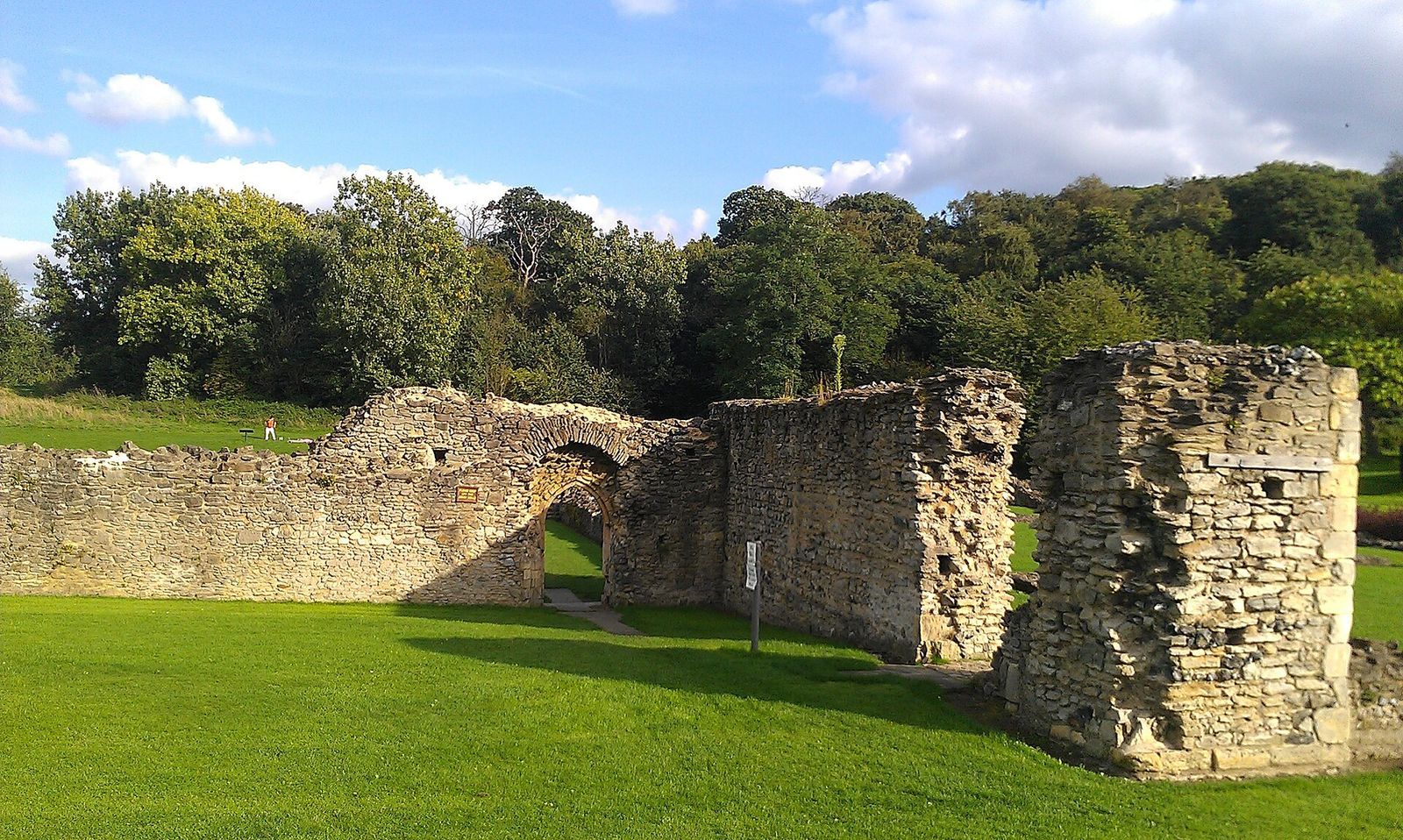
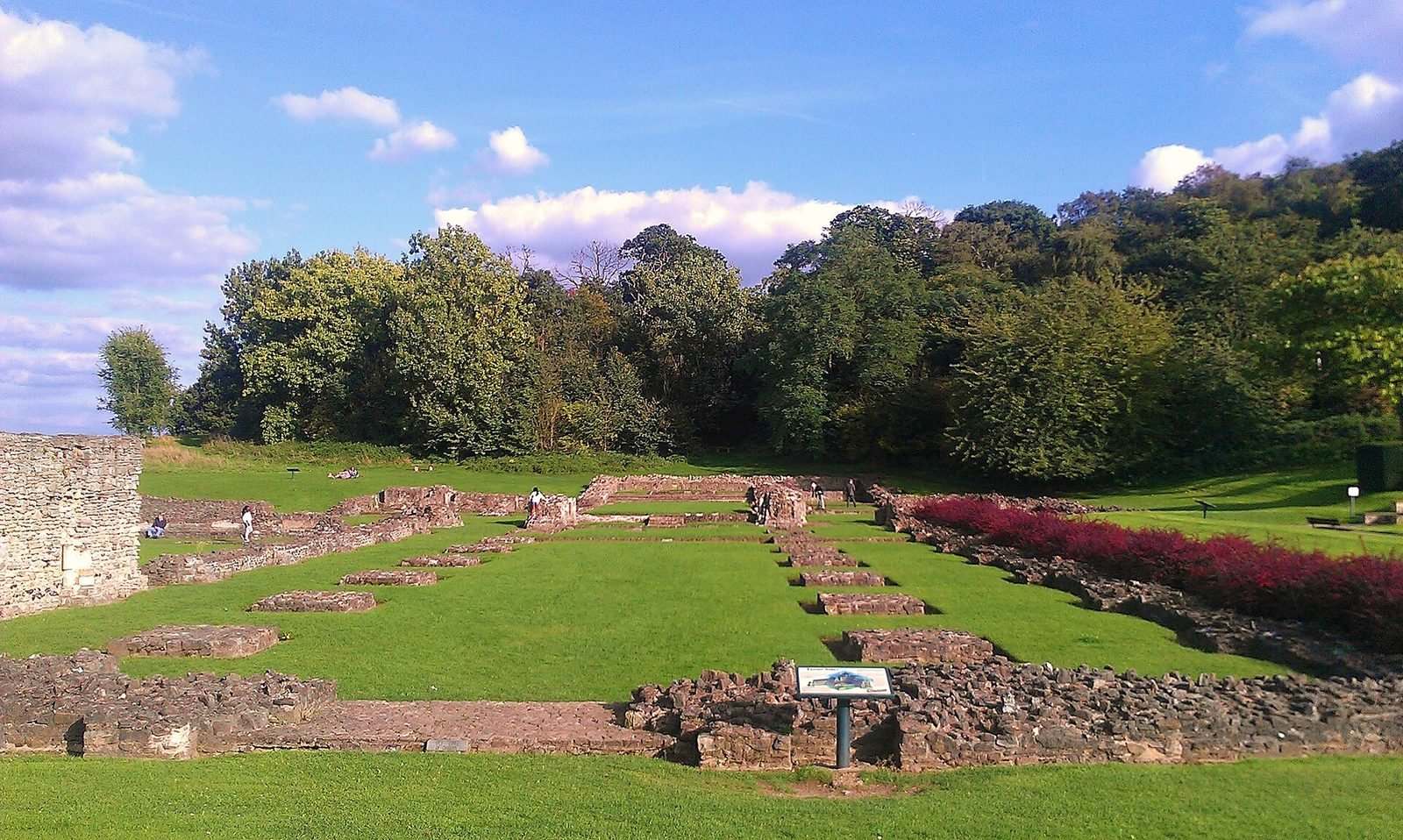
The abbey stood on rising ground above land that was originally marshland, north of Lesnes Abbey Woods. Today the ruins lie within parkland and an ornamental garden. Restoration has exposed some of the walls, and the full outline of the abbey is visible.
Courtyard
A courtyard is among the identified remains, including its western side.
Abbot’s Lodging
The Abbot’s Lodging was the only canonry building spared demolition. It later became part of a farmhouse.
Landscape and associated material
Lesnes Abbey Woods, a long-managed woodland, adjoins the abbey site. Part of the woodland is a geological Site of Special Scientific Interest, noted for early Tertiary fossils.
Mulberry tree
A black mulberry planted north of the abbey in the late eighteenth or early nineteenth century still stands. External supports prop the tree.
Lesnes Missal
The Lesnes Missal, a book containing the texts and prayers used for Mass, was made for the abbey between 1200 and 1220 in Oxford and Kent. It may have been commissioned by Richard de Luci or a member of his family, since it refers to the de Luci coat of arms. The manuscript is now in the Victoria and Albert Museum in South Kensington, London.
Archaeological finds
Finds from the abbey site are held by the Royal Greenwich Heritage Trust, with some displayed at Erith Library.